What smoke alarms does Virginia require in a house?
It depends on whether the house is new, being renovated, existing or rented. New work follows the 2021 Virginia Residential Code, which, as the Town of West Point describes it, puts smoke alarms on every level including basements. Older homes are covered mainly by a maintenance rule, and landlords must certify alarms yearly. Your building official has the final word.
Free to ask. Local shops send quotes, and you pay only when you book one.
By Kasra Taheri, Founder, LoclisPublished
Researched and drafted with AI, then checked claim by claim against the sources listed below before it was published. Prices and rules change; the dates beside each source say when it was last checked.
This is a job for a licensed pro in Virginia
This page explains what the work involves, the permits, what a licensed pro does and what drives the cost. It does not give step-by-step instructions, because this work needs a licence, a permit or both, and doing it wrong can injure someone. Before you hire, check the licence on Virginia's DPOR record.
Virginia does not have one rule for every house. What your home needs depends on whether it is new or being renovated, an older house, or a rental. For new construction and renovation, the 2021 Virginia Residential Code applies and, as the Town of West Point describes it, requires smoke alarms on every level including basements. For older homes the law mostly steps in when alarms are not being maintained, and landlords have a yearly certificate to give. Your local building official has the final say.
New homes and renovations
The Town of West Point says the 2021 Virginia Residential Code became the only enforceable standard on January 18, 2025, for construction and renovation projects started after that date.[1] Two of the points the town lists about smoke alarms in that code:
- the 2021 code mandates that smoke alarms must be installed on every level of a dwelling, including basements[1]
- the code also requires smoke alarms to be installed in hallways that serve bedrooms and adjacent rooms where the ceiling is more than 24 inches higher than the hallway ceiling[1]
New and renovated work is inspected, so the electrician and building inspector decide the exact count, locations and wiring for your plans. Describe the project to your building department if you are unsure how a renovation counts.
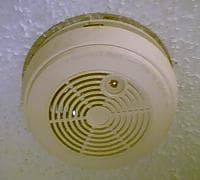
Older homes
The Uniform Statewide Building Code's retrofit chapter says AC-powered smoke alarms with battery backup or an equivalent device shall be required to be installed to replace a defective or inoperative battery-powered smoke alarm,[2] but only when it is determined by the building official that the responsible party of such building or dwelling unit fails to maintain battery-powered smoke alarms in working condition.[2] In plain terms, a working battery alarm in an older house is not the issue; a dead or missing one that the owner will not fix can be.
Rental housing
Under the Virginia Residential Landlord and Tenant Act, a landlord must provide a certificate to the tenant stating that all smoke alarms are present, have been inspected, and are in good working order, no more than once every 12 months.[3] The landlord, his employee, or an independent contractor may perform the inspection.[3] The building code adds that a tenant shall be responsible for the maintenance and operation of the smoke alarm in the tenant's unit.[2]
Alarms for people who cannot hear a standard alarm
The code requires smoke alarms providing an effective intensity of not less than 100 candela to warn a deaf or hearing-impaired occupant, provided upon request by the occupant to the landlord or proprietor.[2] The list of buildings covered includes all buildings arranged for use as one-family and two-family dwelling units.[2]
What the U.S. Fire Administration recommends
Federal guidance goes beyond the minimum, and is a sensible target for any house. The agency's advice is installing smoke alarms in every bedroom, outside each separate sleeping area, and on every level of a home.[4] It says alarms need to be replaced 10 years from the manufacture date.[4] On type, it recommends that every home have both ionization and photoelectric smoke alarms, or dual-sensor smoke alarms.[4] It also notes that your city, county or state may require a specific type of alarm,[4] so check with your local fire marshal before you buy.
When to call a licensed pro
For any hardwired alarm. The U.S. Fire Administration is plain: "Only qualified electricians should install hardwired smoke alarms."[4] The Code of Virginia says no individual shall engage in, or offer to engage in, work as a tradesman unless he has been licensed,[5] and electrical work for the public falls under that rule. Check the licence first with how to check if a contractor is licensed in Virginia.
If your alarms are old or you are not sure what you have, read what replacing hardwired smoke detectors involves and what installing them costs in Virginia. For a rental dispute or a question about what a landlord owes, your local building department or a housing counselor can say what applies to your unit.
Browse electrical services or read more electrical repair answers.
To have alarms installed or replaced in your own house, describe the job once and licensed local electricians quote it.
Common questions
- Does an older Virginia house have to be upgraded to hardwired alarms?
- Not automatically. The retrofit rules in the Uniform Statewide Building Code require AC-powered alarms with battery backup to replace a defective battery-powered alarm only when the building official determines the responsible party fails to maintain battery-powered alarms in working condition.
- Do landlords have to provide smoke alarms in Virginia?
- Landlords must provide a certificate to the tenant stating that all smoke alarms are present, have been inspected, and are in good working order, no more than once every 12 months. Under the building code, the tenant is responsible for maintaining the alarm in the tenant's unit.
- Where should smoke alarms go in my house?
- The U.S. Fire Administration recommends alarms in every bedroom, outside each separate sleeping area and on every level, including the basement. For new construction, the Town of West Point notes the 2021 code requires them on every level, including basements.
- Can a deaf or hard-of-hearing resident ask for a different alarm?
- Yes. The Uniform Statewide Building Code requires alarms with an effective intensity of not less than 100 candela, provided on request of the occupant to the landlord or proprietor, for one-family and two-family dwelling units among other buildings.
- How old can a smoke alarm be?
- The U.S. Fire Administration says smoke alarms need to be replaced 10 years from the manufacture date.
Sources
- [1] Virginia Residential Building Code Changes, Town of West Point, Virginia. Checked October 27, 2026.
- [2] 13VAC5-63-435.5. Chapter 11 Retrofit requirements, Virginia Administrative Code, Virginia General Assembly. Checked October 27, 2026.
- [3] Va. Code § 55.1-1220, Landlord to maintain fit premises, Code of Virginia, Virginia General Assembly. Checked October 27, 2026.
- [4] Smoke Alarms, U.S. Fire Administration, FEMA. Checked October 27, 2026.
- [5] Va. Code § 54.1-1129, Necessity for licensure, Code of Virginia, Virginia General Assembly. Checked October 27, 2026.
Want a pro to handle it?
Describe the job once. Licensed local businesses send quotes, and you pay only when you book one.
Get a quote for Electrical Repair