What temperature should I set my thermostat in winter and summer?
Dominion Energy suggests 68°F or lower in winter and 78°F or higher in summer while you are home, and 62°F to 65°F in winter or 80°F to 83°F in summer when you are away for long periods. Letting the house drift 7 to 10 degrees for about eight hours a day saves more. A heat pump in heating mode does better at a moderate, steady setting.
Free to ask. Local shops send quotes, and you pay only when you book one.
By Kasra Taheri, Founder, LoclisPublished
Researched and drafted with AI, then checked claim by claim against the sources listed below before it was published. Prices and rules change; the dates beside each source say when it was last checked.
Step by step
Read when to stop and call a pro, further down this page, before you start.
Step 2: Set back for sleep and work
Let the temperature drop while you sleep or are out; the Department of Energy's savings estimate assumes 7°F to 10°F below your normal setting for about eight hours a day.[2]
Step 3: Set an away range for long winter trips
For extended time away in winter, Dominion suggests a setting of 62°F to 65°F.[1]
Step 4: Pick your summer home setting
Set 78°F or higher while you are home and need cooling.[1]
Step 5: Raise it while you are away
When the house is empty in summer, let it run warmer, or 80°F to 83°F for long absences.[1]
Step 6: Do not overcorrect the air conditioner
Leave the cooling setpoint where you want to end up, because setting it lower will not cool the house any faster.[2]
Step 7: Hold a heat pump steady
With a heat pump in heating mode, keep a steady moderate setting instead of setbacks, unless you have a programmable thermostat made for heat pumps.[2]
Step 8: Check the thermostat's reading
Put a separate thermometer beside it for a day; if the room is consistently more than 2°F to 3°F off the setting, have it checked.[4]
Step 9: Clear the area around it
Keep lamps, TVs, furniture and direct sun away from the thermostat so it reads the room, not a hot spot.[2]
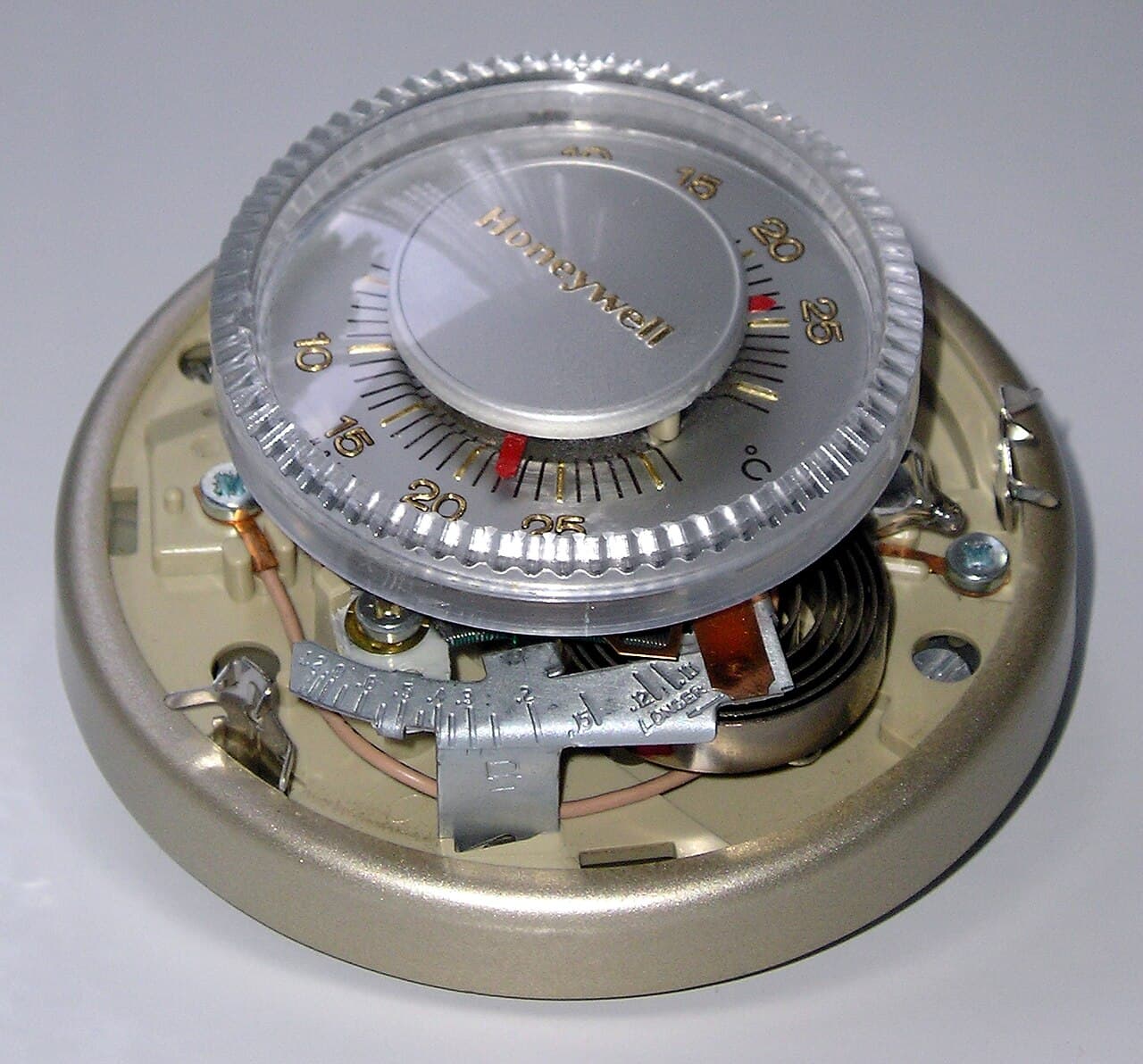
There is no single right number, but there is a well-tested starting point. Dominion Energy suggests 68°F or lower in winter and 78°F or higher in summer, and, for extended time away, 62°F to 65°F in winter and 80°F to 83°F in summer.[1] Start there, adjust a degree at a time for comfort, and let the thermostat do the rest on a schedule.
The settings matter because the bill is large. ENERGY STAR says almost half of the average American household's energy bill goes to heating and cooling, more than $900 a year.[3]
Winter settings
For the hours you are home and awake, the Department of Energy suggested setting the thermostat to around 68°F to 70°F while you are awake, and lower while you are asleep or away.[2] How much lower is where the savings are. The same guidance estimated savings of as much as 10% a year on heating and cooling for turning the thermostat back 7°F to 10°F for eight hours a day from its normal setting.[2]
A practical winter week might look like this:
- Morning, home: 68°F.
- Workday, empty house: a setback, warming up shortly before people come home. Dominion's range for time away is 62°F to 65°F;[1] the Department of Energy's 10% estimate assumes 7°F to 10°F below normal, which is 58°F to 61°F from a 68°F start.[2] The deeper setback saves more; pick the one your household is comfortable with.
- Evening, home: 68°F.
- Night: the same setback, or whatever lets everyone sleep well.
Summer settings
For cooling, the Department of Energy's advice was to set the thermostat as high as is comfortable when you are home and need cooling, and warmer than normal when you are away, and to keep it low enough to ensure humidity control if needed.[2] If the house feels clammy at 78°F, a degree lower may be the better trade than running fans and still feeling damp.
One habit wastes money every summer. Setting it colder than normal when you turn the air conditioner on will not cool the house any faster; it only runs longer and overshoots.[2] Set the number you actually want and let the system get there.
Why setbacks save money
It can seem as if the system works harder to recover after a setback. In practice the house loses heat to the outdoors more slowly when it is cooler, so the longer it sits at the lower setting, the less energy it loses in total.[2] The same works in reverse in summer: a warmer house gains heat more slowly.
A programmable or smart thermostat makes the schedule automatic, so nobody has to remember. How to set one up is in how to program a thermostat to save money.
Heat pumps are the exception in winter
If your home heats with a heat pump, the winter rule is different. The Department of Energy warned that setting back a heat pump in heating mode can make it run inefficiently and cancel the savings, and a moderate setting is the most cost-effective practice.[2] Trane notes that the thermostat will trigger auxiliary heat if you raise the heating temperature by more than 3 to 4 degrees.[5] So hold a moderate, steady setting, or use a programmable thermostat made for heat pumps: these typically use special algorithms to minimize the use of backup electric resistance heat.[2]
Leave emergency heat alone in normal use. Trane says it should only be used in a true emergency, when the heat pump has failed and it is very cold outside.[5] More on running one through the cold months is in how to keep a heat pump running well in winter.
Make sure the thermostat reads the room
The best setting is wasted if the thermostat is fooled. It should sit on an interior wall away from direct sunlight, drafts, doorways, skylights and windows, with furniture clear of it.[2] Check it against a separate thermometer now and then. If the room is consistently more than 2°F to 3°F away from the setting, Carrier recommends having the thermostat and system checked.[4]
Stop and call a pro if
- The house cannot reach your setpoint in normal weather, or the system runs almost nonstop. See why an HVAC system runs all the time.
- The thermostat reads more than a few degrees off a separate thermometer and recalibrating does not fix it.
- A heat pump shows auxiliary or emergency heat for long stretches when it is not very cold.
- The thermostat stops calling for heat or cooling at all. Start with why a thermostat is not turning on the heat.
Browse more heating and cooling answers or find licensed HVAC businesses near Blacksburg.
If the thermostat or system is not holding temperature, describe the problem once and get quotes from licensed HVAC businesses.
Common questions
- What is a good thermostat setting in winter?
- Dominion Energy suggests 68°F or lower while you are home, and the Department of Energy suggested around 68°F to 70°F while you are awake, lower while you sleep or are out. Pick the lowest setting your household is comfortable at and set back from there.
- What is a good thermostat setting in summer?
- Dominion Energy suggests 78°F or higher while you are home, and 80°F to 83°F when you are away for long periods. The Department of Energy's advice was to set it as high as is comfortable when you need cooling, and to keep the house warmer than normal when nobody is home.
- How low should I set the heat when I go away in winter?
- Dominion Energy suggests 62°F to 65°F when you are away for extended periods in winter. A smart or programmable thermostat can bring it back up before you return.
- Is it cheaper to leave the thermostat at one temperature all day?
- For a furnace or an air conditioner, no. A house loses heat more slowly when it is cooler, so the hours spent at a lower winter setting save energy even after the recovery. A heat pump in heating mode is the exception: a setback can make it run inefficiently, and raising the setting by more than 3 to 4 degrees can bring on the backup heat, so a steady moderate setting usually costs less.
- Why does my house feel colder than the thermostat says?
- The thermostat may be reading a warm spot, such as a sunny wall or a lamp underneath it, or it may be out of calibration. Check it against a separate thermometer. Carrier suggests having the thermostat and system checked if the indoor temperature is consistently more than 2°F to 3°F away from the setting.
Sources
- [1] Seven tips for saving energy in your home, Dominion Energy. Checked October 26, 2026.
- [2] Programmable Thermostats (Energy Saver, archived copy), U.S. Department of Energy. Checked October 26, 2026.
- [3] Smart Thermostats, ENERGY STAR, U.S. Environmental Protection Agency. Checked October 26, 2026.
- [4] Heat Pump Not Heating? Here's How to Troubleshoot, Carrier. Checked October 26, 2026.
- [5] What is Auxiliary Heat and How Does it Affect HVAC Performance?, Trane. Checked October 26, 2026.
Want a pro to handle it?
Describe the job once. Licensed local businesses send quotes, and you pay only when you book one.
Get a quote for HVAC Repair