When is the best time to prune shrubs in Virginia?
It depends on when the shrub flowers. Prune spring bloomers such as forsythia and azalea just after they finish flowering. Prune summer bloomers such as crape myrtle and butterfly bush in late winter or early spring, before new growth. Shrubs without showy flowers, like boxwood and yew, can be pruned most of the year. Avoid heavy pruning in late summer and early fall.
Free to ask. Local shops send quotes, and you pay only when you book one.
By Kasra Taheri, Founder, LoclisPublished
Researched and drafted with AI, then checked claim by claim against the sources listed below before it was published. Prices and rules change; the dates beside each source say when it was last checked.
Step by step
Read when to stop and call a pro, further down this page, before you start.
Step 1: Late winter to early spring: summer bloomers
Prune crape myrtle, butterfly bush, rose of Sharon and other new-wood bloomers before new growth starts.[3]
Step 2: Early spring: overgrown deciduous shrubs
Do renewal cuts, or full rejuvenation of cane shrubs like spirea and forsythia, while plants are still dormant.[8]
Step 3: Early spring: needled evergreens
Prune yew, arborvitae and juniper in early spring, when new growth will soon cover the cuts.[2]
Step 4: Just after bloom: spring bloomers
Prune forsythia, lilac, spirea, viburnum and similar shrubs as soon as flowering ends.[7]
Step 5: Just after bloom: azaleas
Pinch off soft new shoots on vigorous azaleas soon after flowering to keep their size and form.[5]
Step 6: Spring and midsummer: formal hedges
Trim hedges in spring and again in midsummer to keep them dense.[8]
Step 7: Summer: light trims on evergreens
Do light maintenance pruning on yews and arborvitae in summer to hold them at size.[2]
Step 8: Late summer to early fall: put the tools away
Skip heavy pruning now; it can push new shoots that are damaged by cold.[1]
Step 9: Any time: dead, broken and damaged wood
Cut out storm damage, dead branches and broken stems whenever you find them.[2]
Step 10: Most of the year: boxwood care
Prune and thin boxwood only when the foliage is dry, and clean tools between plantings.[6]
The right time to prune a shrub in Virginia depends on when it flowers. Spring bloomers are pruned just after they finish flowering, summer bloomers in late winter or early spring, and shrubs without showy flowers most of the year. The one season to avoid for heavy pruning is late summer into early fall.
Why bloom time decides it
Shrubs that flower on old wood set their flower buds the year before they bloom.[1] Virginia Tech's example is that a forsythia that flowers this spring formed those buds last summer.[1] Prune it in fall or winter and you cut off the flowers. Shrubs that flower on new wood set their buds and bloom in the same year,[1] so a late-winter cut costs you nothing.
Spring bloomers: right after flowering
The rule from Virginia Tech is simple: prune plants that flower on old wood just after they flower.[1] That covers the familiar spring shrubs: forsythia, deutzia, lilac, viburnum, mock-orange and spirea.[7] Pruning soon after bloom gives the plant the whole summer to grow and set next year's buds.
Azaleas follow the same pattern. To hold their size and shape, pinch off soft new shoots of vigorous plants soon after flowering.[5]
Summer bloomers: late winter or early spring
Shrubs that bloom in summer can be pruned any time after they flower until just before they leaf out in spring.[1] In practice most people do it in late winter, when the branches are bare and easy to see. This group includes abelia, beautyberry, butterfly bush, rose of Sharon, crape myrtle and summersweet.[7]
Crape myrtles get their own warning. For them, the proper time to prune is late winter or early spring prior to new growth,[3] and Virginia Tech says plainly: "Do not prune crapemyrtles in late summer or early fall"[3] because the new shoots may freeze. It also notes that the belief that crape myrtles must be cut back hard in late winter to bloom well is a misconception;[3] a well-chosen plant needs little more than dead and crossing branches removed.
Shrubs without showy flowers
Shrubs without showy flowers, such as yews, barberries and boxwood, can be pruned most any time of the year except late summer.[1] For boxwood specifically, boxwood thinning can be done at most times of the year except late summer or early fall.[4]
Needled evergreens have their own rhythm. Yew, arborvitae, cedar, false cypress and juniper are pruned in early spring, when new growth will cover the cuts,[2] and maintenance pruning to keep them at a set size is done in summer.[2] If one needs a hard cut, do any severe pruning of arborvitae and juniper in March or April,[7] and stay out of the bare center of the plant.
Formal hedges
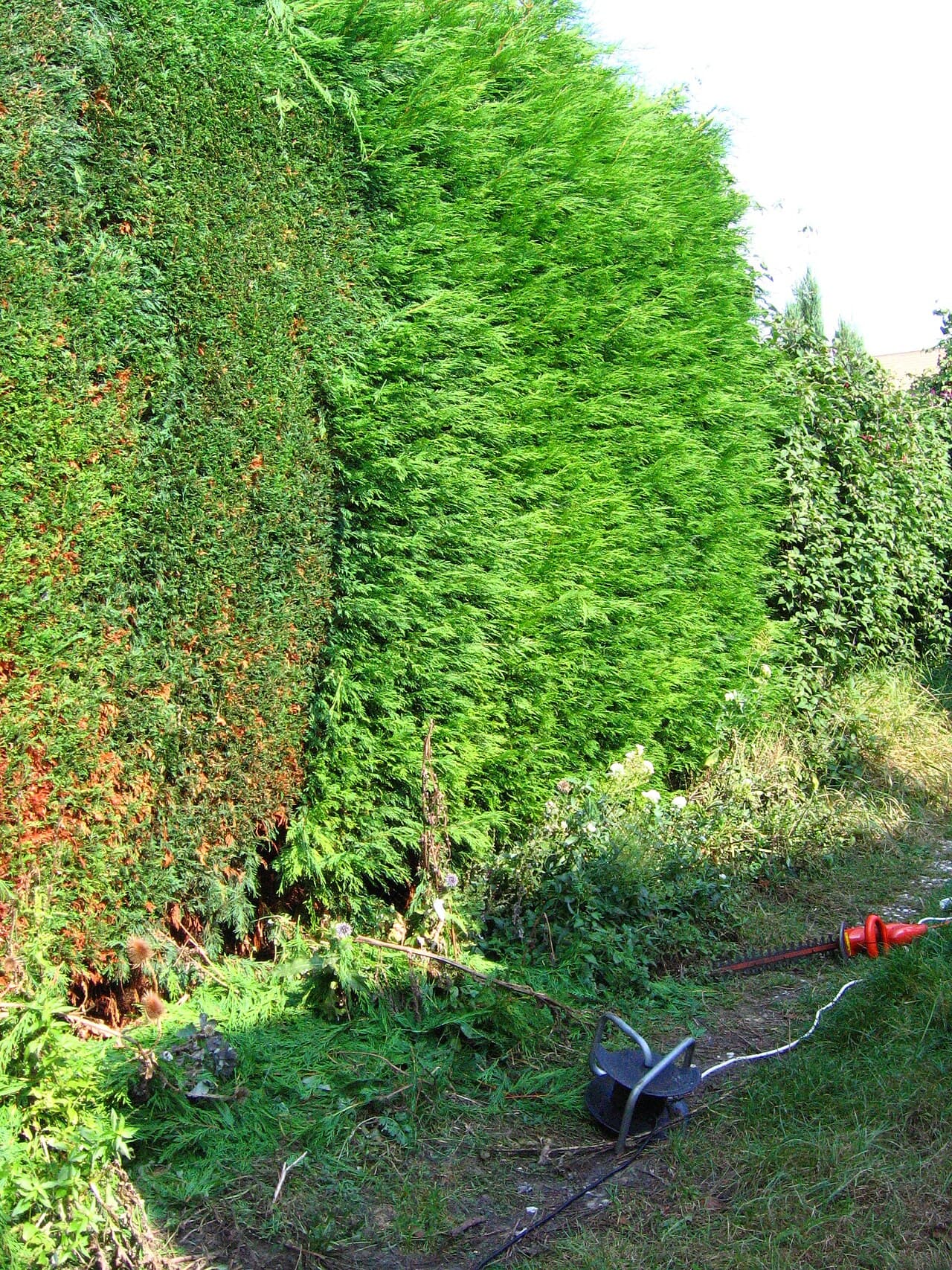
Hedges need more than one trim a year. Hedges may be pruned twice a year, in spring and again in midsummer,[8] and fast growers may need more. Shape them so the base stays wider than the top. Our guide to trimming overgrown hedges and shrubs covers the technique.
Overgrown shrubs
Rejuvenation of overgrown cane shrubs, cutting all the canes close to the ground, is an early-spring job,[8] done while the plant is dormant so it can regrow all season. Gentler renewal pruning, taking a few of the oldest stems out at ground level each year, is done as soon as possible after blooming on spring bloomers,[7] and on most other shrubs in early spring while the plants are still dormant.[7]
The season to avoid
Late summer and early fall are the wrong time for heavy pruning. Late-summer pruning will most likely encourage a flush of new shoots that may not harden off in time for winter,[1] and that tender growth is damaged or killed by cold. The same advice applies to evergreens: avoid pruning evergreens in late summer and early fall.[2]
Two exceptions are always fine. When storms or vandalism damage a plant, prune immediately.[2] And in winter, minor winter pruning for decorations usually causes no harm,[2] so cutting some holly or evergreen boughs for the mantel is not a problem.
A note on boxwood
In Virginia, boxwood blight symptoms typically appear in late summer and fall,[6] and the fungus spreads in wet conditions. Whatever the season, avoid working in boxwood when the foliage is wet,[6] and clean your tools between plantings. If yours are already browning, read why boxwoods turn brown before pruning.
Stop and call a pro if
- The hedge top is out of reach without a powered trimmer on a ladder.
- Branches have grown near or into overhead power lines.
- The shrub needs saw work on trunk-sized stems, or removal.
- Boxwood shows leaf spots, black stem streaks or sudden leaf drop.
If you would rather hand the calendar to someone else, see whether it is worth hiring someone to trim your shrubs and what hedge trimming costs in Virginia. Browse more lawn and landscaping answers, see hedge and shrub trimming services, or look up lawn and landscaping businesses around Blacksburg. To get a seasonal plan quoted, describe the job once and local businesses quote it.
Common questions
- Can I prune shrubs in the fall in Virginia?
- Light cleanup, such as removing dead or broken branches, is fine. Heavy pruning in late summer and early fall is the thing to avoid, because it can push new shoots that do not harden off before winter and are then damaged by cold.
- What happens if I prune a spring bloomer at the wrong time?
- You cut off next year's flowers. Shrubs like forsythia and azalea set their buds the summer before they bloom, so pruning them in fall, winter or early spring removes the buds. The plant is usually fine; it just flowers less until it sets new buds.
- When should I prune crape myrtles?
- In late winter or early spring before new growth, and not in late summer or early fall. Virginia Tech advises against cutting them back hard every year; well-chosen crape myrtles need little pruning beyond removing dead, crossing and broken branches.
- When should I trim boxwood?
- Boxwood can be pruned and thinned at most times of year except late summer and early fall. Work when the foliage is dry, clean tools between plantings, and look for signs of boxwood blight, which typically shows up in late summer and fall in Virginia.
- I do not know what my shrub is. When should I prune it?
- Watch it for a year. If it flowers in spring, prune right after flowering. If it flowers in summer, prune in late winter. If it never makes showy flowers, prune lightly in spring or early summer. Your local Extension office can also help identify it.
Sources
- [1] Shrubs: Functions, Planting, and Maintenance (426-701), Virginia Cooperative Extension, Virginia Tech. Checked October 27, 2026.
- [2] A Guide to Successful Pruning, Pruning Evergreen Trees (430-457), Virginia Cooperative Extension, Virginia Tech. Checked October 27, 2026.
- [3] Pruning Crapemyrtles (430-451), Virginia Cooperative Extension, Virginia Tech. Checked October 27, 2026.
- [4] Selecting Landscape Plants: Boxwoods (426-603), Virginia Cooperative Extension, Virginia Tech. Checked October 27, 2026.
- [5] Evergreen Azalea (Rhododendron species) (2901-1035), Virginia Cooperative Extension, Virginia Tech. Checked October 27, 2026.
- [6] Best Management Practices for Boxwood Blight in the Virginia Home Landscape (PPWS-29NP), Virginia Cooperative Extension, Virginia Tech. Checked October 27, 2026.
- [7] Pruning Ornamental Shrubs (G6870), University of Missouri Extension. Checked October 27, 2026.
- [8] Pruning trees and shrubs, University of Minnesota Extension. Checked October 27, 2026.
Want a pro to handle it?
Describe the job once. Licensed local businesses send quotes, and you pay only when you book one.
Get a quote from a local pro