Who is responsible for a fence between neighbors in Virginia?
Under Virginia's division fence law, neighbors share the cost of building and keeping up a fence between their lands equally, unless one lets their land lie open or they agree otherwise. When an existing shared fence falls into disrepair, either owner can give written notice; if the other does not repair their half within 30 days, the first can repair it and recover half the cost.
Free to ask. Local shops send quotes, and you pay only when you book one.
By Kasra Taheri, Founder, LoclisPublished
Researched and drafted with AI, then checked claim by claim against the sources listed below before it was published. Prices and rules change; the dates beside each source say when it was last checked.
Step by step
Read when to stop and call a pro, further down this page, before you start.
Step 1: Find the property line
Pull your plat or a past survey from your closing papers, and hire a licensed land surveyor if neither shows where the fence sits relative to the line.[8]
Step 2: Check for an agreement
Look in your deed and any HOA covenants for a recorded fence agreement, which can bind later owners when it is in writing and recorded.[5]
Step 3: Talk to your neighbor
Walk the fence together, agree on what is broken, and get one or two written repair quotes you can both look at.
Step 4: Put the split in writing
Write down who pays what, who hires the contractor and when the work happens, and both sign it.
Step 5: Record it if it should last
If the agreement should bind future owners, record it in the deed book at the clerk's office of the county where the land lies.[5]
Step 6: Give written notice if you cannot agree
Send your neighbor written notice that you intend to repair the shared fence and ask them to repair their half.[3]
Step 7: Wait the 30 days
Give your neighbor 30 days from the notice to repair their half before you repair the whole fence.[3]
Step 8: Keep every receipt
Keep the notice, the contract, the invoice and photos before and after, since half the repair cost may later have to be claimed.[4]
Step 9: Hire a licensed contractor
For a job over $1,000, check that the fence contractor holds a Virginia contractor licence and get a signed written contract.[12]
In Virginia, a fence that divides two properties is generally a shared responsibility. The Code says adjoining landowners build and maintain division fences between their lands "at their joint and equal expense," unless one of them chooses to let their land lie open or they agree otherwise.[1] For a fence that already exists and has fallen apart, the law gives a simple procedure: written notice, 30 days for the neighbor to repair their half, and then half the cost owed by the neighbor who did nothing. Many neighbors settle it with a conversation and a shared quote long before that.
This page explains what the statutes say. It is not legal advice, and for an actual dispute over money or the property line, talk to a Virginia attorney.
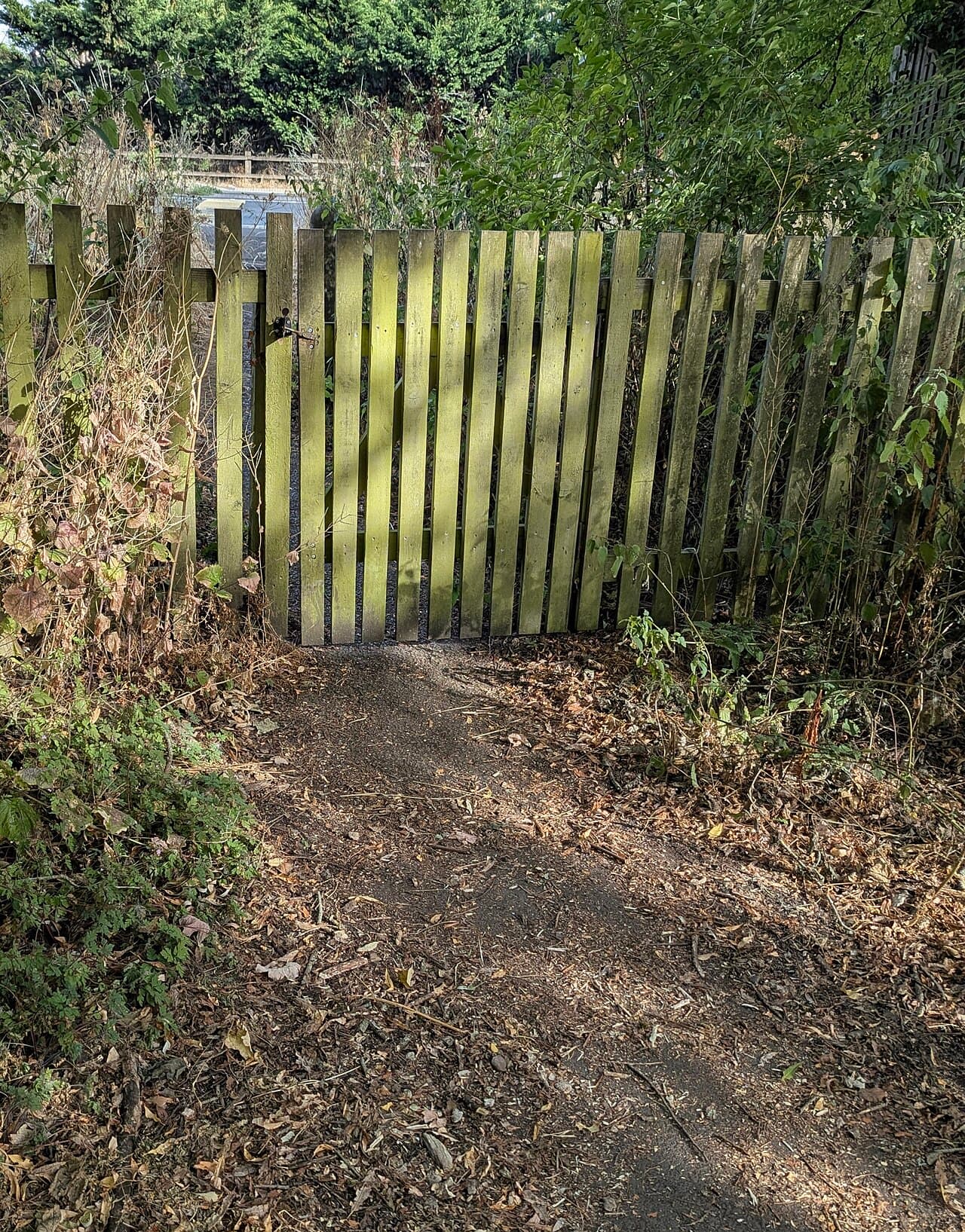
When there is no fence yet
If no division fence has been built, either owner may give the other written notice of the intent to build and ask the neighbor to build half.[2] The neighbor has 10 days to answer in writing that they will let their land lie open.[2] A neighbor who opts out does not pay for the new fence, but if they later enclose their land, they owe the builder half the fence's value at that time.[2]
A neighbor who neither opts out nor agrees within 30 days to build their half is liable for half the cost.[2]
When the shared fence needs repair
The repair rule applies to a fence that both owners have built and used as a division fence, or one the other owner has been required to pay half of.[3] When such a fence is out of repair to the point that it is no longer a lawful fence, either owner can give the other written notice of the intent to repair it and ask them to repair their half.[3] If the neighbor does not repair their half within 30 days, the owner who gave notice may repair the whole fence to make it lawful, and the neighbor is liable for half the cost of the repairs.[3] A sum owed under these sections can be recovered in court by an action or a warrant in debt.[4]
"Lawful fence" is a defined term written with livestock in mind. It includes a fence at least five feet high, and board fences at least 42 inches high with at least three boards on posts set in the ground,[6] among other types, as long as livestock could not creep through. A privacy fence with a broken section, a fallen panel or a gap at a snapped post may no longer meet that test.
A point that surprises many owners: according to Virginia Tech's March 2026 summary, once a division fence exists, neither owner can avoid sharing repair costs by choosing to let their land lie open,[7] a conclusion that rests on a 1981 opinion of the Virginia Attorney General.[7] The opt-out is only for a fence not yet built.
Is your fence actually a division fence?
That is the question to settle first, and it turns on facts. A fence your neighbor's predecessor built, that both households have treated as the boundary for years, is a different case from a fence you put up last year, inside your own line, to keep your dog in. The statute's repair rule speaks of a fence used by both owners as a division fence; a fence one owner built for their own yard may not fit.
Find out where the fence stands. Your closing papers often include a plat or survey. If they do not settle it, Virginia's definition of the practice of land surveying includes establishing or reestablishing land boundaries, and land surveyors are licensed by a state board.[8] A licensed surveyor can mark the line so you are not arguing about a fence that sits on one lot.
Written agreements, HOAs and local rules
An agreement between neighbors about building or maintaining the division fence binds later owners only if it is in writing and says so, is recorded in the deed book in the clerk's office of the county where the land lies, and is indexed like a deed.[5] If one of you might sell, record it.
Check your HOA covenants before you agree on materials or height, and check your locality's zoning rules. Virginia Beach, for example, requires the finished side of a fence to face the public right-of-way,[9] and notes that a fence in an easement may need approval from whoever controls the easement, which can include a homeowners association, a utility or a city department.[9] Do I need a permit for a fence in Virginia? covers permits.
When a storm or a tree did the damage
For a tree that falls on the fence, the Bureau of Insurance says that unless negligence can be proven, each owner's own policy covers their own property,[10] and that if a storm brought the tree down, the owner generally would not be considered negligent.[10] It also says most policies pay the reasonable cost of cleaning up and removing a tree that falls and damages your fence.[10] Why is my fence leaning after a storm? covers sorting out the damage.
Hiring the repair
Agree on one contractor and one written scope, and decide in writing who signs the contract and how the bill is split. A Class C contractor's licence covers jobs where a single contract is over $1,000 and under $30,000,[12] so check the business on DPOR's licence lookup. How much does fence repair cost in Virginia? covers what drives the price.
Stop and call a pro if
- You and your neighbor disagree about where the property line is: a licensed land surveyor can mark it.
- Money is owed or demanded under the division fence statutes, or a neighbor has sent you a formal notice: talk to a Virginia attorney.
- The fence is a swimming pool barrier, sits on a retaining wall, or holds back soil.
- Posts have to be dug out and reset: Virginia law requires a locate request to the notification center before any excavation.[11]
Browse fence repair businesses, all exterior answers, or exterior businesses around Blacksburg. When you and your neighbor are ready, describe the fence repair once and local businesses send written quotes you can both review.
Common questions
- Does my neighbor have to pay half to repair our shared fence?
- Under Va. Code § 55.1-2823, when a fence that has become a division fence is out of repair to the point that it is no longer a lawful fence, either owner can give written notice. If the other does not repair their half within 30 days, the one who gave notice may repair the whole fence and the other is liable for half the cost. Whether your fence counts is a fact question for a Virginia attorney.
- Can my neighbor refuse to pay because they don't use the fence?
- Not for an existing division fence, according to Virginia Tech's March 2026 summary of the law: once a division fence exists, neither owner can avoid sharing repair costs by choosing to let their land lie open. The opt-out applies only before a fence is built, with written notice within 10 days.
- The fence is entirely on my side of the line. Is it still a shared fence?
- It may or may not be. The statute's repair rule covers a fence that both owners have built and used as a division fence, or one the other owner has been required to pay half of. A fence one owner built for their own yard may not fit that description. A survey shows where it sits, and a Virginia attorney can say how the law applies.
- Who pays when a neighbor's tree falls on the fence?
- Unless negligence can be proven, each owner's own policy covers their own property, and the Bureau of Insurance says a tree that a storm brought down generally would not make its owner negligent. Report it to your insurer, which may pay to remove a tree that damaged your fence.
- Which side of the fence has to face my neighbor?
- There is no single statewide rule. Some localities set one for fences along streets: Virginia Beach requires the finished side to face the public right-of-way. Check your locality's zoning office and your HOA covenants, which often say more.
- Do we need a written agreement?
- It is the cleanest way to avoid a dispute. An agreement binds later owners only if it is in writing and says so, is recorded in the deed book at the county clerk's office and is indexed like a deed. Without that, a new neighbor is not bound by your handshake.
Sources
- [1] Va. Code § 55.1-2821, Obligation to provide division fences, Code of Virginia, Virginia General Assembly. Checked October 26, 2026.
- [2] Va. Code § 55.1-2822, When no division fence has been built, Code of Virginia, Virginia General Assembly. Checked October 26, 2026.
- [3] Va. Code § 55.1-2823, When division fence already built, Code of Virginia, Virginia General Assembly. Checked October 26, 2026.
- [4] Va. Code § 55.1-2824, Recovery of amount due in connection with division fence, Code of Virginia, Virginia General Assembly. Checked October 26, 2026.
- [5] Va. Code § 55.1-2825, Requirements for agreement to bind successors in title; subsequent owners, Code of Virginia, Virginia General Assembly. Checked October 26, 2026.
- [6] Va. Code § 55.1-2804, Description of lawful fence, Code of Virginia, Virginia General Assembly. Checked October 26, 2026.
- [7] The Fence Line Dividing Neighbors. What to Know When Repairs are Due (Campus to Commonwealth CC-2026-03, March 2026), Department of Agricultural and Applied Economics, Virginia Tech. Checked October 26, 2026.
- [8] Va. Code § 54.1-400, Definitions (land surveying), Code of Virginia, Virginia General Assembly. Checked October 26, 2026.
- [9] Fence and Wall Bulletin (revised November 2025), City of Virginia Beach, Zoning Administration. Checked October 26, 2026.
- [10] When Disaster Strikes: Insured Homeowners Loss, Virginia State Corporation Commission, Bureau of Insurance. Checked October 26, 2026.
- [11] Va. Code § 56-265.17, Notification required prior to excavation or demolition, Code of Virginia, Virginia General Assembly. Checked October 26, 2026.
- [12] Va. Code § 54.1-1100, Definitions (Contractors), Code of Virginia, Virginia General Assembly. Checked October 26, 2026.
Want a pro to handle it?
Describe the job once. Licensed local businesses send quotes, and you pay only when you book one.
Get a quote for Roofing