Why does my AC coil keep freezing?
An AC coil freezes when its surface drops below 32°F and the moisture on it turns to ice. When it keeps happening, the usual causes are restricted airflow, from a dirty filter, closed or blocked vents, a dirty coil or a weak blower, or low refrigerant from a leak. Running the AC on cool days below about 60°F and a faulty thermostat can also do it.
Free to ask. Local shops send quotes, and you pay only when you book one.
By Kasra Taheri, Founder, LoclisPublished
Researched and drafted with AI, then checked claim by claim against the sources listed below before it was published. Prices and rules change; the dates beside each source say when it was last checked.
This is a job for a licensed pro in Virginia
This page explains what the work involves, the permits, what a licensed pro does and what drives the cost. It does not give step-by-step instructions, because this work needs a licence, a permit or both, and doing it wrong can injure someone. Before you hire, check the licence on Virginia's DPOR record.
An evaporator coil can begin to freeze when its surface temperature drops below 32°F, the freezing point of water, and the condensation that forms on it during normal cooling turns to ice.[1] The two most common reasons are restricted airflow and low refrigerant.[1] If yours keeps freezing after a thaw, one of the causes below is still there, and only the airflow ones are usually yours to fix.
Why a coil gets cold enough to freeze
The indoor coil works by pulling heat out of the air blown across it. The cooling cycle depends on warm indoor air reaching the coil; when airflow is reduced, the coil gets too cold and humidity condenses and freezes on it.[3] It then feeds itself. As ice accumulates, it restricts airflow further and makes the problem worse.[1]
So the question for each cause is the same: is less warm air reaching the coil, or is the refrigerant inside it running colder than it should?
A dirty or clogged filter
A dirty filter is a common cause and the easiest to check. A clogged filter restricts the warm air flowing over the evaporator coil, and without enough warm air the coil's temperature can drop below 32°F.[1] A common replacement interval is every 30 to 90 days, depending on the filter type, the home, the system and the manufacturer's recommendations, and homes with pets, smokers or a lot of dust may need more frequent changes.[1] If you are unsure which filter your system takes, see what MERV rating filter to use.
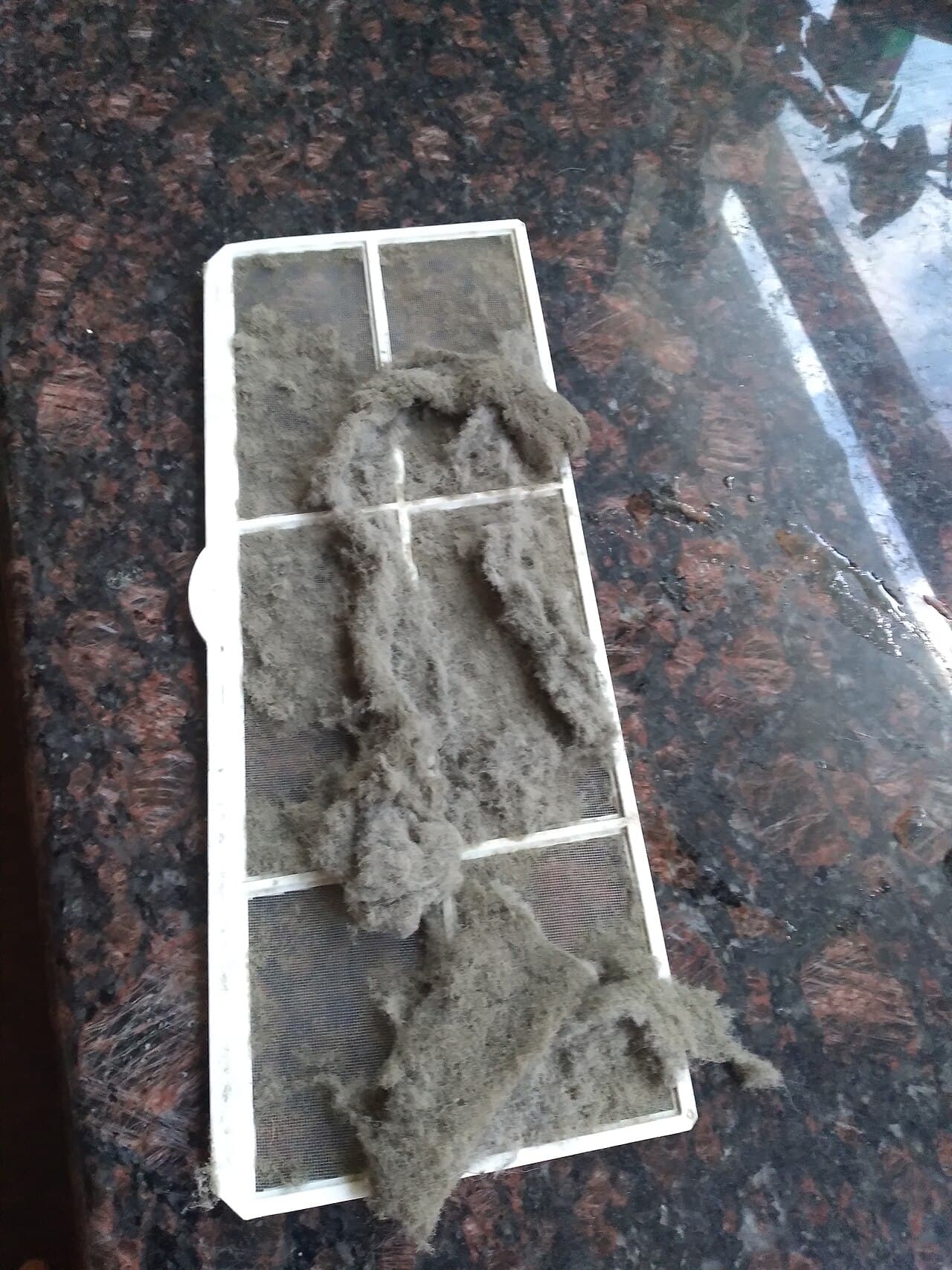
Closed or blocked vents
Closing vents in unused rooms can disrupt the system's airflow balance, and so can heavy furniture, rugs or curtains over supply registers or return vents.[1][3][2] Walk the house and open them all. Airflow problems in the ducts themselves are harder to see. There is no single acceptable static pressure limit for every system; a qualified technician measures total external static pressure against the manufacturer's specifications.[1]
A dirty evaporator coil
Even with regular filter changes, some particles bypass the filter and settle on the evaporator coil, reducing airflow and heat transfer over time.[1] A dirty coil can be a direct result of a dirty or clogged filter.[2] The coil sits inside the air handler or on top of the furnace, out of reach. During an annual tune-up, a technician can inspect the coil and decide whether it needs cleaning.[1]
A blower that is not moving enough air
If the blower motor fails or runs at a reduced speed, it cannot move enough warm air over the evaporator coil to keep it from freezing.[1] You may notice the system humming but feel little or no air coming from the vents.[1] A clean filter and open vents will not help here; the motor or its electrical parts need a technician.
Low refrigerant from a leak
Low refrigerant lowers the pressure and temperature in the evaporator, which can take the coil below 32°F; it is often associated with a refrigerant leak.[1] A leak can be caused by vibration, years of wear and tear, or a frozen evaporator coil itself, and an improper refrigerant charge at installation can also leave the system low.[2] Hissing or bubbling near the refrigerant lines, a unit that runs nonstop, warm air from the vents and a sudden rise in cooling costs are other signs of low refrigerant.[5]
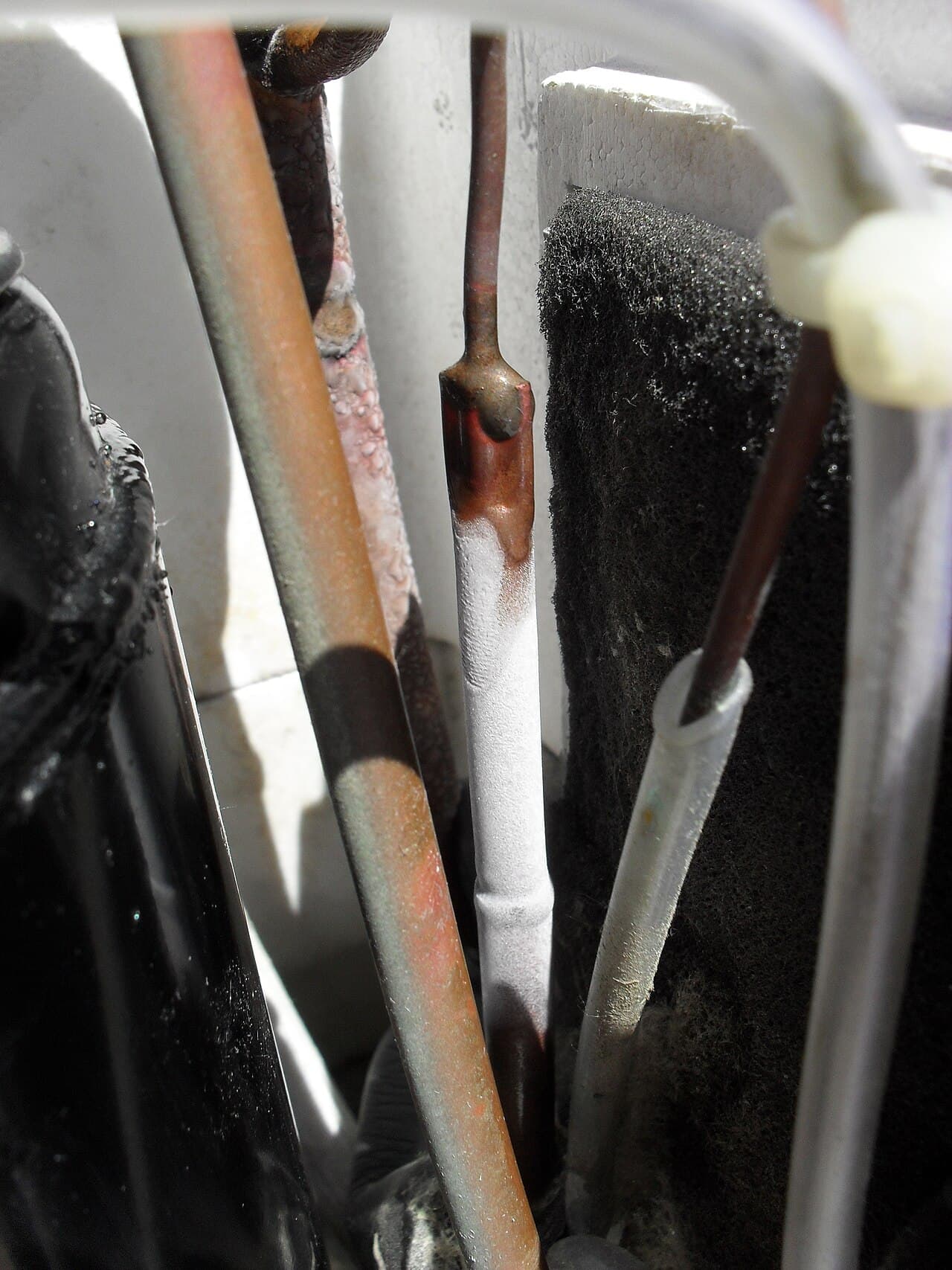
You cannot judge the charge by eye. There is no single refrigerant-pressure reading that applies to every AC system.[1] Section 608 certification is required to recharge an air conditioner, and the EPA asks homeowners to have technicians locate and repair leaks instead of "topping off" a leaking system.[6] More on the signs is in how to know if your AC is low on refrigerant.
Cool weather and the thermostat
Two causes show up in spring and early fall. Running the AC when it is too cool outside, below 60°F, can make it freeze, because the system is designed for warmer temperatures.[3] And if the coil is frozen only in the morning, the thermostat may be to blame: if it does not tell the system to shut down as overnight temperatures fall, the constant running can take the coil below freezing.[2]
Why repeated freezing matters
Each freeze is hard on the equipment. If the system freezes up repeatedly, it can put additional strain on the equipment and potentially shorten the lifespan of the unit.[1] When you see ice, "shut the system off immediately to prevent compressor damage."[4] Then let it thaw fully before trying again; the full routine is in what to do if your AC coil freezes up.
When to call a licensed pro
Call once the filter is clean, the vents are open, it is warm outside, and the coil still freezes. A technician can check refrigerant conditions, test electrical components, measure airflow and static pressure, and inspect the evaporator coil and blower,[1] which covers every cause above that you cannot see. Ask them to tell you the cause in writing, not just what they did.
In Virginia, no individual may work, or offer to work, as a tradesman in heating, ventilation and air conditioning for the public for pay without a licence, unless working under the supervision of a tradesman licensed in that specialty.[7][8] Check a business on DPOR's License Lookup[9] before work starts. For likely prices, see what fixing a frozen AC coil costs in Virginia.
Getting it fixed
Loclis lists DPOR-licensed HVAC businesses with their licence number and class. Find HVAC businesses in Blacksburg, see frozen coil repairs, or browse more HVAC repair answers.
If your coil keeps icing up, describe what it is doing once and licensed local HVAC businesses quote the repair.
Common questions
- Can a dirty filter really freeze an AC coil?
- Yes. A clogged filter cuts the warm air flowing over the coil, and without enough warm air the coil can drop below 32°F and the moisture on it freezes. It is the first thing to check, and one of the causes you can fix yourself.
- Why does my AC freeze up at night?
- Two common reasons: the system is running on a cool night below about 60°F outside, which it is not designed for, or the thermostat is not shutting the system down as the temperature falls, so it runs constantly. A coil that is frozen only in the morning points to the thermostat.
- Does a frozen coil always mean low refrigerant?
- No. Restricted airflow causes it just as often: a dirty filter, closed vents, a dirty coil or a weak blower. If the airflow is fine and the coil still freezes, a technician should check the refrigerant charge and look for a leak.
- Can I keep running the AC if the coil keeps freezing?
- No. Running with ice on the coil strains the compressor, and repeated freezing can shorten the life of the unit. Turn the cooling off, let it thaw, and have it diagnosed rather than restarting it over and over.
- Can a frozen coil cause a refrigerant leak?
- It can. A frozen evaporator coil is one of the things that can cause a leak, along with vibration and years of wear. That is another reason to deal with repeated freezing quickly.
Sources
- [1] Why Does My AC Keep Freezing? Causes & How to Fix It, Bryant Heating & Cooling Systems. Checked October 27, 2026.
- [2] Got a Frozen Evaporator Coil? Don't Panic, American Standard Heating and Air Conditioning. Checked October 27, 2026.
- [3] Why is My AC Unit Freezing Up?, Lennox. Checked October 27, 2026.
- [4] Troubleshoot an Air Conditioner: 6 Steps to Fix an AC Not Working, Carrier. Checked October 27, 2026.
- [5] AC Refrigerant Recharge Pricing Guide, Trane. Checked October 27, 2026.
- [6] Homeowners and Consumers: Frequently Asked Questions, U.S. Environmental Protection Agency. Checked October 27, 2026.
- [7] Va. Code § 54.1-1129, Necessity for licensure, Code of Virginia, Virginia General Assembly. Checked October 27, 2026.
- [8] Va. Code § 54.1-1128, Definitions, Code of Virginia, Virginia General Assembly. Checked October 27, 2026.
- [9] License Lookup, Virginia Department of Professional and Occupational Regulation. Checked October 27, 2026.
Want a pro to handle it?
Describe the job once. Licensed local businesses send quotes, and you pay only when you book one.
Get a quote for HVAC Repair