What should I do if my AC coil freezes up?
Turn the cooling off at the thermostat and, if your system allows it, set the fan to On so moving air helps the ice melt. Do not chip at the ice. Put towels or a pan down for the meltwater, change a dirty filter and open any blocked vents. Restart only once it has fully thawed, and call a licensed HVAC technician if it freezes again.
Free to ask. Local shops send quotes, and you pay only when you book one.
By Kasra Taheri, Founder, LoclisPublished
Researched and drafted with AI, then checked claim by claim against the sources listed below before it was published. Prices and rules change; the dates beside each source say when it was last checked.
This is a job for a licensed pro in Virginia
This page explains what the work involves, the permits, what a licensed pro does and what drives the cost. It does not give step-by-step instructions, because this work needs a licence, a permit or both, and doing it wrong can injure someone. Before you hire, check the licence on Virginia's DPOR record.
An AC coil freezes when the indoor evaporator coil gets too cold, usually because too little warm air is reaching it or the refrigerant charge is low, and the condensation that normally forms on it turns to ice.[1] As ice builds up, it restricts airflow further and makes the problem worse.[1] So the order matters: stop the cooling, let the ice melt, fix any airflow problem you can see, and have a licensed technician find the cause if it comes back.
Signs the coil has frozen
The evaporator coil sits in or on top of the furnace or air handler, so you often notice the effects before the ice. Look for visible ice on the coil or its cabinet, ice on the refrigerant lines outside, warm air from the vents, and puddles of water under the air handler or coil cabinet as it thaws.[2] Gurgling, hissing or buzzing sounds can point to ice buildup or a refrigerant problem.[3]
One exception in winter: if you have a heat pump and the outdoor unit ices up in cold weather, that is normal: the defrost cycle should melt it and return the system to heating.[2] For an outdoor unit that stays caked in ice, read why a heat pump is covered in ice.
Turn the cooling off first
If you see ice, "shut the system off immediately to prevent compressor damage."[4] Running the system while the coil is encased in ice puts heavy strain on the compressor and can end in a complete and costly system failure.[1] Switch the thermostat from Cool to Off.
If your equipment and its manufacturer's instructions allow it, setting the indoor fan to On moves air across the coil and helps it thaw faster.[1][2] The fan setting is on the thermostat; you do not need to open the equipment.
Let the ice melt on its own
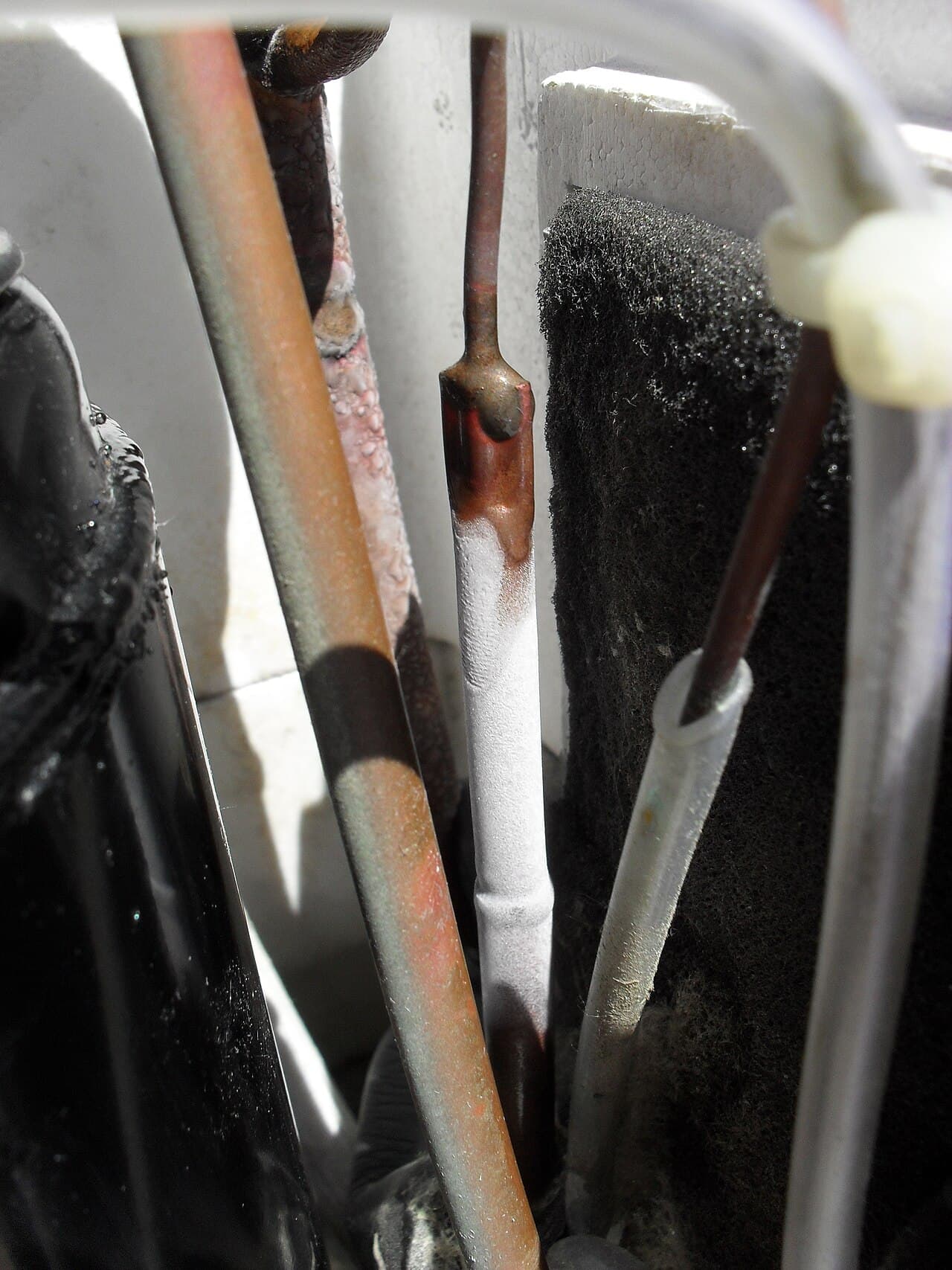
Do not scrape or chip the ice off, because you can damage the coil or the refrigerant tubing.[1] Patience is the repair at this stage. Thawing can take several hours, longer when the ice is heavy, and the AC should not be restarted while significant ice remains on the coil.[1]
Plan for water. A coil fully encased in ice, rather than lightly frosted, can release 1 to 2 gallons of water as it melts.[2] That is more than the drip pan is meant to catch all at once, and the meltwater can overwhelm the condensate drain pan.[1] On a basement floor, old towels soak it up; for a coil in the attic, a plastic tarp, tub or bucket catches the drips.[2] An attic unit needs the closest watch, since an overflow there can reach a ceiling.
Check the airflow while you wait
Poor airflow is the cause you can often find yourself. While the coil thaws, change the air filter if it is dirty, and make sure supply registers and return vents are open and not blocked by furniture, rugs or drapes.[2][3][1] If you are not sure how often your filter should be changed, see how often to change a furnace filter.
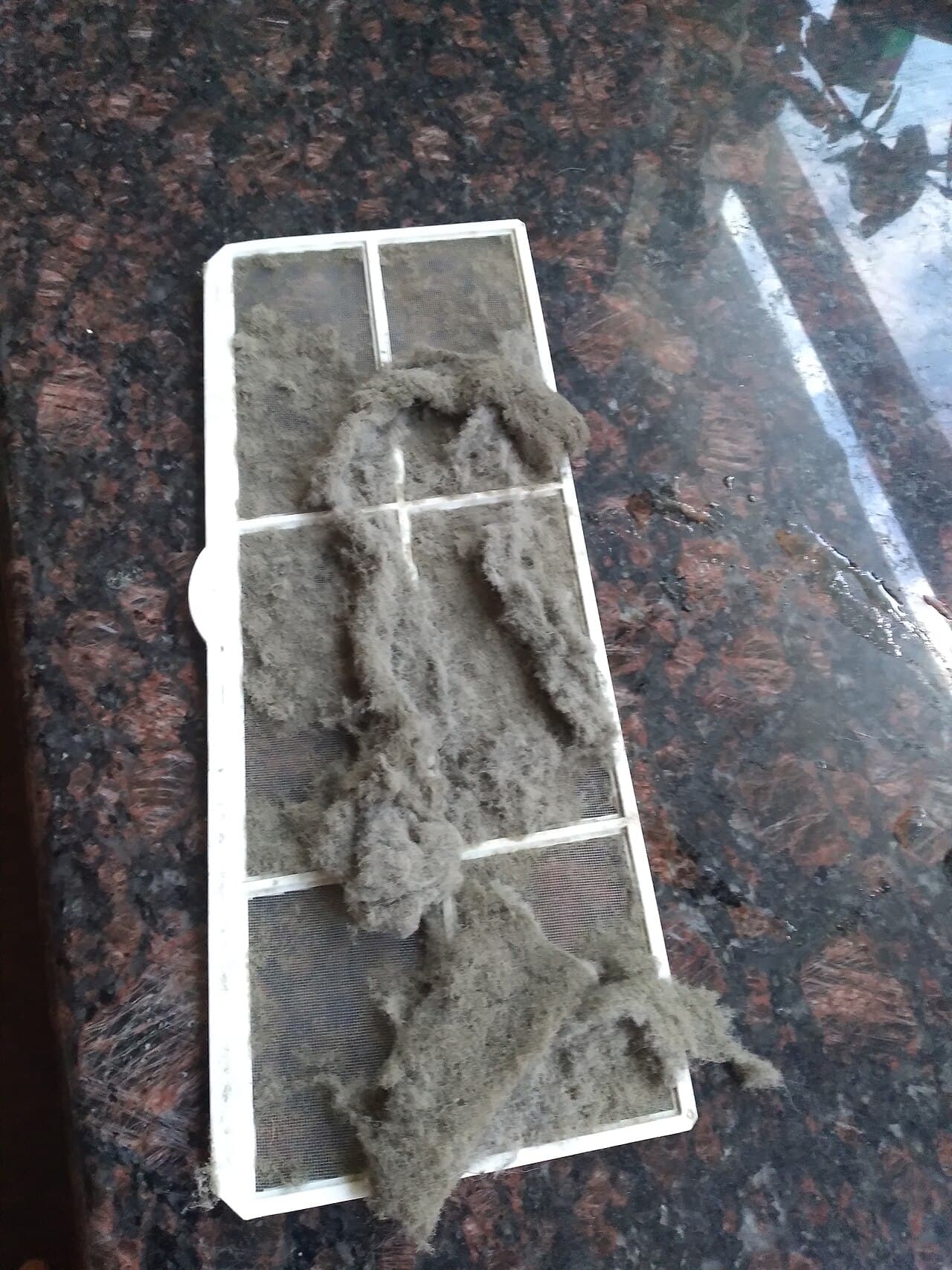
Make a note of what you find: how dirty the filter was, whether the outdoor unit was running, and where the ice was. Telling the technician about the filter, whether the outdoor unit runs and where you saw ice can help them guide you, and may even save a service visit.[4]
If you are going to book a visit, start the thaw as soon as you notice the ice. A technician cannot evaluate the coil and refrigerant lines until the coil has thawed. If it is still frozen when they arrive, they either leave and come back or wait, on the clock, for it to thaw.[2]
Restart only after it has fully thawed
Once the ice has completely melted, cooling can go back on. If the coil freezes again, turn it off and call for service rather than restarting it over and over.[1] A freezing AC does not fix itself: the ice melts while the system is off, but it freezes again once it is back on unless the cause, such as a dirty filter or a refrigerant leak, is fixed.[1] For the full list of causes, read why an AC coil keeps freezing.
What the technician does
A technician can check refrigerant conditions, test electrical components, measure airflow and static pressure, and inspect the evaporator coil and blower.[1] What happens next depends on what they find. If the coil froze because it was dirty, the technician cleans it and tests the system. Some refrigerant leaks can be repaired by brazing the refrigerant lines, but a leak in the indoor coil itself may mean replacing the coil.[2]
If refrigerant is low, adding more is not the fix on its own. Section 608 certification is required to recharge an air conditioner, and the EPA asks homeowners to have technicians locate and repair leaks instead of "topping off" a leaking system.[5] For how leaks are traced, see how a refrigerant leak is found and fixed, and for prices, what fixing a frozen AC coil costs in Virginia.
When to call a licensed pro
Call a technician if the AC freezes again after the filter and vents are sorted, if a refrigerant problem is likely, or if a part such as the blower motor has failed.[1] With a blower fault, you may notice the system humming while little or no air comes from the vents.[1] Call promptly, too, if water from the thaw has reached a ceiling, floor or wiring, or if you hear hissing near the refrigerant lines.
The coil, refrigerant circuit and blower are licensed work. In Virginia, no individual may work, or offer to work, as a tradesman in heating, ventilation and air conditioning for the public for pay without a licence, unless working under the supervision of a tradesman licensed in that specialty.[6][7] Check the business on DPOR's License Lookup[8], and ask whether its technicians are Section 608-certified; you can ask a technician to show the certification card.[5]
Getting it fixed
Loclis lists DPOR-licensed HVAC businesses with their licence number and class. Find HVAC businesses in Blacksburg or another town, see frozen coil repairs, or browse more HVAC repair answers.
If your coil keeps icing up, describe what it is doing once and licensed local HVAC businesses quote the repair.
Common questions
- How long does a frozen AC coil take to thaw?
- Several hours, and longer when the coil is heavily iced. Leave the cooling off until all the ice is gone. If your system allows it, running the indoor fan on its own moves air across the coil and speeds the thaw.
- Can I chip or scrape the ice off to speed it up?
- No. Scraping or chipping can damage the coil's thin fins or the refrigerant tubing, which can turn an airflow problem into a refrigerant leak. Let it melt with the cooling off.
- Will a frozen AC fix itself?
- The ice melts once the cooling is off, but the coil usually freezes again when cooling restarts unless the cause is fixed. A dirty filter or blocked vents you can sort yourself; a refrigerant leak, a dirty coil or a blower fault needs a technician.
- Is a frozen AC coil an emergency?
- Not always, but it can become one if the system shuts down entirely or it happens during extreme heat. Turn the cooling off straight away to protect the compressor, and book a technician quickly if the cause is not a dirty filter or a blocked vent.
- Why is there water around my furnace or air handler after the AC froze?
- It is usually meltwater from the coil. A fully iced coil can release 1 to 2 gallons as it thaws, more than the drain pan may hold. Put towels or a container down, and mention the water to the technician.
Sources
- [1] Why Does My AC Keep Freezing? Causes & How to Fix It, Bryant Heating & Cooling Systems. Checked October 27, 2026.
- [2] Got a Frozen Evaporator Coil? Don't Panic, American Standard Heating and Air Conditioning. Checked October 27, 2026.
- [3] Why is My AC Unit Freezing Up?, Lennox. Checked October 27, 2026.
- [4] Troubleshoot an Air Conditioner: 6 Steps to Fix an AC Not Working, Carrier. Checked October 27, 2026.
- [5] Homeowners and Consumers: Frequently Asked Questions, U.S. Environmental Protection Agency. Checked October 27, 2026.
- [6] Va. Code § 54.1-1129, Necessity for licensure, Code of Virginia, Virginia General Assembly. Checked October 27, 2026.
- [7] Va. Code § 54.1-1128, Definitions, Code of Virginia, Virginia General Assembly. Checked October 27, 2026.
- [8] License Lookup, Virginia Department of Professional and Occupational Regulation. Checked October 27, 2026.
Want a pro to handle it?
Describe the job once. Licensed local businesses send quotes, and you pay only when you book one.
Get a quote for HVAC Repair