How do I keep my AC coil from freezing?
Keep warm air moving across the coil and the refrigerant sealed in. Check the filter monthly in cooling season and change it when dirty, keep supply and return vents open and clear, avoid running the AC when it is below about 60°F outside, and have a licensed technician clean the coil, check the refrigerant and adjust the blower each spring.
Free to ask. Local shops send quotes, and you pay only when you book one.
By Kasra Taheri, Founder, LoclisPublished
Researched and drafted with AI, then checked claim by claim against the sources listed below before it was published. Prices and rules change; the dates beside each source say when it was last checked.
This is a job for a licensed pro in Virginia
This page explains what the work involves, the permits, what a licensed pro does and what drives the cost. It does not give step-by-step instructions, because this work needs a licence, a permit or both, and doing it wrong can injure someone. Before you hire, check the licence on Virginia's DPOR record.
A coil freezes when too little warm air reaches it or the refrigerant charge is low,[1] so prevention comes down to two things: keep air moving across the coil, and keep the refrigerant sealed in. The first is mostly yours, through filters, vents and how you run the system. The second is a licensed technician's, through an annual check-up and fixing leaks properly.
Keep the filter clean
The filter is the cause you control most directly. A clogged filter restricts the warm air flowing over the evaporator coil, and without enough warm air the coil can drop below 32°F and freeze.[1]
ENERGY STAR's advice is to inspect, clean or change air filters once a month in a central air conditioner, furnace or heat pump, and it warns that a dirty filter can increase energy costs and damage the equipment.[4] Virginia Cooperative Extension says to check the filter monthly during peak season.[5] How often you actually change it depends on the filter and the house. A common replacement interval is every 30 to 90 days, depending on the filter type, the home, the system and the manufacturer's recommendations, and homes with pets, smokers or a lot of dust may need more frequent changes.[1]
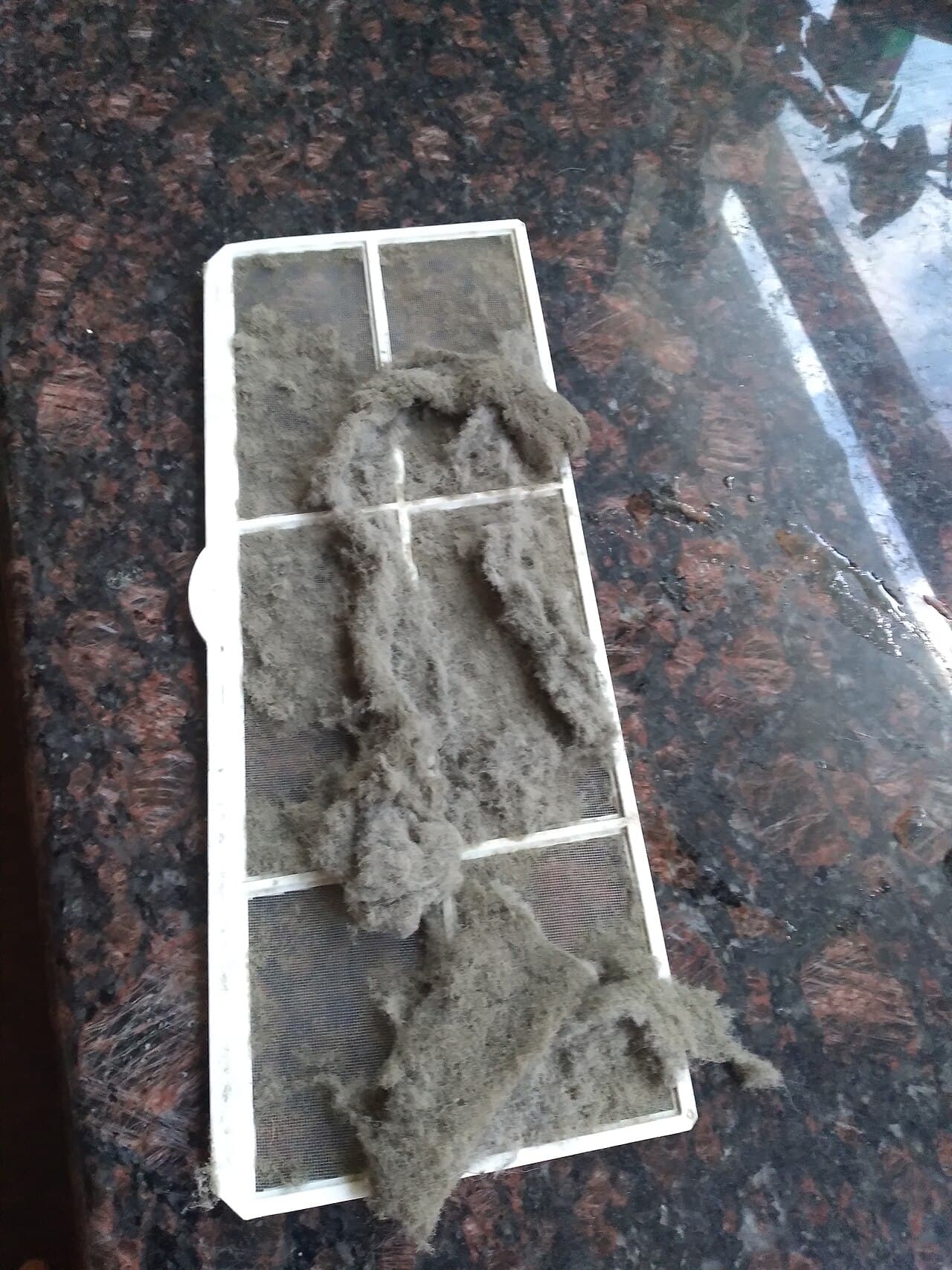
Use the size and type your system's manual calls for. For help choosing one, see what MERV rating filter to use and how often to change a furnace filter. A monthly reminder on your phone makes the check easy to keep up.
Keep the vents and returns open
A central system is set up to move a certain amount of air through the house. Closing vents in unused rooms can disrupt the system's airflow balance and contribute to coil freezing.[1] The fix is simple: keep all supply and return registers open and unobstructed, with furniture, rugs and curtains off them.[1][3][2] Return grilles are easy to hide behind a sofa or a bookcase, so check those too.
Run the AC only when it is warm enough
Air conditioners are built for summer. Running the AC when it is too cool outside, below 60°F, can make it freeze, because the system is designed for warmer temperatures.[3] On spring and fall nights that drop below that, switch to fan only or turn the cooling off rather than leaving it set low overnight.
Watch the thermostat too. A thermostat that does not tell the system to shut down as overnight temperatures fall can keep it running until the coil drops below freezing; a coil frozen only in the morning points that way.[2] If you see that pattern, have the thermostat checked at the next visit.
Book an annual check-up in spring
ENERGY STAR recommends an annual pre-season check-up by a contractor, with the cooling system checked in the spring because contractors get busy once summer comes.[4] Several items on its checklist bear directly on freezing:
- Cleaning the evaporator and condenser coils, because dirty coils reduce the system's ability to cool the home and make it run longer.[4]
- Checking the refrigerant level and adjusting it if necessary, because too much or too little refrigerant makes the system less efficient and shortens its life.[4]
- Cleaning and adjusting the blower components for proper airflow; airflow problems can reduce a system's efficiency by up to 15 percent.[4]
- Checking the condensate drain, because a plugged drain can cause water damage in the house and affect indoor humidity.[4]
Coil cleaning matters even if you are good about filters. Even with regular filter changes, some particles bypass the filter and settle on the evaporator coil.[1] If you are replacing equipment, Virginia Cooperative Extension's advice is practical: "Make sure the inside coil can be reached for its annual cleaning."[5] For prices and whether a plan is worth it, see what an HVAC tune-up costs in Virginia and whether HVAC maintenance plans are worth it.
Fix leaks instead of topping off
Major leaks rarely develop in properly installed and regularly maintained units.[7] If your air conditioner leaks, the EPA advises asking the technician to locate and repair the leak instead of "topping it off."[7] A topped-off system that is still leaking is likely to run low and freeze again.
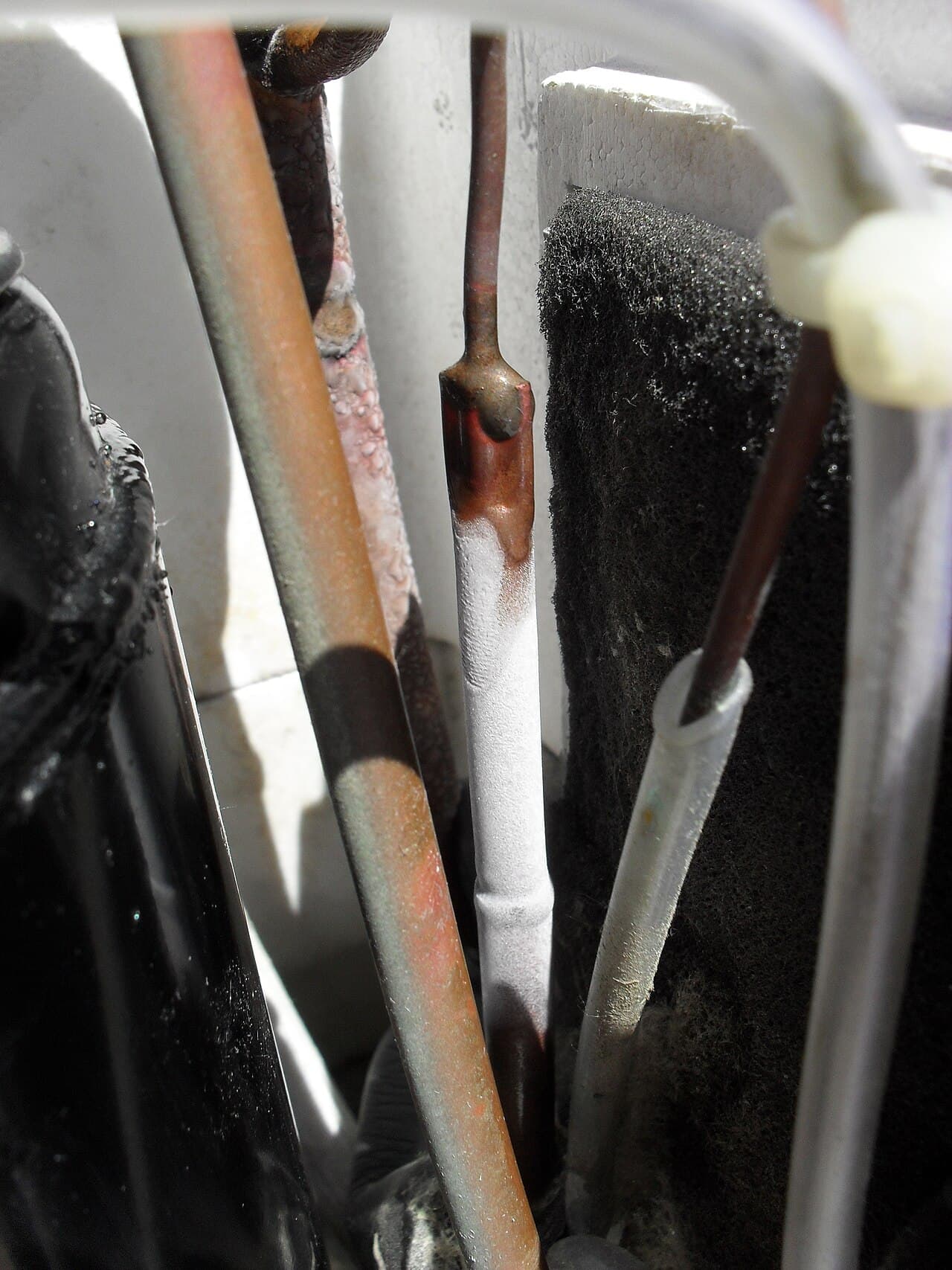
Freezing and leaks feed each other. A leak can be caused by vibration, years of wear and tear, or a frozen evaporator coil itself,[2] so letting a coil freeze again and again can create the leak that keeps it freezing. Installation matters too: an improper refrigerant charge at installation can also leave the system low enough to freeze.[2] When you hire for a new system, a good contractor inspects the duct system and measures airflow to make sure it meets the manufacturer's specifications.[6] Ask for those readings in writing. For how leaks are traced, see how a refrigerant leak is found and fixed.
When to call a licensed pro
Call when the coil freezes even with a clean filter, open vents and warm weather, or when it has frozen more than once this season. If the system freezes up repeatedly, it can put additional strain on the equipment and potentially shorten the lifespan of the unit.[1] In the meantime, follow what to do if your AC coil freezes up, and read why an AC coil keeps freezing to narrow the cause.
The coil, the refrigerant and the blower are licensed work. In Virginia, no individual may work, or offer to work, as a tradesman in heating, ventilation and air conditioning for the public for pay without a licence, unless working under the supervision of a tradesman licensed in that specialty.[8][9] Check a business on DPOR's License Lookup[10] before you book.
Getting it fixed
Loclis lists DPOR-licensed HVAC businesses with their licence number and class. Find HVAC businesses in Blacksburg, see HVAC services, or browse more HVAC repair answers.
If your coil has already frozen, describe what it is doing once and licensed local HVAC businesses quote the repair.
Common questions
- How often should I change my filter to stop the coil freezing?
- Check it every month during cooling season and change it when it looks dirty. A common replacement interval is every 30 to 90 days, sooner in homes with pets, smokers or a lot of dust. Follow your system's manual for the right size and type.
- Is it fine to close vents in rooms I do not use?
- It is better not to. Central systems are designed to move a set amount of air through a set number of vents, and closing registers can upset that balance and help the coil freeze. If you want different temperatures in different rooms, ask an HVAC contractor about zoning.
- Should I run the AC on cool nights?
- Avoid it when it is below about 60°F outside. Air conditioners are designed for warmer weather, and running one on a cool night can make the coil freeze. Switch to fan or off, or open windows instead.
- Do I need a yearly AC tune-up?
- ENERGY STAR recommends an annual check-up before the cooling season. For a coil that freezes, the useful parts are the coil cleaning, the refrigerant check and the blower adjustment, which are a technician's work.
- Can I clean the indoor evaporator coil myself?
- The indoor coil sits inside the air handler or on top of the furnace, next to the refrigerant lines and the blower, so its cleaning is normally part of a technician's service visit. What you can do is keep the filter clean, which keeps dust off the coil in the first place.
Sources
- [1] Why Does My AC Keep Freezing? Causes & How to Fix It, Bryant Heating & Cooling Systems. Checked October 27, 2026.
- [2] Got a Frozen Evaporator Coil? Don't Panic, American Standard Heating and Air Conditioning. Checked October 27, 2026.
- [3] Why is My AC Unit Freezing Up?, Lennox. Checked October 27, 2026.
- [4] Maintenance Checklist, ENERGY STAR, U.S. Environmental Protection Agency. Checked October 27, 2026.
- [5] ENERGY SERIES: What about the Air Conditioning System? (publication 2901-9001), Virginia Cooperative Extension, Virginia Tech. Checked October 27, 2026.
- [6] 10 Tips for Hiring a Heating and Cooling Contractor, ENERGY STAR, U.S. Environmental Protection Agency. Checked October 27, 2026.
- [7] Homeowners and Consumers: Frequently Asked Questions, U.S. Environmental Protection Agency. Checked October 27, 2026.
- [8] Va. Code § 54.1-1129, Necessity for licensure, Code of Virginia, Virginia General Assembly. Checked October 27, 2026.
- [9] Va. Code § 54.1-1128, Definitions, Code of Virginia, Virginia General Assembly. Checked October 27, 2026.
- [10] License Lookup, Virginia Department of Professional and Occupational Regulation. Checked October 27, 2026.
Want a pro to handle it?
Describe the job once. Licensed local businesses send quotes, and you pay only when you book one.
Get a quote for HVAC Repair