Why does my concrete sealer look white or cloudy?
Usually because the sealer went on too thick, went onto damp concrete, or dried in weather that was too cool or humid for it. A solvent-based acrylic turns white when moisture is trapped under it; a water-based one dries milky if it cannot form a film. White, powdery deposits can also be efflorescence, salts carried up by water, which is a different fix.
Free to ask. Local shops send quotes, and you pay only when you book one.
By Kasra Taheri, Founder, LoclisUpdated
Researched and drafted with AI, then checked claim by claim against the sources listed below before it was published. Prices and rules change; the dates beside each source say when it was last checked.
Step by step
Read when to stop and call a pro, further down this page, before you start.
Step 1: Find out which sealer it is
Check receipts, the can or the installer for the product name, and whether it is solvent-based or water-based, because the causes and fixes differ.[1]
Step 2: Look at the white closely
Efflorescence is a deposit of soluble salts left on the surface by water moving through the concrete,[7] so white on bare concrete may not be the sealer; a milky look within the film itself points to the sealer.
Step 3: Think back to the day it went on
Note whether the slab had been washed or rained on, how many coats went on, and whether it was cool, damp or humid.
Step 4: Give a recent haze some dry weather
If it was sealed in the last few days in damp weather, let it have a few dry days before you decide on stripping or solvents.
Step 5: Do not add more sealer
Another coat over a white film adds to the build-up that caused it; for over-applied INCRETE Clear Seal the instruction is "Do not apply additional sealer."[2]
Step 7: Reseal only when the slab is clean and dry
Let it dry for as long as the label asks, such as the 24 hours after rain or other moisture that Baracade Silane 40 WB calls for, and use the label's coverage rate so the new coat stays thin.[5]
A concrete sealer usually looks white or cloudy for one of three reasons: it went on too thick, it went onto concrete that was still damp, or it dried in weather too cool or humid for it. In all three, the film has trapped moisture or never formed properly. A white deposit can also be efflorescence, which comes from the concrete, not the sealer.
Solvent-based sealer that turned white
The most common concrete sealers are acrylics,[1] including most glossy "wet look" products. There are two key causes of "blushing", or whitening, of a solvent-based sealer.[1]
Damp concrete. The first is applying it to concrete that is wet, or to fresh concrete that still has bleed water in it.[1] Then the sealer does not bond and instead floats on a trapped film of water.[1] That can happen when a slab is sealed the morning after a wash, after a night of dew, or in shade that never quite dried.
Too much sealer. The second is thickness. Heavy coats, or sealer built up over years of reapplying, trap moisture underneath until the sealer loses its grip on the concrete.[1] The trapped moisture and air make the debonded film look white, and in time it peels or flakes.[1] It takes very little to be "too much": at a typical coverage rate of 300 square feet per gallon, one coat of acrylic sealer is only about 5 mils thick when wet and about 2 mils when dry.[1] Puddles matter too. On INCRETE Clear Seal, letting the product puddle can lead to bubbling and discoloration.[2]
Water-based sealer that dried milky
Water-based acrylics dry differently. The water and then a coalescing solvent evaporate, fusing the acrylic into a film. If it is too cool or too humid while it dries, the coalescing solvent evaporates before the water does, and the sealer dries white or powdery.[1]
Product limits show how narrow the window can be. INCRETE Clear Seal Water-Base, for example, may turn milky with heavy applications, cool or cold weather, or prolonged exposure to moisture,[3] and its application range is 45 to 95 °F with no rain or heavy fog likely within 8 to 12 hours.[3] A coat put down on an evening that turns foggy can dry milky.
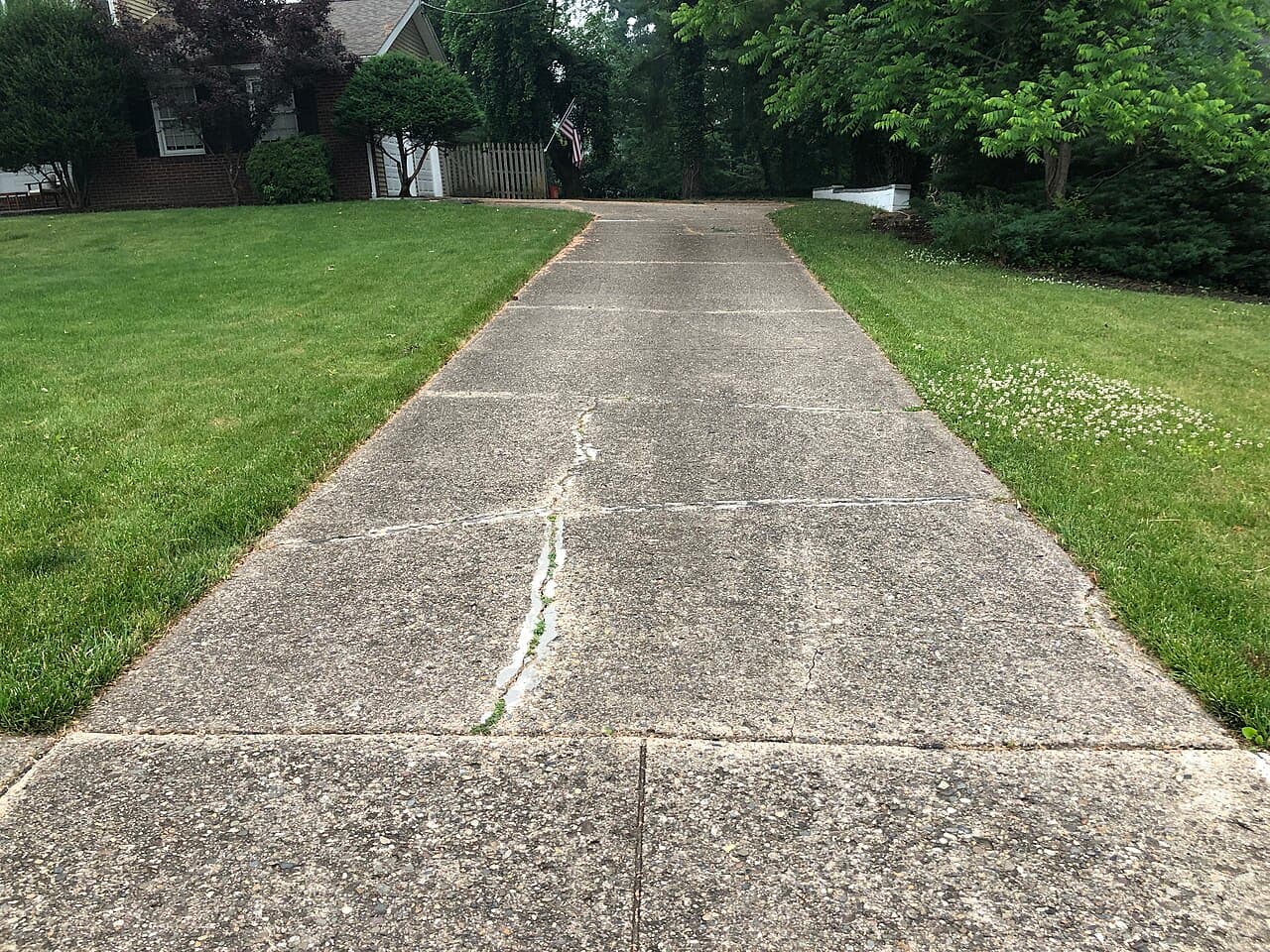
When it is not the sealer: efflorescence
Efflorescence is "the deposition of soluble salts on the surface of the concrete as a result of water migration".[7] Because it comes from water moving through the slab, it can show up on bare concrete as well as sealed. The lasting fix is to deal with the water source where you can, then clean off the salts.
Cleaning it off with acid is a job to hire out. EUCO R&E CLEANER, an acidic cleaner that removes both primary and secondary efflorescence, contains phosphoric acid and is for professional use only.[4] Prolonged exposure causes skin irritation, and the work calls for acid-resistant equipment, rubber gloves and eye protection.[4] The salts also have to be dealt with before any new sealer goes on: INCRETE Clear Seal Water-Base, for one, asks for a surface free of efflorescence before it goes on.[3]
How it gets fixed
On a solvent-based acrylic that went on too thick, a contractor may find that scrubbing it with a solvent such as xylene turns the sealer back into a liquid so the excess can be wiped off,[2] and no additional sealer is applied.[2] That is the fix given for INCRETE Clear Seal, a product for professional use only.[2] Xylenes are highly flammable,[8] and breathing high levels of xylene vapour for a short time can cause nose and throat discomfort, headaches and dizziness and make you feel intoxicated.[8] Leave this to a contractor who works with the sealer's maker's instructions.
On a film that has let go and is peeling, the old sealer usually has to come off before anything new goes on. For INCRETE Clear Seal, old coatings are removed with a stripper such as INCRETE UNI-STRIPP,[2] and the concrete is cleaned and dried before resealing.
What not to do is add a coat on top. More sealer means more thickness, and for over-applied INCRETE Clear Seal the instruction is plain: "Do not apply additional sealer."[2]
How to avoid it next time
Seal only when the slab has dried after washing or rain for as long as the label asks, in the temperature range on the label, with a dry night ahead. Measure the area and use the label's coverage rate so the coat stays thin. On plain concrete, a penetrating sealer such as Baracade WB 244 is non film-forming,[6] so there is no surface film to turn white. See how to seal a concrete driveway and how often concrete should be sealed.
Stop and call a pro if
- The white film is peeling, flaking or covers most of the surface, which means stripping, not touch-up.
- The fix calls for xylene, another solvent or an acid cleaner. The xylene fix is given for a sealer marked for professional use only, the acid cleaner is marked the same way,[2][4] and xylene is highly flammable.[8]
- It is stamped or colored concrete, where stripping can damage the color.
- The white keeps coming back after cleaning, a sign water is moving through the slab from below or from a drainage problem.
- The concrete under the sealer is flaking or scaling; see why concrete spalls.
Getting help in Virginia
Loclis lists DPOR-licensed businesses with their licence number and class. Browse concrete sealing and resurfacing, look up concrete contractors in Blacksburg, or read more concrete and hardscaping answers.
Describe the cloudy sealer once and licensed local concrete businesses quote the fix.
Common questions
- Will white sealer clear up on its own?
- Do not count on it. A film that is white because it has lifted off the concrete tends to peel or flake over time and usually has to come off. A haze on a coat put down in the last few days is worth watching through a dry spell before you strip anything, because stripping is a bigger job than waiting.
- Can I fix cloudy sealer with xylene?
- On some solvent-based acrylics, a contractor can scrub the sealer with a solvent such as xylene so it turns back into a liquid and the excess can be wiped off, adding no new sealer. That fix is given for INCRETE Clear Seal, which is for professional use only. Xylenes are highly flammable, and breathing high levels of the vapour can cause headaches and dizziness, so hire this out.
- How do I tell sealer haze from efflorescence?
- Efflorescence is a deposit of soluble salts brought to the surface by water moving through the concrete, so it can appear on unsealed concrete too. White on bare concrete, or sitting on top of the sealer, points to efflorescence; a film that looks milky in itself points to the sealer. If you cannot tell, have a contractor look before anything is stripped or acid-cleaned.
- Why did only part of my driveway turn white?
- The patches often line up with where the problem was: low spots where sealer pooled, shaded areas that were still damp, or a second pass that overlapped the first. Heavy coats trap moisture, so the thickest spots tend to go white first.
- Should I put another coat on to even it out?
- No. More sealer adds thickness, which is one of the main causes of whitening. Fix or remove the white film first, then reseal at the label's coverage rate when the slab is clean and dry.
Sources
- [1] Diagnosing 5 Common Concrete Sealer Problems, The Euclid Chemical Company. Checked October 26, 2026.
- [2] INCRETE CLEAR SEAL technical data sheet, The Euclid Chemical Company. Checked October 26, 2026.
- [3] INCRETE CLEAR SEAL WATER-BASE technical data sheet, The Euclid Chemical Company. Checked October 26, 2026.
- [4] EUCO R&E CLEANER technical data sheet, The Euclid Chemical Company. Checked October 26, 2026.
- [5] BARACADE SILANE 40 WB technical data sheet, The Euclid Chemical Company. Checked October 26, 2026.
- [6] BARACADE WB 244 technical data sheet, The Euclid Chemical Company. Checked October 26, 2026.
- [7] Preservation Brief 15: Preservation of Historic Concrete, National Park Service, U.S. Department of the Interior. Checked October 26, 2026.
- [8] ToxFAQs for Xylenes, Agency for Toxic Substances and Disease Registry, U.S. Centers for Disease Control and Prevention. Checked October 27, 2026.
Want a pro to handle it?
Describe the job once. Licensed local businesses send quotes, and you pay only when you book one.
Get a quote from a local pro