How often should concrete be sealed?
Reseal when the concrete tells you to, not on a calendar: when water stops beading and soaks in, darkening the surface. Euclid's penetrating sealers usually go at least five years before that happens. Film sealers vary by product, so follow the label, and sealing more often than needed builds up a film that can whiten and peel.
Free to ask. Local shops send quotes, and you pay only when you book one.
By Kasra Taheri, Founder, LoclisUpdated
Researched and drafted with AI, then checked claim by claim against the sources listed below before it was published. Prices and rules change; the dates beside each source say when it was last checked.
Step by step
Read when to stop and call a pro, further down this page, before you start.
Step 1: Do a water test once a year
Sprinkle water on the busiest and the least-used parts of the slab; beading means the sealer is working, soaking in and darkening means it is wearing out.[1]
Step 2: Compare high- and low-traffic areas
Tire paths and the area by the garage usually wear first, so test them separately from the edges.
Step 3: Clean it gently between reseals
For spot cleaning, use a mild detergent made for concrete and try it on a small hidden area first.[1]
Step 4: Keep records
Write down the product name and the date each time the concrete is sealed, so you or a contractor know what is on it next time.
Step 5: Reseal only when the test says so
When water soaks in across the surface, plan a reseal for a dry spell within the label's temperature range, with no rain or heavy dew expected for 24 hours.[6]
Step 6: Keep the new coat thin
Clean and dry the slab, then apply at the label's coverage rate; on INCRETE Clear Seal, too many coats over time can cause whitening and peeling.[2]
Seal concrete when it needs it, not on a fixed schedule. The test is simple: sprinkle water on it. If it beads, the sealer is still working. If it soaks in and darkens the surface, it is time. For a good penetrating sealer on a driveway, that can take five years or more; film sealers vary by product.
As needed, not by the calendar
The signal to reseal is the surface, not the date. For Euclid's Baracade, Euco-Guard and Chemstop penetrating sealers, re-application is not typically needed until the surface is readily darkening and absorbing water again, or is not beading water.[1]
Sealing too often is its own problem. On INCRETE Clear Seal, thick applications, too many successive coats, or multiple coats over time can cause bubbling, whitening, peeling and ultimate failure.[2] On solvent-based sealers generally, a build-up of sealer applied numerous times over the years can trap moisture until the sealer loses its bond, turns white and in time peels or flakes off.[4] That is why sealing every year is usually a mistake with a penetrating sealer, or with a film sealer whose label does not call for frequent maintenance coats. Some labels do call for them, and INCRETE Clear Seal Water-Base is one that does, with a light maintenance coat every 1 to 2 years.[3] Follow your product's label rather than a habit. If yours has already gone cloudy, see why concrete sealer looks white or cloudy.
How long each type tends to last
Penetrating sealers (silane, siloxane). These soak in rather than forming a surface film. For Euclid's lines, re-application usually does not happen for at least 5 years after application, sometimes longer,[1] and concrete treated this way does not typically require regular cleaning or maintenance.[1] They do wear out eventually; of clear penetrating sealers: "Once applied, these sealers will require periodic re-application."[5]
Film sealers (acrylic and similar). These form a film on the surface, and how long it lasts varies by product. On INCRETE Clear Seal, a 100% acrylic, the surface typically begins to dull after 3 to 4 years of extensive use, and an additional coat restores the original luster.[2] INCRETE Clear Seal Water-Base, a film-forming cure and seal, recommends a light maintenance coat every 1 to 2 years, depending on the concrete's exposure to traffic, abrasion and weathering.[3] Check the data sheet for the product on your concrete.
The yearly check
Sprinkle water on the tire paths, the area in front of the garage, and an edge that gets little traffic. Busy areas usually wear first. If the water is absorbed, the surface is porous enough to accept more penetrating sealer.[6]
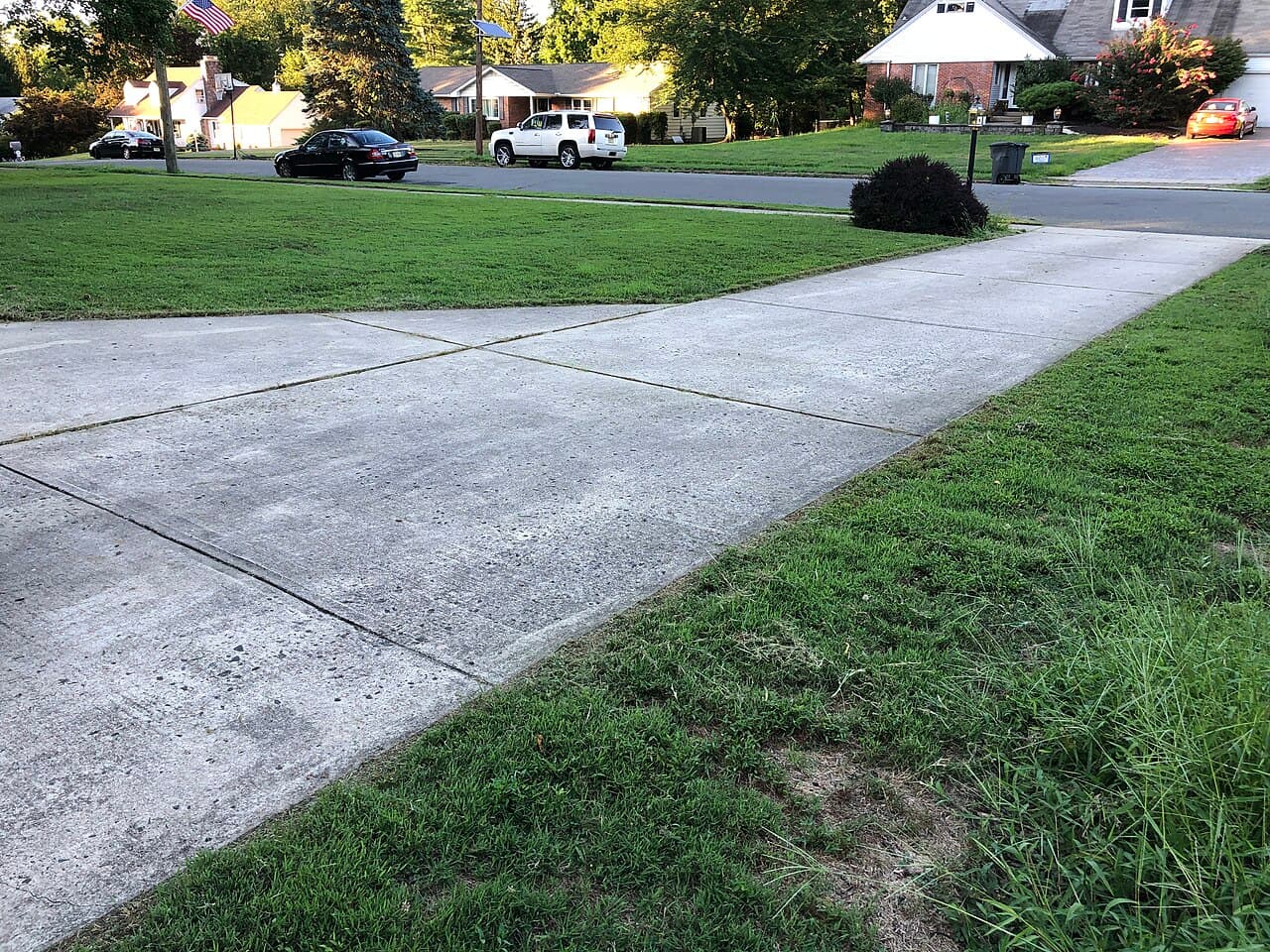
Also look for flaking, scaling and new cracks. Those are concrete problems, not sealer problems, and they need repair before any reseal. See why concrete spalls and how to fix cracks in a concrete driveway.
New concrete: wait, then protect it
Do not seal fresh concrete straight away unless the product is a cure-and-seal meant for that. Penetrating sealers need cured concrete: Quikrete's waterproofing sealer asks for a minimum of 30 days,[6] and Baracade WB 244 asks for at least 7 days and says the longer the concrete cures, the better the sealer performs.[7]
The first winter deserves care too. For deicers and other winter care, see how to keep concrete from cracking in winter.
When to reseal in Virginia
Pick a dry, mild stretch that fits the label. Quikrete's waterproofing sealer, for example, needs air and surface temperatures of 50 to 90 °F, with no rain, heavy dew or temperatures below 50 °F expected within 24 hours.[6] Sealing before freezing weather sets in lets the coat cure before the first salt goes down. How to seal a concrete driveway covers the work.
Stop and call a pro if
- The old sealer is white, peeling or flaking over large areas and has to be stripped.
- The surface is scaling or spalling, which needs repair before sealing.
- Cracks are widening or the slab has sunk or heaved.
- It is stamped or colored concrete and you do not know which sealer is on it.
Getting help in Virginia
Loclis lists DPOR-licensed businesses with their licence number and class. Browse concrete sealing and resurfacing, look up concrete contractors in Blacksburg, read more concrete and hardscaping answers, or see what concrete sealing costs in Virginia.
Describe the reseal once and licensed local concrete businesses quote it.
Common questions
- Should I seal my driveway every year?
- Usually not, unless your product's label calls for it. A penetrating sealer that still beads water does not need another coat yet. Some film sealers do ask for frequent upkeep, such as INCRETE Clear Seal Water-Base with a light maintenance coat every 1 to 2 years; on others, extra coats build up over the years into a film that can turn white and peel. A yearly water test and the label tell you whether a reseal is due.
- How long does a penetrating sealer last?
- Euclid's penetrating water repellents usually do not need re-applying for at least 5 years after application, and sometimes longer, depending on exposure to chemicals, weather and abrasion. The sign it is time is a surface that darkens and soaks up water instead of beading it.
- How long does a film sealer last?
- It varies by product. On INCRETE Clear Seal, a 100% acrylic, the surface typically begins to dull after 3 to 4 years of extensive use, and another coat restores the luster. INCRETE Clear Seal Water-Base recommends a light maintenance coat every 1 to 2 years, depending on traffic, abrasion and weathering. Check your product's data sheet.
- When should I first seal new concrete?
- After it has cured for the time your sealer's label gives, from a week to a month or more depending on the product. Check the label for the cure time, and if the concrete is under a builder's warranty, ask the contractor what they recommend.
- What time of year suits sealing in Virginia?
- Any dry, mild stretch that fits the label. Quikrete's waterproofing sealer, for example, needs air and surface temperatures of 50 to 90 °F, with no rain, heavy dew or temperatures below 50 °F expected within 24 hours. Sealing before freezing weather sets in lets the coat cure before the first salt goes down.
Sources
- [1] Penetrating Water Repellent Sealer Maintenance Procedures, The Euclid Chemical Company. Checked October 26, 2026.
- [2] INCRETE CLEAR SEAL technical data sheet, The Euclid Chemical Company. Checked October 26, 2026.
- [3] INCRETE CLEAR SEAL WATER-BASE technical data sheet, The Euclid Chemical Company. Checked October 26, 2026.
- [4] Diagnosing 5 Common Concrete Sealer Problems, The Euclid Chemical Company. Checked October 26, 2026.
- [5] Preservation Brief 15: Preservation of Historic Concrete, National Park Service, U.S. Department of the Interior. Checked October 26, 2026.
- [6] Concrete & Masonry Waterproofing Sealer (No. 8800-05) data sheet, The Quikrete Companies. Checked October 26, 2026.
- [7] BARACADE WB 244 technical data sheet, The Euclid Chemical Company. Checked October 26, 2026.
Want a pro to handle it?
Describe the job once. Licensed local businesses send quotes, and you pay only when you book one.
Get a quote from a local pro