Should I seal concrete myself or hire someone?
Seal it yourself if the concrete is sound, has no old coating and you are using a water-based penetrating sealer; some, such as Quikrete's waterproofing sealer, go on with a roller or garden sprayer. Hire a licensed contractor for old sealer that is white or peeling, a glossy film finish, solvent-based or professional-only products, or a surface that is flaking or cracking.
Free to ask. Local shops send quotes, and you pay only when you book one.
By Kasra Taheri, Founder, LoclisUpdated
Researched and drafted with AI, then checked claim by claim against the sources listed below before it was published. Prices and rules change; the dates beside each source say when it was last checked.
Step by step
Read when to stop and call a pro, further down this page, before you start.
Step 1: Look at the surface
Check for flaking, scaling, wide or growing cracks and sunken sections; any of these means repair comes before sealing.
Step 2: Find out what is on it now
Drip water on the slab; if it soaks in, bare or worn concrete can take a penetrating sealer, and if it beads or the surface is glossy, something is already there.[4]
Step 3: Read the label of the sealer you would use
Check the temperature range, dry time, coverage and safety section; a product marked for professional use only is a sign to hire.[5]
Step 4: Be honest about time and weather
Plan for a day to clean and dry, a dry forecast, and keeping cars off until the next day.
Step 5: If you hire, check the licence
Look the business up on DPOR's licence lookup; a licence number on a card or advert does not necessarily mean the licence is valid.[1]
Step 6: Get at least three written bids
Ask each bidder to price the same area, product and number of coats so you can compare them.[1]
Step 7: Sign a full written contract
Make sure it lists the scope, product, price and payment schedule, and keep the deposit to 10% or $1,000, whichever is less.[1]
Seal it yourself when the concrete is plain, sound and bare, and the product is a water-based penetrating sealer. Hire a licensed contractor when the surface already has a coating that is failing, you want a glossy film finish, the concrete needs repair, or the job calls for a solvent-based or professional-only product. The deciding question is not skill so much as how hard a mistake would be to undo.
When doing it yourself makes sense
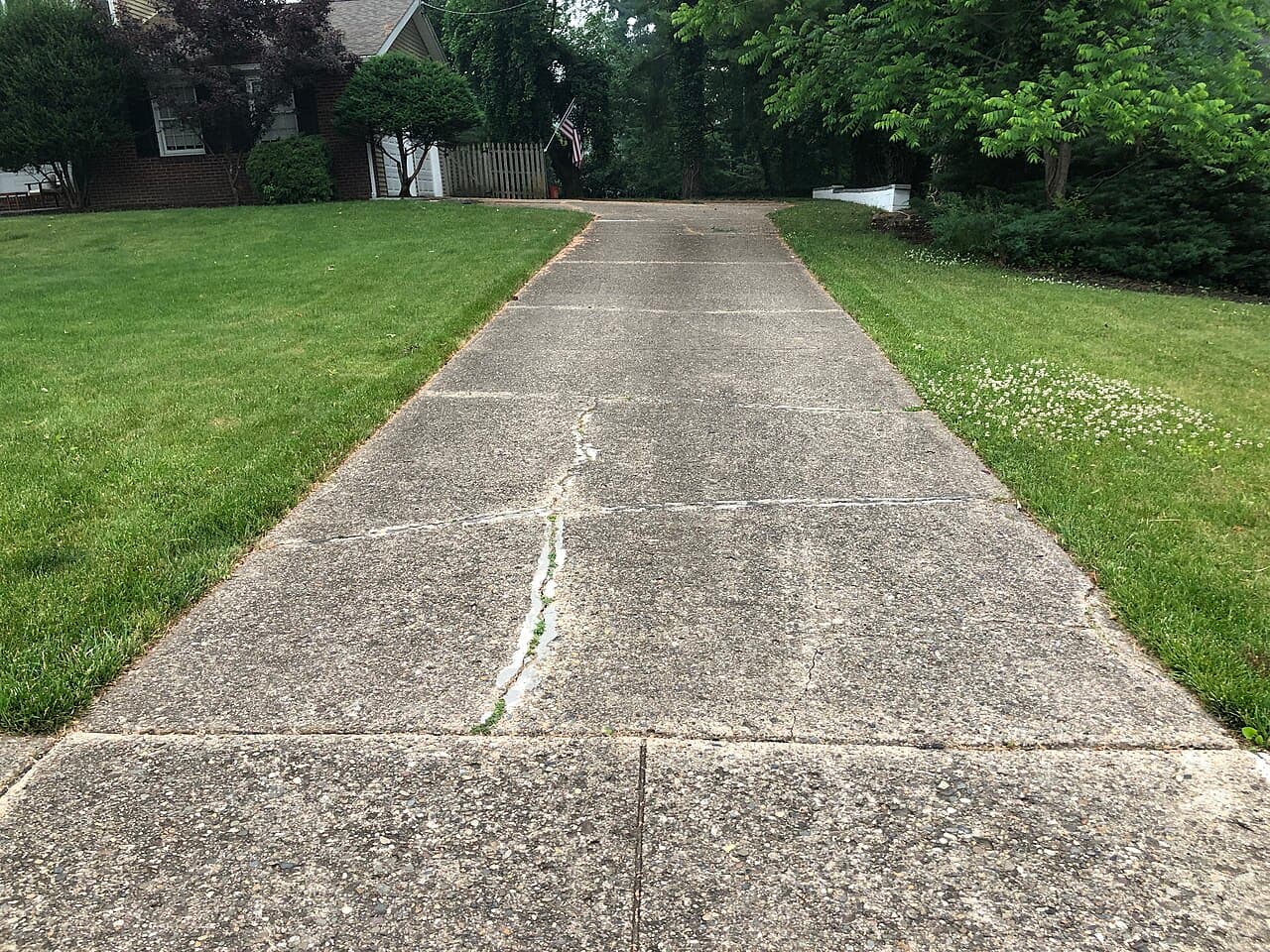
A plain broom-finished driveway, walk or garage apron in good shape is a fair DIY job. Quikrete's Concrete & Masonry Waterproofing Sealer, for example, is ready to use, can be applied with a roller, brush or a garden sprayer and cleans up with warm, soapy water.[4] It is a non-film-forming, penetrating sealer,[4] so there is no glossy film to bubble or peel.
A quick test tells you whether the slab is a candidate. Drip a little water on a few spots: if it soaks in, bare or worn concrete can take a penetrating sealer.[4] If it beads and the surface looks glossy, something is already on it, and that changes the job.
What DIY really takes is patience: cleaning, degreasing and filling cracks, waiting for the slab to dry, a dry forecast, and keeping cars off afterward. How to seal a concrete driveway walks through it.
When to hire instead
A glossy film on decorative concrete. Stamped, stained or exposed-aggregate concrete does not rule out DIY on its own: Quikrete's waterproofing sealer is "particularly suitable for decorative, stained or exposed-aggregate concrete".[4] Hiring makes more sense when the slab already wears a glossy acrylic film or you want that darker look. Most acrylic sealers darken concrete and leave some gloss, and the color after sealing is hard to predict,[6] so a heavy or uneven coat shows. If you want the color to stay much as it is, use a penetrating water repellent, or try a film-forming sealer on a small test patch first.[6] See how to clean and reseal stamped concrete for what that work involves.
Old sealer that is failing. On a solvent-based sealer, heavy coats or a build-up of coats over the years can trap moisture until the sealer turns white and later peels or flakes off.[6] A film like that usually has to come off before anything new goes on; for INCRETE Clear Seal, old coatings come off with a stripper such as INCRETE UNI-STRIPP.[5]
Solvent-based and professional products. INCRETE Clear Seal, an acrylic cure and seal whose tools are cleaned with solvents such as xylene,[5] is for professional use only,[5] and is to be used with adequate ventilation and kept away from all sources of ignition.[5] With it, thick coats, too many coats or multiple coats over time can cause bubbling, whitening, peeling and failure.[5]
Damaged concrete. Flaking, scaling, sinking or cracks that keep growing need repair first; sealing over them wastes the sealer. See should you repair or replace cracked concrete.
Hiring someone in Virginia
Licensing. DPOR's consumer guide says a valid Virginia contractor licence is required for work valued at $1,000 or more.[1] The Code of Virginia sorts contractors into classes by the value of a single job and by their total work in any 12-month period: the smallest licence class, Class C, covers single jobs of more than $1,000 but less than $30,000, and Class B starts at $250,000 or more of work in 12 months.[2] So ask every bidder for a licence number, whatever the size of your job. The Board for Contractors' concrete specialty (CEM) covers "finishing, coloring, curing, repairing, testing, sawing, grinding, grouting, placing of film barriers, sealing, and waterproofing", and the Board's rules say the CBC, RBC and H/H classifications also provide for that work.[3]
Checking. A licence number in an advert or on a business card does not necessarily mean the licence is valid,[1] so look it up yourself. If you hire someone unlicensed, the Board for Contractors may not be able to help you resolve a complaint.[1]
The contract. Virginia law requires licensed contractors to give a written contract for residential work.[1] Get at least three written bids on the same scope, and have the winning one spell out the product, coverage, number of coats, prep, cure time, price and payment schedule. For more questions to ask, see what to ask a concrete contractor before hiring them, and for prices, what concrete sealing costs in Virginia.
Stop and call a pro if
- The old coating is white, peeling or you cannot tell what it is.
- The concrete is stamped, stained or colored and already has a glossy film, or you want a tinted or glossy finish.
- The label says professional use only, or the product is solvent-based and you are not set up to handle it safely.
- The surface is flaking or the slab is cracked, sunken or heaved.
- The area is large enough that a botched coat would be a big job to strip and redo.
Finding a contractor
Loclis lists DPOR-licensed businesses with their licence number and class. Browse concrete sealing and resurfacing, look up concrete contractors in Blacksburg, or read more concrete and hardscaping answers.
Describe the job once and licensed local concrete businesses quote it.
Common questions
- Is sealing a driveway a reasonable DIY job?
- Usually, yes, when the concrete is sound, there is no old coating on it and you use a water-based penetrating sealer. A product like Quikrete's waterproofing sealer is ready to use, goes on with a roller, brush or garden sprayer and cleans up with soapy water. The work that matters is the cleaning, crack repair and waiting for dry weather.
- When is hiring worth the money?
- When a mistake is expensive to fix: decorative concrete that already has a glossy film, or where you want one; old sealer that has turned white or is peeling and has to be stripped; solvent-based or professional-only products; or concrete that is flaking or cracking and needs repair before it is sealed.
- What kind of Virginia licence should a concrete sealing contractor have?
- DPOR says a valid Virginia contractor licence is required for work valued at $1,000 or more. The Board for Contractors' concrete contracting specialty (CEM) expressly includes sealing and waterproofing, and the Board's rules say the CBC, RBC and H/H classifications also cover that work. Look the business up on DPOR's licence lookup and check that the licence is current.
- Does a small sealing job need a licensed contractor?
- Ask for a licence whatever the size of the job. DPOR's consumer guide says work valued at $1,000 or more needs a valid contractor licence, and the Code's licence classes also count a business's total work over any 12 months, not only the one job. Hiring a licensed contractor also keeps you within reach of the Board for Contractors' complaint process.
- What should I ask a contractor before they seal my concrete?
- Which product they will use and why, the coverage rate and number of coats, how they will clean and repair cracks first, whether any old sealer has to come off, how long to keep cars off, and what happens if the sealer turns white or peels. Get the answers in the written contract.
Sources
- [1] What You Should Know Before You Hire a Contractor, Virginia Department of Professional and Occupational Regulation. Checked October 26, 2026.
- [2] Va. Code § 54.1-1100, Definitions (contractors), Code of Virginia, Virginia General Assembly. Checked October 26, 2026.
- [3] 18VAC50-22-30, Definitions of specialty services, Virginia Administrative Code, Board for Contractors. Checked October 26, 2026.
- [4] Concrete & Masonry Waterproofing Sealer (No. 8800-05) data sheet, The Quikrete Companies. Checked October 26, 2026.
- [5] INCRETE CLEAR SEAL technical data sheet, The Euclid Chemical Company. Checked October 26, 2026.
- [6] Diagnosing 5 Common Concrete Sealer Problems, The Euclid Chemical Company. Checked October 26, 2026.
Want a pro to handle it?
Describe the job once. Licensed local businesses send quotes, and you pay only when you book one.
Get a quote from a local pro