Why does mold keep coming back in my bathroom?
Mold returns because the moisture is still there: steam the fan does not clear, condensation, a slow leak or mold hidden behind the wall. EPA says that if you clean up mold but don't fix the water problem, it will most likely come back. Fix ventilation and humidity first, and call a licensed pro if it returns in the same spot or the wall is soft.
Free to ask. Local shops send quotes, and you pay only when you book one.
By Kasra Taheri, Founder, LoclisPublished
Researched and drafted with AI, then checked claim by claim against the sources listed below before it was published. Prices and rules change; the dates beside each source say when it was last checked.
This is a job for a licensed pro in Virginia
This page explains what the work involves, the permits, what a licensed pro does and what drives the cost. It does not give step-by-step instructions, because this work needs a licence, a permit or both, and doing it wrong can injure someone. Before you hire, check the licence on Virginia's DPOR record.
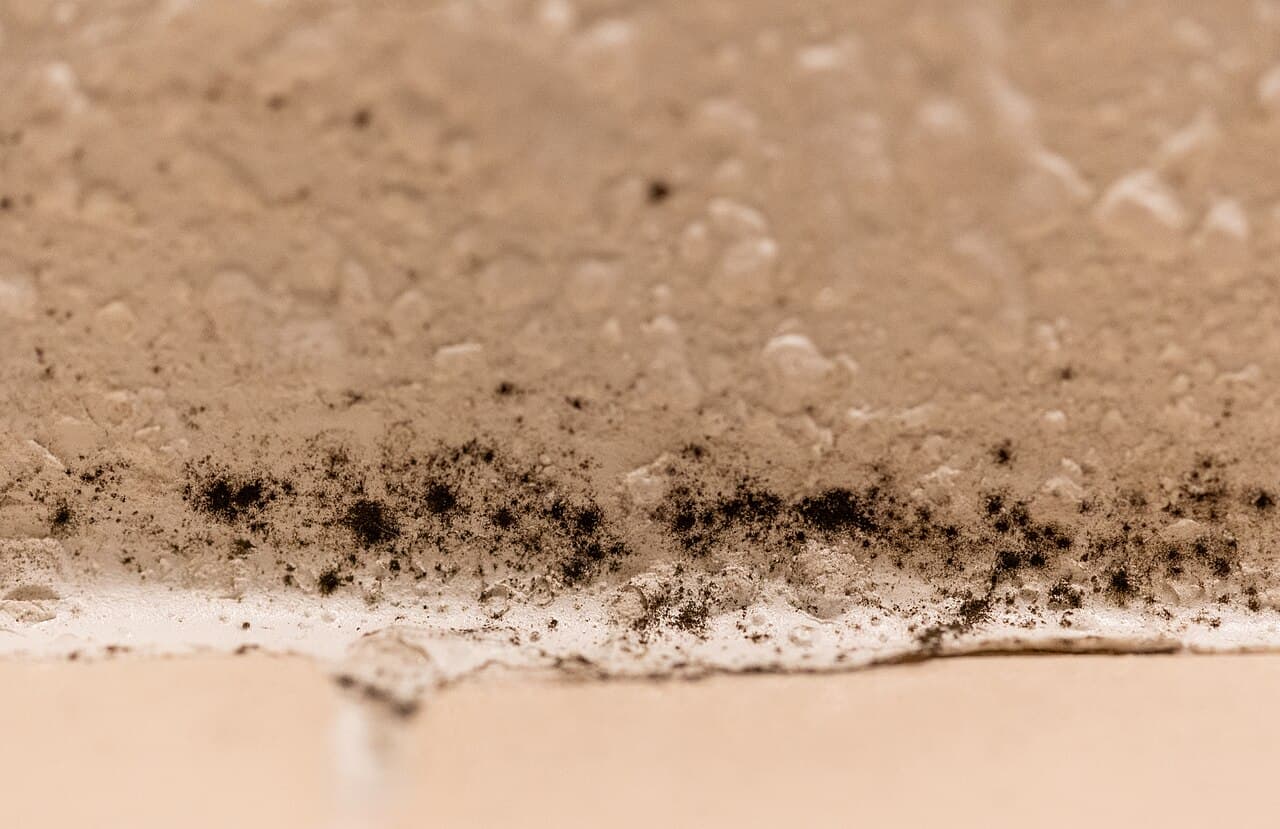
Mold keeps coming back in a bathroom because the moisture that feeds it never went away. Wiping the stain off treats the visible mold, not the cause, and EPA is blunt about the result: if you clean up the mold, but don't fix the water problem, then, most likely, the mold problem will come back.[1] The cause is usually one of three things: steam that never leaves the room, a slow leak, or mold growing out of sight behind the surface you cleaned.
Why bathrooms are the hardest room to keep clear
Mold is everywhere in small amounts. It is impossible to get rid of all mold and mold spores indoors; some mold spores will be found floating through the air and in house dust.[1] What matters is whether they have a reason to grow, and the mold spores will not grow if moisture is not present.[1] A bathroom supplies that reason every day.
EPA's advice for a shower that keeps going black is modest: if there's some mold in the shower or elsewhere in the bathroom that seems to reappear, increasing ventilation (running a fan or opening a window) and cleaning more frequently will usually prevent mold from recurring, or at least keep the mold to a minimum.[1] If that does not work, the problem is bigger than surface steam.
The usual reasons it returns
The fan is not doing its job. EPA's tip is to run the bathroom fan or open the window when showering.[1] A fan that is switched off, switched off too soon, or running weakly leaves the steam to settle on walls and ceiling. A fan with a damaged or disconnected duct can leave the moisture in the building. ENERGY STAR's advice is to use vent fans in bathrooms and kitchens to remove humidity at the source.[2]
The room stays too humid. Fungi (molds) grow in air over 60% relative humidity.[3] EPA's target is to keep indoor humidity below 60 percent (ideally between 30 and 50 percent) relative humidity, and it notes that relative humidity can be measured with a moisture or humidity meter, a small, inexpensive ($10-$50) instrument available at many hardware stores.[1] A cheap meter in the bathroom, read an hour after a shower, tells you whether the room dries out.
Condensation on cold surfaces. Condensation can be a sign of high humidity.[1] Exterior walls, window frames and cold water pipes sweat first. EPA's advice includes this: cover cold surfaces, such as cold water pipes, with insulation.[1]
A slow leak. Mold that returns in the same spot, especially around a tub, a toilet base, a vanity or below a shower valve, often has a supply of water behind it that no fan will fix. EPA's rule of thumb is that if wet or damp materials or areas are dried 24-48 hours after a leak or spill happens, in most cases mold will not grow.[1] A leak that is never dried out gives mold all the time it needs. Failed caulk or grout, a loose fixture, a dripping trap or a failing shower pan can all do it.
Mold behind the surface. Cleaning the face of a wall does nothing for what is behind it. Mold may be hidden in places such as the back side of dry wall, wallpaper, or paneling, the top side of ceiling tiles, the underside of carpets and pads, etc.[1] In a bathroom, EPA's list of likely spots includes areas inside walls around pipes (with leaking or condensing pipes), the surface of walls behind furniture (where condensation forms), inside ductwork, and in roof materials above ceiling tiles (due to roof leaks or insufficient insulation).[1] Soft, stained, bubbling or musty-smelling drywall or flooring around a bathroom is a sign to look further.
What sorts out the cause
Finding the source is a diagnosis job. A plumber can pressure-test and inspect supply lines, the trap and the drain. A tile or bath contractor can judge whether grout, caulk and the shower pan are keeping water out. An HVAC contractor can check where the fan ducts to and whether it moves enough air. A mold remediation company deals with the damaged materials once the water is controlled; see what professional mold remediation involves.
Be careful about opening up a suspect wall yourself. EPA warns that removal of wallpaper can lead to a massive release of spores if there is mold growing on the underside of the paper.[1] Do not reach for bleach as a cure either: the use of a chemical or biocide that kills organisms such as mold (chlorine bleach, for example) is not recommended as a routine practice during mold cleanup.[1]
Lab testing is rarely the answer. EPA says that in most cases, if visible mold growth is present, sampling is unnecessary.[1]
When to call a licensed pro
A small patch is within a homeowner's reach: EPA says that if the moldy area is less than about 10 square feet (less than roughly a 3 ft. by 3 ft. patch), in most cases, you can handle the job yourself.[1] Call a professional when the picture looks different:
- The mold returns in the same place after you have improved ventilation, which points to a hidden leak or condensation problem.
- The drywall, subfloor or tile is soft, stained or smells musty. EPA says that if there has been a lot of water damage, and/or mold growth covers more than 10 square feet, consult EPA's Mold Remediation in Schools and Commercial Buildings.[1]
- Anyone in the household has health concerns. EPA's advice is that if you have health concerns, consult a health professional before starting cleanup.[1]
- The repair is a plumbing, waterproofing or ventilation job. Virginia's Board for Contractors says that if the work you are considering is valued at $1,000 or more, a valid Virginia Contractor's License is required for the license category in which the contractor is to work.[4]
Ask for the fix to the moisture source and the mold cleanup to be written down as separate items, so you know what each one costs. For the cost side, read what mold remediation costs in Virginia and whether a mold remediation company needs a licence in Virginia.
Getting help in Virginia
Loclis lists Virginia businesses that handle restoration work. Browse restoration services or read more restoration answers. When you are ready, describe the mold problem once and local mold remediation businesses respond.
Common questions
- How do I stop mold coming back on the shower ceiling?
- Treat the moisture, not the stain. Run the fan during and after showers, keep humidity below 60 percent, ideally 30 to 50 percent, and watch for condensation. If it still returns in the same place after that, suspect a hidden leak or mold behind the surface.
- What humidity level stops bathroom mold?
- EPA says to keep indoor humidity below 60 percent, ideally between 30 and 50 percent relative humidity. A hardware-store humidity meter, which EPA puts at roughly $10 to $50, shows whether the room is staying in that range.
- Does bleach stop mold coming back?
- Not reliably. EPA says a biocide such as chlorine bleach is not recommended as a routine practice during mold cleanup. Mold returns when moisture does, so fixing the moisture is what prevents it.
- Is mold in the bathroom a reason to test the air?
- Usually not. EPA says that in most cases, if visible mold growth is present, sampling is unnecessary. Spend the money finding and fixing the water source instead.
- When is bathroom mold a job for a professional?
- When it covers more than about 10 square feet, keeps returning to the same spot, sits on soft or stained drywall or flooring, or someone in the home has health concerns.
Sources
- [1] A Brief Guide to Mold, Moisture and Your Home, U.S. Environmental Protection Agency. Checked October 27, 2026.
- [2] Dehumidifiers, ENERGY STAR, U.S. Environmental Protection Agency. Checked October 27, 2026.
- [3] ENERGY SERIES: What about Moisture? (2908-9020), Virginia Cooperative Extension, Virginia Tech. Checked October 27, 2026.
- [4] What You Should Know Before You Hire a Contractor, Virginia Board for Contractors, DPOR. Checked October 27, 2026.
Want a pro to handle it?
Describe the job once. Licensed local businesses send quotes, and you pay only when you book one.
Get a quote from a local pro