Why is my drip irrigation watering unevenly?
Uneven drip watering is usually clogged emitters, a dirty or missing filter, a leak upstream, or pressure that is wrong for the tubing. Run the zone, see where the wet spots stop, then clean the filter, clear weeds and blocked emitters, and check for leaks and a pressure regulator. Keep one emitter flow rating on each run.
Free to ask. Local shops send quotes, and you pay only when you book one.
By Kasra Taheri, Founder, LoclisPublished
Researched and drafted with AI, then checked claim by claim against the sources listed below before it was published. Prices and rules change; the dates beside each source say when it was last checked.
Step by step
Read when to stop and call a pro, further down this page, before you start.
Step 1: Run the zone and watch
Run the zone and note which emitters are dry or weak and where along the line the wet spots stop.
Step 2: Look for leaks and damage
Walk the whole line looking for damaged tubing, kinks, buried emitters and fittings that have pulled apart. Landscape work and animals are common causes of damage.[1]
Step 3: Clean the filter
With the water off, take out the filter screen and rinse it clean, then check that the gasket and screen are intact. Filters need frequent cleaning.[1]
Step 4: Flush the line
Open the end cap of each run with the water on until the water coming out is clear, then close it.
Step 5: Clear or replace clogged emitters
Rinse a blocked point-source emitter or swap it for a new one, and pull any weeds growing into emitters at their roots.[1]
Step 6: Check the pressure regulator
Confirm the regulator is installed properly, and treat leaking joints as a possible sign of too much pressure or particles in the water.[2]
Step 7: Match emitters to plants
Keep one flow rating on each run and give mismatched plants their own zone, with emitters spaced for even distribution.[1]
Step 8: Rerun and compare
Run the zone again and check that the last emitters now match the first.
Uneven drip watering is almost always a flow problem, not a plant problem: some emitters are blocked, the filter is dirty, the line is leaking before the water reaches the end, or the pressure is wrong for the tubing. Run the system, walk the line, and see where the wet spots stop. The pattern tells you which cause to chase.
Read the pattern first
Run a zone for a few minutes and look at every emitter.
- The far end of the line is dry or weak, while the start is fine. Water is being lost along the way, through a leak or a bad connection, or the line is too long or too uphill for the pressure feeding it.
- Scattered dry emitters along an otherwise healthy line. Individual emitters are clogged, kinked or buried.
- The whole zone is weak. Suspect the filter, a partly closed valve or low supply pressure.
- Leaking or pulled-apart fittings. The pressure may be too high, or particles may be in the water.
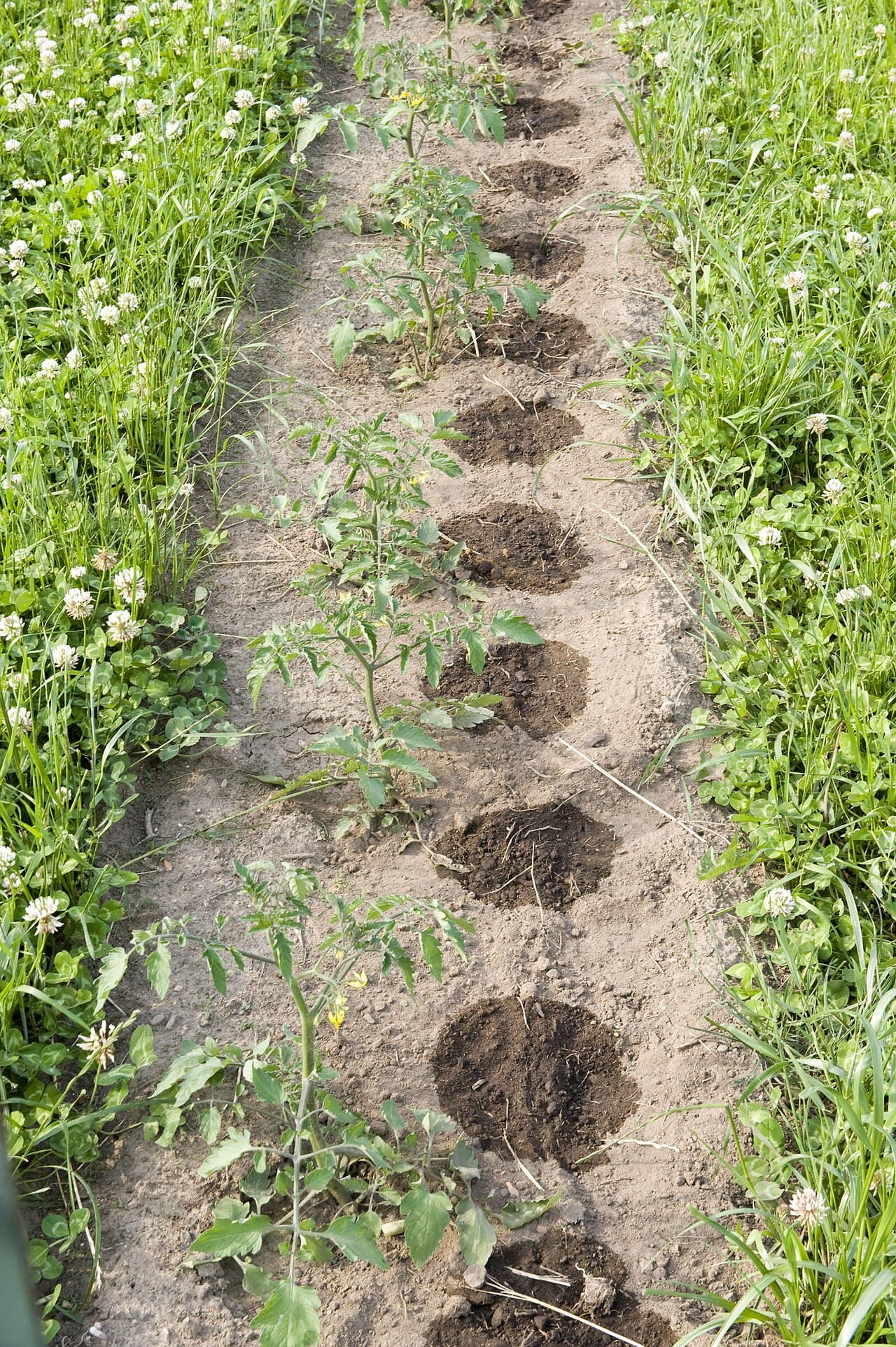
Clogged emitters
Emitters can also become clogged without preventive care.[1] The usual culprits are weeds and grit in the water. Weeds can still grow into the emitters, causing clogs and reducing efficiency, and the EPA's advice is to remove weeds at their roots to avoid emitter damage.[1]
Emitters can also become clogged by particles that enter the irrigation system.[1] Silt and mineral deposits do the same thing more slowly. Clear a blocked point-source emitter by rinsing it, or replace it. Drip line with emitters built into the tubing is harder to clear, and a section with several dead emitters is usually easier to cut out and replace than to rescue one by one.
The filter
A filter is the first thing to check when the whole zone is weak, because every drop passes through it. The EPA's advice is to use filters to block these particles, especially in systems fed by non-potable water, and clean them frequently.[1]
With the water off and the pressure released, unscrew the filter housing, pull out the screen and rinse it under a tap or with a soft brush. If the screen is torn or the gasket is missing, grit is getting through and will keep clogging emitters, so replace the screen.
Leaks along the line
Water that leaks out upstream is water the far emitters never see. In the EPA's words, landscape work and animals can damage tubing, pipes, and emitters and cause water-wasting leaks.[1] Look for chewed tubing, a shovel nick, a connector that has pulled apart, or a puncture hole left by a misplaced emitter.
Check the ground too. The EPA's tip for sprinkler systems applies here as well: look for areas of the landscape with water pooling on the surface; that could be a sign of an underground leak.[2] A soggy spot that stays wet long after the zone shuts off is worth tracing.
Pressure
Microirrigation is a low-pressure, low-flow-rate type of irrigation.[3] The EPA notes that leaking joints can also be a sign of too much water pressure or particles in the water, and suggests checking that the pressure regulator is installed properly.[2]
When a contractor sets up drip, one of the checks is the incoming water pressure, to see if it is higher than recommended for the microirrigation system, to determine if a pressure regulator is needed.[1] If your zone has no regulator and joints keep leaking or pulling apart, a regulator made for drip is a small part, usually fitted at the faucet or valve. If it has one and the far end is still weak, the regulator may be failing or sized for a different flow.
Mismatched or badly spaced emitters
The types, number, flow rate, and spacing of emitters used can vary by zone and plant type.[1] Problems appear when a zone mixes very different plants or emitters of different flow ratings on the same run. Thirsty plants and drought-tolerant ones then get the same dribble. Drip emitters should be spaced properly to ensure even distribution.[1]
Check the flow rating printed on the package of each emitter. Keep one rating per run where you can, and move mismatched plants onto their own zone.
Stop and call a pro if
- The drip zone is fed from an in-ground sprinkler system and the problem looks like a valve, a regulator or the backflow assembly. Those parts are the sprinkler contractor's job.
- There is a wet spot you cannot trace in the lawn or near the foundation after the zone shuts off.
- Pressure is high at the house and fittings keep blowing off even after you add a regulator.
- The line has to be dug up across a driveway or near buried utilities. That is a contractor's job.
Getting help in Virginia
If the system is new and uneven from the start, read how to set up drip irrigation for a garden. To judge whether a fix is worth paying for, see what drip irrigation costs in Virginia and whether to hire someone to install it. More is in the irrigation answers and the irrigation guide.
When you would rather have it checked, describe the problem once and licensed local contractors quote it.
Common questions
- Why is the end of my drip line dry?
- Water is usually being lost before it gets there, through a leak or a pulled-apart fitting, or the run is too long for the pressure feeding it. Walk the line while it runs, fix any leak, clean the filter, and if the far end is still weak, shorten the run or split it into two zones.
- How do I know if a drip emitter is clogged?
- A clogged emitter stays dry or drips far more slowly than its neighbours while the rest of the line works. Weeds growing into emitters and particles that enter the system are the usual causes, so pull weeds at the roots and keep the filter clean.
- Do I need a pressure regulator for drip irrigation?
- Often yes. Drip is a low-pressure system, and the EPA says a regulator is needed when the incoming water pressure is higher than recommended for the system. Check the packaging of your tubing and emitters for the pressure they are made for.
- How often should I clean the drip filter?
- Often. The EPA says to clean filters frequently, and a filter on a well or other non-potable source usually needs it more than one on city water. Check it whenever flow drops, and at the start of each growing season.
- Can I mix different emitters on one drip line?
- It works poorly. Emitters with different flow ratings on one run deliver different amounts, so some plants get too much and others too little. Keep one rating per run and move plants with different needs onto their own zone.
Sources
- [1] Saving Water With Microirrigation: A Homeowner Guide, U.S. Environmental Protection Agency, WaterSense. Checked October 28, 2026.
- [2] Sprinkler Spruce-Up, U.S. Environmental Protection Agency, WaterSense. Checked October 28, 2026.
- [3] Microirrigation (last updated March 6, 2026), U.S. Environmental Protection Agency, WaterSense. Checked October 28, 2026.
Want a pro to handle it?
Describe the job once. Licensed local businesses send quotes, and you pay only when you book one.
Get a quote from a local pro