How do I set up drip irrigation for a garden?
Sketch the bed, then run a timer, filter and, if your pressure is high, a pressure regulator from the spigot to surface tubing. Use drip line along rows or one emitter per vegetable plant, flush the line, check for leaks and set short, frequent watering. Call a pro before tying into house plumbing or a sprinkler system.
Free to ask. Local shops send quotes, and you pay only when you book one.
By Kasra Taheri, Founder, LoclisPublished
Researched and drafted with AI, then checked claim by claim against the sources listed below before it was published. Prices and rules change; the dates beside each source say when it was last checked.
Step by step
Read when to stop and call a pro, further down this page, before you start.
Step 1: Sketch the bed
Draw the bed, mark each plant, and measure the run from the spigot. Group plants with similar water needs into the same zone.[2]
Step 2: Check your water pressure
Compare the pressure rating on your tubing and emitters with your home's pressure; if yours is higher, plan on a regulator.[2]
Step 3: Assemble the spigot end
Attach the timer, filter and, if needed, regulator to the spigot in the order your kit's instructions give.[2]
Step 4: Lay the supply tubing
Run the tubing along the bed on the surface, away from walkways so it is not a tripping hazard.[2]
Step 5: Add drip line or emitters
Lay drip line along rows, or fit point emitters at plants and containers, with about one emitter per vegetable or flower plant.[2]
Step 6: Flush and close the line
Run water through with the end of the line open to push out grit, then close the end.
Step 7: Run it and look for leaks
Turn the water on, check every connection and emitter, and stake the tubing so it stays put.
Step 8: Set a short, frequent schedule
Start with watering once or twice a day on loam soils, or more often for shorter times on sandy soils, and adjust to the plants.[3]
Start with a plan, not a roll of tubing
A garden drip system is a supply line from the spigot, a few parts that protect it, and tubing or emitters that put water at each plant's roots. Plan it on paper first: sketch the bed, mark each plant, and measure the run from the spigot. Group plants that need similar amounts of water, because zones should group plants with similar irrigation needs together.[2]
The payoff is real. Microirrigation systems use 20 to 50 percent less water than conventional sprinkler systems.[1] The water goes to the soil at the plant, not onto the leaves, so there is less runoff and evaporation.
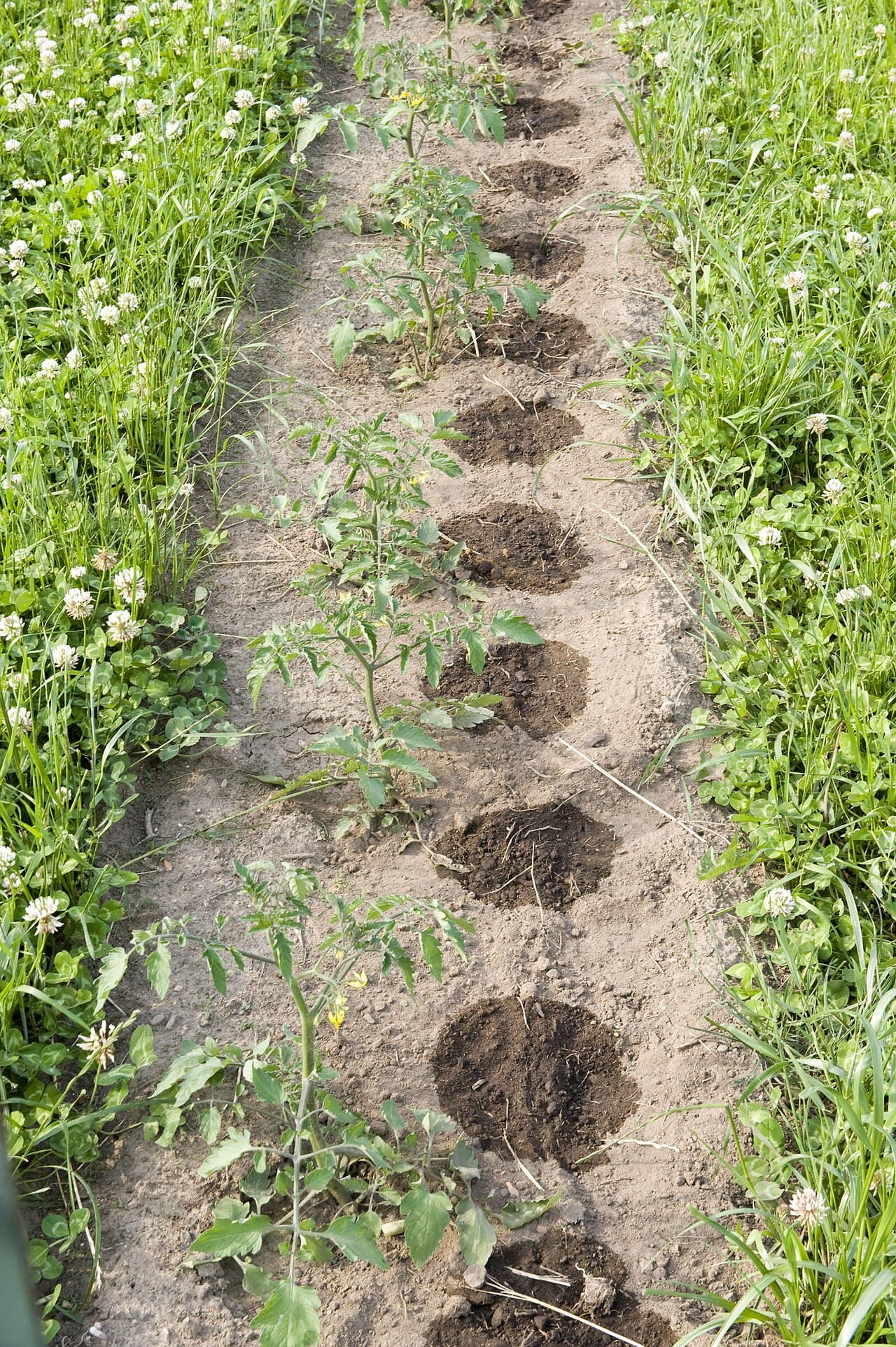
Choose drip line or point emitters
Drip line emitters are tubes with evenly spaced emitters that water at a uniform rate.[2] They suit a row of vegetables or a narrow bed, because every plant along the line gets water. Point-source emitters discharge water from a single point that can extend from a long pipe, which suits containers and scattered plants.[2]
For a vegetable garden, the count is simple: flower beds and vegetable gardens may only need one emitter per plant.[2] Shrubs often require one or two emitters per plant, depending on their type, size, and age.[2] Check the flow rating on the package so every emitter in one run delivers the same amount.
The parts at the spigot
Between the spigot and the tubing you want a filter, a pressure regulator if your pressure is high, and ideally a timer. In most kits they screw together in that order, so follow the instructions in yours.
- Filter. Emitters can also become clogged by particles that enter the irrigation system. Use filters to block these particles, especially in systems fed by non-potable water, and clean them frequently.[2]
- Pressure regulator. Microirrigation is a low-pressure, low-flow-rate type of irrigation.[1] EPA says a contractor will also check your incoming water pressure to see if it is higher than recommended for the microirrigation system, to determine if a pressure regulator is needed.[2] Read the pressure rating on your tubing and emitters and compare it with your home's.
- Timer. Virginia Cooperative Extension agent Shawn Jadrnicek says it's best to use some type of automated irrigation system to make sure you're giving your vegetables the correct amount of water at the best time.[3]
If the system connects to anything beyond a hose spigot, backflow protection comes into play. Depending on your source of water, your system may need filtration, or connection to a backflow preventer may be required to avoid contaminated water entering the potable water system.[2]
Lay it out and set the schedule
Run the tubing on the surface along the bed and keep it out of walkways. Tubing should be positioned so as not to cause a tripping hazard.[2] Mulch over the line is fine and helps hide it. Burying lines means digging, and Virginia 811 says that any time you put a shovel in the ground you need to contact Virginia 811, because many utilities are buried just a few inches below the surface.[4]
Drip schedules run short and often compared with sprinklers. Jadrnicek's guidance: "I would water once or twice a day for a longer period of time with loam soils and up to 10 times a day for a shorter period of time with sandy soils."[3] Watch the plants and the soil a few inches down, then adjust.
Keep it running
Weeds can still grow into the emitters, causing clogs and reducing efficiency.[2] Pull them at the roots and clean the filter often. Before the first freeze, the system should be flushed of standing water, to avoid the water lines freezing during winter months and causing cracks in the pipes.[2] For the in-ground version, see how to winterize a sprinkler system.
Stop and call a pro if
- You want to tie into house plumbing or an existing in-ground sprinkler system. Prince William County says all lawn irrigation systems require a cross connection device to prevent the backflow of water from the lawn irrigation system into the structure's potable water system.[5] Chesterfield County says backflow prevention assemblies on irrigation systems are required by law.[6]
- The plan means trenching. Call Virginia 811 first, or let a licensed contractor handle the digging.
- Your water comes from a well or other non-potable source and you are unsure how to filter it.
- The bed is large or sloped, and flow drops off at the far end of the line.
- Water shows up where it should not, such as near the foundation or a wet spot in the lawn that never dries.
Getting help in Virginia
Costs and the decision to hire are covered in how much drip irrigation costs in Virginia and whether to hire someone to install it. More is in the irrigation answers and the irrigation guide.
When you would rather have it done, describe the job once and licensed local contractors quote it.
Common questions
- Do I need a filter for garden drip irrigation?
- Yes in practice. Emitters can become clogged by particles that enter the system, and EPA says to use filters to block them, especially when the water is non-potable such as from a well, and to clean them frequently. Clean the filter whenever flow from the emitters seems to drop.
- How often should drip irrigation run in a Virginia vegetable garden?
- Virginia Cooperative Extension agent Shawn Jadrnicek suggests watering once or twice a day for a longer period on loam soils, and up to 10 times a day for a shorter period on sandy soils. A timer makes that practical. Adjust by checking the soil a few inches below the surface.
- Can I bury drip tubing?
- You can, but burying means digging. Virginia 811 says any time you put a shovel in the ground you need to contact them first, because many utilities sit just a few inches down. Surface tubing under mulch avoids the digging altogether.
- What do I do with drip irrigation in winter?
- Before the first freeze, flush standing water out of the system, since water that freezes in the lines can crack pipes. Drain the tubing and bring the timer, filter and regulator indoors if your kit allows it.
- Does a drip system need a backflow preventer?
- Requirements depend on how the system is connected and on your locality, so ask your local building department. If it connects to your plumbing or to an in-ground sprinkler system, backflow protection is required in places such as Prince William County and Chesterfield County. Ask your local building department before you connect.
Sources
- [1] Microirrigation (last updated March 6, 2026), U.S. Environmental Protection Agency, WaterSense. Checked October 27, 2026.
- [2] Saving Water With Microirrigation: A Homeowner Guide, U.S. Environmental Protection Agency, WaterSense. Checked October 27, 2026.
- [3] The best times to water your vegetable garden, explained by an agriculture expert, Virginia Tech News, with Virginia Cooperative Extension. Checked October 27, 2026.
- [4] Homeowners, Virginia 811. Checked October 27, 2026.
- [5] Lawn Irrigation System Requirements, Prince William County, Virginia. Checked October 27, 2026.
- [6] A Guide to Selecting, Installing and Maintaining Backflow Preventers in Residential Irrigation Systems, Chesterfield County, Virginia. Checked October 27, 2026.
Want a pro to handle it?
Describe the job once. Licensed local businesses send quotes, and you pay only when you book one.
Get a quote from a local pro