Why is my geothermal system not keeping my house warm?
The usual causes are a thermostat or backup-heat setting, a dirty filter or closed registers, a unit in lockout, backup heat that has lost power, or a loop or well-water problem. Geothermal systems also run long cycles with milder air, which can feel like a fault. Check the thermostat, filter and fault lights, then call a licensed HVAC technician.
Free to ask. Local shops send quotes, and you pay only when you book one.
By Kasra Taheri, Founder, LoclisUpdated
Researched and drafted with AI, then checked claim by claim against the sources listed below before it was published. Prices and rules change; the dates beside each source say when it was last checked.
This is a job for a licensed pro in Virginia
This page explains what the work involves, the permits, what a licensed pro does and what drives the cost. It does not give step-by-step instructions, because this work needs a licence, a permit or both, and doing it wrong can injure someone. Before you hire, check the licence on Virginia's DPOR record.
When a geothermal system cannot keep the house warm, the cause is usually one of five things: a thermostat or backup-heat setting, poor airflow, a unit in lockout, backup heat that has lost power, or a problem with the loop or well water. A few of these you can rule out in minutes. The rest are for a licensed HVAC technician, because the fix is inside a sealed refrigerant system or high-voltage controls.
First, what is normal
Geothermal heat feels different from a furnace, and that alone causes a lot of service calls. The unit delivers warm air, typically 95° to 105°F,[1] which feels mild at the register, and geothermal systems will typically have a longer run time than a natural gas or propane furnace.[1] A system that runs for long stretches on a cold night and holds the set temperature is working as designed.
It is also normal for the backup heat to help on the coldest days. Dealers generally size the geothermal unit to provide the majority of the heating requirements down to a certain outdoor air temperature.[1] When it gets colder than that, the auxiliary heater engages to assist the geothermal unit, which keeps working.[1] Depending on your heating needs, a geothermal heat pump will supply 80-100 percent of your design heating load,[2] so on a design-cold night it may lean on that backup.
Backup heat has no power
If the house falls behind only on very cold days, check whether the auxiliary heat is working at all. Make sure the electrical disconnect switches are in the ON position,[1] because both the unit and auxiliary heat (if present) must be powered for proper operation.[1] A tripped breaker or a disconnect left off after service leaves the heat pump trying to carry the whole load alone.
The unit is in lockout
A lockout occurs when the unit has faulted and cannot correct itself.[1] During lockout mode, Emergency Heat will be activated to provide heating if necessary,[1] so the house may stay warm on backup heat alone. If your electric bills have jumped, the first question to answer is "Is unit always in Emergency Heat?"[1] Look at the thermostat and the unit's status lights.
A lockout can be reset from the thermostat, but if the unit shuts down again, call your dealer, and do not repeatedly reset it.[1] The unit has safety controls that protect it in case of improper airflow, water flow or refrigerant charge, and these controls should not be bypassed.[1] A repeat lockout is the unit telling you which of those is wrong; the technician needs that fault code.
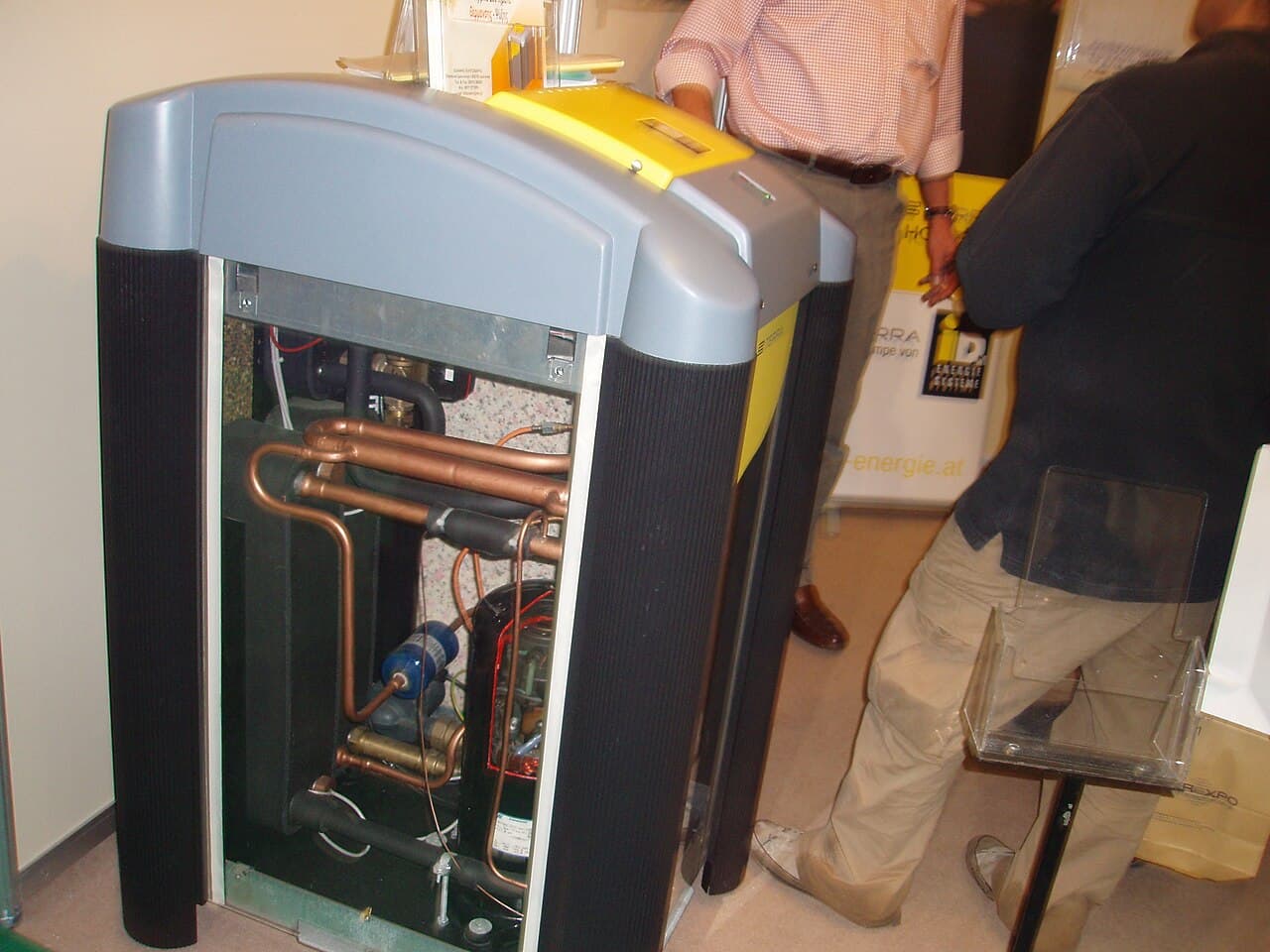
Airflow is restricted
Too little air across the coil cuts heating and can trip the airflow safety. ENERGY STAR warns that a dirty filter can increase energy costs and damage your equipment, leading to early failure,[3] so never run the unit without a filter.[1]
Registers matter too. Closing registers in unused rooms disrupts the air flow pattern and can make other rooms less comfortable without saving money.[1] If one room is cold, the cause may be in the ducts: one study found many homes had at least one section of duct disconnected, blowing conditioned air into attics or crawl spaces.[1]
The system is too small for the house now
If the unit were undersized and unable to meet the heating requirements on a very cold day, you would notice a drop in indoor temperature.[1] That can happen years after installation, because a significant change or addition to the home may result in the system being inadequately sized,[1] so a finished basement, a new room or many added windows can push a well-sized system past its limit. The fix may be a larger unit, more loop, or both, and it starts with a new load calculation.
A loop or well-water problem
Open loops (well water). Without preventive maintenance, minerals and other particles in the water may eventually begin to clog the heat exchanger in the unit.[1] When that happens, the efficiency and capacity of the unit is decreased, eventually to the point where failure may occur.[1] A failing well pump does the same thing faster: If the well pumping system requires service or is inoperable, your unit should be turned off or placed into emergency heat until an adequate water supply is restored.[1] Heat exchanger cleaning needs special equipment and chemicals, so do not attempt to clean the heat exchanger yourself.[1]
Closed loops. Closed loops require no regular maintenance,[1] but if you notice air noise within the piping or if your loop is ever damaged by excavation, contact your dealer.[1] Damage usually comes from digging. Virginia law says no one may begin an excavation without first submitting a locate request to the notification center,[6] and the installer's loop layout is what shows where your own pipes run: keep it and refer to it before doing any digging or excavating in the area of the loop.[1]
Quick checks before you call
These are look-and-confirm checks, not repairs:
- The thermostat is in Heat, the set point is where you want it, and it is not showing Emergency Heat or a fault you did not expect.
- The filter is clean and in place.
- Supply and return registers are open and unblocked.
- The disconnect switches for the unit and any auxiliary heat are on, and no breaker has tripped.
- Note any status lights on the unit so you can report them.
When to call a licensed pro
Call a licensed HVAC technician when any of the checks above does not explain the problem, and right away in these cases:
- If the unit just hums and does not heat, disconnect power and call for service.[1]
- If the loop has been damaged, turn the unit off at the breaker and call for service.[1]
- If either the disconnect switch or the circuit breaker continues to trip after you reset it, call your dealer or installer immediately to prevent damage to the unit.[1]
- The unit keeps locking out, or Emergency Heat comes on by itself.
When you call, have ready your model number and any fault lights that are on, at the unit or the thermostat.[1] Many of the real fixes here mean opening the refrigerant circuit or working on controls and pumps. Federal rules say technicians who maintain, service, repair, or dispose of equipment that could release refrigerants into the atmosphere must be certified,[4] and in Virginia the Board for Contractors requires a master tradesman licence as a condition of licensure for HVAC contractors.[5] Ask whether the company services geothermal equipment specifically. See does an HVAC technician need a licence in Virginia.
For background, read how a geothermal heat pump works and how long a geothermal system lasts. Browse geothermal services, find HVAC businesses in Blacksburg, or read more heating and cooling answers.
To get it fixed, describe the problem once and licensed local HVAC businesses quote the repair.
Common questions
- Is it normal for my geothermal system to run all the time in cold weather?
- Long run times are normal. Geothermal systems deliver milder air than a gas furnace, about 95° to 105°F, and run longer cycles to keep up. What is not normal is a house that keeps losing ground while the system runs, or a thermostat that shows Emergency Heat when you did not select it.
- What does Emergency Heat mean on a geothermal thermostat?
- It means the auxiliary heater is heating the house without the heat pump. Emergency Heat is activated during a lockout to provide heating if necessary, and selecting it on the thermostat provides heat after a compressor failure until the compressor is replaced. If it comes on by itself, call for service.
- Should I keep resetting a geothermal heat pump that locks out?
- No. If the unit shuts down again after a reset, call your HVAC contractor and do not repeatedly reset it. A lockout is the unit protecting itself after a fault it cannot correct, such as a problem with airflow, water flow or refrigerant charge, and the technician needs the fault code to find which one.
- Why are my bills high when the house is barely warm?
- Check whether the thermostat shows Emergency Heat. For high electric bills, the first question in WaterFurnace's troubleshooting list is whether the unit is always in Emergency Heat. A system leaning on backup heat can point to a heat pump fault, a lockout, a loop or water-flow problem, or a unit that is too small for the house, all of which need a licensed HVAC technician.
- Could my ground loop be the problem?
- It can be, though closed loops need no routine maintenance. Air noise in the piping, recent digging in the yard near the loop or a low-flow fault on the unit are signs worth reporting. For an open loop, a well pump problem or mineral build-up in the heat exchanger cuts heating capacity.
Sources
- [1] Owner's Manual, Residential Products (OM1500MW), WaterFurnace International. Checked October 26, 2026.
- [2] Geothermal FAQ & Glossary, WaterFurnace International. Checked October 26, 2026.
- [3] Maintenance Checklist, ENERGY STAR, U.S. Environmental Protection Agency. Checked October 26, 2026.
- [4] Section 608 Technician Certification Requirements, U.S. Environmental Protection Agency. Checked October 27, 2026.
- [5] Va. Code § 54.1-1100, Definitions, Code of Virginia, Virginia General Assembly. Checked October 26, 2026.
- [6] Va. Code § 56-265.17, Notification required prior to excavation or demolition, Code of Virginia, Virginia General Assembly. Checked October 26, 2026.
Want a pro to handle it?
Describe the job once. Licensed local businesses send quotes, and you pay only when you book one.
Get a quote for HVAC Repair