Why is my outlet warm to the touch?
Usually because too much is plugged in, or a connection inside the box is loose or worn and heats up under load. Aluminum wiring and push-in back-wired connections are known culprits. A slightly warm dimmer can be normal; a warm outlet is not. Stop using it, unplug what is on it, and have a licensed electrician check it soon.
Free to ask. Local shops send quotes, and you pay only when you book one.
By Kasra Taheri, Founder, LoclisPublished
Researched and drafted with AI, then checked claim by claim against the sources listed below before it was published. Prices and rules change; the dates beside each source say when it was last checked.
This is a job for a licensed pro in Virginia
This page explains what the work involves, the permits, what a licensed pro does and what drives the cost. It does not give step-by-step instructions, because this work needs a licence, a permit or both, and doing it wrong can injure someone. Before you hire, check the licence on Virginia's DPOR record.
An outlet gets warm when current is meeting resistance it should not: too much load on it, or a connection inside the box that has worked loose, worn out or corroded. The CPSC's home checklist says unusually warm outlets or switches may indicate an unsafe wiring condition, such as a loose electrical connection that can start a fire.[1] Stop using the outlet and have a licensed electrician look at it.
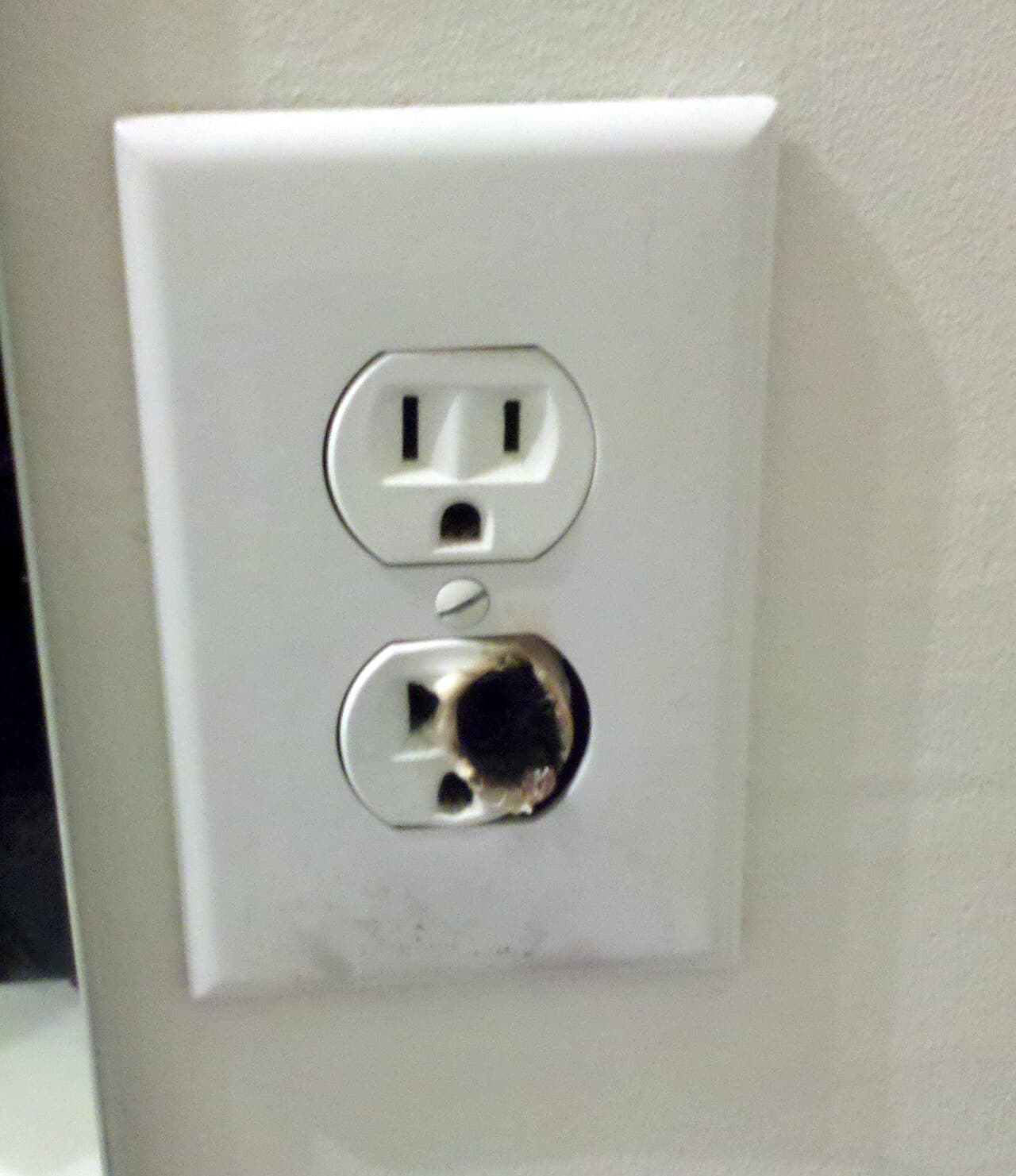
Warm, hot or scorched
There is a difference between a cover plate that is barely warm after a long run of a heater and one you cannot keep your hand on. The CPSC's wiring guide says parts of the electrical system such as switch plates, outlet covers, cords and plugs may be warm but should never be hot, painful to touch or discolored from heat.[2] An ordinary outlet with a lamp or phone charger on it should feel like the wall around it.
Treat these as urgent, whatever the cause turns out to be:
- The plate or outlet is hot, discolored, cracked or melted.
- You smell hot plastic. Burned or overheated wires often give off an odor of hot insulation.[2]
- It buzzes, crackles or sparks.
- You got a tingle or shock from it.
The common causes
Too much load. Space heaters, hair dryers, window air conditioners and kitchen appliances draw a lot of current, and so does a power strip loaded with devices. The CPSC's checklist says if the cord, plug or outlet feels warm, it may be overloaded and can be a fire hazard.[1] The U.S. Fire Administration's first outlet rule is simple: "Do not overload outlets."[4] It also says to plug major appliances such as refrigerators, stoves, washers and dryers directly into a wall outlet and never use an extension cord with a major appliance,[4] and to use power strips that have internal overload protection.[4]
A worn outlet. Outlets wear out. When the contacts inside lose their grip, plugs feel loose or fall out. Loose-fitting plugs can cause overheating and fires, because a loose connection cannot carry much current without getting hot.[1] The USFA's advice: "Replace wall outlets if plugs do not fit snugly."[4]
A loose wire connection. The screws holding the wires can loosen over years of heating and cooling. A loose screw holding a wire or a worn out switch can lead to electrical arcing, overheating, or a fire.[1] You cannot see this from the front of the outlet.
Push-in back-wired connections. Many outlets accept a wire pushed into a hole in the back instead of wrapped around a screw. The CPSC notes that newer homes may have back-wired push-in connections at outlets and switches instead of a wire looped under a tightened screw, and that these connections may tend to loosen and overheat.[2]
Aluminum wiring. Houses wired with aluminum branch circuits are a known risk. According to a CPSC survey, homes built before 1972 and wired with aluminum are 55 times more likely to have one or more wire connections at outlets reach "Fire Hazard Conditions" than homes wired with copper.[3] The CPSC lists hot-to-the-touch face plates on outlets or switches, flickering lights, circuits that don't work and the smell of burning plastic at outlets or switches as signs of a problem,[3] but it also warns that failing aluminum connections seldom give easily detected warning signs and have been reported to overheat without any prior indication.[3]
A problem further along the circuit. Heat is not always caused by what is plugged in. The CPSC explains that an unused outlet can also feel hot, because the power delivered to one outlet often passes through the connections of one or more others.[2] A bad connection in one box can warm an outlet that has nothing in it.
When warm can be normal: dimmers
A dimmer switch is the one device that is expected to run a little warm. Some dimmer switches may warm during normal use,[1] and some dimmers have a metal mounting strap with fins designed to dissipate heat.[5] Leviton notes that when two or more dimmers share a wallbox, derating may be required, which lowers the wattage each dimmer can control.[5] It also says every dimmer has a wattage rating, and it needs to handle the total wattage of the connected lights to prevent overheating.[6] A dimmer that is hot, buzzing or flickering the lights is not normal; see why LED bulbs flicker on a dimmer.
What to do right now
Unplug everything from the outlet, and stop using it. The CPSC's checklist says to make sure appliances are not overloading the outlet, and stop using it until an electrician checks the problem.[1] If possible, switch an appliance off at its own switch before you pull the plug.
Shocks need a faster response. The CPSC's guide says if you get a shock from a metal faceplate or the screws of an outlet or switch, turn off that circuit at the electrical panel unless it affects an essential appliance, and avoid touching the faceplate or using the device until a qualified electrician has helped.[2] If you see smoke or flame, get out and call 911.
Make sure your smoke alarms work while you wait for the repair. Electrical fires are common: in 2021, an estimated 24,200 residential building electrical fires were reported to U.S. fire departments, causing an estimated 295 deaths, 900 injuries and over $1.2 billion in property loss.[4]
When to call a licensed pro
A warm outlet needs a licensed electrician, not a new outlet from the hardware store. The fix may be a new outlet with screw-terminal connections, tightening or redoing connections in several boxes, moving a heavy load to its own circuit, or a permanent aluminum wiring repair. Finding which one is the electrician's job. Call:
- The same day if the outlet is hot, discolored, buzzing or smells of burning, a breaker trips repeatedly, or someone got a shock.
- Soon if the outlet is warm with normal use, plugs fit loosely, or several outlets in the house run warm.
- For an inspection if your house has aluminum branch wiring, or many back-wired outlets and you want them checked.
In Virginia, no individual may work as an electrical tradesman unless licensed, unless working under the supervision of a tradesman licensed in that specialty.[7] Check the person before they open the box. The Board for Contractors warns that "A license number in an advertisement or on a business card does not necessarily mean the contractor's license is valid."[8] Our guide to checking a contractor's licence shows how, and the warning signs of bad wiring cover what else to watch for. If your outlets are the old two-slot kind, read what replacing two-prong outlets involves.
Find an electrician
Look up electricians in Blacksburg, browse electrical services on Loclis, or read more electrical answers.
Describe your warm outlet and licensed local electricians quote the repair.
Common questions
- Is it normal for an outlet to be a little warm?
- Not for an ordinary outlet. The CPSC's checklist expects outlets and switches to be cool to the touch, and says unusually warm ones may mean an unsafe wiring condition such as a loose connection. The exception it notes is that some dimmer switches may warm during normal use.
- Is a warm outlet an emergency?
- Treat it as urgent. Stop using it and unplug what is on it. If it is hot, discolored, buzzing, sparking or smells of burning, or you got a shock from the cover plate, turn off that circuit at the panel and call an electrician the same day. If you see smoke or flames, leave and call 911.
- Why is an outlet warm when nothing is plugged into it?
- Power for other outlets often runs through its connections. The CPSC notes that an unused outlet can feel hot for this reason, and that it points to a potential fire hazard in the outlet, switch or wiring. An electrician needs to find which connection is heating.
- Can a space heater make an outlet warm?
- A heater or other high-draw appliance can overload an outlet, and the CPSC says an outlet that feels warm may be overloaded. Plug major appliances directly into a wall outlet, never into an extension cord, and if the outlet is still warm with a single appliance on it, have it checked.
- Can I replace a warm outlet myself?
- Swapping the outlet may not fix the cause, which is often a loose or failing connection, aluminum wiring or an overloaded circuit. In Virginia, anyone doing this work for pay must be a licensed electrical tradesman or work under one, and the CPSC's aluminum wiring guide tells homeowners not to try repairs themselves.
Sources
- [1] Home Electrical Safety Checklist (Publication 513), U.S. Consumer Product Safety Commission. Checked October 27, 2026.
- [2] CPSC Guide to Home Wiring Hazards (Publication 518), U.S. Consumer Product Safety Commission. Checked October 27, 2026.
- [3] Repairing Aluminum Wiring (Publication 516), U.S. Consumer Product Safety Commission. Checked October 27, 2026.
- [4] Appliance and Electrical Fire Safety, U.S. Fire Administration, FEMA. Checked October 27, 2026.
- [5] Dimmer Light Switches for Your Home, Leviton Manufacturing Co.. Checked October 27, 2026.
- [6] The 5 Things to Look for When Buying a Dimmer, Leviton Manufacturing Co.. Checked October 27, 2026.
- [7] Code of Virginia § 54.1-1129, Necessity for licensure, Code of Virginia, Legislative Information System. Checked October 27, 2026.
- [8] What You Should Know Before You Hire a Contractor, Virginia Board for Contractors, DPOR. Checked October 27, 2026.
Want a pro to handle it?
Describe the job once. Licensed local businesses send quotes, and you pay only when you book one.
Get a quote for Electrical Repair