What does replacing two-prong outlets involve?
It depends on whether a ground wire reaches the box. A licensed electrician tests each outlet, then either connects a three-prong outlet to an existing ground, fits GFCI protection where there is no ground, or runs new wiring. Swapping an outlet in a house needs no Virginia permit application; new wiring does, and anyone doing it for pay must be licensed.
Free to ask. Local shops send quotes, and you pay only when you book one.
By Kasra Taheri, Founder, LoclisPublished
Researched and drafted with AI, then checked claim by claim against the sources listed below before it was published. Prices and rules change; the dates beside each source say when it was last checked.
This is a job for a licensed pro in Virginia
This page explains what the work involves, the permits, what a licensed pro does and what drives the cost. It does not give step-by-step instructions, because this work needs a licence, a permit or both, and doing it wrong can injure someone. Before you hire, check the licence on Virginia's DPOR record.
Replacing two-prong outlets is mostly a question of what is behind the wall. Some older boxes already have a ground path an electrician can use, so a three-prong outlet can go in properly. Many do not, and then the choice is between GFCI protection and new wiring. In Virginia, the person who does it for pay must hold an electrical licence or work under someone who does.
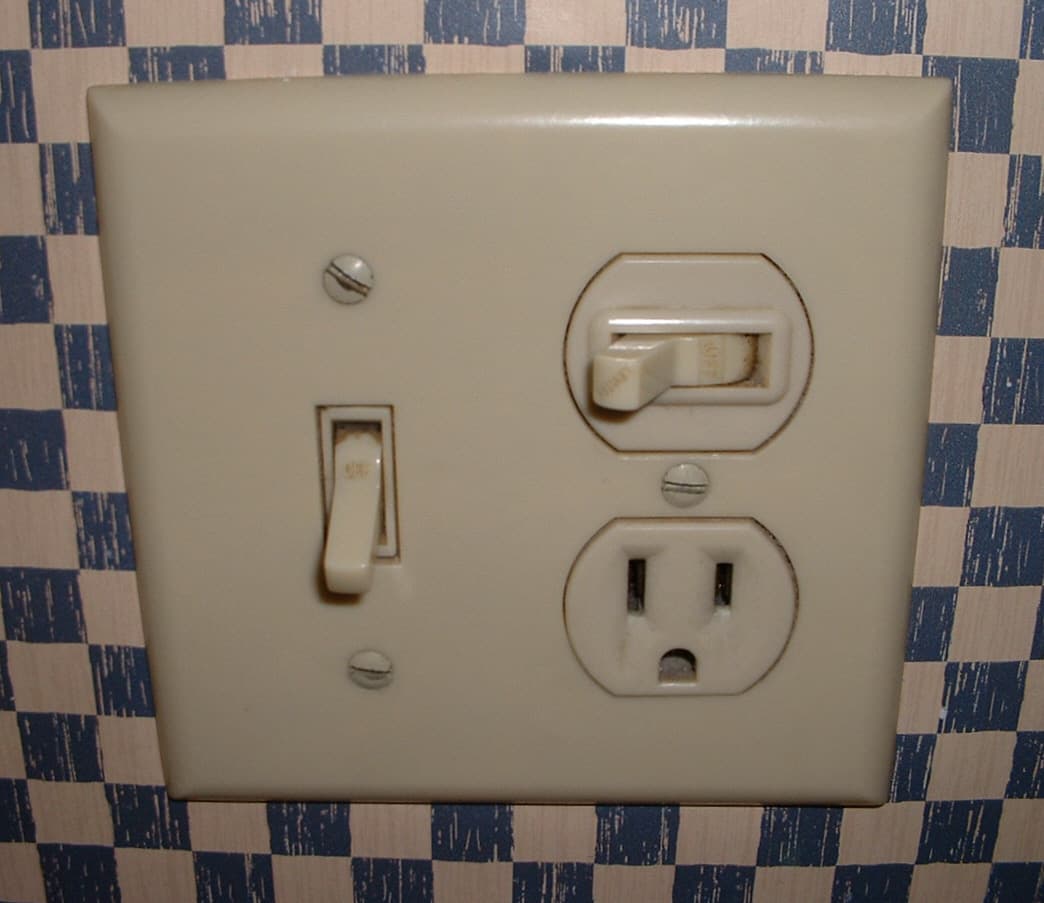
Why two-prong outlets are a problem
A two-slot outlet has a hot and a neutral but no ground. Most modern appliances, computers and power tools come with three-prong plugs, and three-wire cords carry an additional conductor to connect to ground as a safety measure.[2] With no ground at the outlet, that third prong has nowhere to go.
That is why people reach for adapters or snap the ground pin off. The U.S. Fire Administration's outlet advice is blunt: "Never force a 3-prong cord into a 2-slot outlet."[4] The CPSC describes the grounding feature of a 3-prong adapter as a safety feature designed to lessen the risk of fire or shock in case of an appliance fault,[1] and its checklist asks whether adapters are properly grounded and says never to defeat the adapter's grounding feature or break the ground pin off a 3-prong plug.[1] An adapter is a stopgap, not a fix.
What the electrician checks first
The work starts with testing, not with buying outlets. A licensed electrician opens each box and checks:
- Whether a ground reaches the box. Some older cable or metal conduit provides a usable ground; much early wiring does not.
- What the wire is. Electrical cables installed between 1965 and the mid 1970s may contain aluminum wiring.[3] Aluminum changes which devices and connectors can be used, and the CPSC has its own repair methods for it.
- Polarization. On older outlets both slots may be the same size. The CPSC says unpolarized plugs or outlets should be replaced with polarized ones by a qualified electrician.[2]
- The box itself. Small or crowded boxes are common in older houses and limit which devices fit.
- How the circuit is laid out. Which outlets share a circuit decides where a single GFCI can protect several of them.
The options an electrician will weigh
A grounded three-prong outlet. Where testing shows a real ground at the box, the electrician connects a new three-prong outlet to it. This is the cleanest result and the least work.
GFCI protection where there is no ground. A GFCI detects a loss of current that might be flowing through a person and turns the electricity off before severe injury or electrocution can occur.[2] GFCI receptacle outlets can be installed in place of standard receptacle outlets to protect that outlet or a series of outlets in the same branch.[2] The device works without a ground: Leviton's instructions for one common GFCI receptacle say to connect the grounding wire "only if there is a grounding wire".[5] A GFCI is not a ground, though, and the same sheet warns that a GFCI receptacle "does NOT protect against circuit overloads, short circuits".[5]
GFCIs are also not a drop-in part. Leviton also says installing a GFCI receptacle can be more complicated than installing a conventional one,[5] and its instructions send the job to a qualified electrician when the box holds more than four wires, not counting grounding wires.[5] Leviton's GFCI sheet says to use that device with copper or copper-clad wire and not with aluminum wire.[5]
New wiring. Running a ground wire to existing boxes, or a new three-wire circuit from the panel, gives true grounded outlets. It costs more and may mean opening walls or ceilings, but it is often the right call when the old wiring is worn, ungrounded throughout, or due for replacement anyway. Our answer on what rewiring an old house involves covers the bigger version of this job.
While the outlets are being changed, ask about tamper-resistant devices. The USFA also advises tamper-resistant outlets if you have young children.[4]
Something you can do today
If you need ground-fault protection at one outlet before the electrician comes, a plug-in GFCI needs no wiring. Both two-conductor and three-conductor outlets can be protected with plug-in GFCI units.[2] It protects whatever is plugged into it and nothing else.
Permits and licensing in Virginia
Virginia's building code treats a like-for-like swap differently from new wiring. Under the Uniform Statewide Building Code, replacement of 125 volt-15 or 20 ampere receptacles needs no permit application in Groups R-3, R-4 and R-5, and in Group R-2 where serving a single dwelling unit.[6] By contrast, a permit is required before work starts on installations or alterations involving electric wiring,[6] so running a ground or a new circuit is permit work. And the exemption does not excuse the work from the code's other requirements.[6] Your local building office decides where a particular job falls.
Licensing applies either way. Under the Code of Virginia, a tradesman is any individual who does, or offers to do, electrical, plumbing or HVAC work for the general public for compensation,[7] and no individual may work as a tradesman unless licensed, although someone working under the supervision of a tradesman licensed in that specialty does not need their own licence.[8] When a permit is needed, the Board for Contractors is clear about whose job it is: "The contractor should apply for and obtain any necessary building permits."[9] Owners working on their own home have a narrow exemption, explained in can a homeowner do their own electrical work in Virginia.
What drives the cost
There is no official price list for this work, so compare written quotes. The total depends on:
- How many outlets, and how many have a usable ground once tested.
- Whether GFCI protection can be placed at the first outlet on a circuit to cover the rest, or is needed at several points.
- Whether new wire has to be run, and how easy the attic, basement or crawlspace makes it.
- Wall and ceiling patching after any new wiring, and whether it is included.
- Permit fees, which each locality sets.
The Board for Contractors' advice applies here: "Get at least three written bids."[9] And "Limit your deposit to 10% down or $1,000, whichever is less."[9] Our answer on what an electrician costs per hour in Virginia explains how shops price a visit.
When to call a licensed pro
Every option above, from a single grounded swap to a new circuit, is work for a licensed electrician. Call one soon, rather than waiting to replace outlets as a project, if:
- An outlet or its cover plate feels warm, or you smell hot plastic. See why an outlet gets warm.
- Plugs fall out of the slots or the outlet is cracked or scorched.
- You find aluminum or cloth-covered wiring, or the house has no grounded outlets at all.
- You are relying on adapters or extension cords for appliances.
Before you hire, check the licence. The Board for Contractors warns that "A license number in an advertisement or on a business card does not necessarily mean the contractor's license is valid."[9] Our guide to checking a contractor's licence in Virginia shows how. The warning signs of bad wiring are worth a read too.
Find an electrician
Browse outlet and switch electricians on Loclis, look up electricians in Blacksburg, or read more electrical answers.
Describe your outlet job and licensed local electricians quote it.
Common questions
- Can I just put a three-prong outlet in place of a two-prong one?
- Not on its own. A three-prong outlet with nothing connected to its ground terminal looks grounded but is not, so plugged-in equipment loses the protection the third prong is meant to give. An electrician first tests whether a ground reaches the box, then picks a grounded outlet, GFCI protection or new wiring.
- Does a GFCI outlet ground a two-prong circuit?
- No. A GFCI cuts power when it senses current leaking away, for example through a person, which protects against shock. It does not add a ground wire, and Leviton's instructions note that a GFCI receptacle does not protect against circuit overloads or short circuits.
- Do I need a permit to replace two-prong outlets in Virginia?
- Replacing a standard 15- or 20-amp, 125-volt receptacle in a house, or in an apartment serving a single dwelling unit, needs no permit application under the Uniform Statewide Building Code. Running a new ground wire or a new circuit is wiring work, and that does need a permit before work starts.
- Is a three-prong adapter a safe fix?
- Only as a stopgap. The CPSC's checklist treats an adapter as safe only when it is properly grounded and says never to break the ground pin off a three-prong plug. Whether an adapter's tab actually reaches a ground depends on the wiring behind the cover, which is something an electrician can test.
- Can a handyman replace my two-prong outlets?
- Only a licensed electrical tradesman, or someone working under the supervision of one, can do electrical work for pay in Virginia. That covers swapping outlets as well as running new wire.
Sources
- [1] Home Electrical Safety Checklist (Publication 513), U.S. Consumer Product Safety Commission. Checked October 27, 2026.
- [2] CPSC Guide to Home Wiring Hazards (Publication 518), U.S. Consumer Product Safety Commission. Checked October 27, 2026.
- [3] Repairing Aluminum Wiring (Publication 516), U.S. Consumer Product Safety Commission. Checked October 27, 2026.
- [4] Appliance and Electrical Fire Safety, U.S. Fire Administration, FEMA. Checked October 27, 2026.
- [5] Installing and Testing a GFCI Receptacle (GFNT1 instruction sheet), Leviton Manufacturing Co.. Checked October 27, 2026.
- [6] 13VAC5-63-80, Virginia Uniform Statewide Building Code, Section 108 Application for permit, Virginia Administrative Code, Legislative Information System. Checked October 27, 2026.
- [7] Code of Virginia § 54.1-1128, Definitions, Code of Virginia, Legislative Information System. Checked October 27, 2026.
- [8] Code of Virginia § 54.1-1129, Necessity for licensure, Code of Virginia, Legislative Information System. Checked October 27, 2026.
- [9] What You Should Know Before You Hire a Contractor, Virginia Board for Contractors, DPOR. Checked October 27, 2026.
Want a pro to handle it?
Describe the job once. Licensed local businesses send quotes, and you pay only when you book one.
Get a quote for Electrical Repair