Why is my soffit sagging?
A sagging soffit usually means water, over-tight fastening or a span with too little support. Water from a roof edge leak, overflowing gutter or attic moisture soaks and softens the wood, while vinyl nailed tightly cannot expand and bows. Check for stains, soft wood, gutter overflow and wet insulation first. Dry and bowed is often simple; wet and soft is a contractor job.
Free to ask. Local shops send quotes, and you pay only when you book one.
By Kasra Taheri, Founder, LoclisPublished
Researched and drafted with AI, then checked claim by claim against the sources listed below before it was published. Prices and rules change; the dates beside each source say when it was last checked.
Step by step
Read when to stop and call a pro, further down this page, before you start.
Step 1: Look from the ground
Stand back from the house and look along the eave, with binoculars if you have them. Note whether one panel is bowed, a whole run has dropped, or the fascia board and gutter have pulled away together.
Step 2: Check for water first
Look for brown stains, peeling paint, dark patches or mold on the soffit. The key to mold control is moisture control.[2] A wet soffit is a leak to trace before it is a panel to fix.
Step 3: Watch the gutter in rain
In steady rain, see whether the gutter above the sag overflows or drips behind itself. Water running behind a gutter soaks the fascia and the soffit panel beside it.
Step 4: Look at the attic from the hatch
From the attic hatch, with a flashlight and without stepping off the walkway, look toward the eaves for damp or flattened insulation, stained rafters, daylight, or nests.
Step 5: Check how the panel is fastened
A bowed vinyl panel with dry wood behind it has often been nailed tight, so it cannot move as it heats and cools. Panels are meant to sit in their channels with room to expand.
Step 6: Photograph and measure
Take photos of each sagging section and note roughly how many feet of eave are affected, so a contractor can quote from them.
Step 7: Fix a single bowed panel only if it is dry
If one panel is loose or bowed, the wood behind it is dry and the eave is one storey and reachable from a ladder, follow the panel replacement guide. Otherwise stop here.
The short version
A sagging soffit is almost always telling you about water, weight or fastening, and water is the one to rule out first. The usual causes are a leak or overflowing gutter that has soaked the soffit and the wood behind it, a panel that was nailed too tight and has bowed, a long span with no support, or attic moisture and insulation pressing on the panels. Look from the ground, then the attic hatch, and only treat it as a simple fix if the wood is dry.
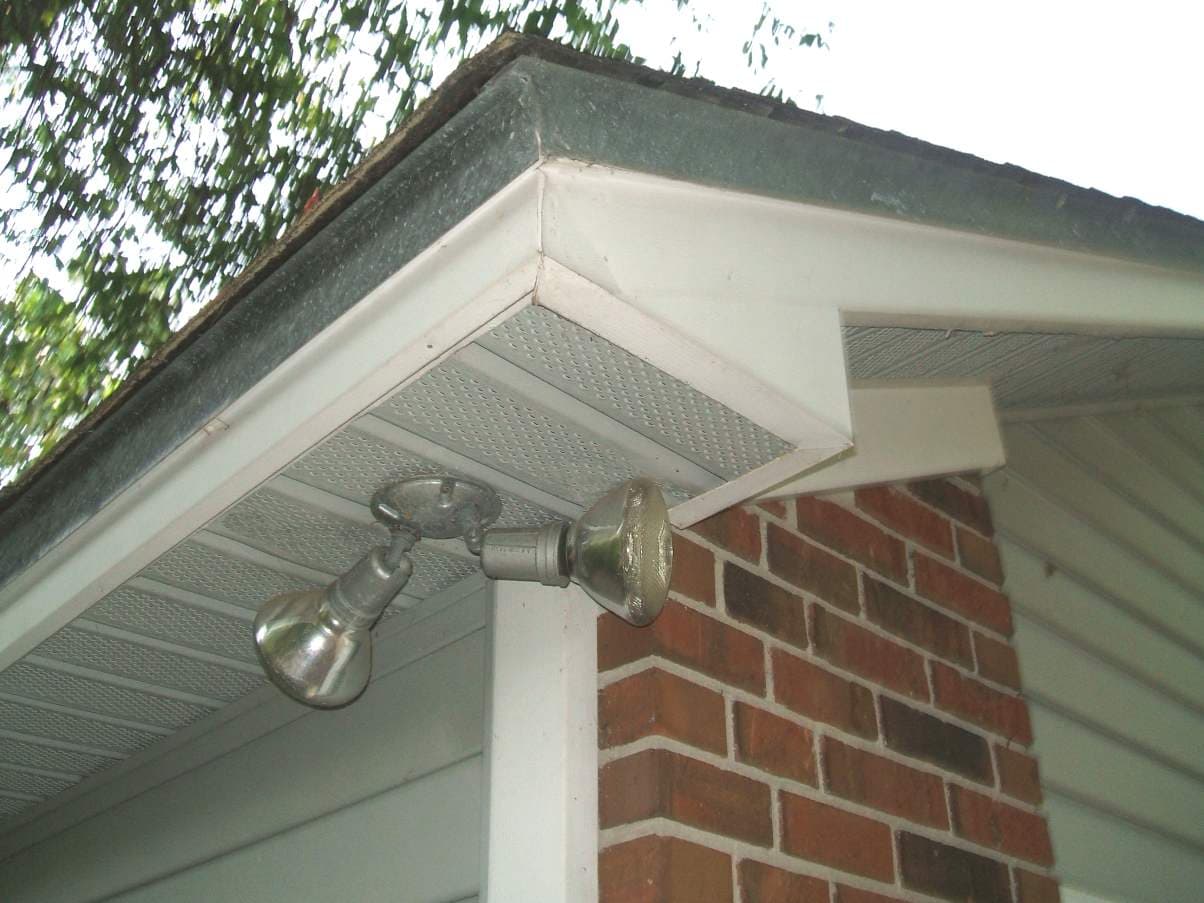
The usual causes
Water from above. A roof leak at the edge, a gutter that overflows or has pulled away, or a failed drip edge lets water run onto the fascia and soffit. Wet wood loses strength, and the soffit board or the framing it hangs from can soften and drop. Molds gradually destroy the things they grow on.[2] So a soffit that stays wet gets worse each season.
A panel fastened too tight. Vinyl and aluminum soffit expands and contracts. The manufacturer's instruction for the receiving channels is: Nail the channels every 16", positioning the nail in the center of the slot. Do not nail tightly.[1] Once a soffit panel is face-nailed, it will expand only in one direction,[1] which is why a panel nailed hard at both ends can buckle into a wave rather than lie flat.
A span that is too wide. The same manufacturer says: If the eave span is greater than 16", you will have to install nailing strips.[1] A deep overhang without that extra support can droop in the middle even when nothing is wet.
Moisture and weight from the attic. Humid air that reaches the eaves condenses and soaks the underside. Virginia Cooperative Extension notes: Most building codes require roof and soffit vents to exhaust humidity and moisture that could cause insulation or other building materials to deteriorate.[3] Blocked vents and wet insulation push the problem back onto the soffit.
Animals and age. Nesting animals can pull panels loose, and old wood soffit and fascia rot at the joints. If you see droppings, nesting material or chewed edges, read why birds or squirrels get into soffit before you touch anything.
How to read what you see
Dry and bowed, with the rest of the eave straight, points to fastening. A long, even drop with a stained board and a gutter that is pulling away points to water and rot. A sag that sits under a roof valley, chimney or downspout points to a leak or overflow at that spot. Soft or crumbling wood, a musty smell or black growth means the damage goes behind the panel and the repair is no longer cosmetic.
What you can safely do
These are checks you do from the ground and the attic hatch. Do not climb on the roof or open the eave framing yourself.
Where a fix is simple and where it is not
If a single vinyl panel is bowed, the wood behind it is dry and the eave is one storey high, how to replace a vinyl soffit panel covers it. Work from a stable ladder. Do not overreach or lean too far to one side.[4] On an older house, the EPA says: If your home was built before 1978, it may have lead-based paint.[5] Scraping painted trim there is a job for a lead-safe certified contractor.
If you find a wet spot, dry it and fix its source. It is important to dry water-damaged areas and items within 24-48 hours to prevent mold growth.[2] Drying a stain without fixing the leak only delays the next sag.
Stop and call a pro if
- The wood is soft, stained or wet. The fascia, rafter tails or sheathing may be rotted, and the soffit is only where it shows. The water source has to be found and repaired first.
- The sag is more than one panel, or the fascia, gutter and soffit have dropped together.
- You see wet insulation, daylight or stains from the attic side. That points to a roof or flashing problem, not a soffit problem.
- There are nests or animals. Leave them alone until they are gone and the entry point can be closed.
- The eave is above one storey or you cannot reach it without leaning off a ladder.
- A light, vent fan or wire runs through the soffit. Leave that to an electrician.
Getting help in Virginia
Next, see who repairs soffits, a roofer or a gutter company and how much soffit repair costs in Virginia. Browse more roofing repair answers or soffit repair on Loclis.
When you would rather hand it over, describe the sagging soffit once and local licensed contractors quote it.
Common questions
- Is a sagging soffit an emergency?
- Not usually, but do not leave it. A sag means something has failed, most often water or fastening. If it is wet, active leaks and rot spread, and a loose section can fall. Check for water first, then decide between a one-panel fix and a contractor.
- Can I fix a sagging soffit myself?
- Only a single bowed vinyl panel with dry wood behind it, on a one-storey eave you can reach safely from a ladder. Anything with soft wood, a leak, several panels or fascia damage should be seen by a contractor.
- Why is my vinyl soffit wavy?
- Often because it was nailed too tight. The manufacturer says not to nail tightly, and a panel fastened rigidly cannot expand, so it buckles. A wide span with no nailing strip can also droop.
- What causes soffit to rot?
- Repeated wetting from a roof edge leak, overflowing gutters or attic moisture. Wood that stays damp decays, and mold grows on it. The cure is stopping the water, not painting over it.
- Will insurance cover a sagging soffit?
- It depends on your policy and on the cause. Sudden storm damage is treated differently from long-term leaks or wear, so ask your insurer before repairs and photograph the damage.
Sources
- [1] Installation Instructions: Soffit, CertainTeed. Checked October 27, 2026.
- [2] A Brief Guide to Mold, Moisture and Your Home, U.S. Environmental Protection Agency. Checked October 27, 2026.
- [3] ENERGY SERIES: What about Ventilation?, Virginia Cooperative Extension, Virginia Tech. Checked October 27, 2026.
- [4] Portable Ladder Safety Program, Virginia Commonwealth University Health and Safety. Checked October 27, 2026.
- [5] Renovation, Repair and Painting Program: Do-It-Yourselfers, U.S. Environmental Protection Agency. Checked October 27, 2026.
Want a pro to handle it?
Describe the job once. Licensed local businesses send quotes, and you pay only when you book one.
Get a quote for Roofing