How much does a car battery replacement cost in Virginia?
We found no dated, primary-source Virginia price for a car battery replacement, so the cost is whatever the shop or retailer quotes. It depends on the battery your car takes, any core charge for the old one, and labor. In Virginia you can ask for a written estimate, and the shop must offer to return the old battery.
Free to ask. Local shops send quotes, and you pay only when you book one.
By Kasra Taheri, Founder, LoclisPublished
Researched and drafted with AI, then checked claim by claim against the sources listed below before it was published. Prices and rules change; the dates beside each source say when it was last checked.
Step by step
Read when to stop and call a pro, further down this page, before you start.
Step 1: Find the battery your car needs
Check the owner's manual or the label on the current battery for the size and type it takes, so every quote is for the same battery.
Step 2: Ask for a written estimate
Before any work that may cost more than $25, ask the shop for the estimated labor, estimated parts, a description of the work and the estimated completion time in writing.[2]
Step 3: Ask about any estimate fee
Ask whether the shop charges for the estimate or related diagnostic work; it must disclose any such condition when you ask.[2]
Step 4: Ask about the core charge
Ask whether the quote includes a core charge for the old battery and how it is handled if you want the old battery back.[3]
Step 5: Compare two or three quotes
Put the quotes side by side: battery, labor, any core charge and warranty.
Step 6: Keep the invoice
Check that the invoice shows parts and labor separately.[4]
We could not find a dated, primary-source Virginia price for replacing a car battery, so we will not quote one. The price you pay is whatever the shop or retailer quotes for your car, and it moves with the battery, any core charge and the labor. What Virginia law does give you is a way to pin that price down in writing before work starts.
What drives the price
Four things set the total:
- The battery itself. Size, type and power rating vary by vehicle. A car that needs a larger or more specialised battery costs more than one that takes a common size.
- Labor. On many cars the battery is easy to reach and the swap is quick. On others it sits under a seat, in the trunk or behind panels, and labor goes up.
- The core charge. Some quotes include a core charge tied to the old battery. Ask whether yours does and how it is handled.
- Extras. Terminal cleaning, a new hold-down or cables, and testing the charging system are sometimes added. Ask for each as a separate line.
Your rights under Virginia law
Virginia's Automobile Repair Facilities Act applies to any person who for profit diagnoses or corrects malfunctions of, or damage to, a motor vehicle.[1] That covers dealers, independent garages and chain shops alike. Under it:
- On request, before any repair work for which you may be charged more than $25, the shop must give you a written statement of the estimated labor, the estimated parts, a description of the problem or work and the estimated completion time.[2]
- Once you ask for a written estimate, work other than the diagnosis needed to prepare it cannot start until you have the estimate and have authorized the work, and the shop cannot charge more than 10 percent over the written estimate, or 20 percent for a vehicle at least 25 model years old, unless you authorize the extra work or time.[2]
- A shop may charge a reasonable fee for the estimate and related diagnostic work, but must disclose the condition when you ask, in writing or on a sign posted at the entrance.[2]
- The shop must offer, when you authorize the repair, to return the parts it removes and replaces, except parts that go back to a manufacturer or distributor under a warranty, trade-in or core agreement.[3]
- When the work is done, you must get a written invoice that shows the work performed and the charges for parts and labor, separately stated, and identifies warranty parts and any used, rebuilt or reconditioned parts.[4]
A violation is a prohibited practice under the Virginia Consumer Protection Act.[5]
How to get a price you can trust
Start by finding out which battery your car takes. The owner's manual or the label on the current battery tells you, and it lets you compare quotes for the same product.
Then get two or three written quotes. For each, note the battery, the labor, any core charge and the warranty. A cheaper battery with a shorter warranty is not always the cheaper choice.
If you want the old battery back, say so when you authorize the work. If you want back a part that is subject to a core charge or trade-in agreement, you agree to pay the shop the additional core charge or trade-in fee.[3]
The old battery
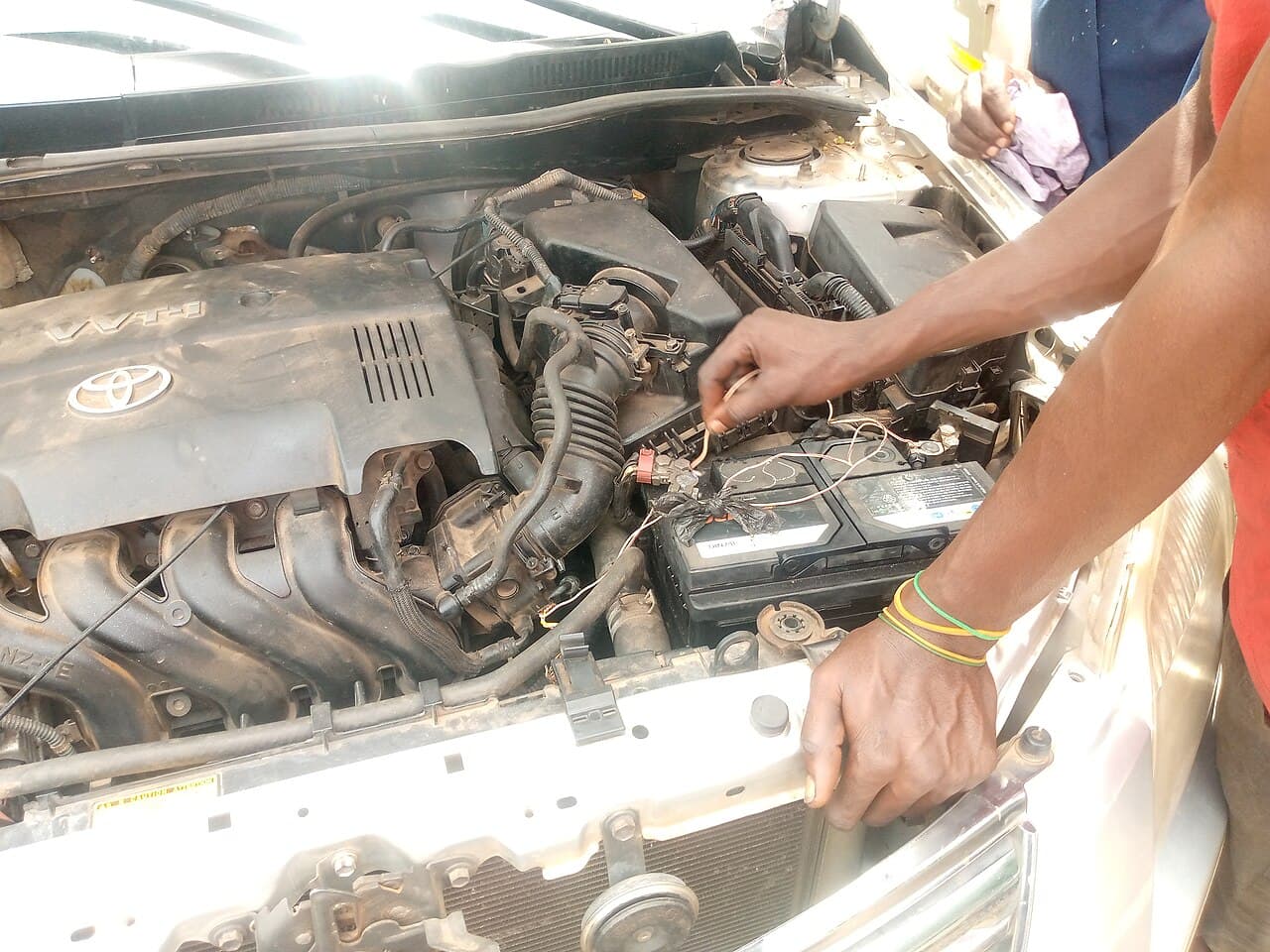
A lead-acid battery is not ordinary trash. Lead-acid batteries may contain up to 18 pounds of lead and about one gallon of corrosive lead-contaminated sulfuric acid.[6] The EPA's advice is: "Return lead-acid batteries to a battery retailer or local household hazardous waste collection program; do not put lead-acid batteries in the trash or municipal recycling bins."[6] Ask whoever installs your new battery what happens to the old one.
Stop and call a pro if
- The battery keeps dying after a new one goes in. The problem may be in the charging system or something draining power, not the battery. Ask the shop to test it and to put the finding in the estimate.
- The battery case is swollen, cracked or leaking. Do not handle it yourself; let a shop or retailer do it.
- Your car has a battery in the trunk, under a seat or in a hybrid or electric system. Have a shop handle it and ask what it will charge.
- A shop will not give you a written estimate. You can request one (a shop has no obligation to prepare it before 10:00 a.m. or after 4:00 p.m. on a working day),[2] and any complaints can be made to the Division of Consumer Counsel of the Department of Law.[2]
Getting help in Virginia
For other repair prices, see what a car AC recharge costs and what exhaust repair costs. Browse more automotive repair answers.
To get written quotes for your own vehicle, describe the job once and local shops will respond.
Common questions
- Does the shop have to give me a written estimate for a battery replacement?
- On request, yes, if you may be charged more than $25. The shop must give you a written statement of estimated labor, estimated parts, a description of the work and the estimated completion time. Ask before work starts.
- Can the final bill be higher than the estimate?
- Not by more than 10 percent, or 20 percent for a vehicle at least 25 model years old, unless you authorize the additional work or time. That limit applies once you have asked for a written estimate.
- What is a core charge on a car battery?
- Virginia's repair statute recognises core charge agreements: a part that must go back to a manufacturer or distributor under one need not be returned to you, and if you want such a part back you agree to pay the additional core charge or trade-in fee. Ask any shop whether the quote includes a core charge and how it is handled.
- Where should I take an old car battery?
- The EPA says to return lead-acid batteries to a battery retailer or a local household hazardous waste collection program, and not to put them in the trash or municipal recycling bins.
- Who do I complain to about a repair shop in Virginia?
- Shops must post a notice that complaints can be made to the Division of Consumer Counsel of the Department of Law. A violation of the repair statute is a prohibited practice under the Virginia Consumer Protection Act.
Sources
- [1] Va. Code § 59.1-207.2, Definitions, Code of Virginia, Virginia General Assembly. Checked October 27, 2026.
- [2] Va. Code § 59.1-207.3, Written estimate for repair work required upon request, Code of Virginia, Virginia General Assembly. Checked October 27, 2026.
- [3] Va. Code § 59.1-207.4, Offer to return replaced parts required, Code of Virginia, Virginia General Assembly. Checked October 27, 2026.
- [4] Va. Code § 59.1-207.5, Written invoice required upon completion of repair work, Code of Virginia, Virginia General Assembly. Checked October 27, 2026.
- [5] Va. Code § 59.1-207.6, Enforcement; penalties, Code of Virginia, Virginia General Assembly. Checked October 27, 2026.
- [6] Used Household Batteries, U.S. Environmental Protection Agency. Checked October 27, 2026.
Want a pro to handle it?
Describe the job once. Licensed local businesses send quotes, and you pay only when you book one.
Get a quote for Automotive