How much does a whole-house water filter cost in Virginia?
A basic cartridge housing is the cheap part: GE listed its heavy-duty whole-house housing at $75.99 on its own store when we checked on October 26, 2026, before cartridges or installation. The real cost depends on what a water test shows, the equipment that calls for, the plumbing work and permit to put it in, and the cartridges, salt or media it uses each year.
Free to ask. Local shops send quotes, and you pay only when you book one.
By Kasra Taheri, Founder, LoclisPublished
Researched and drafted with AI, then checked claim by claim against the sources listed below before it was published. Prices and rules change; the dates beside each source say when it was last checked.
Step by step
Read when to stop and call a pro, further down this page, before you start.
Step 1: Test the water first
Get a lab test before pricing equipment, so the quote is for the problem you actually have.[4]
Step 3: Decide where to treat
Choose whether the problem needs treating at every tap or only at the faucet you drink and cook from.[5]
Step 4: Check certification
Ask which independent certification the equipment carries for the specific claim you care about.[4]
Step 5: Get two or three quotes
Ask two or three suppliers for written quotes on the same water test results, so you compare like with like.[4]
Step 6: Price the upkeep
Ask each supplier what cartridges, salt, media, lamps and service visits will cost per year, not just the install price.[4]
Step 7: Check the licence
Look up the installer's contractor licence on DPOR's License Lookup before you sign.[8]
Step 8: Ask about the permit
Ask whether the installer will get the building permit for work on your water supply line.[9]
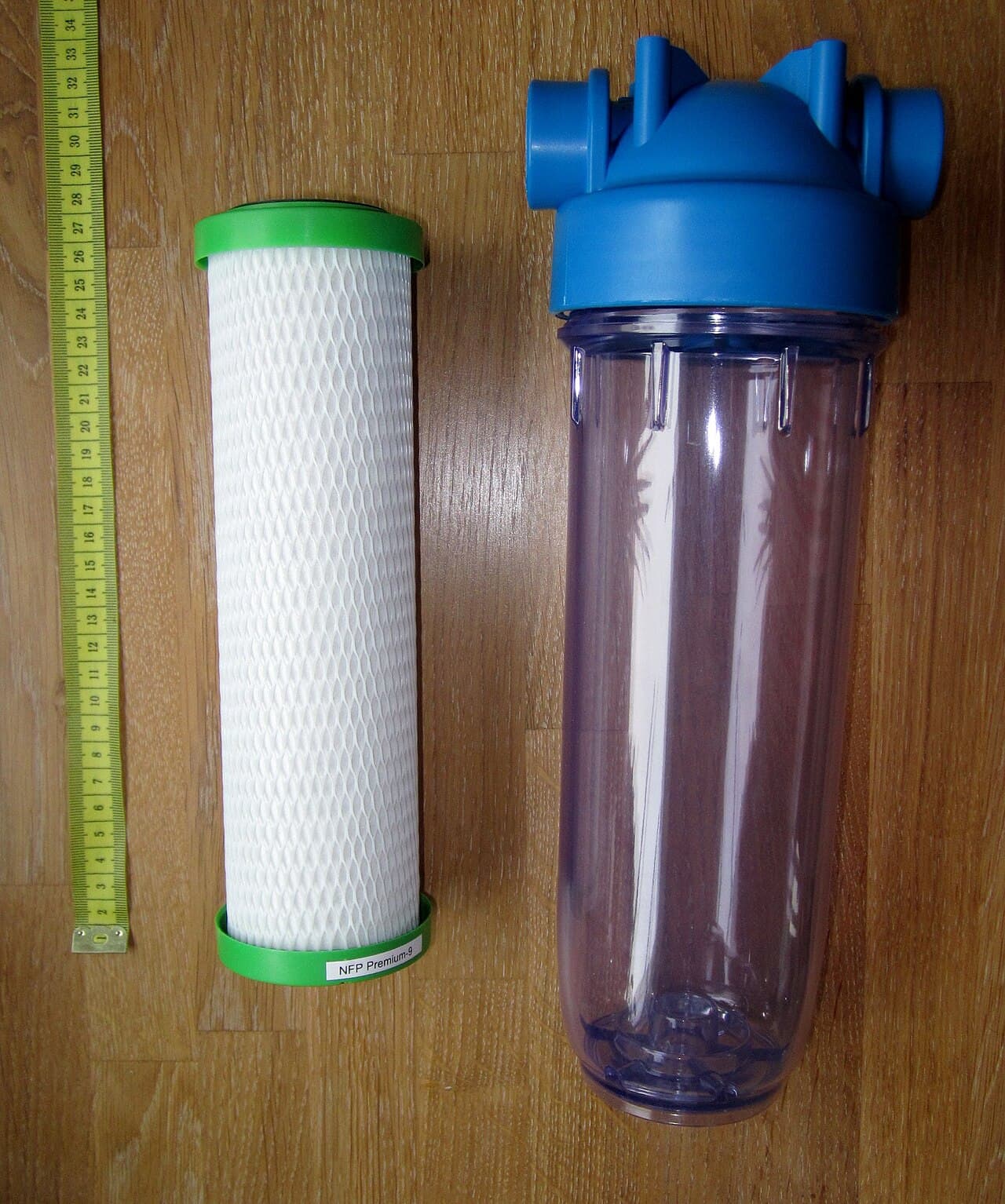
A whole-house filter can mean a single cartridge housing that costs under a hundred dollars or a set of treatment tanks matched to a well test, so the phrase covers two very different jobs. At the low end, GE's own store listed its GXWH40L heavy-duty whole-house housing at $75.99 when we checked on October 26, 2026.[1] The housing does not come with a cartridge,[2] and installation is extra. What you pay depends on what your water needs, what it takes to plumb it in, and what it costs to keep running.
The parts, priced
For a simple cartridge system, the parts are the housing and the cartridges. GE rates its FXHTC carbon cartridge for that housing at 30,000 gallons or 3 months.[2] On that schedule, plan on about four cartridges a year, and price the cartridge your housing takes before you buy the housing.
For comparison, the U.S. Environmental Protection Agency's 2005 filtration fact sheet said: "Prices can range from $20 for a simple pitcher to hundreds of dollars for a reverse osmosis unit".[5] Those figures are two decades old; use them only to see the spread, and price current equipment yourself.
The first thing to pay for is a test. Through Virginia Tech's well-water program, the Virginia Household Water Quality Program, a drinking water clinic kit covers 28 chemical and bacteriological constituents, and the analysis per kit was $70 when we checked on October 26, 2026.[3] The program says comparable analysis at a private commercial lab would cost more than $300.[3]
What the equipment costs to own
Virginia Cooperative Extension's guide to home treatment starts from the point that no single water treatment device treats all problems,[4] and each type has its own running costs:
- Sediment and carbon cartridges. Sediment cartridge filters need their cartridges changed periodically,[4] and carbon cartridges are replaced on the maker's schedule.
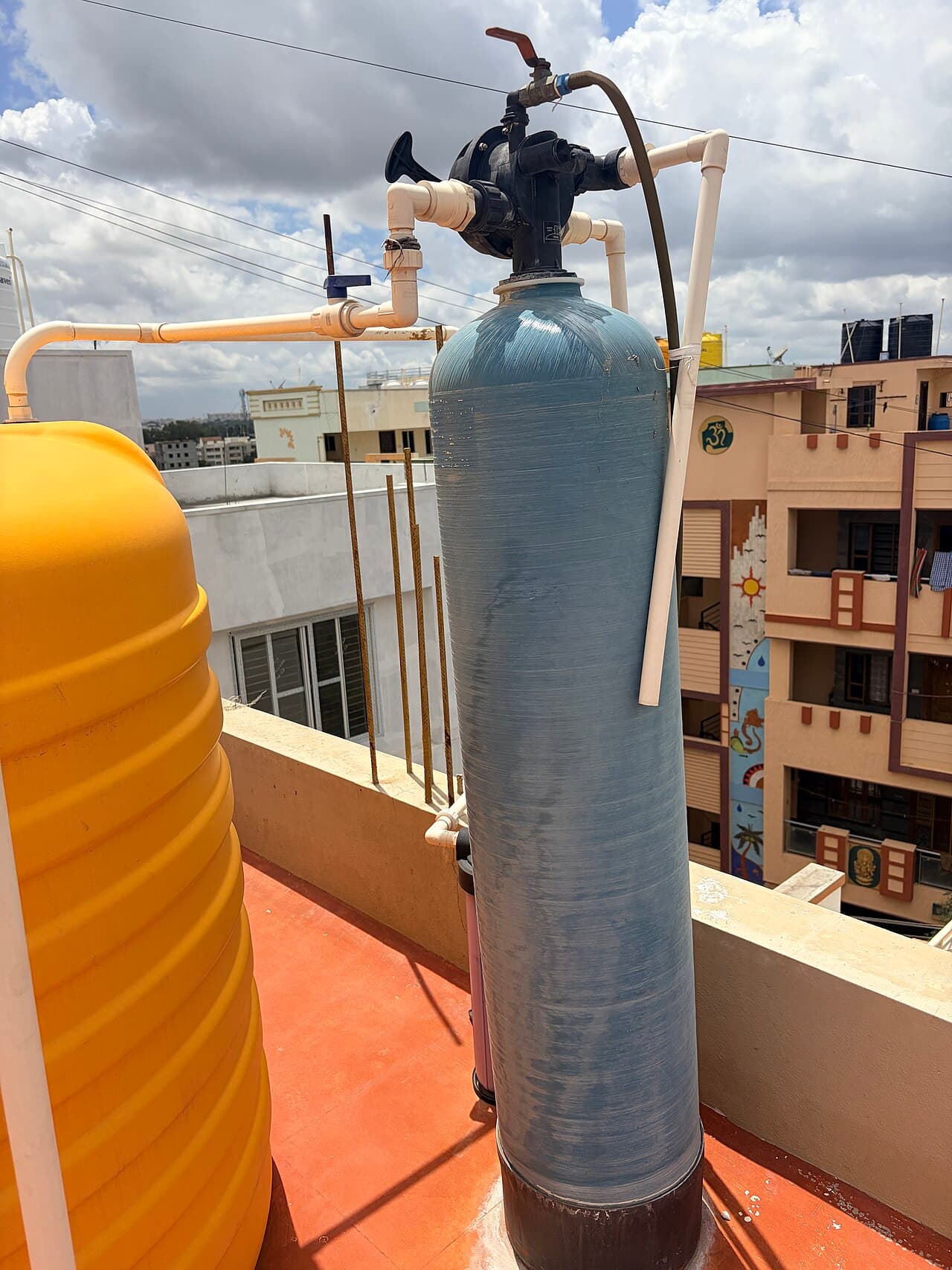
- Media filters. These media filters need periodic backwashing,[4] which uses water and sometimes an automatic control valve.
- Oxidizing filters. These treat iron, manganese or the rotten-egg smell. Oxidizing filters for iron, manganese or hydrogen sulfide are periodically recharged with an oxidizing agent, typically potassium permanganate, and backwashed.[4]
- Water softeners. Salt is the recurring cost: softeners use sodium pellets that typically come in 40-pound bags.[4]
- Reverse osmosis. Usually a single faucet, not the whole house, and only 10 to 20 percent of the water entering a reverse osmosis unit comes out as treated water.[4]
- UV disinfection. UV lamps weaken over time and must be changed on the manufacturer's schedule.[4]
- Acid neutralizers. Using an acid water neutralizing filter will likely increase the hardness of the water,[4] which can add a softener to the bill.
Extension's advice is to weigh the initial cost as well as the operating costs, and to get two or three opinions from different suppliers before buying.[4] It also recommends periodic testing of samples collected before and after any treatment device,[4] so count a follow-up test in the budget.
Treating every tap, or only one
A point-of-use device treats water at one tap, such as an under-sink unit at the kitchen faucet. According to the EPA, for most contaminants a point-of-use device is effective for treating only the water that is consumed. The exceptions are contaminants such as radon, disinfection byproducts and some organic chemicals, which easily turn into gases and may pose a risk when inhaled, such as when showering; a point-of-entry device, one that treats all the water entering the house, can reduce those.[5] So a single-tap unit can be a smaller job when the concern is only what you drink, and the test shows none of those. Whole-house treatment is the one to price when the problem is one of those gases, or staining, scale, odor or sediment throughout the house. How to know what water treatment system you need walks through matching the test to the equipment.
What drives the installation price
Fitting even a simple housing into the main line is plumbing work, and GE's installation instructions show what can be involved. They are written for copper pipe, and for plastic, PVC or galvanized pipe they say to consult a qualified plumber for additional hardware.[2] They recommend a shut-off valve on both sides of the filter, a pressure-reducing valve if the house's water pressure is higher than 80 psi during the day, and an expansion tank in the cold water line between the water heater and the filter, and they call for a 6-gauge copper ground wire across the filter where the pipe is copper or galvanized steel.[2] Each of those adds parts and time.
The Virginia Uniform Statewide Building Code requires a permit for installations or alterations involving the water supply and distribution system,[9] so ask whether the permit fee is in the quote.
Who can do the work matters too. Under the Code of Virginia, the Board for Contractors requires "a master tradesmen license as a condition of licensure for electrical, plumbing, and heating, ventilation, and air conditioning contractors."[7] On Loclis, plumbing work needs a licence at any job size, and an unlicensed quote is refused. Check the business on DPOR's License Lookup.[8]
What to ask for in a written quote
- the water test results the quote is based on, and what each piece of equipment is for
- make, model and the certification each unit carries
- every line item: equipment, valves, bypass, pressure-reducing valve, ground wire, permit, labor
- the cost and schedule of cartridges, salt, media, lamps and any service plan
- warranty on the equipment and on the labor
- the contractor's DPOR licence number and class
Stop and call a pro if
- Your pipe is not copper, or the line is corroded where the filter would go.
- There are no shutoff valves near where the filter would be installed.
- Your water pressure is high or you have no pressure-reducing valve.
- The test shows bacteria, nitrate or lead. Those are health problems, not taste problems, and the fix may be at the well, not a filter.
- The quote involves the water heater. That work is for a licensed plumber; see whether you need a permit to replace a water heater.
Getting quotes in Virginia
Loclis lists DPOR-licensed plumbing businesses with their licence number and class. Look up plumbers in Blacksburg, browse water treatment services and well water testing, or read more plumbing answers.
When you have your test results, describe the job once and licensed local plumbers quote it.
Common questions
- Why do whole-house water filter quotes vary so much?
- Because the phrase covers everything from a single cartridge housing to a train of tanks with a softener, an oxidizing filter and a UV light. The equipment your water test calls for, the plumbing needed to fit it, a permit, and the ongoing cartridges, salt or media make up most of the difference.
- Do I need a water test before buying a whole-house filter?
- Yes. Virginia Cooperative Extension says it is critical to have a sample analyzed by an independent, certified lab before buying treatment equipment. Through Virginia Tech's well-water program, a clinic kit covering 28 constituents was $70 when we checked on October 26, 2026, and city customers can start with the utility's annual water quality report.
- Can I install a whole-house filter myself to save money?
- Changing cartridges is a homeowner job. Cutting a filter into the supply line is not a light one: it means plumbing joints, shutoff valves, a ground wire on metal pipe and often a permit, because the Virginia building code requires one for installations or alterations involving the water supply and distribution system.
- Does the installer need a licence in Virginia?
- Hire a licensed plumbing contractor. Va. Code § 54.1-1100 has the Board for Contractors require a master tradesman licence as a condition of licensure for plumbing contractors, and on Loclis plumbing work needs a licence at any job size. Look the business up on DPOR's License Lookup before you sign.
- What does a whole-house filter cost to run each year?
- Count the replacement parts on the maker's schedule. GE rates its whole-house carbon cartridge for 30,000 gallons or 3 months, so that housing takes about four cartridges a year at that rate. Softeners use salt, media filters use water to backwash, and UV units need a new lamp on their own schedule.
Sources
- [1] GE Whole House Water Filtration System, GXWH40L (product listing), GE Appliances. Checked October 26, 2026.
- [2] Installation Instructions: Heavy-Duty Water Filtration System GXWH40L (49-50220-4), GE Appliances. Checked October 26, 2026.
- [3] Virginia Household Water Quality Program: drinking water clinics, Virginia Cooperative Extension, Virginia Tech. Checked October 26, 2026.
- [4] Virginia Household Water Quality Program: Household Water Treatment (442-670), Virginia Cooperative Extension, Virginia Tech. Checked October 26, 2026.
- [5] Water Health Series: Filtration Facts, U.S. Environmental Protection Agency. Checked October 26, 2026.
- [6] Safe Drinking Water Act: Consumer Confidence Reports (CCR), U.S. Environmental Protection Agency. Checked October 26, 2026.
- [7] Code of Virginia § 54.1-1100, Contractors: Definitions, Code of Virginia, Legislative Information System. Checked October 26, 2026.
- [8] License Lookup, Virginia Department of Professional and Occupational Regulation. Checked October 26, 2026.
- [9] 13VAC5-63-80, Virginia Uniform Statewide Building Code: Section 108 Application for permit, Virginia Administrative Code, Legislative Information System. Checked October 26, 2026.
Want a pro to handle it?
Describe the job once. Licensed local businesses send quotes, and you pay only when you book one.
Get a quote for Plumbing Repair