Why does my water smell like rotten eggs?
The smell is usually hydrogen sulfide gas. If only the hot water smells, the water heater is the likely source: bacteria can grow in it, or sulfate in the water can react with its magnesium corrosion-control rod. If hot and cold both smell, the gas is in the well water or the plumbing, and a lab test shows how much is there and how to treat it.
Free to ask. Local shops send quotes, and you pay only when you book one.
By Kasra Taheri, Founder, LoclisPublished
Researched and drafted with AI, then checked claim by claim against the sources listed below before it was published. Prices and rules change; the dates beside each source say when it was last checked.
Step by step
Read when to stop and call a pro, further down this page, before you start.
Step 1: Smell hot and cold separately
Fill one glass with cold water and one with hot, step away from the sink, and smell each to see which one carries the odor.[1]
Step 2: Rule out the drain
If the water in the glass smells fine but the sink does not, the odor is more likely coming from the drain than from the water.
Step 3: Try several faucets
Check a few faucets, including an outdoor spigot, which usually carries cold water that has not been through a softener, to see whether the smell is everywhere or in one place.
Step 7: Collect the sample carefully
Follow the lab's collection instructions exactly, because hydrogen sulfide escapes from water into the air quickly.[1]
Step 8: Hot water only: call a plumber
If only the hot water smells, have a plumber check the water heater's corrosion control rod instead of opening the heater yourself.[1]
Step 9: Treat by the level found
Use the lab result to choose treatment sized to the concentration, from a carbon filter for traces to an oxidizing system for higher levels.[1]
A rotten-egg smell in tap water is usually hydrogen sulfide, which Virginia Cooperative Extension describes as "a colorless gas that gives water a distinctive sulfur or 'rotten egg' smell and taste, which may be especially noticeable in hot water."[1] Your nose is a sensitive meter here: most people can smell it at concentrations of 0.5 to 1.0 mg/L.[1] The question that narrows it down fastest is whether the smell is in the hot water, the cold water, or both.
First, make sure it is the water and not the air. Virginia Natural Gas, for one, explains that it adds a chemical odorant called mercaptan that makes natural gas smell like rotten eggs.[6] If the smell hangs in a room rather than coming from a glass of water, treat it as a possible gas leak and read the first item under "Stop and call a pro if" below.
Only the hot water smells: look at the water heater
The bacteria that produce hydrogen sulfide thrive in low-oxygen places like wells, plumbing systems, water softeners and water heaters.[1] A tank heater is warm, dark and full of standing water. Extension also notes that sulfates can be chemically changed to hydrogen sulfide in some water heaters by a reaction with the heater's magnesium corrosion control rod.[1]
Its advice is direct: "Ask a plumber to check the corrosion control rod in the hot water heater."[1] It adds that a rod made of aluminum rather than magnesium may address the problem, but to check with the water heater's manufacturer first so the warranty is not affected.[1] There is a limit to that fix: "If hydrogen sulfide is being produced by microorganisms inside your water heater, replacing the corrosion control rod will not solve the problem."[1]
Leave the heater itself to a licensed plumber; Loclis does not publish how-tos for working on water heaters. See whether you need a permit to replace a water heater if replacement comes up.
Hot and cold both smell: look at the water itself
When every tap smells, the gas is usually already in the water when it reaches the house. Extension says hydrogen sulfide is often naturally present in wells drilled in shale or sandstone, or near coal or oil fields, and that its presence can be seasonal, and it often shows up in well water that also has iron or manganese or a low pH.[1]
There is one cause you should rule out. Extension warns that hydrogen sulfide may indicate sewage contamination, particularly in poorly constructed or shallow wells near leaky sewer lines or septic drainfields.[1] "If sewage contamination is suspected, test your water for coliform bacteria and nitrate."[1] The EPA's checklist for well owners also lists an "Objectionable taste or smell" as a reason to test for hydrogen sulfide, corrosion and metals.[5]
On city or county water, a sulfur smell in the cold water at every tap is something to report. The EPA lists a secondary level for odor of 3 TON (threshold odor number), with "rotten-egg" among the smells it describes,[4] and its advice to customers is to identify your local public water system and contact it.[4]
Is it harmful?
Not at low levels in itself, but it can raise other risks. Extension says low levels of hydrogen sulfide in household water are not a health hazard, but that hydrogen sulfide can make water more corrosive, which can result in leaching of metals present in the plumbing system.[1] Those metals are the health concern: consuming some of the contaminants that may be dissolved by corrosive water may pose health risks, particularly metals like copper and lead.[2] If your household water is corrosive, it is strongly recommended that you test for metals like lead and copper.[2] So add a lead and copper test when you test for the smell.
The gas itself matters in a closed room: in very rare circumstances hydrogen sulfide gas released from water into closed spaces can build up to toxic or flammable levels.[1]
The house pays too. It can corrode plumbing and the exposed metal of appliances, even stainless steel, darken silverware and discolor copper or brass fixtures.[1] It also can clog a water softener's resin bed,[1] and bacteria that feed on sulfur can produce a dark slime, which can stain clothing and clog plumbing.[1]
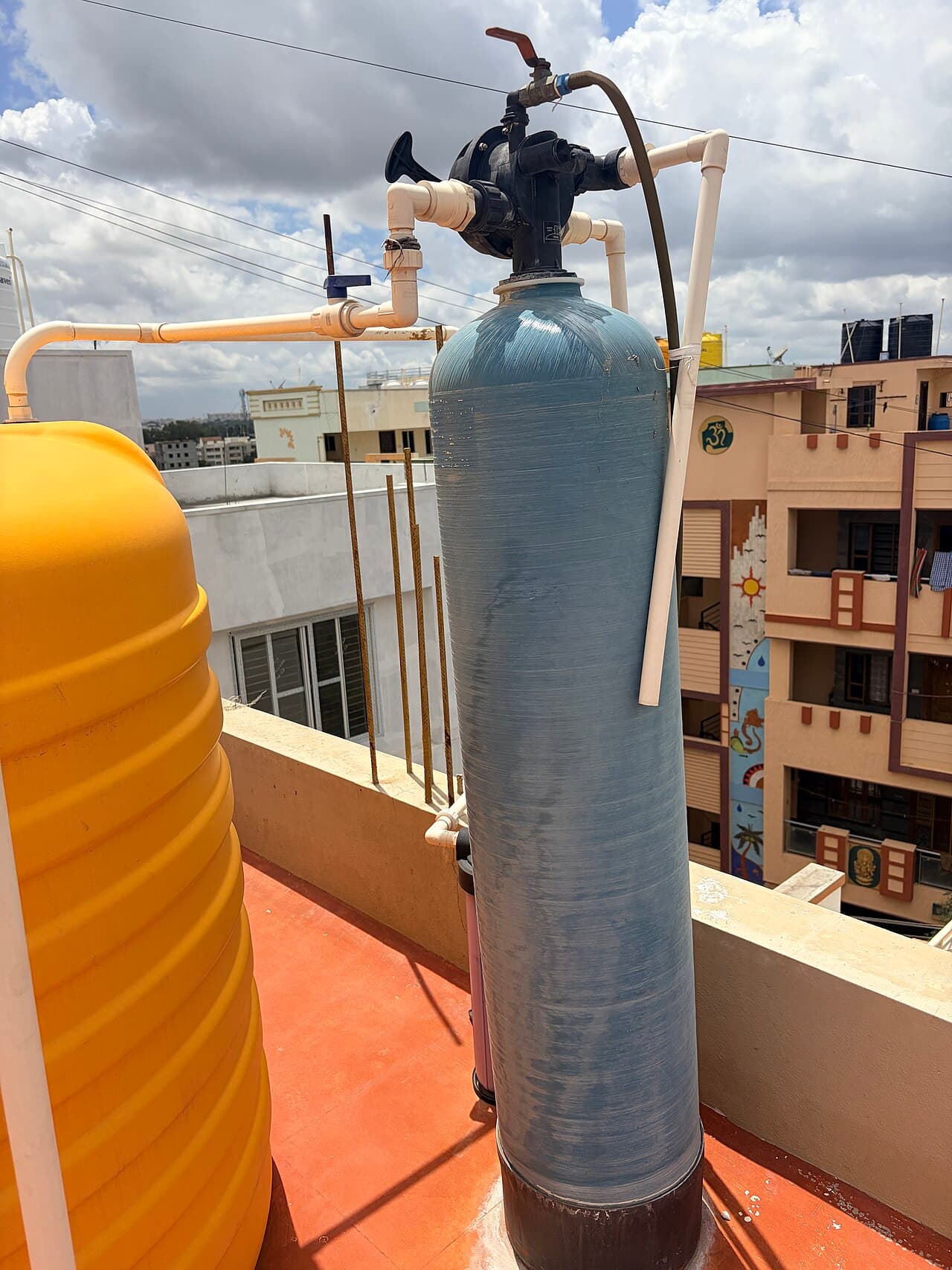
Testing, then treating
You can smell it, but you still need a number, because the treatment depends on the concentration. Hydrogen sulfide escapes into the air quickly, so Extension explains that samples for hydrogen sulfide must be stabilized immediately, most labs supply special bottles that contain a chemical for this, and because that chemical interferes with other tests, a separate sample should be collected for bacteria.[1]
Treatment is matched to the result:
- Trace amounts, up to a few tenths of a milligram per liter, can be removed with an activated carbon filter.[1]
- For hydrogen sulfide concentrations up to 6 mg/L, an oxidizing, iron-removal filter containing manganese greensand can be used.[1] Extension adds that water with a pH below 6.7 may first need an acid water neutralizer.[1]
- Above 6 mg/L, an oxidizing agent like chlorine or potassium permanganate must be injected into the plumbing system, followed by a holding tank and a filter.[1]
If sulfur bacteria in the well are the cause, shock chlorination can knock them back, but Extension cautions that control of sulfur bacteria may only be temporary and routine shock chlorination may be required.[1] Virginia Tech's well-water program recommends calling a water well systems provider (licensed well driller) to shock chlorinate the well,[3] because the dose depends on details such as the well's depth, diameter and water level.[3] For choosing equipment, see how to know what water treatment system you need.
Stop and call a pro if
- You smell rotten eggs in the air. Virginia Natural Gas says to leave the area immediately, avoid anything that may cause a spark, including light switches and telephones, and call 911 once you are a safe distance away.[6] Then call your gas company.
- A strong sulfur smell builds up in a closed space such as a well house, basement or utility room. Hydrogen sulfide released from water into closed spaces can, in very rare cases, reach toxic or flammable levels.[1] Leave the space and keep others out of it. If you cannot tell the smell from a gas leak, follow the first item above; otherwise have a licensed well driller or water treatment professional find the source before anyone works in there.
- Only the hot water smells. The water heater's rod and tank are a licensed plumber's job.
- The water smells like sewage, or your well is shallow or near a septic system. Test for coliform bacteria and nitrate, and consider using other water for drinking until you have results.
- The smell came back after treatment or the well needs disinfecting. Call a licensed well driller.
- Black slime is clogging fixtures or staining laundry.
Getting help in Virginia
Loclis lists DPOR-licensed plumbing businesses with their licence number and class. Look up plumbers in Blacksburg, browse well water testing and water treatment services, or read more plumbing answers.
Describe the smell once, say whether it is in the hot water, the cold or both, and licensed local plumbers quote it.
Common questions
- Is water that smells like rotten eggs safe to drink?
- Low levels of hydrogen sulfide are not a health hazard, according to Virginia Cooperative Extension, and the sulfur bacteria that make it do not represent a health risk. Two cautions: hydrogen sulfide can make water more corrosive, so it can pick up metals such as lead and copper from the plumbing, and the smell can come from sewage reaching a well. Test for lead and copper, and for coliform bacteria and nitrate if your well is shallow or near a septic system.
- Why does only my hot water smell like rotten eggs?
- The water heater is the usual cause. Bacteria that make hydrogen sulfide thrive in water heaters, and sulfate can react with a magnesium corrosion control rod. Extension's advice is to ask a plumber to check the rod, and to check with the heater's manufacturer before changing it so the warranty is not affected.
- Can a water softener cause a sulfur smell?
- It can be part of it. Extension lists water softeners among the low-oxygen places where hydrogen sulfide bacteria thrive, and notes that hydrogen sulfide can clog a softener's resin bed. Keep the softener serviced on its schedule and include it in what you tell a water treatment professional.
- Will a regular carbon filter get rid of the smell?
- Only at trace levels. Extension says an activated carbon filter can remove up to a few tenths of a milligram per liter. Higher levels need an oxidizing filter or chemical injection, so test first to know which you need.
- How can I tell the smell from a gas leak?
- Where the smell is. A water smell is strongest at the glass or the faucet. Natural gas has an added odorant that smells like rotten eggs, so if the smell is in the air of a room, Virginia Natural Gas says to leave the area immediately and call 911 from a safe distance.
Sources
- [1] Virginia Household Water Quality Program: Sulfate and Hydrogen Sulfide in Household Water (442-658), Virginia Cooperative Extension, Virginia Tech. Checked October 26, 2026.
- [2] Virginia Household Water Quality Program: Corrosive Household Water (442-665), Virginia Cooperative Extension, Virginia Tech. Checked October 26, 2026.
- [3] Virginia Household Water Quality Program: Frequently Asked Questions, Virginia Cooperative Extension, Virginia Tech. Checked October 26, 2026.
- [4] Secondary Drinking Water Standards: Guidance for Nuisance Chemicals, U.S. Environmental Protection Agency. Checked October 26, 2026.
- [5] Protect Your Home's Water, U.S. Environmental Protection Agency. Checked October 26, 2026.
- [6] Safety: Smell Gas? Act Fast, Virginia Natural Gas. Checked October 26, 2026.
Want a pro to handle it?
Describe the job once. Licensed local businesses send quotes, and you pay only when you book one.
Get a quote for Plumbing Repair