How often should I edge my lawn?
Trim along the edges every time you mow, and recut the hard edge with a blade edger whenever grass starts lapping over the concrete. In the growing season that mowing rhythm is roughly weekly for most Virginia lawns. Creeping grasses such as bermudagrass and Kentucky bluegrass need the blade edger most often; bunch-type tall fescue needs it least, and dormant grass hardly at all.
Free to ask. Local shops send quotes, and you pay only when you book one.
By Kasra Taheri, Founder, LoclisUpdated
Researched and drafted with AI, then checked claim by claim against the sources listed below before it was published. Prices and rules change; the dates beside each source say when it was last checked.
Step by step
Read when to stop and call a pro, further down this page, before you start.
Step 1: Know your grass
Find out whether your lawn is a creeping grass like bermudagrass or Kentucky bluegrass or a bunch-type like tall fescue.[3]
Step 2: Cut the line in spring
Recut a crisp edge with a blade edger as the lawn greens up, before the season's growth gets ahead of you.
Step 3: Trim at every mowing
Run a string trimmer along sidewalks, driveway and beds each time you mow, following the line you cut.
Step 4: Watch the overhang
Recut with the blade edger whenever grass leans over the concrete or runners start lying on the slab.
Step 5: Edge bermudagrass hardest in summer
Plan on the most edging in summer for bermudagrass, which spreads fast in its growing season.[3]
Step 6: Edge cool-season grass in spring and fall
Expect the most edge growth on tall fescue and bluegrass in spring and fall, when they grow best.[3]
Step 7: Ease off in dormancy
Skip edging while warm-season grass is dormant in winter, or while unwatered fescue is dormant in summer heat.[2]
Step 8: Sweep the joints
Sweep soil and clippings out of the seam and joints after each session so nothing new roots there.[4]
Step 9: Clean up onto the lawn
Blow or sweep clippings back onto the grass, never into the street or a storm drain.[6]
Trim the edges every time you mow, and recut the hard edge with a blade edger whenever the grass starts to lap over the concrete. For most Virginia lawns in the growing season that means a trim roughly every week and a blade recut every so often, more often for creeping grasses such as bermudagrass and less for tall fescue. When the grass is dormant, the edge needs little or nothing.
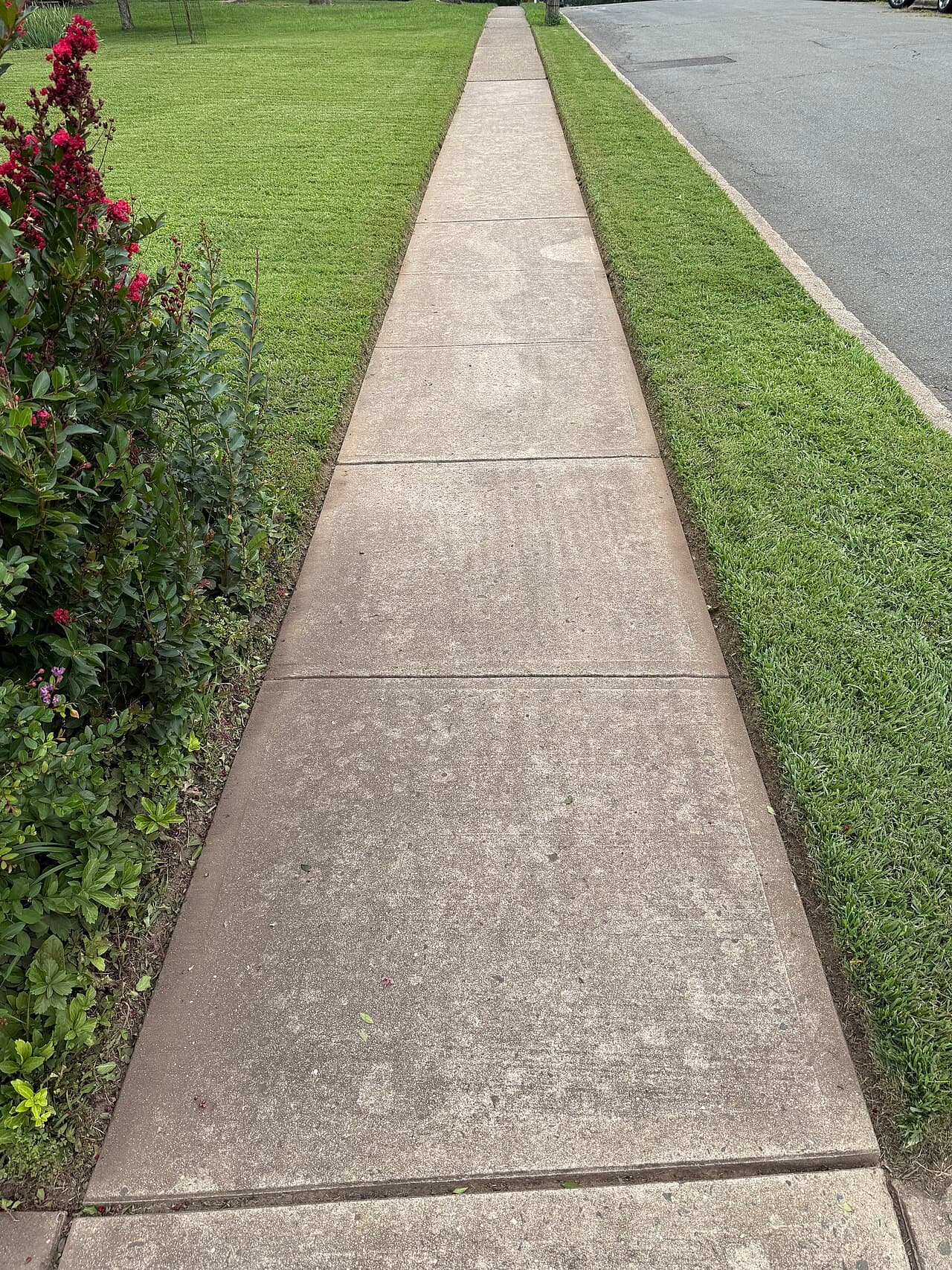
Edging follows mowing
The edge grows as fast as the rest of the lawn, so your mowing schedule sets the edging schedule. Virginia Cooperative Extension's rule is to mow often enough that only one third of the leaf height is removed at any one mowing,[1] which it puts at probably every five to six days during the active growing season, and every 10 days or less when growth slows down.[1]
Henrico County's Extension office gives a similar range by how polished you want the lawn: mowing twice a week for a high-quality, manicured cool-season lawn, weekly for regular maintenance, and every 10 to 14 days for a reduced-maintenance lawn.[2] Whatever rhythm you settle on for mowing, a quick trim along the edges on the same day keeps the line in place.
Two kinds of edging
- The trim. A string trimmer run along the sidewalk, driveway and bed edges at each mowing. It takes minutes and keeps the grass from leaning over the concrete.
- The recut. A blade edger, or a half-moon hand edger on a short walk, run along the seam to cut a clean vertical line again. That is needed when the trim alone no longer holds the line, which happens far more often on a fast creeper than on tall fescue.
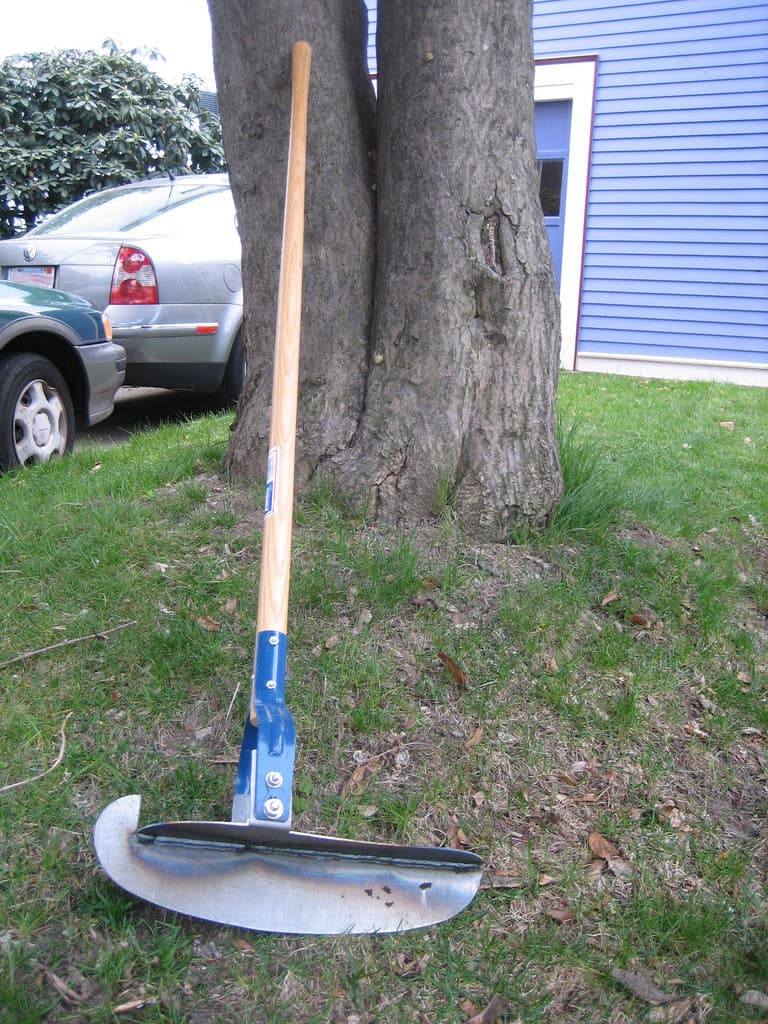
Your grass sets the pace
Virginia Tech's turfgrass guide rates bermudagrass as high maintenance during the growing season, primarily because of mowing and edging requirements.[3] Kentucky bluegrass has aggressive creeping potential from rhizomes,[3] so it also needs regular recuts. Among warm-season grasses, zoysiagrass has less stem encroachment into beds than bermudagrass and a lower mowing requirement.[3] And Virginia Tech recommends managing tall fescue as a non-creeping, bunch-type grass,[3] which is why a fescue edge holds its shape longest.
If you are not sure what you have, see why grass keeps growing into sidewalk cracks, which covers how to tell a creeping grass from a bunch-type one.
Your season sets the rest
Virginia's two kinds of lawn grow at different times. Cool-season grasses perform best in spring and fall in Virginia, while warm-season grasses thrive from mid-spring through mid-fall.[3] In practice:
- Tall fescue and bluegrass lawns. Edge most in spring and again in fall. Tall fescue can go dormant in the heat of summer unless it is watered,[2] so edging can ease off then.
- Bermudagrass and zoysia lawns. Edge most from mid-spring through mid-fall. Warm-season grasses are dormant for 4 to 5 months from late fall to early spring,[3] so winter edging is rarely needed.
A good habit for any lawn is to cut a fresh, crisp line in early spring as growth starts, then hold it with trims through the season.
Signs it is time to recut
- Grass blades lean over the concrete even right after a trim.
- Runners are lying on the slab or poking into the first joint.
- The bare strip along the edge has filled in and the line is wavy.
- Soil and clippings are building up in the seam. Cornell's turf weed guide recommends minimizing soil buildup in cracks, joints and other openings through regular sweeping,[4] which keeps new grass and weeds from rooting there.
Each time you edge
Recut on the same line rather than a little further into the lawn each time, or the bare strip widens. With a powered edger, Husqvarna's manual says to always wear eye protection and keep children, animals, onlookers and helpers 15 metres (50 feet) away.[5] Then blow or sweep the clippings back onto the lawn. Prince William County lists grass clippings and leaf litter among the potential sources of illicit discharges to the storm drain system.[6] For the technique, see how to edge a lawn along a sidewalk.
Stop and call a pro if
- The edge has been lost under thick runners along long stretches and you would rather have it cut back once by a crew.
- Bermudagrass keeps invading beds and cracks despite regular edging, and you want a herbicide program.
- The sidewalk or driveway slabs have heaved or cracked; see whether to repair or replace cracked concrete.
Weighing a service? Read whether edging is worth adding to a weekly lawn service, browse the lawn and landscaping answers, or look up lawn and landscaping businesses around Blacksburg. To have it kept up for you, describe the job once and local businesses quote it.
Common questions
- Do I need to edge every time I mow?
- A quick trim along the edges every time you mow is what keeps a line sharp. Cutting the hard edge with a blade edger is needed less often, whenever the grass starts lapping over the concrete or runners appear on the slab.
- How often should I edge bermudagrass?
- More often than tall fescue or zoysia during summer. Virginia Tech rates bermudagrass as high maintenance in its growing season mainly because of mowing and edging. Trim at each mowing and expect to recut the hard edge regularly from mid-spring through mid-fall, then very little while it is dormant in winter.
- Can edging too often hurt the lawn?
- Recutting the same line is fine. The usual problem is cutting a little further into the lawn each time, which widens the bare strip and can scalp the turf. Keep the blade on the same seam and set it only as deep as needed to cut the grass and runners.
- Should I edge in winter?
- Rarely. Warm-season grasses such as bermudagrass and zoysia are dormant for months in a Virginia winter, and cool-season grasses grow slowly in the cold. A tidy-up before spring growth starts is usually all the edge needs.
- Is edging along flower beds on the same schedule?
- Roughly, though beds give creeping grass a soft path. Bermudagrass and Kentucky bluegrass push into beds through their creeping stems, so check bed edges as often as sidewalk edges in the growing season and recut them when grass reaches into the mulch.
Sources
- [1] Mowing To Recycle Grass Clippings (430-402), Virginia Cooperative Extension, Virginia Tech. Checked October 26, 2026.
- [2] SMART Lawns (revised March 2022), Virginia Cooperative Extension, Henrico County Office. Checked October 26, 2026.
- [3] Selecting Turfgrass for Virginia (SPES-748), Virginia Cooperative Extension, Virginia Tech. Checked October 26, 2026.
- [4] Hard Surfaces, Cornell University, Turfgrass and Landscape Weed ID. Checked October 26, 2026.
- [5] Edger Attachment Operator's Manual, Husqvarna. Checked October 26, 2026.
- [6] Stormwater Pollution Reduction, Prince William County, Department of Environmental Services. Checked October 26, 2026.
Want a pro to handle it?
Describe the job once. Licensed local businesses send quotes, and you pay only when you book one.
Get a quote from a local pro