How do I edge a lawn along a sidewalk?
Clear stones and debris off the edge, put on eye and ear protection, long trousers and sturdy shoes, and set the edger's blade depth before you start. Then walk the blade along the seam where grass meets concrete, letting the slab guide you, lift out the loose strip of sod and runners, and sweep the clippings back onto the lawn rather than into the street.
Free to ask. Local shops send quotes, and you pay only when you book one.
By Kasra Taheri, Founder, LoclisUpdated
Researched and drafted with AI, then checked claim by claim against the sources listed below before it was published. Prices and rules change; the dates beside each source say when it was last checked.
Step by step
Read when to stop and call a pro, further down this page, before you start.
Step 1: Choose the tool
Use a string trimmer for a light touch-up, and a blade edger or a half-moon hand edger to recut an edge the grass has crept over.
Step 2: Clear the edge
Pick up stones, broken glass, nails, wire and string along the sidewalk so the blade cannot throw them or wrap them up.[1]
Step 3: Flag hidden lines
Mark sprinkler heads, landscape lighting cable and pet fence wire that run near the edge so you can steer around them.
Step 4: Gear up
Wear protective glasses, ear protection, gloves, long trousers and heavy-duty shoes before you start the edger.[1]
Step 5: Keep people back
Keep children, pets and helpers 15 metres (50 feet) away, and stop the machine if anyone comes closer.[1]
Step 6: Set the depth
Adjust the cutting depth before you start work, not partway down the sidewalk.[1]
Step 7: Line up on the seam
Rest the guide wheel or shoe on the concrete and line the blade up right where the grass meets the slab.
Step 8: Walk it slowly
Move at a steady walking pace and let the blade do the cutting instead of forcing it into the ground.
Step 9: Clear clogs safely
Stop the engine and wait until the blade has stopped before pulling grass or stones out of the blade guard.[1]
Step 10: Lift the strip
Pull out the loose sliver of sod and any runners lying on the concrete by hand or with a flat spade.
Step 11: Sweep it back
Sweep or blow clippings and soil back onto the lawn, never into the street gutter or a storm drain.[3]
Step 12: Touch up each mowing
Run a string trimmer along the new line each time you mow so the edge stays sharp between recuts.
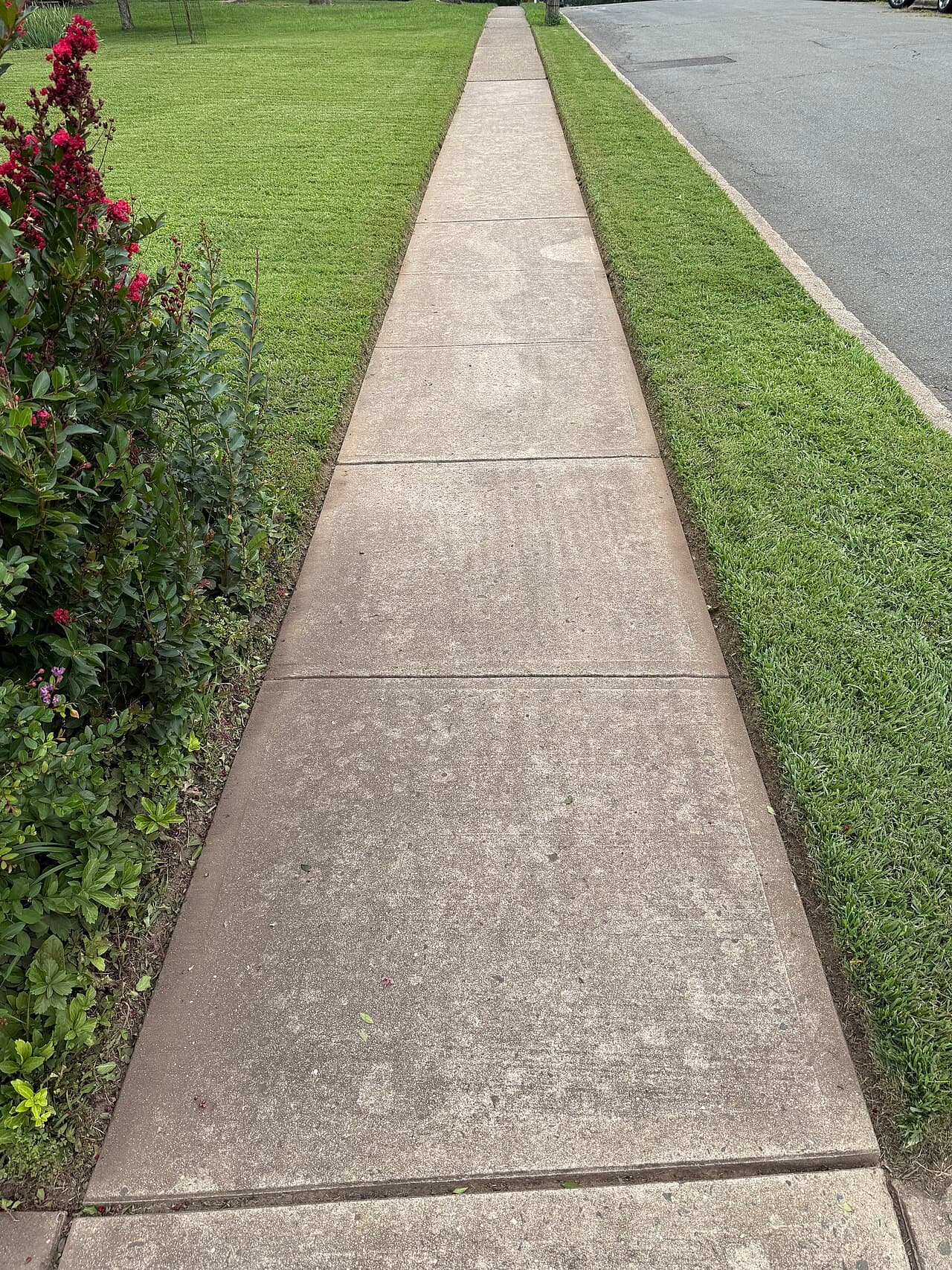
Edging a sidewalk is two jobs: cutting a clean vertical line where the turf meets the concrete, and clearing away the grass that has already crept over the slab. A string trimmer turned on its side handles the regular touch-up. When the grass has spread onto the concrete, a blade edger or a half-moon hand edger cuts the sharp line back in, and after that the trimmer keeps it.
Pick the right tool
- String trimmer. Fast, follows curves, and most homeowners already own one. Turn the head vertical and run the line along the seam. It leaves a softer edge and wears through line quickly against concrete.
- Powered blade edger. A walk-behind machine or a trimmer attachment with a spinning vertical blade. It cuts a crisp slot through turf and runners and is the tool for winning back an overgrown edge.
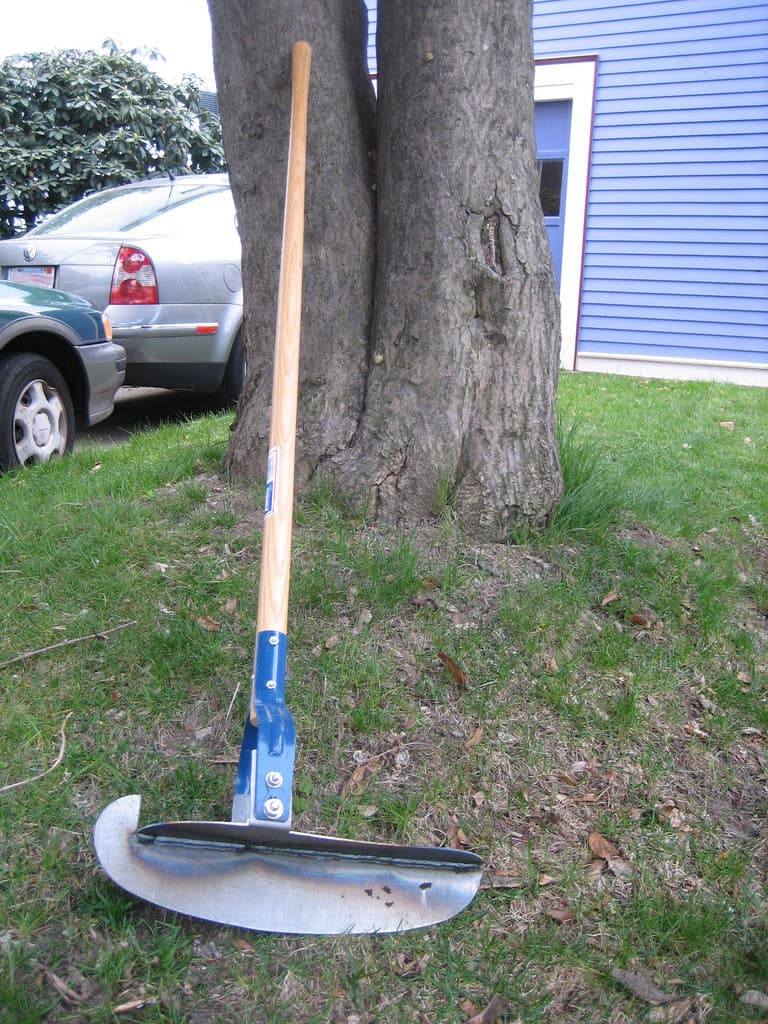
- Half-moon hand edger. Quiet, cheap and slow. You step it into the soil along the slab and rock it. It works well for a short front walk or a first cut in soft, moist soil.
Before you start
Walk the length of the sidewalk first. Husqvarna's edger manual says to remove stones, broken glass, nails, wire and string that can be thrown or can wrap around the blade.[1] While you are there, flag anything buried close to the edge, such as sprinkler heads, low-voltage lighting cable or invisible pet fence wire, so you can steer around it.
Dress for flying debris. Stones and debris thrown up by the blade can cause blindness or other serious injury.[1] Wear protective glasses, long trousers and heavy-duty shoes,[1] along with ear protection and approved eye protection, and approved protective gloves.[1] Children, animals, onlookers and helpers should stay outside a 15-metre (50-foot) safety zone, and the machine should be stopped if anyone approaches.[1] On a busy front walk, that may mean waiting for a quiet time of day.
Finally, adjust the cutting depth before starting work.[1] Aim for just enough depth to sever the grass and its runners at the slab edge. Going deeper rarely improves the line and makes the blade more likely to dig into the gravel under the concrete.
Cutting the edge
With a wheeled edger, set the guide wheel or shoe on the sidewalk so the blade sits right at the seam, then walk forward at a steady pace. Let the blade cut; forcing it down makes it bounce and wander. Keep the blade close to the ground, never lean over the blade guard, and take extra care when pulling the edger toward you.[1]
Grass and soil will pack into the guard on an overgrown edge. Stop the engine before cleaning out grass and stones that collect in the guard.[1] The blade keeps turning after the engine stops, so wait until the blade has stopped before your hands go near it.[1] If heavy vibration starts, stop the engine, pull the cable off the spark plug and check the machine for damage[1] before going on; a bent or chipped blade belongs at a repair shop.
With a half-moon edger, stand on the lawn side, set the blade along the concrete and press it in with your foot, then move along by roughly the blade's width each time. With a string trimmer, hold the head vertical, keep the line just touching the seam, and walk slowly.
Once the line is cut, pull out the loose sliver of sod and lift any runners lying on the concrete. On a badly overgrown walk, a flat spade helps peel back the mat of grass that has rooted on the slab.
Clean up the right way
The clippings and soil on the sidewalk should go back onto the lawn, not into the street. Prince William County lists grass clippings and leaf litter among the potential sources of illicit discharges to the storm drain system,[3] and notes that the storm drain flows directly to local creeks and streams.[3] Roanoke County's stormwater guidance says to throw nothing in a storm drain, ditch or drainage swale.[4] Under Virginia law, depositing soil, sand, mud, gravel or other substances on a highway so as to create a hazard to the traveling public is a Class 1 misdemeanor.[5] A push broom or a blower aimed toward the grass takes a minute.
Keeping the edge sharp
How often the edge needs recutting depends mostly on your grass. Bermudagrass spreads by rhizomes and stolons with extremely fast lateral spread,[2] and Kentucky bluegrass creeps aggressively from rhizomes,[2] so both re-cover a cut edge quickly in their growing season. By contrast, tall fescue is managed as a bunch-type, non-creeping grass,[2] so a fescue edge holds much longer. In most yards, a trimmer pass at each mowing plus a blade recut when the grass starts to lap over the concrete keeps things neat. See how often to edge a lawn for a season-by-season schedule, and why grass keeps growing into sidewalk cracks if the problem is the joints rather than the edge.
Stop and call a pro if
- The sidewalk slabs have heaved, sunk or broken, leaving ledges that catch the edger or trip people. That is a concrete problem first; see whether to repair or replace cracked concrete.
- You hit buried cable, wire or irrigation line along the edge.
- The edge runs along a busy street where you cannot keep people well clear of thrown debris.
- Bermudagrass has taken over the edge, the cracks and the beds, and you are weighing a herbicide program.
- The edger vibrates, the blade is bent, or the engine will not hold speed. A shop that handles edger repair can check it.
For more on lawn upkeep, browse the lawn and landscaping answers, see edging and trimming services, or look up lawn and landscaping businesses around Blacksburg. To have it done for you, describe the job once and local businesses quote it.
Common questions
- Can I edge a sidewalk with a string trimmer?
- Yes. Turn the trimmer so the head spins vertically and run the line along the seam between grass and concrete. It is quick and fine for keeping an existing edge tidy, but it leaves a softer line than a blade edger, and it struggles to cut back thick runners that have already crept over the slab.
- Should I mow or edge first?
- Either works. Many people edge first so the mower picks up some of the loose clippings, then sweep or blow what is left on the sidewalk back onto the lawn. What matters more is cleaning up afterward so clippings stay out of the street and storm drains.
- How deep should I cut the edge?
- Only deep enough to sever the grass and runners at the slab edge. Set the depth on the edger before you start, and go shallower if the blade starts throwing gravel from under the concrete or bogging down. Your edger's manual gives the adjustment for your model.
- Do I need safety glasses for a manual edger?
- They are a good idea with any edger, and essential with a powered one. A spinning blade or string can throw stones and debris hard enough to cause blindness or other serious injury, and Husqvarna's edger manual calls for protective glasses every time.
- Why does the grass grow back over the sidewalk so fast?
- Creeping grasses such as bermudagrass and Kentucky bluegrass spread sideways on stems above and below the ground, so they re-cover a cut edge quickly in their growing season. Bunch-type tall fescue spreads much less, so a fescue edge holds longer between cuts.
Sources
- [1] Edger Attachment Operator's Manual, Husqvarna. Checked October 26, 2026.
- [2] Selecting Turfgrass for Virginia (SPES-748), Virginia Cooperative Extension, Virginia Tech. Checked October 26, 2026.
- [3] Stormwater Pollution Reduction, Prince William County, Department of Environmental Services. Checked October 26, 2026.
- [4] Clean Stormwater Makes for Happy Kids, Roanoke County Community Development, Stormwater Management. Checked October 26, 2026.
- [5] Va. Code § 18.2-324, Throwing or depositing certain substances upon highway, Code of Virginia, Virginia General Assembly. Checked October 26, 2026.
Want a pro to handle it?
Describe the job once. Licensed local businesses send quotes, and you pay only when you book one.
Get a quote from a local pro