How do I align garage door safety sensors?
Check that both sensors sit at the same height, 4 to 6 inches above the floor, and that the lenses are clean and face each other with nothing in the beam. Loosen the wing nut or bracket screw on the one that is off, aim it at the other until your opener's indicator lights show steady, snug it, then test the door's reversal with a 2x4.
Free to ask. Local shops send quotes, and you pay only when you book one.
By Kasra Taheri, Founder, LoclisPublished
Researched and drafted with AI, then checked claim by claim against the sources listed below before it was published. Prices and rules change; the dates beside each source say when it was last checked.
Step by step
Read when to stop and call a pro, further down this page, before you start.
Step 1: Clear the beam
Move anything out of the line between the two sensors, and wipe each lens with a soft dry cloth.
Step 2: Check the height
Measure from the floor to each sensor. An electric eye should be installed at a height of 4 to 6 inches above the floor.[1]
Step 3: Look for the sensor that moved
Sight along the line between the sensors and see which one is tilted, loose on its bracket or knocked sideways.
Step 4: Loosen the bracket slightly
Loosen the wing nut or bracket screw on that sensor just enough that you can aim it by hand.
Step 5: Aim it at the other sensor
Turn and tilt it until its lens points straight at the other lens, and watch the indicator lights described in your opener's manual until both show the steady, aligned state.
Step 6: Tighten the bracket
Snug the wing nut or screw without moving the aim, then check that the lights stay steady.
Step 7: Check the wiring you can see
Look at the thin sensor wires for staples, pinches or breaks, without touching any wire connected to the opener.
Step 8: Test the door
Close the door with the remote and wave an object through the beam as it comes down; it should stop and reverse.
Step 9: Test the reversal with a 2x4
Place a 2x4 on the floor in the door's path. If the door does not properly reverse when striking the 2x4, the opener should be disengaged until it is adjusted, repaired or replaced.[1]
Start with the simple things
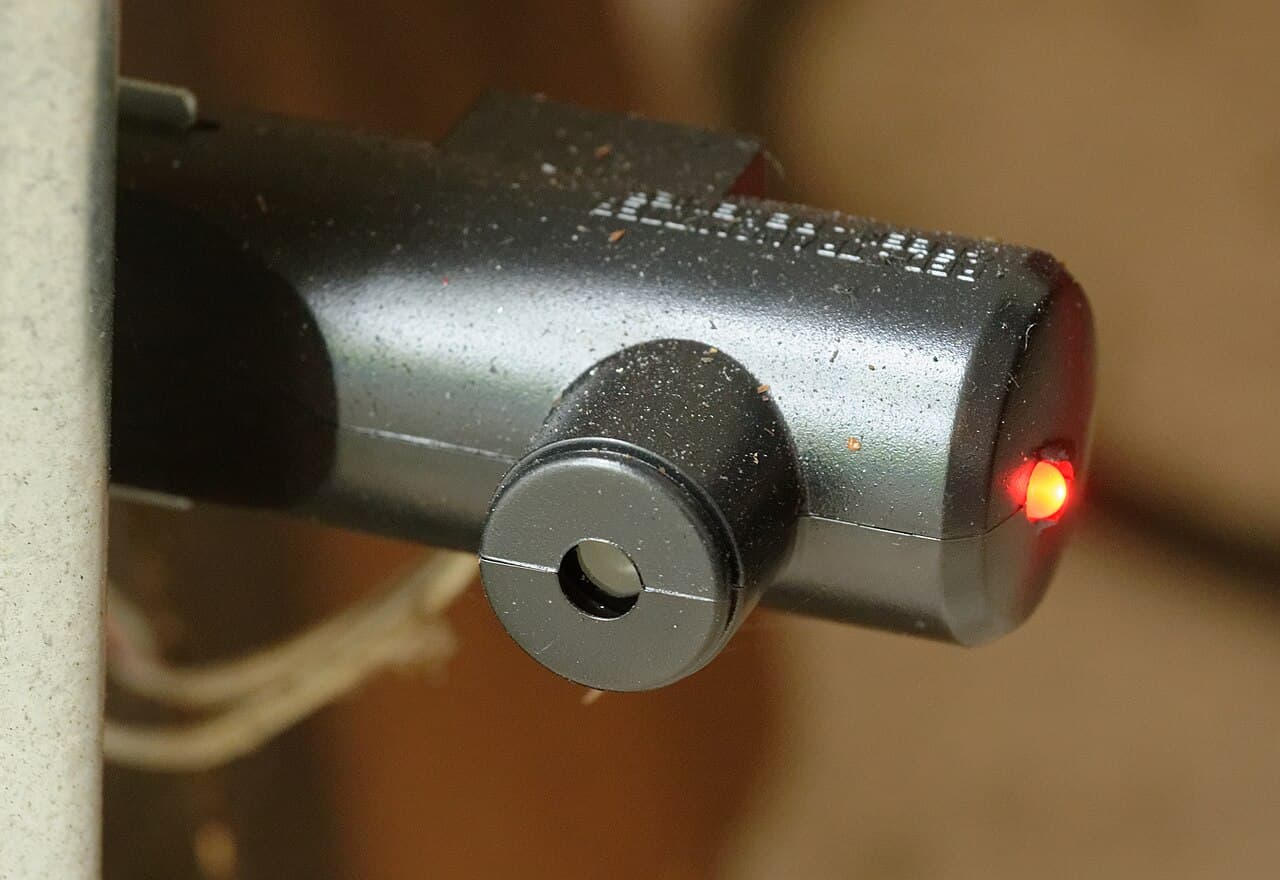
If the door will not close, or stops and reverses on its way down, a sensor that has been knocked out of line is the usual cause. The two safety sensors sit low on either side of the door and send an invisible beam across the opening. When something breaks the beam, or the sensors cannot see each other, the opener will not close the door.
Most of the time the fix is quick: clear the beam, clean the lenses and re-aim the sensor that moved. This is a plug-in-level job. You are only adjusting small brackets, not wiring.
Why the sensors matter
Safety sensors are not an accessory. The CPSC reports that about 73 children between the ages of 2 and 14 have been trapped and killed under automatic garage doors since March 1982.[1] A requirement for external entrapment protection system was added in 1993.[1] This system can be an electric eye, a door edge sensor, or any other device that provides equivalent protection.[1]
So the goal is never just "make the door close." It is to make the door close with the sensors working. Do not tape over a sensor or hold the wall button to get around a fault.
Check the height and the line
Stand back and look across the door opening. Both sensors should be on opposite sides, facing each other, at the same height. An electric eye should be installed at a height of 4 to 6 inches above the floor.[1]
Look for the sensor that has moved. Common causes are a bumped bracket, a bracket that has worked loose on the wall or track, or a sensor that has swung to point at the floor or the wall. Also check that nothing sits in the beam, such as a bin, a hose or a stored item, and wipe each lens with a soft dry cloth. Spider webs, dust and condensation can all block the beam.
Re-aim the sensor
Loosen the wing nut or screw on the bracket of the sensor that is off, just enough to move it by hand. Aim its lens straight at the lens of the other sensor.
Opener makers show the result with indicator lights on the sensors, and the colours and the meaning of a steady or blinking light differ by brand and model. Use the lights described in your opener's manual, and when both show the aligned state, tighten the bracket without moving the aim. Then check again, because a sensor can shift as you tighten it.
If the sensor bracket is bolted to the track or the wall and that mounting is loose, snug it. Do not loosen anything on the door's springs, cables or bottom brackets, and do not unscrew parts of the opener itself.
Test the door
First close the door with the remote and move an object, such as a broom handle, through the beam as the door comes down. It should stop and reverse.
Then do the 2x4 test. The CPSC says: "Place a 2x4 on the floor of the garage in the door's path."[1] If the door does not properly reverse when striking the 2x4, the opener should be disengaged until it is adjusted, repaired or replaced.[1] If you need to disengage it, pull the “quick release” mechanism to detach the garage door from the opener,[1] and have the door looked at before you use the opener again.
Make this a habit. The CPSC advises you to inspect the garage door and the garage door opener every 30 days to make sure they are working properly,[1] and LiftMaster's monthly list includes the line: "Test the safety reversal system."[2]
Stop and call a pro if
- The door does not reverse on the 2x4. The opener should be disengaged until it is adjusted, repaired or replaced.[1] Reversal settings are in the opener, not the sensors.
- The lights will not go steady after you align and clean. The sensor, its wire or the opener may have failed. Testing wire or the terminals at the opener is wiring work: leave it to a technician.
- The door is unbalanced, binding or sticking. If the door is unbalanced or binding, call a trained door systems technician.[2] See what to do if a garage door comes off its track.
- A wire is cut, frayed or chewed. Do not splice it while the opener is plugged in.
- A spring, cable or bottom bracket looks damaged. Do not touch them; they are under high tension.
Getting help in Virginia
For more on the door itself, read how to replace garage door rollers, browse garage door repair answers, or find garage door pros through Loclis garage door repair.
When you would rather have a technician do it, describe the sensor problem and local garage door pros will quote the job. Ask what the quote includes, such as new sensors, wiring and a reversal test.
Common questions
- How high should garage door safety sensors be?
- The CPSC says an electric eye should be installed at a height of 4 to 6 inches above the floor. Both sensors should be at the same height, on opposite sides of the door, so the beam runs across the opening.
- Do I need to align both sensors?
- Usually only one has moved, often the one that was bumped by a bike, a bin or a car. Find the one that is tilted or loose on its bracket, aim it at the other and leave the good one alone. If you cannot tell which, loosen and re-aim each in turn.
- How do I know the door will reverse properly?
- Test it. The CPSC says to place a 2x4 on the floor of the garage in the door's path. If the door does not properly reverse when striking the 2x4, the opener should be disengaged until it is adjusted, repaired or replaced. LiftMaster's monthly checklist also includes testing the safety reversal system.
- Why do sensors matter so much?
- The CPSC reports about 73 children between the ages of 2 and 14 trapped and killed under automatic garage doors from March 1982, as of its publication. The required external entrapment protection, such as an electric eye, is part of why modern openers stop and reverse.
- The lights still will not go steady after I align them. What now?
- Look for a dirty or fogged lens, direct sun or a bright light shining into one sensor, a loose or pinched wire, and a sensor that is not square to the other. If none of that is the cause, the sensor, wire or opener may have failed, and a technician can test it. Do not tie back or bypass the sensors to make the door close.
Sources
- [1] Non-Reversing Automatic Garage Door Openers Are a Hazard (CPSC publication 523), U.S. Consumer Product Safety Commission. Checked October 27, 2026.
- [2] LiftMaster Residential Maintenance, LiftMaster. Checked October 27, 2026.
Want a pro to handle it?
Describe the job once. Licensed local businesses send quotes, and you pay only when you book one.
Get a quote for Garage Doors