How do I get rid of mice in my house?
Find where the mice are traveling, set plenty of snap traps flush against those walls, and keep trapping until the traps stay empty. At the same time, take away food and nesting material and seal every gap larger than a quarter inch with steel wool, hardware cloth or sheet metal. Skip ultrasonic plug-ins, and clean droppings wet, never by sweeping.
Free to ask. Local shops send quotes, and you pay only when you book one.
By Kasra Taheri, Founder, LoclisPublished
Researched and drafted with AI, then checked claim by claim against the sources listed below before it was published. Prices and rules change; the dates beside each source say when it was last checked.
Step by step
Read when to stop and call a pro, further down this page, before you start.
Step 2: Get more traps than you think
Buy mouse-size snap traps and set extra back-up traps, because some traps will fail.[3]
Step 3: Bait lightly
Put a small dab of the food the mice are already eating, or a bit of cotton, on the trigger.[9]
Step 4: Set traps against the walls
Place traps flush against walls and near droppings, gnaw marks and holes, where mice run along edges.[1]
Step 5: Keep traps out of reach
Put traps only where children and pets cannot get to them.[7]
Step 6: Check every day with gloves on
Check traps daily and wear gloves whenever you handle a trap or a dead mouse.[1]
Step 7: Bag dead mice
Spray a dead mouse with disinfectant, seal it in a plastic bag inside a second bag, and put it out with the trash.[2]
Step 8: Clean droppings wet
Mist droppings with disinfectant or a bleach solution and wipe them up; do not sweep or vacuum them dry.[2]
Step 9: Lock up the food
Move dry food, pet food and birdseed into jars, tins or heavy plastic containers.[3]
Step 10: Clear nesting spots
Get rid of spare cardboard boxes, newspaper stacks and clutter where mice can nest.[3]
Step 13: Close the door gaps
Fit door sweeps and weather stripping so mice cannot crawl under exterior doors.[3]
Step 14: Trap until it stays quiet
Keep fresh traps out until they stop catching, then leave a few set to catch any newcomers.
Getting rid of mice takes three things done together: trapping the mice already inside, taking away the food and nesting spots that keep them there, and sealing the gaps they use to get in. Pest experts call this an integrated approach. Prevention, sanitation and sealing come first, with rodenticides only as a last resort.[4] Trapping alone tends to fail because new mice keep arriving, and sealing alone traps the current ones inside.
Confirm it is mice, and find where they go
You may see the signs long before you see a mouse. Look for rodent droppings around food packages, in drawers or cupboards and under the sink; nesting material such as shredded paper, fabric or dried plant matter; chewed food packaging; holes chewed through walls and floors; and stale smells from hidden areas.[6] Mice also leave brown or gray smudges along walls and other surfaces they travel over, marking their regular routes, and they are mostly active at night.[3] A quiet kitchen in the daytime does not mean they are gone.
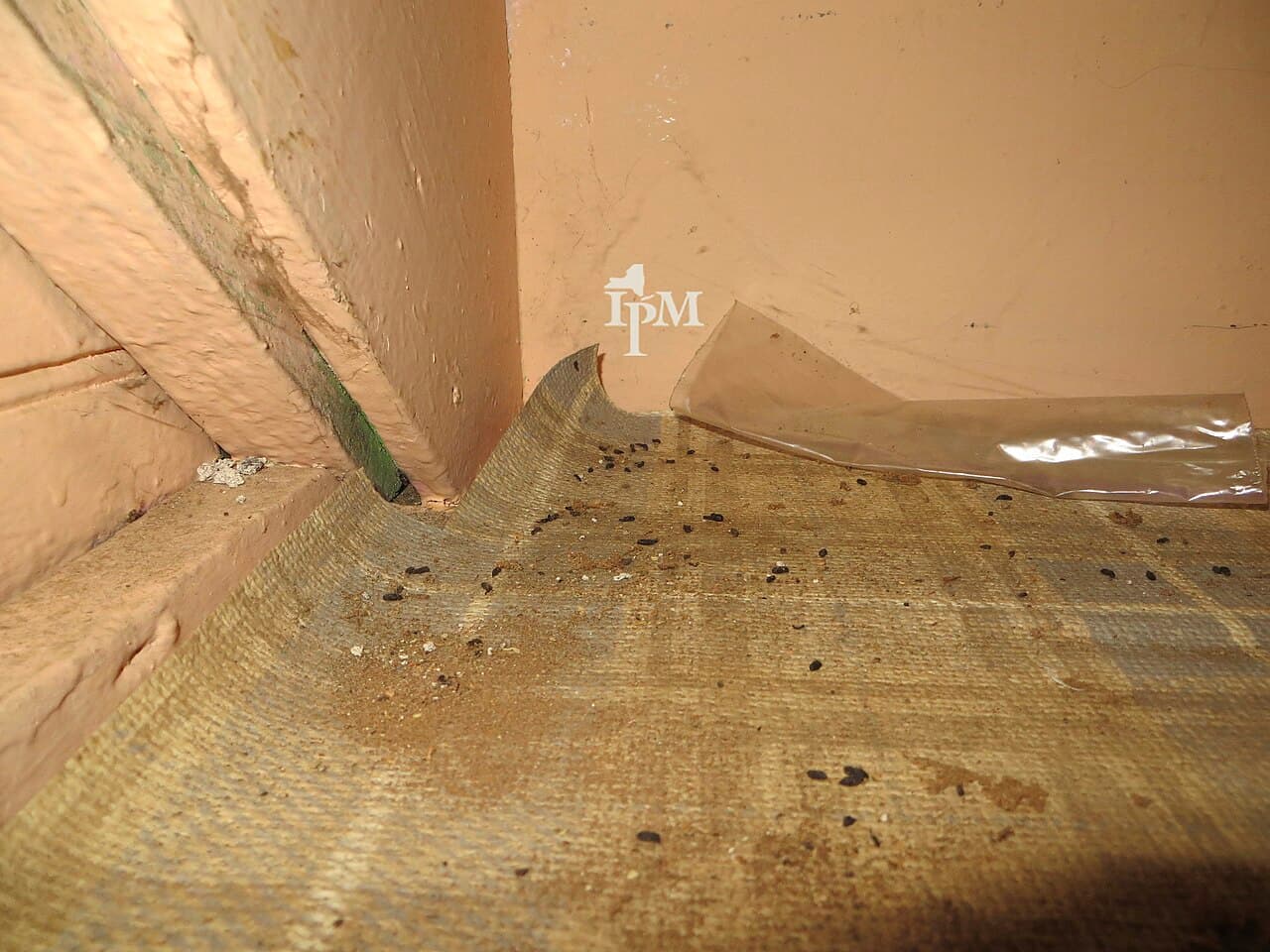
Check the droppings before you buy traps. An adult house mouse weighs about half an ounce and leaves rod-shaped, pointed droppings. A Norway rat weighs 3 to 21 ounces and leaves capsule-shaped droppings.[1] Rats need larger traps and a different approach, covered under the stop signs below.
Set snap traps where mice travel
For most situations, snap traps work well and are a good first step,[9] and they let you see your progress. Where you put them matters more than which brand you buy. Mice travel along edges, such as the line where wall meets floor, using their whiskers as guides, and seldom cross open spaces.[1] Set traps flush against the wall so a mouse passes directly over the trigger,[1] and put them near droppings, gnaw marks and holes, behind appliances and in the backs of cabinets.
Use more traps than feels necessary. Mice usually stay within 30 feet of their nests,[3] so concentrate traps where the signs are. Virginia Tech's rodent guidance suggests a trap every three to four feet along a wall where you find activity, clearing one area before moving to the next.[1] A pair of traps set 1 to 2 inches apart can catch a mouse that jumps over the first one.[9]
Bait matters less than people think. The bait that works is often the food the mice are already eating. Peanut butter is popular and easy to use, but it can be an allergy risk for some people. Use only a small amount on the trigger; with too much, a mouse can take the bait without setting the trap off. A ball of cotton also works, because females looking to build a nest go after it.[9]
Mice are curious and explore new objects, so traps often catch quickly; rats are wary of anything new and take more patience.[1] Expect some traps to fail and set back-up traps, and place traps only where children and pets cannot reach them.[3][7]
Handle catches and droppings safely
Hantaviruses spread to people mainly by breathing air contaminated with rodent urine, droppings or saliva, and the disease is rarely reported in Virginia.[2] The Virginia Department of Health's cleanup routine is still simple and worth following every time:
- If a garage, shed or basement has been closed up, open it and let it air out for at least 30 minutes before working inside.[2]
- Wear gloves. Wet droppings and nesting material first with a commercial disinfectant or a mix of 1½ cups of bleach to 1 gallon of water, misted gently from a spray bottle, then wipe up the debris; do not sweep or vacuum it dry, which puts dust in the air.[2]
- Spray a dead mouse with disinfectant, put it in a plastic bag with enough disinfectant to wet it, seal the bag and place it in a second bag for the trash.[2]
- Wash your gloved hands in disinfectant and then soap and water before taking the gloves off, and wash your hands again afterwards.[2]
Take away food and shelter
If rodents are killed but their food and water are still there, new ones will eventually move in to take their place.[1] Keep unrefrigerated food, pet food and birdseed in jars, tins or durable plastic containers.[3] Wipe up crumbs and spills, and put pet food away at night. Fixing drips helps less with mice than with other pests: mice can get by without drinking water if their food is moist enough.[3] Remove cardboard boxes and newspapers they can nest in, and cut down clutter inside and out, which lets mouse activity go unnoticed.[3]
Seal the way in
This is the step that makes the result last. A mouse can squeeze through any opening ¼ inch across,[1] so check closely.
- Materials. For larger holes, use ¼-inch hardware cloth, 19-gauge or thicker sheet metal, plaster or mortar. Smaller holes can be sealed with caulk or copper wool.[1] Steel wool makes a good temporary plug but may rust over time.[9] Plastic screening, rubber, vinyl, expanding foam and wood are ineffective for plugging mouse holes, because mice chew through them.[9]
- Where to look. Check where pipes and wires go through walls, around vents, along the foundation and under exterior doors,[1][9] and under sinks where plumbing comes through the cabinet. Add door sweeps and weather stripping so mice cannot crawl under doors.[3]
- High openings. Rats and mice also get in through the eaves, the roof and attic vents.[1] Look at those from the ground, and leave any opening you cannot reach from a step stool to a professional.
What to skip
- Ultrasonic plug-ins. The Federal Trade Commission ruled sound devices sold to repel rodents ineffective at controlling rats and mice.[1]
- Mothballs. Mothballs do not repel animals.[5]
- Catch and release. Mice let go outside can find their way back in unless the entry points are sealed.[7]
- Poison indoors. Mice tend to stay within about 30 feet of their nest, so poisoned mice often die inside the house, where the smell of a dead mouse in a wall is hard to deal with.[9] Consumer rodent poisons are sold only as ready-to-use bait stations,[8] and any bait needs to stay away from children and pets.
Stop and call a pro if
- The noise or damage is bigger than a mouse: heavy thumping in the attic, noise in the daytime, or holes too large for a mouse. See what animal is living in your attic, because squirrels, raccoons and bats are wildlife jobs.
- You find rat-size droppings or burrows along the foundation.
- Wiring has been chewed. Mice chewing on wire insulation can cause electrical shorts and fires.[1] Call a professional if electrical equipment has rodents in it or looks damaged.[4]
- The way in is at the roofline. Do not climb onto the roof to seal it.
- You see mice in daylight, or traps keep filling week after week. Seeing a mouse during the day can mean food is scarce or the population is high.[1]
- Someone in the house develops fever, fatigue and shortness of breath after contact with rodents. See a doctor right away and mention the rodent exposure.[2]
Getting help on Loclis
Read when to call an exterminator for mice, what it costs to get rid of mice in Virginia and how to keep mice out in winter. Browse rodent control services, find pest control around Blacksburg or see more pest control answers. When you would rather hand it off, describe the job on Loclis so local pest control businesses can quote it.
Common questions
- What is the most reliable way to catch mice in a house?
- Snap traps, lots of them, set flush against walls where you find droppings and gnaw marks. Mice run along edges and usually stay close to their nests, so traps spaced every few feet along the walls they use catch far more than one trap in the middle of the floor.
- Do ultrasonic mouse repellers work?
- No. The Federal Trade Commission ruled sound devices sold to repel rodents ineffective, and mice quickly get used to regularly repeated sounds. Spend the money on traps and on metal to seal the gaps instead.
- Should I use poison inside the house?
- It is usually a poor choice indoors. Mice stay close to their nests, so poisoned mice often die inside walls and ceilings, and the smell is hard to deal with. If you do use a bait, consumer products come only as ready-to-use bait stations; follow the label and keep them away from children and pets.
- Can I catch mice alive and let them go outside?
- You can use live traps, but released mice may find their way back into the house unless the entry points are sealed. Seal first, or the same mice may simply walk back in.
- Are mouse droppings dangerous to clean up?
- They can be. Hantaviruses spread mainly by breathing air contaminated with rodent urine, droppings or saliva, although the disease is rarely reported in Virginia. Wear gloves, wet the droppings with disinfectant or a bleach solution first, and wipe them up instead of sweeping or vacuuming.
- Will a cat get rid of mice?
- Seldom on its own. A cat may catch a few, but mice have many places to hide and raise young in a house. Traps, cleanup and sealing are what end an infestation.
Sources
- [1] Schools Integrated Pest Management (IPM) for Rats and Mice, Department of Entomology, Virginia Tech. Checked October 27, 2026.
- [2] Hantavirus Pulmonary Syndrome (HPS) fact sheet, Virginia Department of Health. Checked October 27, 2026.
- [3] Mice, National Pesticide Information Center, Oregon State University and U.S. EPA. Checked October 27, 2026.
- [4] Rodents, National Pesticide Information Center, Oregon State University and U.S. EPA. Checked October 27, 2026.
- [5] Problem Wildlife in the House, National Pesticide Information Center, Oregon State University and U.S. EPA. Checked October 27, 2026.
- [6] Identify and Prevent Rodent Infestations, U.S. Environmental Protection Agency. Checked October 27, 2026.
- [7] Options for Dealing With Rodent Infestations, U.S. Environmental Protection Agency. Checked October 27, 2026.
- [8] Restrictions on Rodenticide Products, U.S. Environmental Protection Agency. Checked October 27, 2026.
- [9] Pest Notes: House Mouse, University of California Statewide Integrated Pest Management Program. Checked October 27, 2026.
Want a pro to handle it?
Describe the job once. Licensed local businesses send quotes, and you pay only when you book one.
Get a quote from a local pro