When should I call an exterminator for mice?
Handle one or two mice yourself with snap traps and sealing. Call a licensed pest control company when traps keep catching mice week after week, you see mice in daylight, you find rat droppings or burrows, wiring is chewed, or the way in is at the roofline. In Virginia, a company that applies or recommends rodent bait for pay needs a pesticide business license.
Free to ask. Local shops send quotes, and you pay only when you book one.
By Kasra Taheri, Founder, LoclisPublished
Researched and drafted with AI, then checked claim by claim against the sources listed below before it was published. Prices and rules change; the dates beside each source say when it was last checked.
Step by step
Read when to stop and call a pro, further down this page, before you start.
Step 1: Confirm the signs
Look for droppings, gnaw marks and gray smudges along walls to see where mice are active.[9]
Step 2: Run a short trapping test
Set snap traps flush against the walls where you found droppings and gnaw marks.[5]
Step 3: Seal the easy gaps
Close gaps larger than a quarter inch under doors and around pipes, and fit door sweeps.[9]
Step 4: Keep a tally
Write down each catch, the date and the spot, so you can tell whether the numbers are falling.
Step 5: Check for warning signs
Call a pro if catches do not taper off or you find any of the warning signs in the list on this page.
Step 6: Get two or three bids
Get bids from two or three companies and compare value, not only price.[7]
Step 8: Ask for the plan in writing
Ask the company to inspect and write down the problem, the products and the steps to prevent a return.[7]
Call an exterminator when the problem is bigger than a few mice in one spot, when it involves rats, or when mice have reached wiring or the roofline. A mouse or two in the kitchen is usually a job for a line of snap traps and an afternoon of sealing gaps. The signs below tell you when it has gone past that.
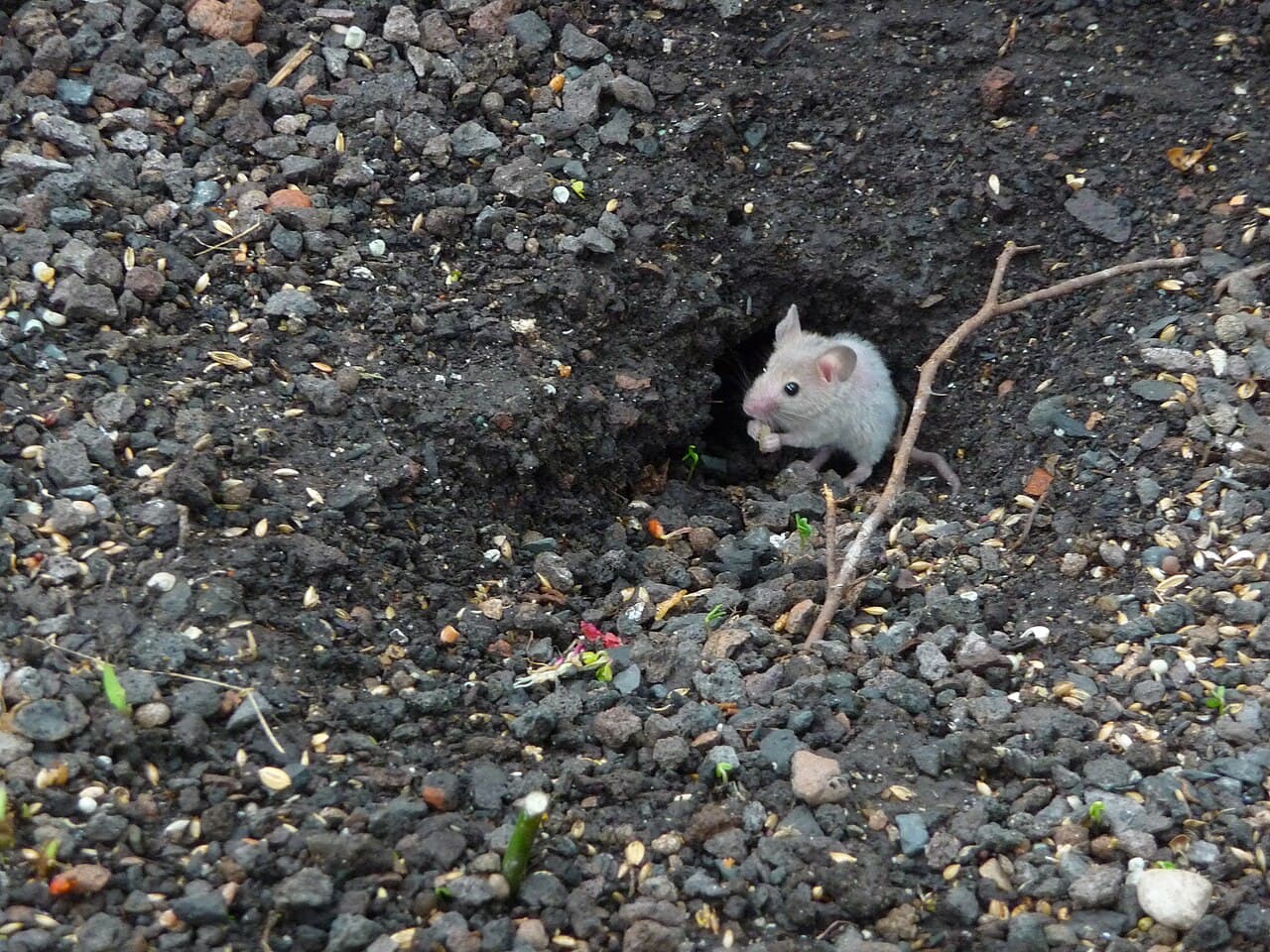
When you can usually handle it yourself
For a small problem, trapping is the preferred method in homes, garages and other buildings where only a few house mice are present.[12] Mice are curious and explore new objects, so traps often work quickly on them.[5] Mice usually stay within 30 feet of their nests,[9] so a cluster of droppings under one sink usually means a nest nearby, not a house full of mice.
Give it a fair test: set traps every night and seal the obvious gaps. A mouse can squeeze through any opening ¼ inch across,[5] so check under doors, around pipes under sinks and where cables enter. How to get rid of mice in your house covers trap placement, bait and safe cleanup. If catches fall off and the droppings stop, you are done.
Stop and call a pro if
Traps keep catching mice. If the catch does not taper off, the population is larger than it looked. A large infestation may take a combination of methods, including traps or rodenticides,[9] and rats and mice have very short generation times and can populate a building in a short amount of time.[5]
You see mice in daylight. Rats and mice usually search for food at night. Seeing one during the day can mean food is scarce or the population is high.[5]
The droppings or holes are rat-size. A house mouse weighs about half an ounce and leaves rod-shaped, pointed droppings; a Norway rat weighs 3 to 21 ounces and leaves capsule-shaped droppings.[5] Rats are hard to control because they avoid new objects, including traps and baits, and they may travel hundreds of feet a day for food or water.[10] Norway rats generally nest at or below ground level, and roof rats prefer elevated places,[5] so burrows along the foundation or noise high in the walls both deserve a professional look.
Wiring is chewed. Mice chewing on wire insulation can cause electrical shorts and fires.[5] Call a professional if electrical equipment has rodents in it or looks damaged.[11] Have an electrician check chewed wiring once the rodents are dealt with.
The way in is high up. Rats and mice also enter through the eaves, the roof and attic vents, not only the first three feet above the ground.[5] Sealing at the roofline means ladder and roof work, which is not a homeowner job.
You are thinking about poison. Consumer rodent poisons are sold only as ready-to-use bait stations with block or paste bait, and second-generation anticoagulants are registered only for commercial and structural pest control.[8] Poison has a cost inside a house: rodents baited indoors often die in hidden, hard-to-reach places, leaving a decaying, smelly body that attracts flies.[5] A company can decide where baiting makes sense and where trapping is better.
You have tried and it keeps coming back. National Pesticide Information Center specialists put it plainly: "Consider hiring a professional. There’s an art to managing mice."[9]
What a pest control company should do
A good company starts with an inspection, not a spray. The EPA's advice is that any company should inspect your home and outline a recommended control program, including the pests to be controlled, the extent of the problem, the active ingredients, non-chemical alternatives, how to reduce your exposure, and steps to minimize the problem in the future.[7] For rodents, expect the plan to cover where they are getting in and how those openings will be sealed, not only traps or bait.
Virginia Tech's integrated pest management plan for rats and mice has four parts: prevention, monitoring, the least toxic control methods, and record keeping.[5] A company working that way will look for nesting areas, food, water and entry points, set traps or bait stations, and come back to check them.
If bait is used, it should be in locked stations. Under EPA rules, professional bait products are not packaged in bait stations, but their labels require tamper-resistant stations wherever children under six, pets or nontarget wildlife have access, and for all outdoor above-ground placements.[8] Products made for professional applicators are not to be sold in consumer stores such as hardware and grocery stores.[8]
How to hire one in Virginia
- Licence. Under Virginia law, no one may apply or recommend a pesticide commercially without a pesticide business license and a certified commercial applicator on staff.[1] The Virginia Department of Agriculture and Consumer Services adds that a separate license is required for each business location, and every license expires on March 31 each year.[2]
- Insurance. To be licensed, a business must show a certificate of insurance for at least $100,000 for property damage, $100,000 for personal injury to or death of one person, and $300,000 per occurrence.[2]
- Ask. The EPA says to ask to see the company's license, and if you have concerns, call your state pesticide regulatory agency.[6] It also suggests you get bids from two or three companies, look at value more than price, and ask neighbors and friends whether they were satisfied with the company.[7]
- Follow-up. Ask how many visits are included and what happens if mice return, and be skeptical of a company that will not stand behind its work.[7] Hiring a company does not end your part of the job: you still need to evaluate the results and keep asking questions until the pests are under control.[7]
If it is not mice
Heavy thumps, daytime noise in the attic or chewed holes far larger than a mouse needs point to squirrels or raccoons, which are wildlife jobs rather than pest control. Licensed trappers can capture certain game and furbearer species during open seasons but cannot move live animals off your property, while Commercial Nuisance Animal Permit holders can trap most wildlife species at any time of year and take them offsite for humane dispatch.[4] The Virginia Department of Wildlife Resources' Trapper Finder Tool lists both near a location you enter, with the species each will trap, and it is up to you to check their references.[4] Start with what animal is living in your attic.
If you rent
Virginia tenants must keep their unit free from insects and pests and promptly tell the landlord about them, and a tenant can be charged the added cost of treatment caused by an unreasonable delay in reporting.[3] Report mice in writing before you hire anyone.
Getting help on Loclis
Read what it costs to get rid of mice in Virginia and whether pest control companies need a licence in Virginia. Browse rodent control services, find pest control around Blacksburg or see more pest control answers. When you are ready, describe the job on Loclis so local pest control businesses can quote it or offer an inspection visit first.
Common questions
- Is one mouse worth calling an exterminator for?
- Usually not. One or two mice in one area are often handled with a line of snap traps against the walls, food stored in hard containers, and the nearby gaps sealed. Call when catches do not taper off, or when you see one of the warning signs.
- What does seeing a mouse in the daytime mean?
- Mice and rats usually look for food at night, so a mouse out in daylight can mean food is scarce or the population is high. Treat it as a reason to look harder for droppings and to consider calling a company.
- Does an exterminator need a licence in Virginia?
- Yes, for pesticide work. Virginia law bars anyone from applying or recommending a pesticide commercially without a pesticide business license and a certified commercial applicator on staff. Ask to see the license before any bait goes down.
- Can an exterminator use stronger poison than I can buy?
- Yes. Second-generation anticoagulant rodenticides are registered only for commercial and structural pest control, and professional products are not sold in hardware or grocery stores. Their labels still require tamper-resistant bait stations wherever children, pets or wildlife can reach them.
- Who handles squirrels or raccoons instead of mice?
- Those are wildlife jobs. Licensed trappers and Commercial Nuisance Animal Permit holders are listed by the Virginia Department of Wildlife Resources' Trapper Finder Tool, along with the species each will trap.
- I rent. Should I call an exterminator myself?
- Tell your landlord first, in writing. Virginia tenants must report pests promptly and can be charged for the added cost of treatment caused by an unreasonable delay in reporting.
Sources
- [1] Code of Virginia § 3.2-3924. Annual business license required, Virginia General Assembly, Legislative Information System. Checked October 27, 2026.
- [2] Pesticide Business License, Virginia Department of Agriculture and Consumer Services. Checked October 27, 2026.
- [3] Code of Virginia § 55.1-1227. Maintenance of dwelling unit by tenant, Virginia General Assembly, Legislative Information System. Checked October 27, 2026.
- [4] Find a Licensed Trapper or Wildlife Control Specialist, Virginia Department of Wildlife Resources. Checked October 27, 2026.
- [5] Schools Integrated Pest Management (IPM) for Rats and Mice, Department of Entomology, Virginia Tech. Checked October 27, 2026.
- [6] Tips for Hiring a Rodent Control Professional, U.S. Environmental Protection Agency. Checked October 27, 2026.
- [7] Citizen's Guide to Pest Control and Pesticide Safety, U.S. Environmental Protection Agency. Checked October 27, 2026.
- [8] Restrictions on Rodenticide Products, U.S. Environmental Protection Agency. Checked October 27, 2026.
- [9] Mice, National Pesticide Information Center, Oregon State University and U.S. EPA. Checked October 27, 2026.
- [10] Rats, National Pesticide Information Center, Oregon State University and U.S. EPA. Checked October 27, 2026.
- [11] Rodents, National Pesticide Information Center, Oregon State University and U.S. EPA. Checked October 27, 2026.
- [12] Pest Notes: House Mouse, University of California Statewide Integrated Pest Management Program. Checked October 27, 2026.
Want a pro to handle it?
Describe the job once. Licensed local businesses send quotes, and you pay only when you book one.
Get a quote from a local pro