How do I keep mice out of my house in winter?
Seal the house in early fall, before cold nights send mice looking for shelter. Close every gap larger than a quarter inch with copper wool, caulk, hardware cloth, sheet metal or mortar, fit door sweeps, and check where pipes and wires enter. Then take away what draws them: open food, birdseed, clutter and firewood against the house. Keep a few snap traps set for early arrivals.
Free to ask. Local shops send quotes, and you pay only when you book one.
By Kasra Taheri, Founder, LoclisPublished
Researched and drafted with AI, then checked claim by claim against the sources listed below before it was published. Prices and rules change; the dates beside each source say when it was last checked.
Step by step
Read when to stop and call a pro, further down this page, before you start.
Step 1: Walk the outside in early fall
Before the first cold nights, look for gaps along the foundation and around pipes, wires, vents and doors.[7]
Step 2: Plug small gaps
Fill small cracks and gaps with caulk or copper wool.[1]
Step 3: Cover larger holes with metal
Cover larger openings with quarter-inch hardware cloth, 19-gauge or heavier sheet metal, or mortar.[1]
Step 4: Skip chewable fillers
Do not rely on expanding foam, rubber, vinyl, plastic screening or wood, which mice chew through.[7]
Step 5: Fit door sweeps
Add door sweeps and weather stripping to exterior doors, including the door from the garage.[3]
Step 6: Close gaps around air conditioners
Seal the gaps where air-conditioning units or their lines pass through a wall or window.[1]
Step 7: Trim plants back
Cut shrubs, vines and grass back 12 to 18 inches from the walls.[1]
Step 8: Move the firewood
Stack firewood off the ground and well away from the house, not against a wall.[2]
Step 9: Clear leaf piles and deep mulch
Rake up leaf piles and thin deep mulch next to the foundation.[6]
Step 10: Lid the garbage
Keep kitchen garbage in containers with tight-fitting lids.[6]
Step 11: Store food in hard containers
Keep dry food, pet food and birdseed in jars, tins or heavy plastic containers.[3]
Step 12: Clear cardboard and clutter
Get rid of spare cardboard boxes and newspaper stacks in the garage, basement and attic.[3]
Step 13: Check parked cars
Check cars you are not driving for nests and chewed wires.[3]
The way to keep mice out in winter is to close the house before winter starts. Where house mice live outdoors, they often move into homes in autumn as nights get colder.[7] By the time you hear them in the walls, they are already nesting. Keeping them out is the most successful and permanent way to control house mice,[7] and Virginia Tech's rodent guidance adds that prevention takes time and effort but can be a permanent fix if it is done correctly.[1] Early fall, before the first cold nights, is the time to do it.
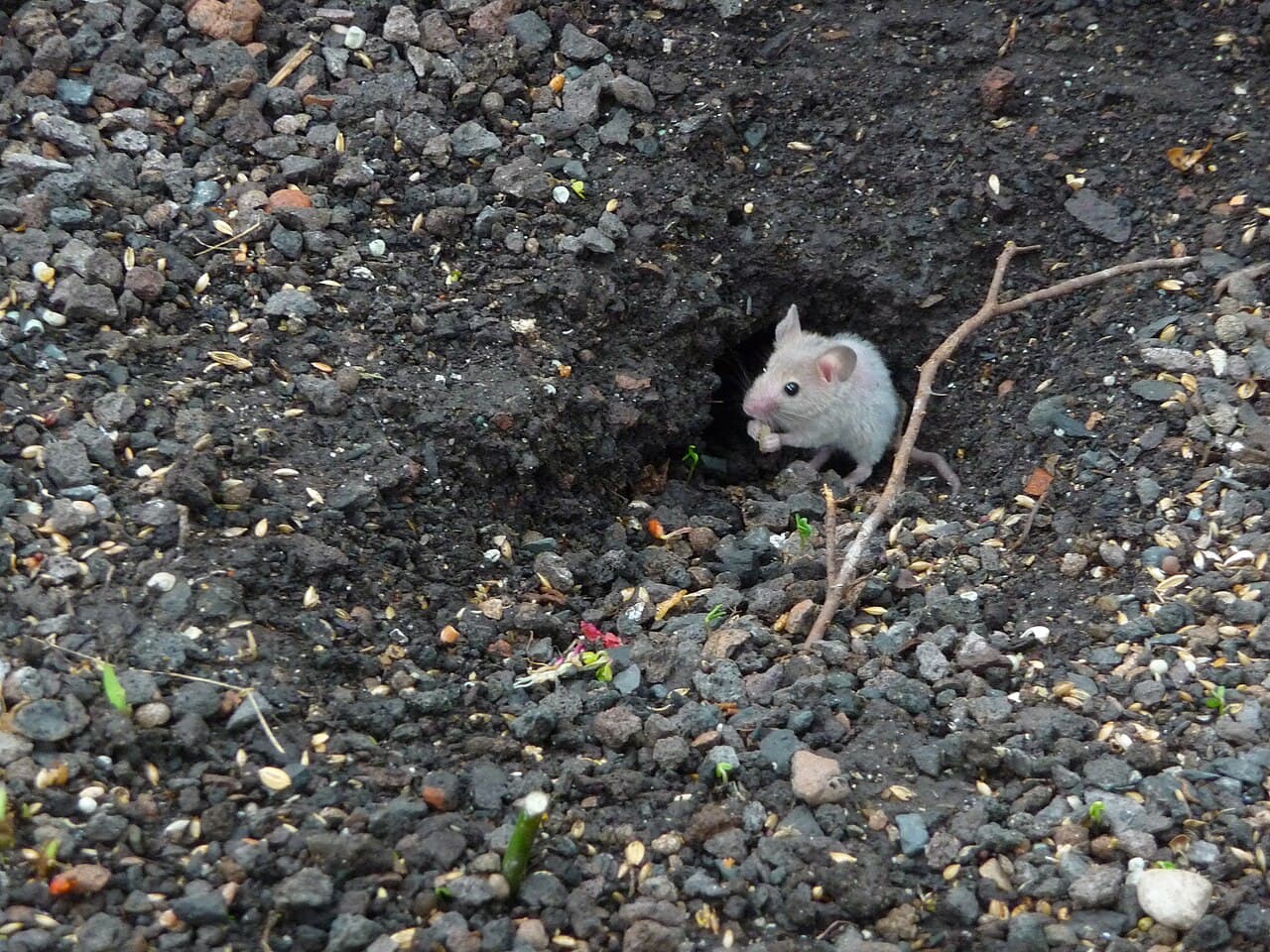
Seal the gaps before it gets cold
Small openings are enough. A mouse can squeeze through any opening ¼ inch across,[1] and the Virginia Department of Health notes that rodents can squeeze through holes as small as a dime.[2] Walk around the house slowly, ideally with a flashlight, and look low.
Where to look. Start with cracks in the foundation and the openings around water pipes, vents and utility cables, which should be sealed with metal or concrete.[7] Then check the places those lines come through inside: under the kitchen and bathroom sinks, behind the washer and dryer, and around the water heater and furnace closet. Doors, windows and screens should fit tightly, and the edges of doors may need covering with metal to stop gnawing.[7] Check the garage door and the door from the garage into the house too.
Higher up. Rats and mice also enter through the eaves, the roof and attic vents, not only the first three feet above the ground.[1] Look at the roofline from the ground or a low step ladder. Leave anything at the roof, the chimney or a second-storey eave to a professional.
What to use. For larger holes, use ¼-inch hardware cloth, 19-gauge or thicker sheet metal, plaster or mortar; smaller holes can be sealed with caulk or copper wool.[1] Steel wool makes a good temporary plug but may rust over time.[7] Plastic screening, rubber, vinyl, expanding foam and wood are ineffective for plugging mouse holes.[7]
Doors and air conditioners. Fit door sweeps and weather stripping so mice cannot crawl under doors,[3] with raised metal doorsills where you can.[1] Seal the gaps where air-conditioning units or their lines pass through a wall or window; Virginia Tech notes these units give mice warmth, a nesting site and water.[1]
Make the outside less inviting
Mice that live next to the house find their way in sooner or later. Cut back what gives them cover and food:
- Plants. Trim trees, bushes, grass and vines at least 12 to 18 inches away from the house.[1] Mice climb well, so cut back dense plants and tree limbs near the house.[3]
- Leaves and mulch. Remove leaf piles and deep mulch, which make good nesting sites.[6] Fall cleanup does double duty.
- Firewood. Winter is firewood season, and a stack against the wall is a mouse hotel. The Virginia Department of Health's advice is to raise wood piles and garbage cans on platforms at least 12 inches off the ground and keep them at least 100 feet from the house.[2] If that is not practical, keep the stack as far from the house as you can and bring in only what you will burn soon.
- Garbage and compost. Use kitchen garbage cans with tight-fitting lids, and turn the compost so new food scraps are covered.[6]
- Bird feeders. Spilled seed feeds mice all winter. The EPA suggests you pause the bird feeder while you are dealing with mice, or switch to huskless seed that leaves less for rodents to eat.[6]
- Fallen food. Pick up fallen fruit and nuts under trees[1] before the ground freezes.
Take away food and nesting spots inside
Keep unrefrigerated food, pet food and birdseed in jars, tins or durable plastic containers.[3] Bags of birdseed and pet food in the garage are a common draw. Remove cardboard boxes and newspapers that mice can use for nesting, and cut down clutter, which lets mouse activity go unnoticed.[3] Plastic bins with tight lids are better than cardboard for holiday decorations and anything else stored in the attic, basement or garage.
If you park a car for the winter or store a vehicle, check cars you are not driving for signs of mice, which can damage wires and other parts.[3]
Watch for early arrivals
Preventing mice and spotting them early keeps damage from getting out of control.[3] Introduce traps early, and set back-up traps[3] in the places mice usually show up first: the garage, the basement, behind the stove and refrigerator, and under the kitchen sink. Set them flush against walls, since rodents travel along edges.[1] Check them every few days through the winter. A trap that catches nothing tells you the sealing worked; a catch tells you where to look for the gap. Keep traps away from children and pets.
When you open a shed, cabin or closed-up garage after the winter, follow the Virginia Department of Health's advice: open a building, garage or basement that has been shut up and let it air out for at least 30 minutes before you spend time inside.[2] Then wet any droppings with disinfectant or a bleach solution and wipe them up; do not sweep or vacuum them dry.[2]
What does not help
- Ultrasonic plug-ins. The Federal Trade Commission ruled sound devices sold to repel rodents ineffective at controlling rats and mice.[1]
- Mothballs. Mothballs do not repel animals.[5]
- Poison as prevention. Bait does not stop mice coming in, and a mouse that dies inside a wall is hard to deal with. Seal first; see how to get rid of mice in your house if some are already inside.
Stop and call a pro if
- The gaps are at the roofline, the eaves or the chimney. Do not climb onto the roof. For chimneys, NPIC's advice is: "Do not cover chimneys until all animals are gone."[5]
- You hear heavy thumps in the attic or noise at dawn and dusk, which points to squirrels or raccoons. See how to keep raccoons and squirrels out of the attic.
- Wiring has been chewed in the house or a stored car. Call a professional if electrical equipment has rodents in it or looks damaged.[4]
- Traps keep catching mice after you have sealed the obvious gaps, or you find rat-size droppings. Read why you hear scratching in your walls at night to work out what you have.
Getting help on Loclis
Read when to call an exterminator for mice and how often to have pest control service. Browse rodent control services, find pest control around Blacksburg or see more pest control answers. If you would rather have a pro find and seal the gaps, describe the job on Loclis so local pest control businesses can quote it.
Common questions
- Why do mice come inside in the fall?
- Where house mice live outdoors, they often move into homes in autumn as nights get colder. A house offers shelter, warmth and food, which is why fall is the time to seal gaps, before the cold weather sets in.
- What is the smallest gap a mouse can use?
- Mice can fit through any opening a quarter inch in diameter, and the Virginia Department of Health notes rodents can squeeze through holes as small as a dime. Check closely around pipes, cables, vents and door bottoms.
- Is expanding foam enough to keep mice out?
- No. Expanding foam, rubber, vinyl, plastic screening and wood are ineffective for plugging mouse holes because mice chew through them. Use caulk or copper wool for small gaps and hardware cloth, sheet metal or mortar for larger ones.
- Where should I keep firewood in winter?
- Off the ground and away from the house. The Virginia Department of Health advises placing wood piles on platforms at least 12 inches off the ground and at least 100 feet from the house. Bring in only what you will burn soon.
- Do ultrasonic repellers keep mice out in winter?
- No. The Federal Trade Commission ruled sound devices sold to repel rodents ineffective at controlling rats and mice. Sealing the gaps and keeping food put away do the work.
- Should I put out poison in the fall to be safe?
- Bait is not a substitute for sealing, and poisoned mice can die inside walls where the smell is hard to deal with. A few snap traps set against walls in the garage, basement and kitchen will catch early arrivals and show you whether any mice are getting in.
Sources
- [1] Schools Integrated Pest Management (IPM) for Rats and Mice, Department of Entomology, Virginia Tech. Checked October 27, 2026.
- [2] Hantavirus Pulmonary Syndrome (HPS) fact sheet, Virginia Department of Health. Checked October 27, 2026.
- [3] Mice, National Pesticide Information Center, Oregon State University and U.S. EPA. Checked October 27, 2026.
- [4] Rodents, National Pesticide Information Center, Oregon State University and U.S. EPA. Checked October 27, 2026.
- [5] Problem Wildlife in the House, National Pesticide Information Center, Oregon State University and U.S. EPA. Checked October 27, 2026.
- [6] Identify and Prevent Rodent Infestations, U.S. Environmental Protection Agency. Checked October 27, 2026.
- [7] Pest Notes: House Mouse, University of California Statewide Integrated Pest Management Program. Checked October 27, 2026.
Want a pro to handle it?
Describe the job once. Licensed local businesses send quotes, and you pay only when you book one.
Get a quote from a local pro