How do I insulate a garage door?
Fit rigid foam panels from a kit: measure the gap between the rails on each door section, cut a panel to length, and press it in with the grooved side facing the door. Wear safety glasses, keep foam away from heat, and test the door's balance afterward. A door that will not stay half open needs a pro.
Free to ask. Local shops send quotes, and you pay only when you book one.
By Kasra Taheri, Founder, LoclisPublished
Researched and drafted with AI, then checked claim by claim against the sources listed below before it was published. Prices and rules change; the dates beside each source say when it was last checked.
Step by step
Read when to stop and call a pro, further down this page, before you start.
Step 1: Check the door first
Confirm the sections have an inside channel between the horizontal rails, and wipe the inside of each section clean.
Step 2: Disable the opener
Close the door and unplug the opener so nobody can press the wall button while you work. Keep hands clear of section joints and track, and do not touch the springs or cables.
Step 3: Gear up
Put on safety glasses; the kit's instructions list a straight edge, utility knife, tape measure and safety glasses as the tools required.[1]
Step 4: Measure each section
Measure the length between vertical rail A and the inside edge of vertical rail B.[1]
Step 6: Press the panel in
Insert the excess insulation behind the vertical rails, then insert the panel between the horizontal rails with the channeled or grooved side facing the garage door.[1]
Step 7: Repeat on every section
Work from the bottom section up, measuring each one before cutting.
Step 8: Test the balance
Pull the quick release, lift the door by hand to about halfway and let go; it should stay put. If it moves, stop and call a pro.
A foam-panel kit is an afternoon job: measure the gap between the rails on each door section, cut a rigid panel to fit, and press it in. The panels add weight to a door that is held up by springs, so the last step is a balance test, and a door that fails it is a job for a pro.
What a kit is
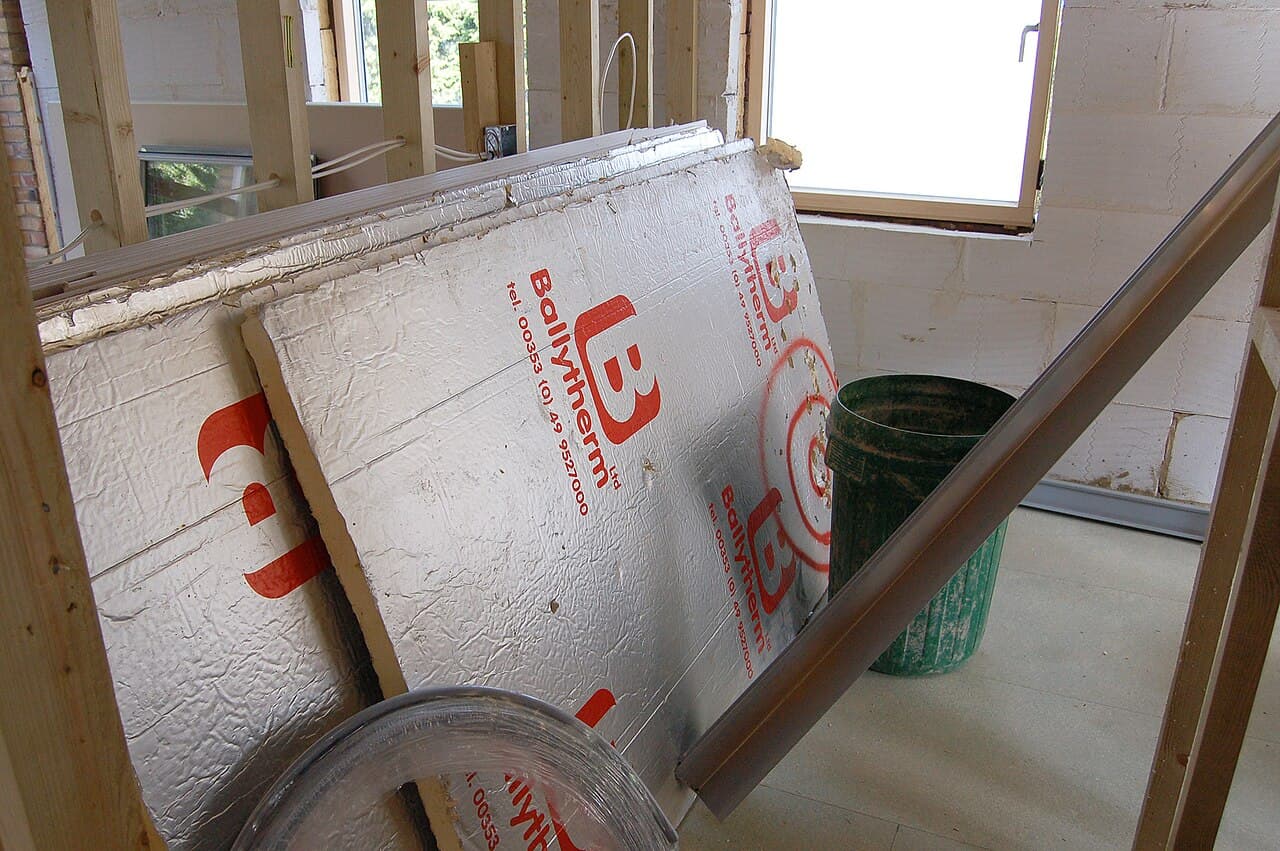
Most kits are rigid expanded polystyrene (EPS) panels. One common kit has eight panels, each 20¼ inches wide, 54 inches long and 1¼ inches thick, and it insulates most standard 8-foot or 9-foot doors.[1] Another maker's kit covers 60 square feet with eight pieces and lists an R-value of about 4.0 per inch.[2] R-value is a measure of insulation's ability to resist heat traveling through it, and the higher the number, the better the thermal performance.[5]
Reflective (radiant barrier) kits also exist. One maker's kit has eight panels, each 4 feet long, held on with adhesive squares that need 24 hours to become fully stuck.[3]
The foam panels sit on the inside face of each section, between the horizontal rails, and the extra length goes behind the vertical rails.[1] If a section has no inside channel, a kit like this is not the right choice.
Before you start
- Wear safety glasses. The kit's instructions list a straight edge, utility knife, tape measure and safety glasses as the tools required.[1]
- Work with the door closed and the opener unplugged, so nobody can press the wall button.
- Keep hands and fingers clear of section joints, track and other door parts while working, as the door maker advises.[7]
- Leave the springs, cables and bottom brackets alone. One door maker warns that attempting to remove a torsion spring assembly without proper training or tools may cause an uncontrolled release of spring forces and serious or fatal injury.[7]
- Wipe the inside of each section so the panels and any adhesive sit flat.
Fit the panels
Measure the length between vertical rail A and the inside edge of vertical rail B, then cut each insulation panel to length.[1] Break off the insulation where it is cut.[1] Measure every section: they are not always identical.
Insert the excess insulation behind the vertical rails, then insert the panel between the horizontal rails with the channeled or grooved side facing the garage door.[1] Work one section at a time from the bottom up.
Keep foam away from heat
Polystyrene foam is not a finish material. One maker warns that the product is combustible and, if exposed to a fire of sufficient heat and intensity, may burn rapidly, so it should not be left exposed or inadequately protected.[2] Keep it off hot surfaces and away from heaters. The same maker says to protect expanded polystyrene from hydrocarbons, coal tar pitch, solvents and solvent fumes.[2] Follow your local building code for how the product may be used.
Test the balance afterward
Insulation adds weight. A properly operating garage door is "balanced", meaning the door stays in place when stopped in any partially open position.[6] A single car door may weigh as much as 200 pounds[7] on its own, so even a few extra pounds matter to springs sized for the original door.
To check, close the door, pull the quick release to detach it from the opener, and lift it by hand about halfway, keeping hands clear of the section joints and your feet out from under the bottom edge. A severely unbalanced garage door could unexpectedly crash to the floor, possibly striking someone under the open door.[6] If yours drifts or drops instead of staying put, do not use it; call a pro.
Stop and call a pro if
- The door will not stay where you leave it. If doors are not balanced, or if they bind or stick, they should be serviced by a professional.[6] Read is it safe to replace a garage door spring yourself for why you should not adjust the springs.
- The opener strains, or the door reverses, after you add panels. The load has changed, so have the springs and opener checked.
- Sections are dented, cracked or sagging, or hinges and rollers are worn. Insulation will not fix that; see is it worth repairing an old garage door.
- The door has no room behind the rails, or is wood, glass or heavily windowed and a kit will not fit.
- The door is old and the real problem is its condition. A new insulated door may be the better spend: how much a new garage door costs in Virginia.
After the panels
Seal the edges too. Clopay advises making sure weatherstripping is in good condition to prevent heat from escaping.[4] For the money side, see how much garage door insulation costs in Virginia and whether insulating a garage door is worth it. Browse more garage door answers or garage door pros on Loclis.
If you would rather not do it yourself, or the door will not balance, describe the job and local garage door companies quote it.
Common questions
- What is the easiest way to insulate a garage door?
- A rigid foam-panel kit. You measure the gap between the rails on each section, cut a panel to length with a utility knife, and press it in. One maker's kit has eight panels and insulates most standard 8-foot or 9-foot doors.
- Will insulation make my garage door too heavy?
- It adds weight, and the springs were sized for the original door. A balanced door stays in place when stopped in any partly open position, so test that after you finish. If the door drifts or drops, have a pro service the springs.
- Is foam insulation a fire risk?
- Polystyrene foam is combustible. One kit maker warns that it may burn rapidly if exposed to a fire of sufficient heat and intensity and should not be left exposed or inadequately protected. Keep it off hot surfaces and follow local building code.
- Do I need to seal the door edges too?
- Worn weatherstripping lets heat escape, so check it. Panels insulate the door face but do nothing for gaps around the sides, top and bottom.
- Can I insulate any garage door?
- Not every one. Kits like this need an inside channel between the horizontal rails. Wood, glass or heavily windowed doors may not take panels, and an old, damaged door may be better replaced.
Sources
- [1] Garage Door Insulation Kit: Installation Instructions, Insulfoam. Checked October 27, 2026.
- [2] Garage Door Kit HD Insert: Basic Installation Instructions, Cellofoam North America. Checked October 27, 2026.
- [3] Garage Door Insulation Kit Install Instructions, REACH Barrier LLC. Checked October 27, 2026.
- [4] Improve Energy Efficiency With Insulated Garage Doors, Clopay. Checked October 27, 2026.
- [5] Recommended Home Insulation R-Values, ENERGY STAR, U.S. Environmental Protection Agency. Checked October 27, 2026.
- [6] Non-Reversing Automatic Garage Door Openers Are a Hazard (Pub. 523), U.S. Consumer Product Safety Commission. Checked October 27, 2026.
- [7] Aluminum Full Vision Residential Garage Door Instructions, Clopay. Checked October 27, 2026.
Want a pro to handle it?
Describe the job once. Licensed local businesses send quotes, and you pay only when you book one.
Get a quote from a local pro