Why is my garage still cold after insulating the door?
Because insulation slows heat flow but does not stop air. The usual culprits are gaps at the bottom seal, along the sides and top, and between sections, plus other openings such as a side door, a window or the walls. On a cold day, find the leaks with the lights off, then replace worn seals and caulk small gaps.
Free to ask. Local shops send quotes, and you pay only when you book one.
By Kasra Taheri, Founder, LoclisPublished
Researched and drafted with AI, then checked claim by claim against the sources listed below before it was published. Prices and rules change; the dates beside each source say when it was last checked.
Step by step
Read when to stop and call a pro, further down this page, before you start.
Step 1: Look for daylight
Close the door, turn the garage lights off in the afternoon and look around the whole perimeter and across each section joint for light or a visible gap.
Step 2: Feel for drafts
On a cold, windy day, run the back of your hand along the bottom, sides, top and section joints; any moving air is a leak.[2]
Step 3: Check the bottom seal
Look for a seal that is cracked, flattened, torn or sitting off the floor, and check that it meets the floor along the full width.
Step 4: Check the side and top seals
Close the door and look for gaps where the weatherstripping along the jambs and header has shrunk, torn or pulled away.
Step 5: Replace a worn bottom seal
Disengage the opener, raise the door, clamp both tracks below it, slide the old seal out and the new one in, and leave two extra inches at each end.[3]
Step 6: Seal small gaps
Caulk gaps of a quarter inch or less around the frame, and use backer rod or low-expanding foam sealant for larger ones.[4]
Step 7: Check your insulation kit
Make sure every panel fits snugly in its section with no gaps at the edges, and press loose panels back in place.
Step 8: Check the other openings
Look at the side door, any windows and the places where pipes or wires pass through the walls for the same gaps.
Insulation is not the same as an air seal
A garage can stay cold after you insulate the door because insulation slows heat flow but does not stop air moving. The Department of Energy puts it this way: "Think of insulation as a sweater — it can keep you warm when the air outside is cold, but it does not really block the wind."[1] Air sealing is the windbreaker, and a garage door has a lot of edge to seal.
Air leaks can make your home feel drafty and uncomfortable and place an unnecessary strain on heating and cooling equipment.[1] In a garage the same leaks keep the room near the outdoor temperature. Your garage door is likely the largest opening in your home,[2] so even after the panels are filled, the edges around that opening decide how it feels inside.
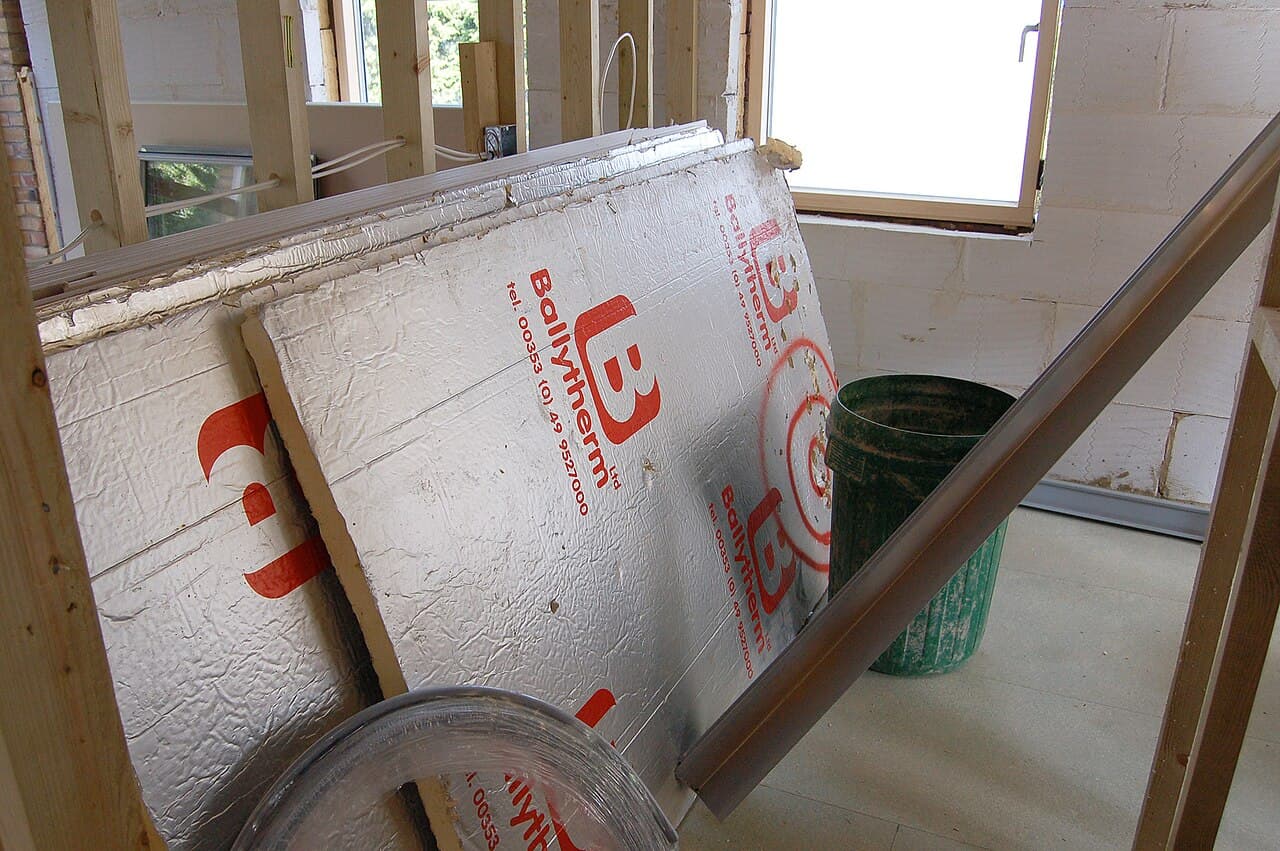
Where the cold is usually coming in
Even a small gap can let hot or cold air seep into your garage.[2] On a door that has been insulated, the likely spots are:
- The bottom seal. The rubber strip along the floor hardens, flattens and tears. It also leaves a gap wherever the slab dips.
- The sides and top. Weatherstripping along the jambs and header shrinks or gets knocked loose. The door should meet it evenly all the way up.
- The section joints. Where panels meet, a gap can let air through even when the seal along the floor is perfect.
- The kit itself. Foam panels help only where they fit. Fiberglass insulation can settle over time, which may reduce the insulating performance.[2]
- Everything else in the garage. A side door, a window, a gap around a pipe or the wall shared with the house can each leak as much air as the door edges.
Clopay's advice is to regularly inspect the door's perimeter, threshold and any windows for signs of air leaks.[2] Beyond the door itself, a proper seal is key, and the weatherstripping needs to be in good condition to prevent heat from escaping.[2]
Find the leaks
Spend ten minutes on this before you buy anything. Close the door in the afternoon, turn the lights off in the garage and look around the edges and across each section joint for daylight. Then, on a cold, windy day, run the back of your hand along the same lines. Moving air is a leak, even where you see no gap.
Write down what you find. A long gap along the bottom points to the seal, a patch near one side points to the jamb weatherstripping, and a draft that only appears at a joint between panels points to the door itself.
Fix the common ones
Replace a worn bottom seal. Disengage the opener before beginning work, raise the door to the open position and put C-clamps in both tracks directly below the door and tighten them.[3] Slide the old seal out and the new one in, then leave two extra inches of seal past the edge of the door and tuck the extra into itself to allow for future shrinkage.[3] Seals are not interchangeable: garage doors are manufactured with varying types of weather seal retainer designs, so the replacement has to be the right type for your retainer.[3] Take a short piece of the old seal to the store or send a photo to the door's maker.
Seal small gaps in the frame. Use weatherstripping or spray foam insulation to seal any gaps you find.[2] Where the frame meets the wall, caulk is for gaps of a quarter inch or less, while backer rod or low-expanding foam sealant suits larger gaps.[4] Clean out the cracks you want to caulk, and smooth the caulk with a finger or tool afterwards to help ensure a good seal.[4]
Refit the kit. If a panel is loose or short, press it back into its section or replace it with one cut to fit. Hold off on anything that makes the door heavier until you have re-tested its balance, as described in how to insulate a garage door.
Set the right expectation
An unheated garage will not feel like a room in the house, and sealing and insulating will not change that on a freezing night. What they do is slow the loss, so any heat the garage does get from the house, the car or the sun lasts longer. For the longer view, see how to keep your garage warmer in winter, and for the money side, whether insulating is worth it and what insulation costs in Virginia.
Stop and call a pro if
- The door is out of balance or hard to move. Added insulation adds weight and can throw off the balance. If it drifts or drops when stopped partway, the springs need a garage door pro; do not adjust them yourself.
- Panels are bent, dented or will not close tight. No weatherstripping fixes a door that is out of square. See whether an old door is worth repairing.
- The gaps are in the wall or around the frame itself, such as rot at the bottom of the jamb or daylight through framing. That is carpentry, not sealing.
- The tracks are loose or bent. A door that sits crooked in its tracks leaks no matter what you seal.
Getting help in Virginia
Browse garage door answers, see local pros under garage doors, or describe the problem once and licensed local businesses quote it.
Common questions
- Should the garage feel warm once the door is insulated?
- Not necessarily. Insulation slows heat loss; it does not make heat. An unheated garage still drifts toward the outdoor temperature, only more slowly. If you want it noticeably warmer, you need to stop the air leaks first and then decide whether a heat source is worth it.
- Is the bottom seal really that important?
- It runs the full width of the door at floor level, so a worn seal leaves a long gap. Clopay's own advice is that the weatherstripping has to be in good condition to keep heat from escaping, and a hardened or flattened seal is easy to replace.
- Can the insulation kit itself be the problem?
- Yes, if panels sit loosely or leave gaps at the edges of a section. Foam kits only help where they fit. Fiberglass kits have a second problem: Clopay notes that fiberglass can settle over time, which may reduce its performance.
- How do I find drafts I cannot see?
- Wait for a cold, windy day and run the back of your hand along the bottom, sides, top and section joints. Moving air at any spot is a leak. A thin strip of tissue held near the edge flutters toward the leak.
- When is a new door the better fix?
- When the door is dented, out of square, or has joints that will not close, because gaps like that cannot be sealed with weatherstripping. Compare the cost of repairs against replacement in the guide to whether an old door is worth repairing.
Sources
- [1] Guide to Air Sealing, U.S. Department of Energy. Checked October 27, 2026.
- [2] Improve Energy Efficiency With Insulated Garage Doors, Clopay. Checked October 27, 2026.
- [3] Installation instructions for bulb-shaped and U-shaped astragal (garage door weather seal), Clopay Building Products. Checked October 27, 2026.
- [4] Sealing Behind Window & Door Trim Project, ENERGY STAR, U.S. EPA. Checked October 27, 2026.
Want a pro to handle it?
Describe the job once. Licensed local businesses send quotes, and you pay only when you book one.
Get a quote from a local pro