How do I keep my heating system from failing in winter?
Have a licensed technician check the furnace or heat pump every fall, before the busy season. Between visits, keep the filter clean, keep supply vents and returns open, keep the outdoor vent pipes and heat pump unit clear of snow and ice, put carbon monoxide alarms on every level, and call early when the system starts making new noises or short cycling.
Free to ask. Local shops send quotes, and you pay only when you book one.
By Kasra Taheri, Founder, LoclisUpdated
Researched and drafted with AI, then checked claim by claim against the sources listed below before it was published. Prices and rules change; the dates beside each source say when it was last checked.
This is a job for a licensed pro in Virginia
This page explains what the work involves, the permits, what a licensed pro does and what drives the cost. It does not give step-by-step instructions, because this work needs a licence, a permit or both, and doing it wrong can injure someone. Before you hire, check the licence on Virginia's DPOR record.
Have a licensed technician service the furnace or heat pump every fall, keep the filter clean, keep vents and outdoor pipes clear, put carbon monoxide alarms on every level, and call at the first new noise or short cycle instead of waiting for a cold night.
Book the heating check-up in the fall
ENERGY STAR recommends having a contractor do annual pre-season check-ups, with the heating system checked in the fall, because contractors get busy once winter comes.[1] Federal safety agencies say the same for safety reasons. The EPA's advice is direct: "Have a trained professional inspect, clean and tune-up central heating system (furnaces, flues and chimneys) annually."[2] The U.S. Fire Administration agrees: "Maintain heating equipment and chimneys by having them cleaned and inspected each year by a professional."[3]
A proper check-up covers more than a filter. ENERGY STAR's checklist includes tightening electrical connections and measuring voltage and current on motors, lubricating moving parts, checking the condensate drain, and checking the controls and the starting cycle.[1] On a gas or oil furnace, it adds checking all gas (or oil) connections, gas pressure, burner combustion and the heat exchanger.[1] The reason for the electrical checks is spelled out: "Faulty electrical connections can cause unsafe operation of your system and reduce the life of major components."[1]
See how much an HVAC tune-up costs in Virginia and whether HVAC maintenance plans are worth it.
Keep the filter clean
ENERGY STAR lists the filter under actions to do yourself: inspect, clean, or change air filters once a month, and it notes that your contractor can show you how.[1] It explains why: "A dirty filter can increase energy costs and damage your equipment, leading to early failure."[1] Lennox's advice is to change disposable furnace filters every 1-3 months, and more often in a dusty or dry climate.[4] More in how often to change a furnace filter.
Keep air moving through the house
A furnace that cannot move enough air overheats and shuts its burners off. Bryant's basic checks include making sure supply registers and return grilles are open and unobstructed,[6] so keep furniture, rugs and curtains off them, and avoid closing a lot of vents in unused rooms.
Keep the outdoor pipes and heat pump clear
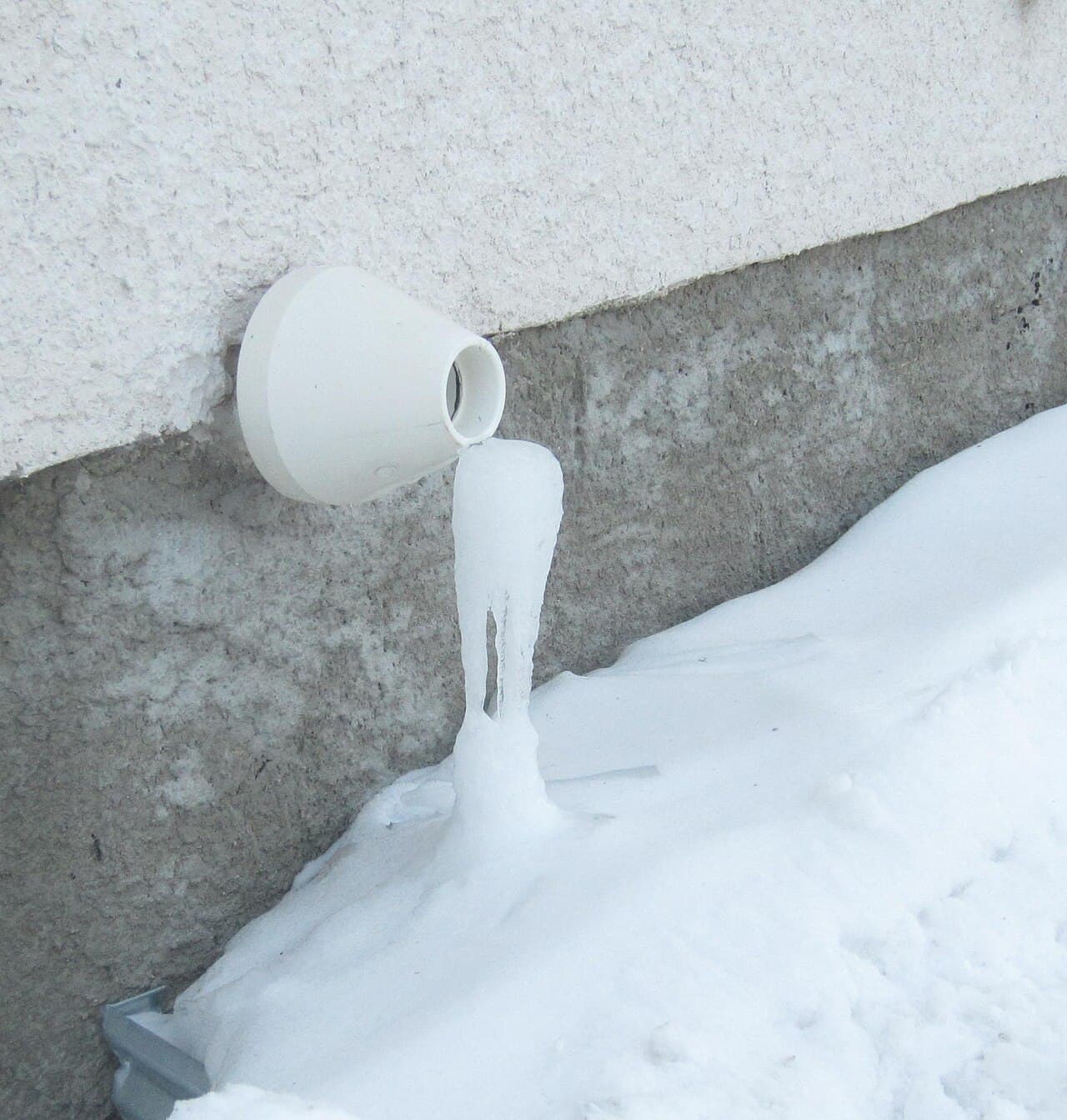
Modern condensing furnaces take their air supply through an intake pipe from outside and send exhaust out through another pipe, like the outlet pictured above.[4] Lennox warns: "If this pipe becomes clogged or blocked, this impacts not only your furnace's efficiency, but it can also cause a dangerous buildup of carbon monoxide."[4] After snow or a hard freeze, check that the pipes are free of ice, snow, bird nests or insects.[4] Lennox adds that if you cannot easily check the pipes, a dealer can do it for you.[4]
A heat pump's outdoor unit needs room to breathe. Carrier's general guideline is to keep at least 24 inches of clear space around the heat pump, following your model's own clearance requirements.[7] Frost is expected: "A light, thin layer of frost—generally less than 1/4 inch—is normal during winter operation".[7] Thick ice is not. Carrier notes that water from melting snow or ice can leak onto the coil and then freeze,[7] for example from a leaking gutter above the unit, and it is firm on one point: "Never try to chip ice from the coil."[7]
Put carbon monoxide alarms on every level
The U.S. Consumer Product Safety Commission, as quoted by the EPA, recommends carbon monoxide (CO) alarms on each level outside each sleeping area, plus an annual professional inspection of all fuel-burning appliances.[2] The alarm matters because "Carbon monoxide is an odorless, colorless and toxic gas."[2] Test the alarms when you book the fall check-up.
If a carbon monoxide alarm sounds, or anyone has symptoms of carbon monoxide poisoning, Columbia Gas of Virginia's instruction is to "leave the area to get to fresh air and immediately call 911," and not to go back in until emergency responders identify the cause and allow you to go back inside.[8] If you smell gas, its instruction is to "go outside and call 911 and then call us at 1-800-544-5606 (24/7)."[8] If another company supplies your gas, use its emergency number.
Keep the space around heating equipment clear
The U.S. Fire Administration's rule is: "Keep anything that can burn at least 3 feet from all heat sources".[3] A furnace is one of them, so boxes, paint and laundry in a utility room belong at least that far from it.
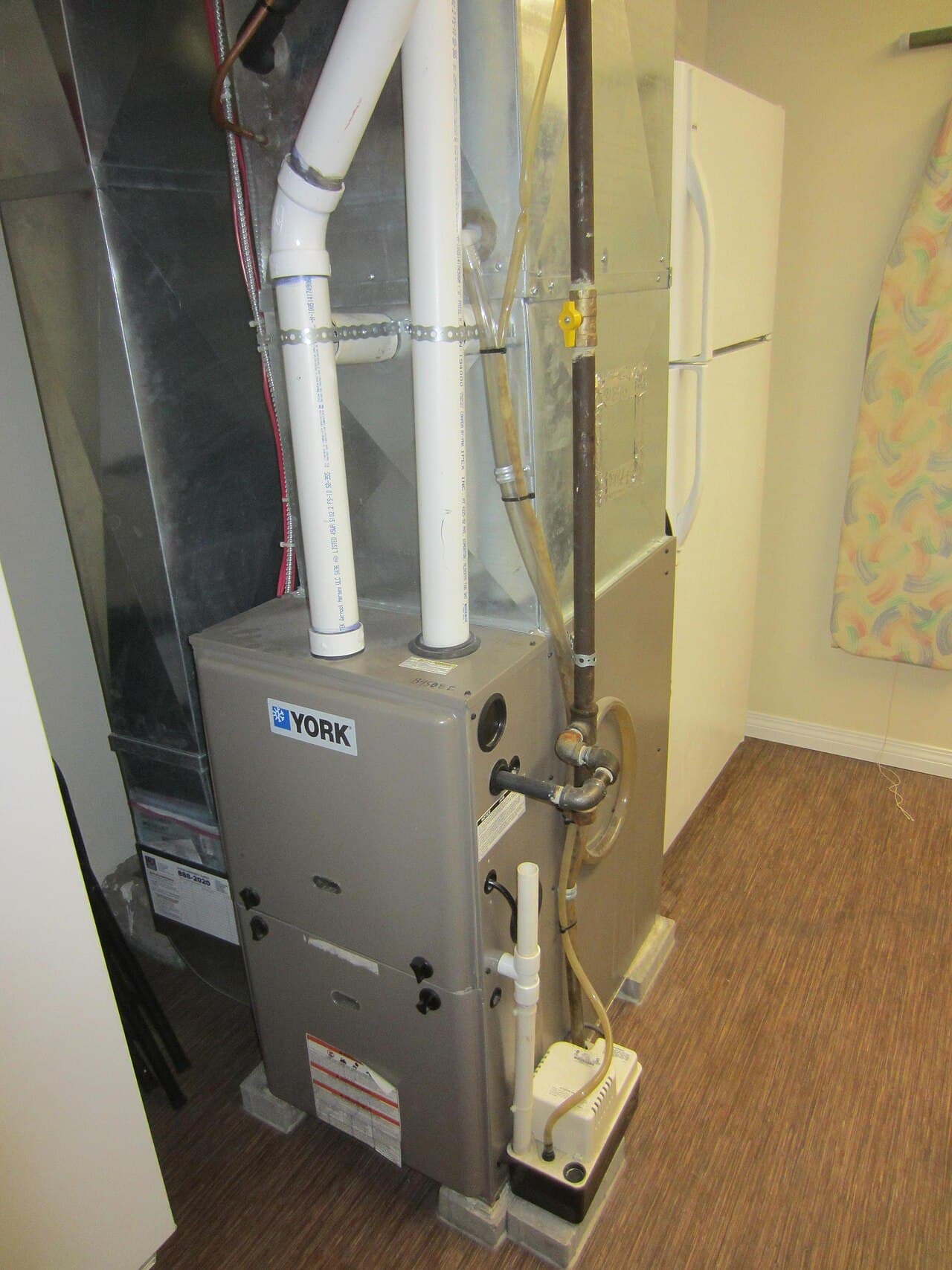
Act on the early warnings
Small symptoms are cheaper to fix before a cold night turns them into an emergency. Watch for:
- New noises. Lennox suggests a professional check when the furnace is running louder than normal or making sounds you are not used to hearing.[5]
- Short cycling or ignition trouble. Bryant's reasons to call include short cycling, strange noises, or a pilot light that won't stay lit.[6]
- Moisture and rust. Lennox says signs of moisture on windows or rust build-up on the vent pipe can indicate improper operation.[4]
- Rising bills. "A rise in energy bills can mean that your system is running less efficiently."[5]
If the system is old and failing often, read how long an HVAC system lasts and should I repair or replace my furnace.
Plan for a no-heat day
Know who you will call before you need them, and keep the furnace's model number handy. For households that cannot afford an emergency repair, the Virginia Department of Social Services' Crisis Assistance lists heating equipment repair or replacement for households with a heating emergency, such as no heat or unsafe equipment.[9] When we checked on 26 October 2026, the department said applications for equipment help are taken from November 1 to March 15.[9]
When to call a licensed pro
Everything past the filter, the vents and a look at the outdoor pipes is a job for a licensed technician. Under Virginia law, no individual may work as a tradesman without a licence, and the Code's definition of a tradesman covers heating, ventilation and air conditioning work done for the public for pay.[10][11] Check a business on DPOR's License Lookup.[12]
Call a technician when:
- the fall check-up has not been done and the first cold front is coming;
- the furnace blows cold air after the filter and thermostat are checked (see why a furnace blows cold air);
- the vent pipes are blocked and out of reach, or the furnace shut down after snow;
- the heat pump is iced over and the ice does not clear;
- you smell gas or a CO alarm sounds, after you have left the house and called 911.
Getting service in Virginia
Loclis lists DPOR-licensed HVAC businesses with their licence number and class. Look up HVAC businesses in Blacksburg or another town, browse heating repair and HVAC maintenance, or read more heating and cooling answers.
If the heat is already acting up, describe the problem once and licensed local HVAC businesses quote the repair.
Common questions
- When should I have my furnace serviced?
- In the fall, before the first cold snap. ENERGY STAR recommends a pre-season check-up of the heating system in the fall because contractors get busy once winter comes; some people remember it by booking around the autumn time change.
- How often should I change the furnace filter in winter?
- ENERGY STAR says to inspect, clean or change air filters once a month, and Lennox suggests changing disposable filters every 1 to 3 months, more often in dusty or dry conditions. Check it monthly in winter and change it when it looks dirty.
- Do I need a carbon monoxide alarm if I have a gas furnace?
- The U.S. Consumer Product Safety Commission, as cited by the EPA, recommends carbon monoxide alarms on each level of every home, outside each sleeping area, and an annual professional inspection of fuel-burning appliances including furnaces. Carbon monoxide has no colour or smell, so the alarm is the warning.
- What should I do if snow covers my furnace vent pipes?
- Lennox says the intake and exhaust pipes of a high-efficiency furnace should be free of ice, snow, bird nests or insects, because a blocked pipe can cause a dangerous buildup of carbon monoxide. If you cannot reach them easily or the furnace has already shut down, call a heating technician.
- Is ice on my heat pump a problem?
- A thin layer of frost, generally less than 1/4 inch according to Carrier, is normal and should clear during the defrost cycle. Thicker ice, a solid coating, or ice that does not clear needs a technician. Carrier warns never to chip ice from the coil.
- Is an HVAC maintenance plan worth it?
- It can be, if it includes the fall heating check-up you would book anyway. Compare what each plan covers against paying per visit, and read the renewal terms.
Sources
- [1] Maintenance Checklist, ENERGY STAR, U.S. Environmental Protection Agency. Checked October 26, 2026.
- [2] Carbon Monoxide's Impact on Indoor Air Quality, U.S. Environmental Protection Agency. Checked October 26, 2026.
- [3] Heating Fire Safety, U.S. Fire Administration, FEMA. Checked October 26, 2026.
- [4] Four Ways to Prep Your Furnace for Winter, Lennox. Checked October 26, 2026.
- [5] How Long Does a Furnace Last?, Lennox. Checked October 26, 2026.
- [6] Why Is My Furnace Blowing Cold Air? Troubleshooting and Solutions, Bryant. Checked October 26, 2026.
- [7] Heat Pump Troubleshooting Guide, Carrier. Checked October 26, 2026.
- [8] Carbon Monoxide, Columbia Gas of Virginia. Checked October 27, 2026.
- [9] Energy Assistance Program (EAP), Virginia Department of Social Services. Checked October 26, 2026.
- [10] Va. Code § 54.1-1129, Necessity for licensure, Code of Virginia, Virginia General Assembly. Checked October 26, 2026.
- [11] Va. Code § 54.1-1128, Definitions, Code of Virginia, Virginia General Assembly. Checked October 26, 2026.
- [12] License Lookup, Virginia Department of Professional and Occupational Regulation. Checked October 26, 2026.
Want a pro to handle it?
Describe the job once. Licensed local businesses send quotes, and you pay only when you book one.
Get a quote for HVAC Repair