How do I keep a home from becoming hoarded again after a cleanout?
Treat the cleanout as the start, not the finish. Relapse is common without ongoing treatment, so keep therapy, coaching or a support group going. Agree on simple house rules, such as a home for every item and one thing out for each new thing in, and check in regularly. Keep the safety basics in place: clear exits, a wide path and working smoke alarms.
Free to ask. Local shops send quotes, and you pay only when you book one.
By Kasra Taheri, Founder, LoclisPublished
Researched and drafted with AI, then checked claim by claim against the sources listed below before it was published. Prices and rules change; the dates beside each source say when it was last checked.
Step by step
Read when to stop and call a pro, further down this page, before you start.
Step 1: Keep treatment going
Keep therapy, coaching or a support group going after the cleanout, because hoarding disorder is a chronic condition that needs continual management.[1]
Step 2: Give every item a home
Give each thing that is kept a designated spot where it lives when it is not in use.[1]
Step 3: Protect the cleared rooms
Agree that nothing moves back into a space once it has been cleared.[1]
Step 4: Decide on each item once
When mail, purchases or gifts come in, decide straight away whether each is thrown away, given away, put away or donated.[1]
Step 5: Use a two-day purchase rule
Shop from a list, wait two days before buying anything not on it, and let one item of equal size go for each new one.[1]
Step 6: Skip the decide-later pile
Avoid piles of things to sort or discard later, since that is where the build-up usually starts again.[1]
Step 7: Review what goes unused
Once a year, look at items not used for a year or more and let go of those whose space could serve something more useful.[1]
Step 8: Test smoke alarms monthly
Test every smoke alarm each month and replace any alarm 10 years from its manufacture date.[6]
Step 9: Walk the exits at each visit
Check that doors swing fully open, stairs and halls are clear, bedroom windows can be reached and the main path stays about 3 feet wide.[1]
Step 10: Keep burnables away from heat
Keep papers and anything else that can burn at least 3 feet from space heaters, radiators, fireplaces and candles.[7]
Step 11: Put outgoing items on a schedule
Book bulk pickups or donation drop-offs on a regular calendar so bags and boxes leave the house before they become a new pile.
Step 12: Praise progress
Keep regular, friendly visits going and praise momentum, even small wins, instead of inspecting and criticizing.[1]
The cleanout is the easy part. Keeping the house clear depends on three things working together: ongoing treatment for the person who lives there, a few simple house rules they agree to, and regular, friendly contact that catches small build-ups before they become big ones. Keep the fire-safety basics in place the whole time, because they matter most if things start to slip.
Plan for the risk of relapse
Fairfax County's code compliance office warns families not to assume the job is done once a home is restored, because recidivism is a problem for many people with hoarding disorder.[1] Its guidance is blunt: unless psychiatric help is obtained after a cleanout, recidivism is common.[2] It also notes that only 15 percent of people with hoarding disorder can acknowledge they have a problem,[2] so a person may not see the build-up coming back the way family does.
Treatment is a long game. Fairfax County describes hoarding disorder as a chronic condition that needs continual management,[1] often with weekly therapy that can extend into months or years, with substantial habit-breaking homework.[1] Cognitive behavioral therapy for hoarding includes practicing going out without bringing new items home, even free ones, and developing a plan to prevent recidivism.[1]
Fairfax County does not provide that care itself and says it is reached through personal health insurance.[1] Your local community services board is the public starting point. Loudoun County's mental health department, for example, takes calls about outpatient intervention and treatment options at 703-771-5155,[8] and its Area Agency on Aging supports older adults and their caregivers.[8]
House rules that stop the build-up
Fairfax County's tips for keeping clutter down are simple enough to agree on together:[1]
- Pick up each item and decide on the spot whether to throw it away, give it away, put it away or donate it.[1]
- Give everything that is kept a designated resting spot.[1]
- Do not move things back into a space once it is cleared.[1]
- Do not make piles of things to decide on or discard later.[1]
- Shop from a list, write down anything else you want, and wait two days before deciding whether to buy it.[1] If you do buy, for every item bought, one item of equal size leaves the house.[1]
- Throw away anything moldy, broken, rotting or attracting pests.[1]
The rules work best when they belong to the person, not to the family. Write them down together, keep them short, and attach them to routines: mail sorted at the door, a donation bag that leaves every week, trash and recycling out on collection day without fail.
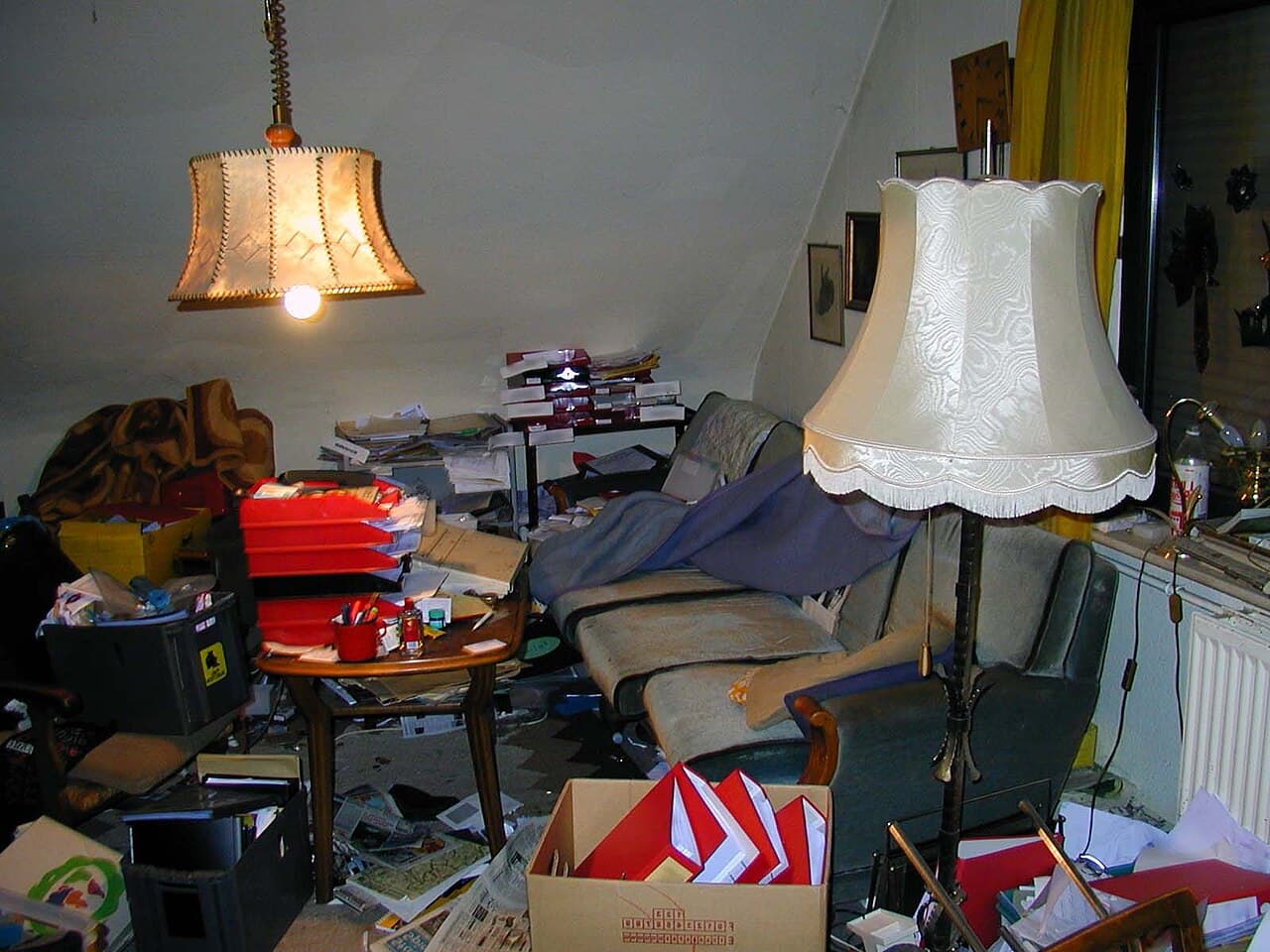
Keep the safety basics in place
If the clutter does creep back, these are the things that keep a bad situation from becoming a tragedy. Fairfax County's guidelines are doors that swing completely open, stairs and hallways free of possessions, clear windows in rooms where people sleep, items kept away from the furnace, water heater, electrical panel and stove, and a 3-foot-wide path wherever only narrow paths remain.[1] The county adds that at least two routes out of the house should always be kept clear,[5] and that occupants should be able to escape through an egress window within 5 seconds.[5]
Smoke alarms are the other half. The U.S. Fire Administration recommends smoke alarms inside and outside each bedroom and sleeping area and on every level of the home,[6] testing each one monthly,[6] and replacing alarms 10 years from the manufacture date.[6] It says only qualified electricians should install hardwired alarms,[6] and that some fire departments will install battery-operated alarms at no cost.[6] It also says to keep anything that can burn at least 3 feet from all heat sources, including fireplaces, wood stoves, radiators, space heaters and candles.[7]
Early warning signs
Fairfax County's list of hoarding signs doubles as a relapse checklist: frequent deliveries or a steady stream of purchases coming home,[4] stocking up on free items such as sugar packets, napkins and pamphlets,[4] becoming agitated when anyone tries to remove things,[4] and not letting people into the house.[4] From outside, watch for covered windows and food deliveries because the kitchen can no longer be used.[4]
A cleared room filling up again, or a path narrowing, is the earliest sign of all. Mention it gently and early, while it is a small job.
Support without policing
How you check in matters as much as how often. Fairfax County's advice to families is to praise momentum, even small victories,[1] and to accept that change will not happen overnight and progress will have to be monitored for the rest of a person's life.[1] It also notes that threatening to end a relationship does not motivate people with hoarding disorder.[1]
Connection helps. Fairfax County's guidance says loneliness can lead people to hold onto things as a replacement for companionship,[3] and that setbacks are normal.[3] Visits that are about a meal or an outing, not an inspection, make the house a place people come to again.
Stop and call a pro if
- A cleared home has filled back up and exits, stairs or bedroom windows are blocked again.
- Pests, mold, animal waste or spoiled food are back in quantity.
- Floors sag, ceilings bow, or utilities such as heat, water or power have stopped working.
- A smoke alarm is hardwired and needs replacing; that is a job for an electrician.
- The person is in crisis or refusing all help; contact your local community services board or social services office, or call 911 in an emergency.
More help on Loclis
For the first cleanout, see how to help a family member clean out a hoarded house, and for everyday clutter, how to keep a house from filling up with clutter again. Browse more junk removal and moving answers, see hoarding cleanout businesses, or find junk removal and moving businesses around Blacksburg. If the house needs another clear-out or regular help, describe the job once on Loclis and local businesses can quote on it.
Common questions
- How common is it for a hoarded home to fill up again?
- Common enough that Fairfax County warns families not to assume the job is done once a home is restored. Its guidance is that recidivism is common unless psychiatric help follows a cleanout, which is why treatment and regular check-ins matter as much as the cleanout itself.
- How often should family check in after a cleanout?
- There is no set schedule. What matters is that visits are regular, friendly and expected, so small build-ups are caught early. It can help to pair a visit with a chore the person values, such as a grocery run or a donation drop-off.
- What are the first signs that hoarding is coming back?
- Fairfax County lists signs such as frequent deliveries, stocking up on free items, refusing to let people in, getting agitated when anyone tries to remove things, covered windows and relying on food delivery because the kitchen cannot be used. Piles in a room that had been cleared are another early sign.
- Will a professional organizer help keep the house clear?
- They can help, especially alongside treatment. Fairfax County lists hoarding coaches, professional organizers, support groups and therapists among the private help people use. An organizer can set up storage and routines; a therapist works on the reasons the things are being kept.
- What safety checks matter most between cleanouts?
- Exits and smoke alarms. Doors should swing fully open, stairs and halls should be clear, bedroom windows reachable, and the main path about 3 feet wide. Smoke alarms belong on every level and inside and outside sleeping areas, tested monthly and replaced 10 years from their manufacture date.
Sources
- [1] Hoarding Disorder: Do You Need Help?, Fairfax County Department of Code Compliance. Checked October 27, 2026.
- [2] What is Hoarding?, Fairfax County Department of Code Compliance. Checked October 27, 2026.
- [3] Hoarding FAQs, Fairfax County Department of Code Compliance. Checked October 27, 2026.
- [4] Do You Suspect Hoarding?, Fairfax County Department of Code Compliance. Checked October 27, 2026.
- [5] Dangers and Health Risks, Fairfax County Department of Code Compliance. Checked October 27, 2026.
- [6] Smoke Alarms, U.S. Fire Administration. Checked October 27, 2026.
- [7] Heating Fire Safety, U.S. Fire Administration. Checked October 27, 2026.
- [8] Hoarding Resources, Loudoun County. Checked October 27, 2026.
Want a pro to handle it?
Describe the job once. Licensed local businesses send quotes, and you pay only when you book one.
Get a quote from a local pro