How do I replace a damaged laminate plank?
Match a spare plank, then choose a method. Near a wall, unlock the rows back to the damage and swap the plank. Mid-room, cut the damaged plank out from the top, trim the new plank so it drops in, and glue it. Follow your manufacturer's guide first. Virginia needs no permit for replacing floor finishes. Leave any old vinyl tile or adhesive underneath alone.
Free to ask. Local shops send quotes, and you pay only when you book one.
By Kasra Taheri, Founder, LoclisPublished
Researched and drafted with AI, then checked claim by claim against the sources listed below before it was published. Prices and rules change; the dates beside each source say when it was last checked.
Step by step
Read when to stop and call a pro, further down this page, before you start.
Step 1: Find or set aside a spare plank
Use a spare from the same product, or take a plank from a hidden spot such as a closet.
Step 2: Read the manufacturer's guide
Check whether your floor is floating or glued and how its joints release.
Step 3: Remove the trim
Pry off the baseboard or shoe moulding on the nearest wall gently and label each piece so it refits.
Step 4: Number the planks
Pencil a number on the back of each plank you lift so the rows go back in the same order.
Step 5: Unlock the rows back to the damage
Lift and unlock row by row until the damaged plank is free, then set it aside.
Step 6: Or cut out a mid-room plank
Tape around it, wear glasses and a mask, and cut out the centre with a saw set to the plank's thickness, leaving the edges.
Step 7: Remove the edge pieces
Pry the leftover edges out with a pull bar or putty knife and vacuum the opening.
Step 8: Trim the new plank
Cut the underside of the locking edges as the guide describes so the plank drops in flat.
Step 9: Set and glue the plank
Apply the glue or adhesive your manufacturer specifies to the tongue edges, press the plank in and wipe squeeze-out at once.
Step 10: Weigh it down and let it cure
Tape across the joints and set something heavy on the plank for the glue's stated cure time.
Step 11: Relock, refit and clean
Relock any rows you lifted, refit the trim and clean with a laminate cleaner, never a wet mop.[2]
The short version
You can replace one damaged laminate plank without relaying the room, and it is a sensible weekend job if you have a spare plank from the same line. There are two methods. Near a wall, you unlock the floor row by row back to the damage. In the middle of a room, you cut the damaged plank out from the top and glue a new one in. Which fits depends on how your floor locks together, so read the manufacturer's installation guide for your product before you cut.
A floor finish repair needs no building permit in Virginia: the Uniform Statewide Building Code's list of work exempt from a permit includes "Installation or replacement of floor finishes in all occupancies."[1]
Before you start
Find a matching plank. Colour and embossing vary between production runs. A spare saved from the original install is best; a loose plank from a closet or under a built-in works too, because you can replace that one with a new plank where nobody looks.
Know what is underneath. If you find old resilient flooring below the laminate, leave it alone. EPA lists "Vinyl floor tiles and the backing on vinyl sheet flooring and adhesives" among the places asbestos may be found.[3] If the old layer is cracked or you cannot tell what it is, do not sand, scrape or break it up.
Mind old painted trim. Prying baseboard in a house built before 1978 can disturb lead paint. EPA's lead rule covers anyone paid to perform work that disturbs painted surfaces in homes, childcare facilities and preschools built before 1978,[4] and in general it does not apply to homeowners working on their own homes. Work gently and wipe up dust with a damp cloth.
Method one: unlock the floor back to the damage
Use this when the damaged plank is within a few rows of a wall. Remove the baseboard or shoe moulding along that wall, then lift and unlock the rows one at a time, numbering each plank on the back in pencil so it goes back in order. Swap in the new plank, relock the rows and refit the trim.
It is the cleanest repair because every joint goes back the way the factory made it. Most click-together laminate floats over an underlayment and is held by its joints and the trim, not nailed down, but check your guide: a glued floor cannot be taken apart this way.
Method two: cut the plank out and glue the new one in
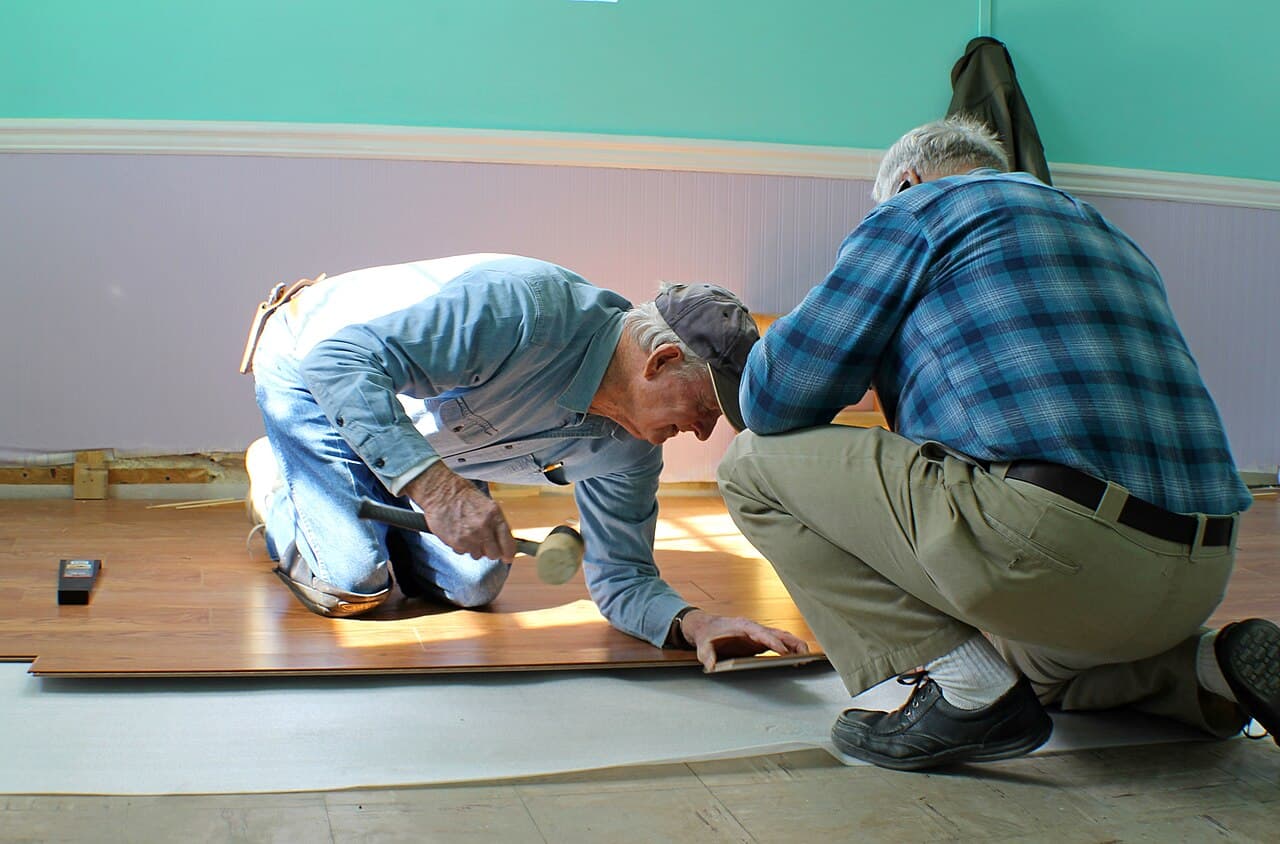
Use this when the plank is mid-room. You cut out the centre of the damaged plank, remove the edges, trim the new plank so it can drop in from above, and glue it. The steps below walk through it. Never cut deeper than the plank, because the underlayment and the subfloor are not part of the repair.
Clean up
Vacuum the opening before the new plank goes in, since grit in a joint stops it closing. Afterwards, use cleaning products made specifically for laminate floor care[2] and wipe up spills quickly. Shaw's guidance for its laminate is clear: "Do not wash or wet mop the floor with soap, water, oil-soap detergent or any other liquid cleaning product."[2] Water that finds an open joint is what makes laminate swell, so a wet mop can damage the repair.
Stop and call a pro if
- The damage came from water. A new plank does not fix a leak. Swollen planks near a dishwasher, door or wall mean you should find and stop the source first.
- The subfloor is soft, stained or uneven. That is a subfloor repair, not a plank job.
- You find old vinyl tile, black adhesive or anything of unknown age. EPA lists vinyl floor tiles, sheet-flooring backing and adhesives among possible asbestos sources,[3] so do not disturb them.
- A dozen or more planks are damaged. Patches will show; ask for a quote on the section.
- The floor is glued down and you cannot match it. Cutting out glued planks takes more skill.
Getting help in Virginia
If you would rather hand it over, read whether to hire a flooring installer for a few damaged boards and whether to repair or replace damaged flooring. Browse home repair answers and flooring repair businesses, then describe the damage once and licensed local contractors quote it.
Common questions
- Do I need a permit to replace laminate flooring in Virginia?
- No. The Uniform Statewide Building Code lists the installation or replacement of floor finishes among the work that needs no permit. If you must open the floor and find structural problems, a permit is required before work involving any structural component, so ask your local building department.
- Can I replace a plank in a floating laminate floor without taking everything apart?
- Often yes. Near a wall you can unlock rows back to the damage, and mid-room you can cut the plank out and glue a new one in. Your manufacturer's installation guide decides which method suits your product.
- Where do I get a matching plank?
- Start with a spare from the original installation. If you have none, ask the manufacturer or retailer for the same line and batch, or take a plank from a closet or under an appliance and use the new one there.
- Can I mop a laminate floor after the repair?
- Not with liquid. Shaw's laminate care guidance says not to wash or wet mop the floor with soap, water, oil-soap detergent or any other liquid cleaning product. Use a cleaner made for laminate.
- Is it safe to lift old flooring under the laminate?
- Leave old vinyl tile, sheet-flooring backing and adhesive alone. EPA lists them among the places asbestos may be found, so have them checked before sanding, scraping or breaking them up.
Sources
- [1] 13VAC5-63-80. Section 108 Application for permit (Virginia Uniform Statewide Building Code), Virginia Administrative Code, Virginia General Assembly. Checked October 27, 2026.
- [2] Laminate Floor Care & Maintenance, Shaw Floors. Checked October 27, 2026.
- [3] Learn About Asbestos, U.S. Environmental Protection Agency. Checked October 27, 2026.
- [4] Lead Renovation, Repair and Painting Program, U.S. Environmental Protection Agency. Checked October 27, 2026.
Want a pro to handle it?
Describe the job once. Licensed local businesses send quotes, and you pay only when you book one.
Get a quote for Home Repair