Should I hire a flooring installer to replace a few damaged boards?
Hire an installer when the boards are nailed or glued, the damage came from water, you have no matching spare, or you do not want to risk the surrounding floor. Replace the planks yourself when it is a few floating click-lock planks and you have a spare. Virginia needs no permit to replace a floor finish. Get at least three written bids.
Free to ask. Local shops send quotes, and you pay only when you book one.
By Kasra Taheri, Founder, LoclisPublished
Researched and drafted with AI, then checked claim by claim against the sources listed below before it was published. Prices and rules change; the dates beside each source say when it was last checked.
Step by step
Read when to stop and call a pro, further down this page, before you start.
Step 1: Count and photograph the damage
Photograph each damaged board with a ruler beside it, and count how many there are.
Step 2: Find the cause
Check for a leak, a spill or a heavy item. Stop any water first.
Step 3: Identify the floor type
Note whether it is floating laminate, vinyl plank, nailed hardwood or glued, since that decides who should do it.
Step 4: Look for a spare
Check closets, the garage and any leftover boxes for matching boards.
Step 5: Decide DIY or hire
Do it yourself only if it is a few floating planks with a spare; otherwise hire.
Step 6: Check each bidder's licence
Look every contractor up in the DPOR licence lookup before accepting a quote.[6]
Step 7: Collect three written bids
Give each bidder the same description and photos.[6]
Step 8: Ask for itemised lines
Request the board count, the material, any finish work and the cleanup in writing.
The short answer
Hire a flooring installer when the boards are glued or nailed down, you cannot match the floor, the damage came from water, or you do not want to risk the surrounding floor. Do it yourself when it is a few floating laminate or click-lock planks and you have a spare. In Virginia the building code's list of work that needs no permit includes "Installation or replacement of floor finishes in all occupancies."[1] Wooden flooring work falls under finish carpentry, which the Board for Contractors defines as "the installation, repair, and finishing of cabinets, sash casing, door casing, wooden flooring, baseboards, countertops, and other millwork".[2]
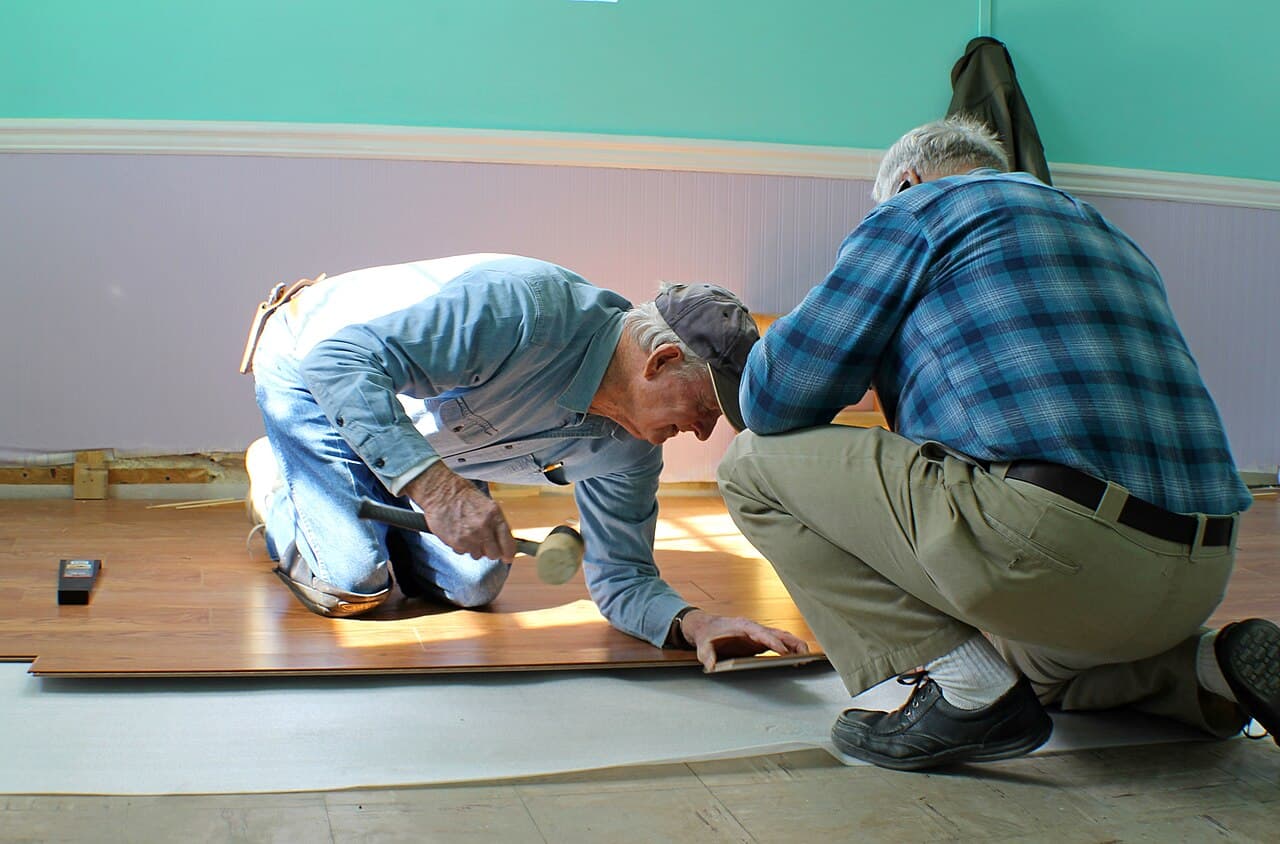
When a pro is worth it
Solid or glued boards. Replacing a board in a nailed hardwood floor means cutting out the board and blending the new one into the finish. That is easier to ruin than a floating plank. If the floor will need sanding and refinishing to match, a professional's finishing tools and experience matter.
Water damage. Replacing boards does not fix what wet them. A pro can find the leak, check the subfloor, and decide whether the damage reaches past what you see.
No spare material. Matching a discontinued product is hard. An installer can often source similar boards or pull matching ones from a closet.
Old layers underneath. EPA lists "Vinyl floor tiles and the backing on vinyl sheet flooring and adhesives" among the places asbestos may be found.[3] If you suspect old resilient flooring, do not disturb it; ask a qualified professional first.
Painted trim in a pre-1978 home. EPA's lead rule covers anyone paid to perform work that disturbs painted surfaces in homes, childcare facilities and preschools built before 1978.[4] A contractor who is paid to do this work must follow it, while in general it does not apply to homeowners working on their own homes.
Do it yourself when
The damage is a few planks of floating click-lock laminate or vinyl plank, you have a matching spare, the subfloor is dry and solid, and you are comfortable cutting and gluing. How to replace a damaged laminate plank walks through it.
What the work costs and who may do it
We found no Virginia price for replacing a few boards that a public source dates, so we do not print one. Cost follows the number of boards, the material, access and whether the floor must be refinished. Ask for a written quote that states the number of boards, the material and the finish work.
Virginia licensing turns on the size of the job. A Class C contractor licence covers a single contract over $1,000 but less than $30,000,[5] and a small repair may fall below that threshold, so check the DPOR licence lookup and ask what covers the work. DPOR recommends at least three written bids or estimates using identical plans and specifications.[6] Do not automatically accept the lowest.[6]
Stop and call a pro if
- The floor is cupped, crowned or buckled. That is a moisture problem to diagnose before any board is replaced.
- The boards are nailed or glued to a subfloor you have not seen. Pulling them can damage the subfloor.
- You find old tile, black adhesive or dust from old material. Do not disturb it.
- The damage is under an appliance or near plumbing. Stop the leak first.
- The bid is far below the others. DPOR warns that a bid substantially lower than the others probably indicates a mistake or missing work.[6]
Getting help in Virginia
See whether to repair or replace damaged flooring, browse home repair answers and flooring repair businesses, then describe the damage once and licensed local contractors quote it.
Common questions
- Do I need a permit to replace damaged floorboards in Virginia?
- Not to replace a floor finish: Virginia's building code lists the installation or replacement of floor finishes among work that needs no permit. A permit is required before work involving any structural component, so ask your local building department if the subfloor is involved.
- Is a handyman allowed to do this?
- For small jobs, often. Virginia's contractor licensing turns on the size of the contract: Class C covers a single contract over $1,000 but less than $30,000. Check the licence in the DPOR lookup and ask what covers the work.
- Why will an installer not just replace one board?
- On nailed or glued floors one board is easy to damage and hard to blend. A good installer will tell you what is possible and what the finished patch will look like before starting.
- How do I compare quotes?
- Give each bidder the same photos and description, and ask for the board count, material and finish work separately. DPOR recommends at least three written bids and not automatically taking the lowest.
- What if the boards are damaged by water?
- Stop and fix the source first. Replacing boards without that means the new ones fail too. A pro can check the subfloor as well.
Sources
- [1] 13VAC5-63-80. Section 108 Application for permit (Virginia Uniform Statewide Building Code), Virginia Administrative Code, Virginia General Assembly. Checked October 27, 2026.
- [2] 18VAC50-22-30, Definitions of specialty services (Board for Contractors Regulations), Virginia Administrative Code, Virginia General Assembly. Checked October 27, 2026.
- [3] Learn About Asbestos, U.S. Environmental Protection Agency. Checked October 27, 2026.
- [4] Lead Renovation, Repair and Painting Program, U.S. Environmental Protection Agency. Checked October 27, 2026.
- [5] Va. Code § 54.1-1100, Definitions (contractors), Code of Virginia, Virginia General Assembly. Checked October 27, 2026.
- [6] What You Should Know Before You Hire a Contractor, Virginia Board for Contractors, DPOR. Checked October 27, 2026.
Want a pro to handle it?
Describe the job once. Licensed local businesses send quotes, and you pay only when you book one.
Get a quote for Home Repair