How do I test my house for mold?
Start with your eyes, nose and a humidity meter rather than a test kit. Look for visible growth and moisture stains, note any musty smell, and keep indoor humidity below 60 percent. The EPA says that when mold is visible, sampling is usually unnecessary. If you smell mold you cannot see, or water damage has made people ill, hire an experienced professional.[^epa-guide]
Free to ask. Local shops send quotes, and you pay only when you book one.
By Kasra Taheri, Founder, LoclisPublished
Researched and drafted with AI, then checked claim by claim against the sources listed below before it was published. Prices and rules change; the dates beside each source say when it was last checked.
Step by step
Read when to stop and call a pro, further down this page, before you start.
Step 1: Walk the house with a flashlight
Check under sinks, around tubs and showers, exterior wall corners, ceilings below bathrooms or under the roof, basements and crawl spaces for visible growth, stains and peeling paint.
Step 2: Note smells
Write down any musty smell and the room where it is strongest.
Step 3: Measure humidity
Use a humidity meter and aim to keep indoor relative humidity below 60 percent, ideally 30 to 50 percent.[1]
Step 4: Find the water
Look for leaks, condensation on windows, walls or pipes, and missing ventilation, since mold will not grow without moisture.[1]
Step 5: Photograph and record
Take dated photos of each spot and note its approximate size against the 10 square foot guide.[1]
Step 6: Decide whether sampling is needed
If mold is visible, sampling is usually unnecessary; if it is hidden or you need cleanup verified, hire an experienced professional.[1]
Look first, then measure the moisture
The most useful mold test is a careful look, because mold needs water. The EPA puts it plainly: "There are many types of mold, and none of them will grow without water or moisture."[1] So you are hunting for the water, and the mold is the evidence.
Walk the house with a flashlight and check the places moisture collects: under sinks, around tubs and showers, the corners of exterior walls, the ceiling below a bathroom or under the roof, the basement walls and the crawl space. Look for fuzzy or speckled patches in any colour, stains, bubbling or peeling paint, and warped or soft material. Note any musty smell and where it is strongest.
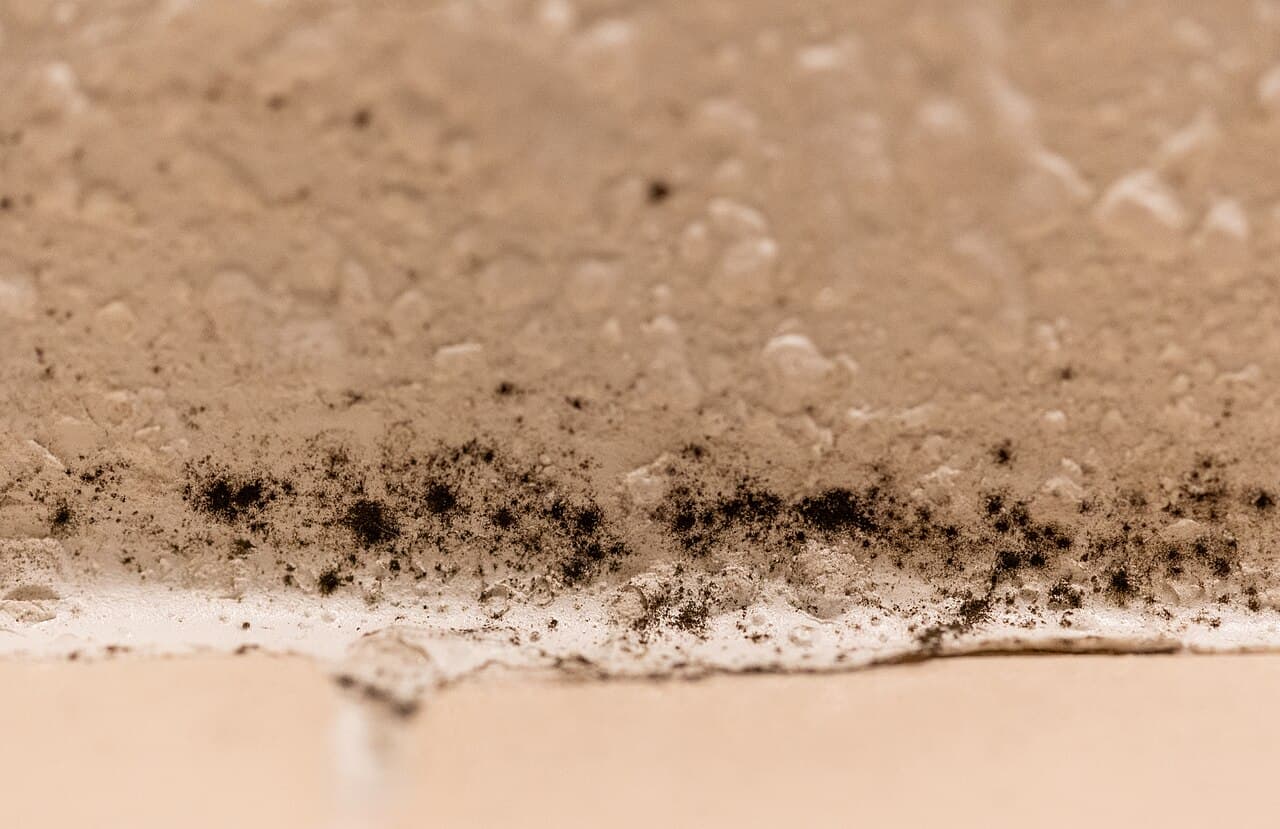
Then measure the air. A small humidity meter from a hardware store shows relative humidity, and the EPA advises you to keep indoor humidity below 60 percent (ideally between 30 and 50 percent) relative humidity.[1] Check it in the basement, the bathrooms and the rooms where you smell something. The EPA also notes: "Condensation can be a sign of high humidity."[1]
Do you need a lab test at all
Often not. The EPA's guidance says: "In most cases, if visible mold growth is present, sampling is unnecessary."[1] If you can see it, you already know it is there. The better questions are where the water comes from and how big the patch is, not which species it is.
Sampling also has a limit that surprises people: "Since no EPA or other federal limits have been set for mold or mold spores, sampling cannot be used to check a building's compliance with federal mold standards."[1] A lab number cannot tell you the house passes or fails a legal standard. The Virginia Department of Health adds that there is no practical way to eliminate all mold and mold spores in the indoor environment,[2] so finding some spores in a sample proves little by itself.
Where sampling does help, the EPA wants it done properly: "Sampling for mold should be conducted by professionals who have specific experience in designing mold sampling protocols, sampling methods, and interpreting results."[1] It also says surface sampling may be useful to determine if an area has been adequately cleaned or remediated.[1] A store-bought kit gives you neither the design nor the interpretation.
When the mold is hidden
Sometimes there is nothing to see. The EPA's rule of thumb: "You may suspect hidden mold if a building smells moldy, but you cannot see the source, or if you know there has been water damage and residents are reporting health problems."[1] Typical hiding places are the back side of dry wall, wallpaper, or paneling, the top side of ceiling tiles, the underside of carpets and pads,[1] along with areas inside walls around leaking or condensing pipes, behind furniture, and inside ductwork.[1]
Do not go looking by tearing things open. The EPA warns that investigating hidden mold "will require caution when the investigation involves disturbing potential sites of mold growth," and that removal of wallpaper can lead to a massive release of spores if there is mold growing on the underside of the paper.[1] Its advice: "If you believe that you may have a hidden mold problem, consider hiring an experienced professional."[1]
One more warning from the EPA: "Do not run the HVAC system if you know or suspect that it is contaminated with mold - it could spread mold throughout the building."[1]
What to do with what you find
Photograph each spot with the date and location, then deal with the water first: a leak, a missing bath fan, a gutter that dumps against the wall. Mold that comes back to a wet spot is a plumbing or ventilation problem more than a cleaning problem.
On size, the EPA says: "If the moldy area is less than about 10 square feet (less than roughly a 3 ft. by 3 ft. patch), in most cases, you can handle the job yourself".[1] Beyond that, it points to its remediation guidance: "If there has been a lot of water damage, and/or mold growth covers more than 10 square feet, consult EPA's Mold Remediation in Schools and Commercial Buildings."[1]
Stop and call a pro if
- You smell mold but see none. "If you believe that you may have a hidden mold problem, consider hiring an experienced professional."[1]
- There has been water damage and people are getting sick. "If you have health concerns, consult a health professional before starting cleanup."[1] The Virginia Department of Health names young children, the elderly, pregnant women, and people with asthma or other respiratory diseases as more likely to develop symptoms.[2]
- The patch is larger than about 10 square feet, or the water was sewage or other contaminated water. For the latter the EPA says: "If the water and/or mold damage was caused by sewage or other contaminated water, then call in a professional who has experience cleaning and fixing buildings damaged by contaminated water."[1]
- You suspect the HVAC system. Leave it off and have it assessed.[1]
- Someone offers to remediate your home. Virginia's consumer protection law lists as a prohibited practice selling mold remediation services for a residential dwelling without holding a mold remediation certification from a nationally or internationally recognized certifying body, and failing to comply with the EPA's publication on Mold Remediation in Schools and Commercial Buildings or the ANSI/IICRC S520 standard (or an equivalent ANSI-accredited standard).[3] The Virginia Department of Health says it does not assess the credentials of, or make recommendations regarding, specific mold specialists,[2] so ask to see the certificate yourself.
Getting help in Virginia
For what the work and the paperwork look like, read whether a mold remediation company needs a licence in Virginia and what professional mold remediation involves. Browse all inspection answers or the inspection guide.
When you are ready, describe the inspection you need and Virginia inspectors can quote it.
Common questions
- Are home mold test kits worth buying?
- Usually not. The EPA says that in most cases, if visible mold growth is present, sampling is unnecessary, and that sampling should be done by professionals who can design the protocol and interpret the results. A single kit result cannot do either.
- Can a mold test tell me whether my house is safe?
- No. The EPA states that no federal limits have been set for mold or mold spores, so sampling cannot be used to check a building's compliance with federal mold standards.
- What does mold need to grow?
- Water. The EPA says none of the many types of mold will grow without water or moisture, which is why finding and fixing the moisture source matters more than identifying the mold.
- What humidity level should I aim for?
- The EPA advises keeping indoor humidity below 60 percent, ideally between 30 and 50 percent relative humidity, and says condensation can be a sign of high humidity.
- What if I smell mold but cannot see it?
- Treat it as possible hidden mold. The EPA lists places such as behind dry wall, wallpaper or paneling, above ceiling tiles, under carpet pads and inside ductwork, and advises hiring an experienced professional rather than opening walls yourself.
Sources
- [1] A Brief Guide to Mold, Moisture and Your Home, U.S. Environmental Protection Agency. Checked October 27, 2026.
- [2] Mold - Environmental Health, Virginia Department of Health. Checked October 27, 2026.
- [3] Code of Virginia § 59.1-200. Prohibited practices, Code of Virginia, Virginia General Assembly. Checked October 27, 2026.
Want a pro to handle it?
Describe the job once. Licensed local businesses send quotes, and you pay only when you book one.
Get a quote from a local pro