Should I hire someone to recaulk my bathroom?
If the old caulk is just stained, cracked or peeling and the wall and tile behind it are sound, recaulking is a reasonable job to do yourself. Hire someone when there are signs water has got behind the surface, when mold is widespread, when the surfaces are delicate, or when you want several joints done neatly in one visit.
Free to ask. Local shops send quotes, and you pay only when you book one.
By Kasra Taheri, Founder, LoclisPublished
Researched and drafted with AI, then checked claim by claim against the sources listed below before it was published. Prices and rules change; the dates beside each source say when it was last checked.
Step by step
Read when to stop and call a pro, further down this page, before you start.
Step 1: Press the old bead
Push on the caulk with a fingertip; a bead that flakes, has gone brittle or has pulled away has failed and needs replacing.[1]
Step 2: Check around it
Look and smell for musty odours, bubbling paint, soft drywall or flaking grout near the tub or shower.[1]
Step 3: Decide on the scope
List the joints you want redone and anything else, such as loose tile or a stained ceiling below, that needs a look.
Step 4: Get written quotes
Ask at least three businesses for written bids on the same list of work, sending photos of each joint.[6]
Step 6: Get it in writing
Make sure the agreement says what is removed, which sealant is used, the price and when you pay, and keep the deposit to 10% of the price or $1,000, whichever is less.[6]
Step 7: Check the finished bead
Before paying in full, look for a continuous, smooth bead with no gaps, smears or old caulk left underneath it.
Most of the time you do not need to. If the old caulk is just stained, cracked or peeling and the wall and tile behind it are sound, recaulking a tub or shower is a manageable job with a tube of silicone, a blade and an afternoon. Hiring someone makes sense when the caulk is a symptom of water getting behind the surface, when mold is widespread, when the surfaces are easy to damage, or when you want every joint in the room done neatly in one go.
First, find out what kind of job it is
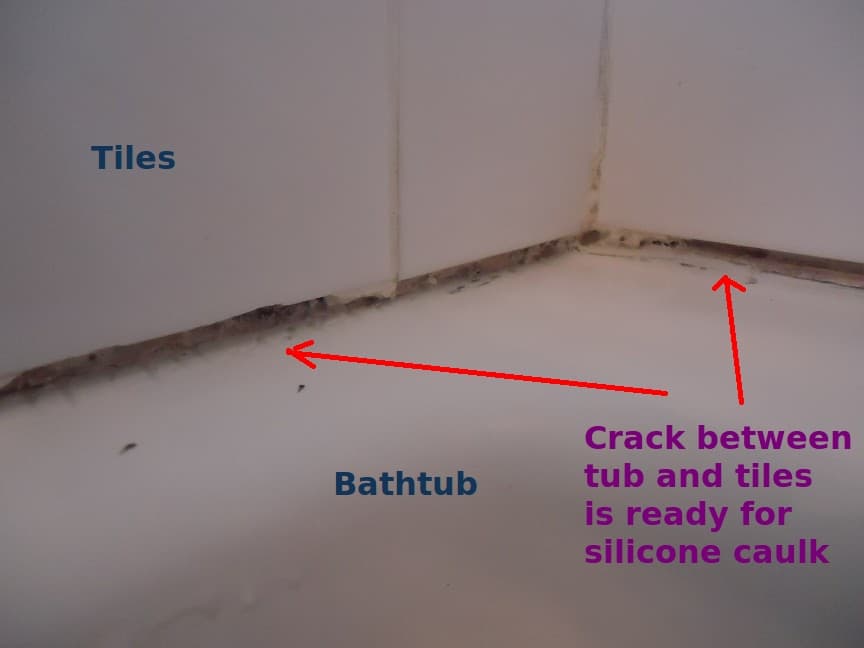
Caulk wears out on its own, and a worn bead is a cosmetic and maintenance job. Signs it is past its life include clear silicone that darkens or grows mold from within, even after cleaning,[1] gaps along the joint, and caulk that has gone brittle or flakes when you press it.
What changes the decision is what is around the caulk. GE lists the warning signs that water is already getting in: musty odours at the base of the tub, bubbling paint, soft drywall or flaking grout nearby.[1] Add to that a stain on the ceiling below the bathroom, a tile that moves when you press it, or a floor that feels soft beside the tub. Any of these means a new bead of caulk would only cover up a problem; someone needs to find out how far the water has gone.
When doing it yourself makes sense
- The joint is a plain tub or shower pan against ceramic tile.
- The old caulk comes out cleanly and there is nothing soft behind it.
- Mold, if any, is limited to the surface of the joint.
- You can kneel or lean into the tub for a while comfortably.
Our step-by-step guide to recaulking a bathtub covers removal, cleaning, the bead and curing.
When hiring someone is the better call
Old silicone that will not come out. There is no substance that will dissolve silicone,[2] so it has to be cut and scraped off, and many layers of old caulk take patience and a steady blade.
Delicate surfaces. Acrylic tubs, cultured marble, natural stone and glass shower doors scratch or stain easily. GE's data sheet says mineral spirits should be tested on a hidden area first, because they can discolour some surfaces,[2] and that on hard plastics or painted surfaces, rubbing alcohol is used instead of mineral spirits.[2] Someone who does this often knows which tools and cleaners each surface tolerates.
Mold beyond the joint. If the moldy area is less than about 10 square feet, EPA says that in most cases you can handle the job yourself.[3] Beyond that, or when it keeps returning from behind the tile, it is a bigger job. EPA also advises: "If you have health concerns, consult a health professional before starting cleanup."[3] The Virginia Department of Health notes that young children, the elderly, pregnant women and people with asthma or other respiratory diseases are more likely than others to develop symptoms from mold exposure.[4] For real remediation, Virginia's Consumer Protection Act requires mold remediation contractors to be certified by a nationally or internationally recognized certifying body.[4]
Several joints and a tidy finish. If you want the tub, shower corners, sink and floor line all redone and matched, one visit from a practised pro is often quicker than a weekend of learning.
Physical limits. Recaulking means kneeling over a tub edge for a long time. That alone is a fair reason to hire it out.
Who to hire and what to check
Recaulking is typically handyman or tile work. If water is coming from the plumbing itself, such as a dripping valve or a leaking drain, that is a plumber's job, not a caulking one.
Most recaulking jobs are small, and Virginia's contractor licence classes start above $1,000: a Class C licence covers a single contract over $1,000 but less than $30,000.[5] If your total, with any added repairs, goes over that, the business should be licensed, and you should check it yourself on DPOR's lookup. DPOR warns that "A license number in an advertisement or on a business card does not necessarily mean the contractor’s license is valid,"[6] and that if you contract with someone who does not hold a license, the Board for Contractors may not be able to help you.[6]
Paperwork protects you either way. Under the Board's rules, licensed contractors doing residential work must use a legible written contract, though routine maintenance and service contracts are excluded.[7] DPOR's guide says to get at least three written bids[6] for the same work, and to limit a deposit to 10% of the price or $1,000, whichever is less, do not pay 100% of the bill until the job is 100% complete, and never pay cash.[6]
Questions to ask before you book
- Will you remove all of the old caulk, or seal over it?
- Which sealant will you use, and in what colour?
- How will you handle any mold you find in the joint?
- What happens if the wall or tile behind it is damaged?
- How long should the shower stay unused afterwards?
Stop and call a pro if
- Drywall near the tub is soft, paint is bubbling, or tiles are loose.
- There is a water stain or sagging on the ceiling below the bathroom.
- Mold covers a large area or comes back from inside the wall after cleaning.
- Water appears around the valve, spout or drain rather than along the caulk line; that is a plumbing problem.
For prices, see what recaulking costs in Virginia and whether it is illegal to hire an unlicensed contractor in Virginia. You can browse handyman services and handymen around Blacksburg, or describe the job once and local businesses quote it.
Common questions
- Is recaulking a bathroom hard to do yourself?
- It is not hard, but it is fiddly. The skill is in getting every trace of the old caulk out and laying one smooth, continuous bead. Most people get a good result on a plain tub-to-tile joint with patience; corners, glass shower doors and natural stone are where a practised hand shows.
- Who recaulks bathrooms, a handyman or a plumber?
- Recaulking is usually handyman or tile work, not plumbing. Call a plumber when the problem is the plumbing itself: a dripping valve, a leak from the drain or supply lines, or water showing up where the fixtures are, not just along the caulk line.
- Does the person recaulking my bathroom need a Virginia licence?
- For a small recaulking job, usually not. Virginia's contractor licence classes start with a single contract over $1,000. If the total with any added repairs is over $1,000, the business should hold a Board for Contractors licence, which you can check on DPOR's lookup.
- Should I hire someone if there is mold behind the caulk?
- Surface mold on the joint can be cleaned before resealing. If mold covers more than about 10 square feet, keeps coming back from behind the surface, or someone in the house is sensitive to mold, get help. Virginia requires mold remediation contractors to be certified.
- What should a written quote for recaulking include?
- Which joints are included, that all the old caulk will be removed, how mold will be handled, the sealant type and colour, the price, when you pay, and what happens if damage is found underneath. Licensed contractors must put residential work in a written contract.
Sources
- [1] What happens if you don't reseal your bathtub? (updated July 31, 2025), GE Sealants (Henkel Corporation). Checked October 27, 2026.
- [2] Advanced Silicone 2 Kitchen & Bath Sealant technical data sheet (revision August 15, 2025), Henkel Corporation (GE Sealants). Checked October 27, 2026.
- [3] A Brief Guide to Mold, Moisture and Your Home, U.S. Environmental Protection Agency. Checked October 27, 2026.
- [4] Mold - Environmental Health, Virginia Department of Health. Checked October 27, 2026.
- [5] Va. Code § 54.1-1100, Definitions, Code of Virginia. Checked October 27, 2026.
- [6] What You Should Know Before You Hire a Contractor (2017), Virginia Board for Contractors, Department of Professional and Occupational Regulation. Checked October 27, 2026.
- [7] 18VAC50-22-260, Filing of charges; prohibited acts, Virginia Administrative Code, Board for Contractors. Checked October 27, 2026.
Want a pro to handle it?
Describe the job once. Licensed local businesses send quotes, and you pay only when you book one.
Get a quote from a local pro