How often should I recaulk my shower?
Recaulk when the caulk fails, not on a fixed date. GE says a good silicone sealant should last 3 to 5 years in a shower, depending on use, ventilation and cleaning, and to inspect it every year. Check it each spring and fall, and replace it sooner if it cracks, peels, pulls away or has mold inside it that will not clean off.
Free to ask. Local shops send quotes, and you pay only when you book one.
By Kasra Taheri, Founder, LoclisPublished
Researched and drafted with AI, then checked claim by claim against the sources listed below before it was published. Prices and rules change; the dates beside each source say when it was last checked.
Step by step
Read when to stop and call a pro, further down this page, before you start.
Step 1: Put it on the calendar
Check the shower caulk each spring and fall, alongside other seasonal jobs such as changing HVAC filters.[2]
Step 2: Look closely
Check corners, the base and around fixtures for caulk that is soft, discoloured, cracked or pulling away from the tile.[2]
Step 3: Press the bead
Run a finger along it; caulk that flakes, powders, feels brittle or lifts at the edges has failed.[2]
Step 4: Clean it gently
Wipe the caulk regularly with a non-abrasive cleaner so soap film does not build up on it.[1]
Step 5: Run the fan
Run the bathroom fan or open the window during every shower and for a while afterwards.[5]
Step 6: Dry the surfaces
Squeegee or towel the walls, floor and caulk lines after showering to take away standing water.[3]
Step 7: Fix leaks quickly
Repair a dripping valve or leaking fixture promptly, and dry anything that gets wet within 24 to 48 hours.[5]
Step 8: Replace it fully
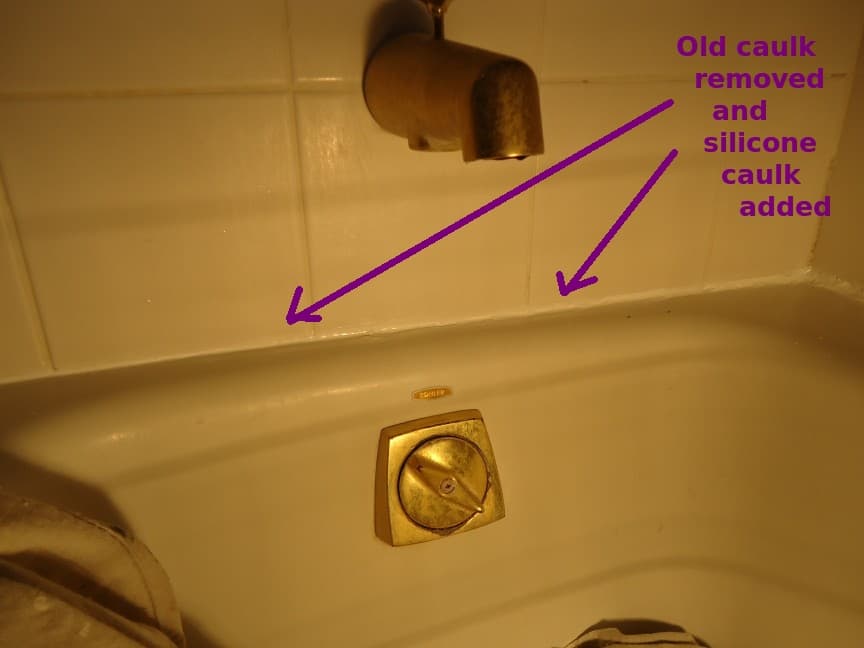
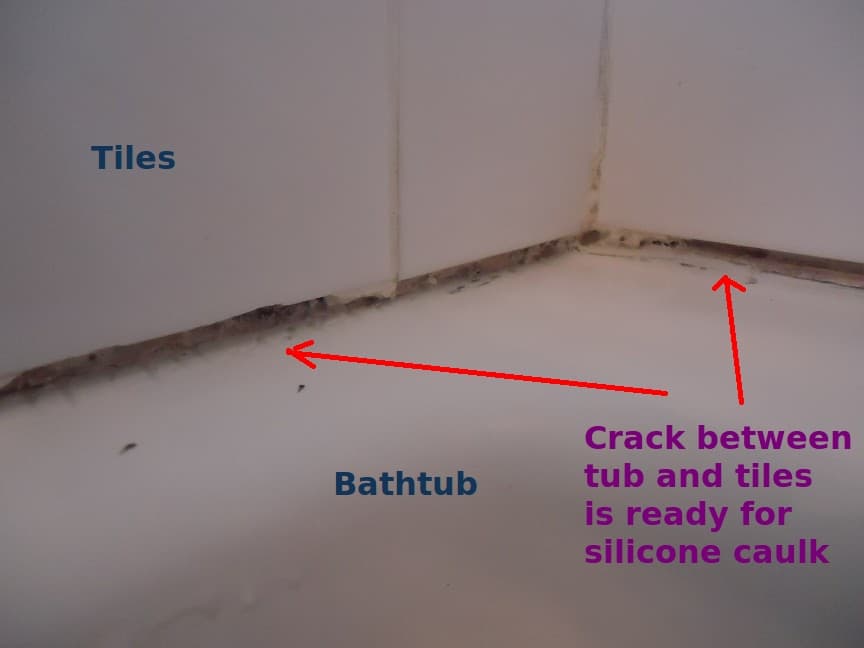
When the caulk has failed, cut it all out and reseal rather than adding a new bead over the old one.[2]
Step 9: Write down the date
Note when you recaulked and with what product, so you can see how long it lasts in your bathroom.
There is no fixed schedule for recaulking a shower. Replace the caulk when it has failed, and catch that early by checking it twice a year. As a rough guide, GE's sealant FAQ says a high-quality silicone sealant should last 3 to 5 years in a shower, depending on use, ventilation and cleaning habits,[1] and that you should inspect it yearly for peeling, cracking or mold, especially in corners and joints.[1] A busy family shower with poor ventilation will be at the short end of that; a guest bathroom with a good fan may go much longer.
Why there is no single number
Label claims and real life differ. GE's FAQ says GE silicone sealants can last five to 20 years with proper prep, depending on use and exposure,[1] but a shower is close to the hardest exposure there is: hot water, steam, soap and daily movement. Across residential work generally, the Forest Products Laboratory found that no professional consensus exists on how long sealant joints in residential construction can be expected to remain functional.[7] It also notes that sealant joint failure can occur without obvious indication,[7] which is why a regular look matters more than a date.
When to check
Twice a year is a sensible habit. GE recommends checking your seals in the spring and fall[2] and pairing it with other seasonal jobs. It takes a few minutes: good light, a close look and a fingertip.
Check again whenever something changes: a new musty smell, a stain on the ceiling below, grout that starts to crumble, or water on the floor outside the shower.
Signs it is time to recaulk
GE's list of what sealant failure looks like is a good checklist: cracks that widen under light pressure, beads lifting from one or both edges, sealant that flakes, powders or feels brittle, mold that reappears after cleaning, and hardened or shrunken lines.[2]
The mold point needs care. Some mold on the surface of a bead is normal in a damp room and can be cleaned off. Dark spots inside clear silicone, or mold that returns to the same place soon after cleaning, are different. Mold reappearing in the same spot is likely a failed seal,[2] with water getting in behind or under the bead.
Keeping caulk going longer
Clean it, gently and often. Mold-resistant products help, but they do not clean themselves. GE's data sheet is explicit: "Fully cured sealant is resistant to stain-causing mold & mildew. Regular cleaning of sealant is required however, as soap and other residue can cause secondary mold and mildew growth on surfaces."[4] A soft brush or sponge and a non-abrasive cleaner are enough; harsh scrubbing pads wear the bead.
Ventilate. EPA's guidance on bathrooms is realistic: "Places that are often or always damp can be hard to maintain completely free of mold."[5] But it adds that "increasing ventilation (running a fan or opening a window) and cleaning more frequently will usually prevent mold from recurring, or at least keep the mold to a minimum."[5] EPA recommends keeping indoor humidity below 60 percent, ideally between 30 and 50 percent,[5] and the Virginia Department of Health recommends using exhaust fans to move moisture from showering to the outdoors.[6] A fan that only stirs the air in the room, or vents into the attic, does much less.
Dry things off. A quick squeegee of the walls and a wipe of the caulk lines after showering means less standing water sitting on the bead for hours.
Fix leaks fast. A dripping valve or spout keeps the base of the shower wet. EPA advises that you dry water-damaged areas within 24 to 48 hours to prevent mold growth.[5]
When you do recaulk
Do it fully. Clean any mold first, because EPA's rule is "Do not paint or caulk moldy surfaces."[5] Then cut out every bit of the old bead. GE's advice is direct: "Don’t seal over old work. It won’t hold, and it won’t last."[2] Our guide to recaulking a bathtub covers removal, cleaning and the new bead; the same method works for a shower.
Do not rely on a warranty to stretch the interval. GE's lifetime warranty on this sealant states that the remedy is a refund of the purchase price, and the maker is not liable for damages beyond it.[4] The Forest Products Laboratory makes the same point about caulk warranties generally: warranties of multiple decades cover only replacement of the caulking material, not the labour or damage from a failed joint.[7]
Stop and call a pro if
- New caulk fails again within months even though the old bead was fully removed.
- Tiles are loose, grout is crumbling, or the wall behind the shower feels soft.
- There is a stain or sagging on the ceiling below the bathroom.
- Mold keeps coming back from behind the tile, or covers a large area.
- The shower floor or pan flexes or moves when you stand on it.
If your caulk keeps splitting, see why caulk keeps cracking; if mold is the main problem, see why a bathroom keeps getting moldy after disinfecting. You can browse handyman services and the other handyman answers, or describe the shower job once and local businesses quote it.
Common questions
- How long does shower caulk last?
- It varies with the product, the prep and the bathroom. GE says a high-quality silicone should last 3 to 5 years in a shower, depending on use, ventilation and cleaning. A poorly prepared bead, a cheap acrylic caulk or a shower with no working fan can fail much sooner.
- Do I have to recaulk if there is mold on the caulk?
- Not always. Mold growing on the surface of the bead can often be cleaned off. If dark spots are inside clear silicone, or mold comes back in the same spot soon after cleaning, the seal has usually failed and the caulk should be cut out and replaced after the joint is cleaned and dried.
- Does mold-resistant caulk mean I never have to clean it?
- No. GE's data sheet says cured sealant resists mold, but it still needs regular cleaning, because soap and other residue on its surface can grow mold. The label protects the caulk itself, not the film that builds up on top of it.
- What makes shower caulk fail faster?
- Poor preparation, such as caulking over old caulk or soap film; a product with little flexibility in a joint that moves; a bead that is too thin; and a bathroom that stays damp because the fan is not used or does not vent outside. Leaks behind the wall shorten its life too.
- Is a lifetime warranty on caulk worth anything?
- It helps less than it sounds. These warranties generally cover the product, not the labour of redoing the joint or any water damage. GE's lifetime warranty on its kitchen and bath silicone, for example, offers a refund of the purchase price. Good preparation and regular checks matter more than the warranty.
Sources
- [1] Frequently Asked Questions, GE Sealants (Henkel Corporation). Checked October 27, 2026.
- [2] Sealant maintenance: how to inspect and refresh seals around your home (updated June 13, 2025), GE Sealants (Henkel Corporation). Checked October 27, 2026.
- [3] How to remove mold from shower caulking area before recaulking (updated September 22, 2026), GE Sealants (Henkel Corporation). Checked October 27, 2026.
- [4] Advanced Silicone 2 Kitchen & Bath Sealant technical data sheet (revision August 15, 2025), Henkel Corporation (GE Sealants). Checked October 27, 2026.
- [5] A Brief Guide to Mold, Moisture and Your Home, U.S. Environmental Protection Agency. Checked October 27, 2026.
- [6] Mold - Environmental Health, Virginia Department of Health. Checked October 27, 2026.
- [7] The Ins and Outs of Caulking (FPL-GTR-169, May 2006), USDA Forest Service, Forest Products Laboratory. Checked October 26, 2026.
Want a pro to handle it?
Describe the job once. Licensed local businesses send quotes, and you pay only when you book one.
Get a quote from a local pro