What are the most common problems found in a home inspection?
Most findings come back to water and age: gutters, downspouts and grading that send rain toward the foundation, damp crawl spaces, worn roofs and flashing, and leaks under sinks. Next come electrical issues such as missing GFCI protection or older aluminum wiring, smoke alarms that are missing or dead, fuel-burning appliances that need service, and, in older Virginia homes, unbonded yellow gas tubing.
Free to ask. Local shops send quotes, and you pay only when you book one.
By Kasra Taheri, Founder, LoclisPublished
Researched and drafted with AI, then checked claim by claim against the sources listed below before it was published. Prices and rules change; the dates beside each source say when it was last checked.
Step by step
Read when to stop and call a pro, further down this page, before you start.
Step 1: Walk the outside in the rain
Watch where the gutters overflow and where each downspout empties, and note any water running toward the house instead of away from it.
Step 2: Check the grade
Look at the soil along the foundation; it should slope away from the house so water does not collect against the walls.[5]
Step 3: Measure indoor humidity
Put an inexpensive humidity meter in the basement or near the crawl space access and aim to keep readings below 60 percent.[5]
Step 4: Look under every sink
With a flashlight, check cabinet floors and pipes for drips, stains, swollen wood or a musty smell.
Step 5: Read the cable jackets
In an unfinished basement, attic or garage, look along the electrical cables for AL or Aluminum printed on the jacket, without touching any connections.[6]
Step 6: Spot yellow gas tubing
Note whether flexible yellow gas tubing runs to your appliances, especially in a house built before May 1, 2008, and leave any assessment to a licensed contractor.[3]
Step 7: Test the smoke alarms
Press the test button on every alarm and replace batteries in any that use a replaceable battery.[8]
Step 8: List what you find
Write down each problem, where it is and when you noticed it, so an inspector or contractor can follow up.
The short answer
Every house is different, but inspection findings tend to cluster in the same few places: water, roofs, electrical, gas appliances and life-safety devices. In Virginia, an inspector's report must cover the structure, roof and attic, exterior, interior, plumbing, electrical, heating and air conditioning,[1] so those are the headings you will see. Below is what usually turns up under each, and what it means.
Water going where it should not
Water is behind more findings than anything else: overflowing gutters, downspouts that dump next to the foundation, soil that slopes toward the house, missing or loose flashing, failed caulk around windows and doors, and stains on ceilings or under sinks.
Virginia Cooperative Extension describes bulk moisture, meaning rain getting in through holes, cracks and gaps left by poor flashing, inadequate drainage, or worn weather-stripping and caulking,[4] as the most important way moisture gets into a house, because it moves liquid water straight into building cavities.[4] Extension engineers also warn never to assume siding, roofing or sealed windows are waterproof, since virtually all of them can leak sooner or later.[4]
The fixes are usually simple. EPA's advice is to clean and repair gutters regularly and make sure the ground slopes away from the foundation.[5] An inspector will flag where that is not happening.
Damp crawl spaces and basements
Many older homes sit over a crawl space, and a damp one is a frequent finding: standing water, wet or torn plastic sheeting, sagging insulation, rusty ductwork, or a musty smell.
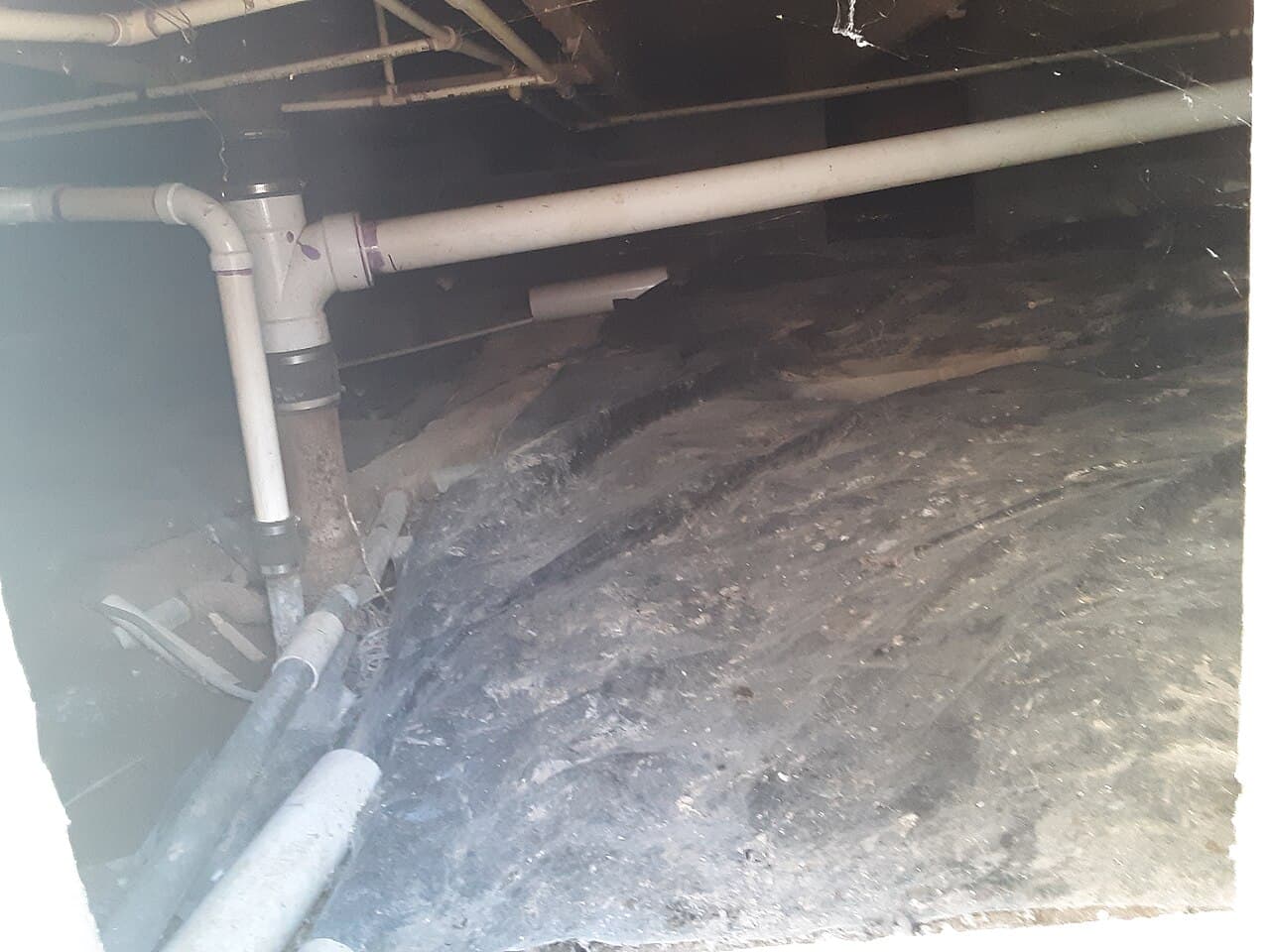
Humidity is the reason it matters. Molds grow in air above 60 percent relative humidity, and wood decays when relative humidity is near or at 100 percent.[4] EPA suggests you keep indoor humidity below 60 percent, ideally between 30 and 50 percent.[5] The report must address crawl space ventilation and vapor barriers,[1] so expect comments there on older homes.
Roofs and attics
The roof section covers the roof covering, ventilation, drainage, flashings where readily visible, roof framing and sheathing, the attic and its insulation.[1] Common notes are worn or damaged shingles near the end of their life, flashing problems around chimneys and vents, signs of past leaks on attic sheathing, bathroom fans venting into the attic, and thin or disturbed insulation. For what a dedicated roof check adds, see what a roof inspection includes.
Electrical items
The electrical section includes the service, panels, wiring and devices, and specifically ground fault circuit interrupters, the presence or absence of smoke alarms and carbon monoxide detectors, and the presence of solid conductor aluminum branch circuit wiring.[1] Typical findings include missing GFCI protection near water, double-tapped breakers, open junction boxes, ungrounded outlets, amateur wiring in basements, and older panels.
Aluminum branch wiring deserves attention when it appears. A survey for the Consumer Product Safety Commission found that homes built before 1972 and wired with aluminum were 55 times more likely than copper-wired homes to have at least one outlet connection reach fire hazard conditions.[6] CPSC lists the warning signs as "hot-to-the-touch face plates on receptacles or switches; flickering lights; circuits that don't work; or the smell of burning plastic at outlets or switches".[6] For more on this section of the report, see what a home electrical inspection includes.
Gas tubing and fuel-burning appliances
Virginia adds one item of its own. If an inspector sees any shade of yellow corrugated stainless steel tubing in a home built before the 2006 Virginia Construction Code took effect on May 1, 2008,[3] the report must say so along with a required statement, which ends: "Proper bonding and grounding of the product should be determined by a contractor licensed to perform the work in the Commonwealth of Virginia."[3] The statement is not a finding that the tubing is unsafe; it flags that its bonding and grounding should be checked by a licensed contractor.
Furnaces, boilers, water heaters and their vents are also frequently flagged for age, rust, or missing service records. EPA advises that you have fuel-burning appliances, including furnaces, gas water heaters, gas ranges, gas dryers, fireplaces and wood stoves, inspected by a trained professional at the beginning of every heating season.[7]
Smoke alarms
Missing, dead or very old smoke alarms are a routine finding, and Virginia makes the report address them. Every report must include, in substance, the statement: "It is recommended that a home have smoke alarms on each level of the dwelling and in every bedroom or sleeping area."[1] The U.S. Fire Administration's rule for most alarms is also simple: "Replace the entire smoke alarm every 10 years."[8]
What a standard inspection does not look for
Some of the most expensive problems are outside the usual scope. A Virginia contract can exclude the presence of wood-destroying organisms and mold, environmental hazards such as radon, asbestos and lead-based paint, and the remaining life of any system.[2] If you want them checked, add them in writing. Radon in particular is worth testing: EPA says to fix a home if the radon level is 4 picocuries per liter or higher.[9]
Also read the limits section of your report. The inspector must identify any component that cannot be inspected and explain why,[1] and those gaps are where surprises tend to hide.
Stop and call a pro if
- You smell gas, find yellow gas tubing with no bonding noted, or a fuel-burning appliance shows soot, rust-through or a disconnected vent. Call a licensed gas fitter or HVAC contractor.
- Outlets or switch plates are warm, lights flicker, or you find aluminum wiring. Call a licensed electrician: CPSC advises having a qualified electrician determine the cause rather than trying it yourself.[6]
- Water is coming in, floors feel soft, or mold is spreading beyond a small patch.
- The roof needs anything more than a look from the ground.
For what to tackle first once the report is in, see what to fix first after a home inspection. You can also browse inspection answers or find a licensed electrician in Blacksburg.
Need an inspection or a second look at a finding? Describe the house once and licensed inspectors near you can quote.
Common questions
- Are most home inspection findings serious?
- Usually not. A typical report has many small maintenance items and a few that matter. Read the summary for anything about safety, active water, the roof, the structure, or electrical and gas, and treat the rest as a maintenance list.
- Why does my inspector mention yellow gas tubing?
- Virginia law requires it. If an inspector sees yellow corrugated stainless steel tubing in a home built before May 1, 2008, the report must say so and carry a set statement that a licensed contractor should determine whether it is properly bonded and grounded.
- Will a home inspection find mold or radon?
- Not unless you add those tests. A Virginia inspection contract can exclude mold, radon, asbestos, lead-based paint and wood-destroying insects. The inspector may still note visible moisture damage, but testing is separate.
- Is a home inspection a code inspection?
- No. The contract has to say that the inspection does not review compliance with the building code. An inspector reports condition, not code violations.
- What should I do about an item marked not inspected?
- Ask why it was not inspected, then arrange access or have a specialist look before you close. The report must name anything it could not inspect and explain the reason.
Sources
- [1] 18VAC15-40-130. Home inspection report, Virginia Administrative Code, Legislative Information System. Checked October 27, 2026.
- [2] 18VAC15-40-120. Home inspection contract, Virginia Administrative Code, Legislative Information System. Checked October 27, 2026.
- [3] § 54.1-517.2:1. Home inspection; required statement related to the presence of yellow shaded corrugated stainless steel tubing, Code of Virginia, Legislative Information System. Checked October 27, 2026.
- [4] ENERGY SERIES: What about Moisture? (2908-9020), Virginia Cooperative Extension, Virginia Tech. Checked October 27, 2026.
- [5] A Brief Guide to Mold, Moisture and Your Home, U.S. Environmental Protection Agency. Checked October 27, 2026.
- [6] Repairing Aluminum Wiring (Publication 516), U.S. Consumer Product Safety Commission. Checked October 27, 2026.
- [7] Protect Your Family and Yourself from Carbon Monoxide Poisoning, U.S. Environmental Protection Agency. Checked October 27, 2026.
- [8] Smoke alarms, U.S. Fire Administration, FEMA. Checked October 27, 2026.
- [9] Home Buyer's and Seller's Guide to Radon (EPA 402/K-24/001), U.S. Environmental Protection Agency. Checked October 27, 2026.
Want a pro to handle it?
Describe the job once. Licensed local businesses send quotes, and you pay only when you book one.
Get a quote from a local pro