When should a sump pump be replaced?
Replace a sump pump when it fails a bucket test, when the motor, bearings or impeller wear out, when it trips a GFCI outlet that tests good, or when it reaches the age its maker expects. Wayne's backup-pump manual lists about three years for pumps with one- or two-year warranties and about six for three- or five-year ones. Replace float switches on the maker's schedule.
Free to ask. Local shops send quotes, and you pay only when you book one.
By Kasra Taheri, Founder, LoclisPublished
Researched and drafted with AI, then checked claim by claim against the sources listed below before it was published. Prices and rules change; the dates beside each source say when it was last checked.
Step by step
Read when to stop and call a pro, further down this page, before you start.
Step 1: Inspect it each season
Look at the pump 3-4 times a year for movement and for debris building up on the switch or float.[1]
Step 2: Check the outlet and cord
Make sure the pump is plugged into a working GFCI outlet, reset it if it tripped, and look for damage on the cord.[1]
Step 3: Keep the pump upright
With the pump unplugged, stand it back up if vibration has tilted it, because a tilted pump can jam its float.[1]
Step 4: Clear the inlet screen
With the pump unplugged, clear small stones and debris from the inlet screen.[1]
Step 5: Run a bucket test
Pour a bucket of water into the pit and confirm the pump starts on its own and drains the pit quickly.[1]
Step 6: Replace the switch on schedule
Follow the maker's switch schedule; Wayne requires replacing its tether switch every two years.[1]
Step 7: Test the backup monthly
If you have a battery backup pump, check its battery condition and run it once a month as its manual directs.[2]
Step 8: Write down the install date
Mark the pump's install date and warranty length on the pit cover or in your records, so you know when it is due.
The short answer
Replace a sump pump when it stops passing a simple bucket test, when its motor, bearings or impeller wear out, when it trips a GFCI outlet that tests good, or when it reaches the age its maker expects it to last. Replace the float switch sooner if the maker says to. A pump you depend on is cheaper to replace on a dry afternoon than during a storm.
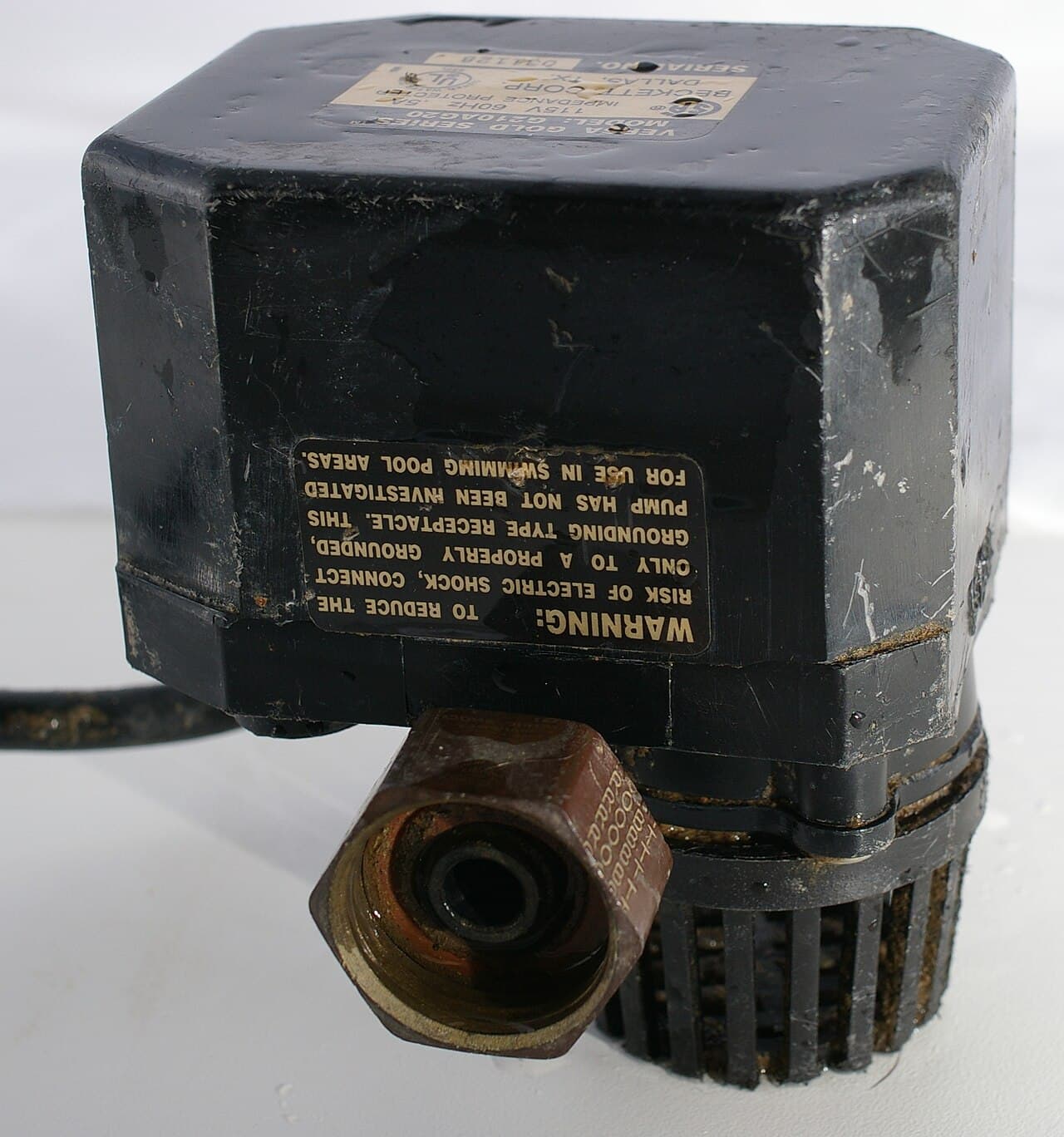
How long a pump should last
Warranty length is a useful clue to how long a pump should last. Wayne's backup-pump manual ties the two together: a pump with a one- or two-year warranty should give approximately three years of service, and one with a three- or five-year warranty approximately six,[2] if it is properly installed, maintained and operated according to Wayne's written instructions.[2] Wayne's own primary pumps carry warranties of one year on some models and up to five years on its stainless steel and cast iron models.[1]
Treat those numbers as a planning guide, not a deadline. A pump in a pit that fills every hour in a wet spring works far harder than one that runs a few times a year. If you do not know how old your pump is, look for a date code on its label or ask the plumber who installed it.
Signs it is time now
It fails the bucket test. Wayne's advice: "If the pump doesn’t start, have it serviced or replaced."[1] First rule out a tripped outlet, a jammed float and a clogged screen; see why won't my sump pump turn on.
It is noisy, weak or dead. In Wayne's troubleshooting chart, worn bearings and a broken impeller, which make a pump noisy or weak, are both answered with replace pump, as is a failed motor.[1]
It trips the outlet. In Wayne's chart, a pump that trips its GFCI outlet has either a bad GFCI, for an electrician to replace, or a bad pump.[1]
It overheats, and the wiring checks out. Wayne's pump motor has an automatic resetting thermal protector,[1] so an overheated pump shuts off and restarts on its own. Wayne explains: "Protector tripping is an indication of motor overloading as a result of operating the pump at low heads, excessively high or low voltage, inadequate wiring, incorrect motor conditions, or at the end of product life."[1] Only the last of those means a new pump. Wayne's chart lists low supply voltage, for which the remedy is to contact an electrician,[1] so have the voltage and wiring checked before you replace a pump that keeps cutting out.
It cannot keep up. If the pit fills faster than the pump empties it, or the pump runs without stopping, one of Wayne's remedies is to recheck the sizing calculations to determine the proper pump size.[1] See why a sump pump runs constantly.
For the cases in between, see should I repair or replace my sump pump.
Maintenance that makes it last
Wayne says to inspect the pump 3-4 times per year for pump movement or buildup of debris on the switch or float,[1] and warns: "Lack of proper routine maintenance will void warranty."[1] The steps above cover the routine. Two parts deserve their own schedule.
The float switch. The switch is often due before the pump is. Wayne's manual says: "Replace the tether switch every two (2) years."[1] Other makers set their own intervals, so check your manual. A stuck float is a different problem from a worn one; see how to fix a stuck sump pump float switch.
The outlet. "In damp areas, GFCI breakers may trip, effectively shutting off the sump pump."[1] A quick look at the outlet each time you pass the pit catches that before rain does.
Backup pumps and batteries
A battery backup protects against power outages, not against a worn primary pump. Wayne states: "The ESP25n is a battery operated backup sump pump. It does not replace a regular pump."[2] Its instructions say that once a month, check the battery condition,[2] by running the backup with the main pump unplugged. Goulds notes: "After power is restored, charger will automatically recharge battery fully in about six hours."[3] A battery that will not hold a charge is due for replacement on its own schedule.
When you replace it, fix the discharge too
Where the water goes matters as much as the pump. The Northern Virginia Soil and Water Conservation District warns: "If downspouts and sump pumps are not set up correctly, it can cause foundation problems, erosion or wet spots in the yard."[4] Where it may go is set locally. Spotsylvania County lists groundwater sump pumps among the improper connections to private sewer laterals, because the extra water costs more to treat and may overload its public sewer system.[5] Other localities set their own rules, so ask yours where a sump pump may discharge before a new one goes in. For the job itself, see how to replace a sump pump.
Stop and call a pro if
- The pump is hardwired, or the outlet trips as soon as it starts.
- There is water on the floor and the electric panel is in the basement.
- The discharge pipe needs to be cut, rerouted or extended for a new pump.
- The pit fills faster than any pump you have tried can empty it.
- You are not sure where your pump is allowed to discharge.
Browse more plumbing repair answers, see sump pump services on Loclis, or find licensed plumbers near Blacksburg. When you are ready, describe the job once and get quotes from licensed plumbers.
Common questions
- How long does a sump pump last?
- It depends on the pump and how hard it works. Wayne's backup-pump manual ties expected life to warranty length: approximately three years of service for pumps with one- or two-year warranties and approximately six for three- or five-year ones, if the pump is installed, maintained and operated as its instructions say.
- Should I replace my sump pump before it fails?
- If the basement would flood without it, yes, once it reaches the age its maker expects or starts showing wear such as noise or heavy vibration. Replacing a pump on a dry day costs less, and carries less risk, than an emergency call in a storm.
- Do I need to replace the float switch separately?
- On pumps with a replaceable switch, often yes. Wayne requires replacing its tether switch every two years to reduce the risk of switch failure and flooding, well before the pump itself is due.
- Does a battery backup mean I can keep an old primary pump longer?
- No. Wayne says its battery backup pump does not replace a regular pump; it protects against power outages. A backup that runs often is a sign the primary pump needs attention.
- Can I discharge my sump pump into the sewer when I replace it?
- Not in Spotsylvania County, which lists groundwater sump pumps among the improper connections to private sewer laterals. Other localities set their own rules, so ask your county or city where a sump pump may discharge before the new one goes in.
Sources
- [1] Submersible Sump Pumps: Operating Instructions and Parts Manual (600002W-001 J, 06/25), WAYNE Water Systems. Checked October 26, 2026.
- [2] ESP25n Battery Backup Sump Pump: Operating Instructions and Parts Manual (600005W-001 J), WAYNE Water Systems. Checked October 26, 2026.
- [3] Battery Backup Sump Pump: Installation, Operation and Parts Manual (IM186R04), Goulds Water Technology (Xylem). Checked October 26, 2026.
- [4] Gutters and Downspouts: Wetness or Erosion Problems, Northern Virginia Soil and Water Conservation District. Checked October 26, 2026.
- [5] Utilities: Sanitary Sewer Lateral FAQ, Spotsylvania County. Checked October 26, 2026.
Want a pro to handle it?
Describe the job once. Licensed local businesses send quotes, and you pay only when you book one.
Get a quote for Plumbing Repair