How do I fix a stuck sump pump float switch?
Unplug the pump first. Then find what is holding the float: a pump that has tipped or shifted, a cord or pipe in its path, a float rubbing the pit wall, or debris built up on it. Stand the pump upright, clear the float, tie the cord to the discharge pipe, plug back in and fill the pit to test. A float that still sticks needs replacing.
Free to ask. Local shops send quotes, and you pay only when you book one.
By Kasra Taheri, Founder, LoclisPublished
Researched and drafted with AI, then checked claim by claim against the sources listed below before it was published. Prices and rules change; the dates beside each source say when it was last checked.
Step by step
Read when to stop and call a pro, further down this page, before you start.
Step 1: Unplug the pump
Pull the pump's plug, and the float switch's piggyback plug if it has one, before you reach into the pit.[1]
Step 2: Stay off a wet floor
If water is on the floor, do not walk on it until all power is off, and if the electric panel is in the basement, call an electrician.[1]
Step 3: Let the motor cool
Before you service the pump, let it cool for a minimum of 2 hours, because the oil inside gets pressurized and hot in normal use.[1]
Step 4: Stand the pump upright
Vibration can tip a pump onto its side and jam the float, so set it level on the pit floor with the switch facing away from the inlet.[1]
Step 5: Give the float room
Check the float has at least 1 in. of clearance to the side wall of the pit and can travel its full range without touching anything.[1]
Step 6: Clear the float and its rod
Wipe silt and buildup off the float and the rod or cage it rides on, and lift it by hand to feel that it moves freely.
Step 7: Clean the pit and inlet screen
Scoop out stones, silt and debris from the pit floor and the pump's inlet screen so nothing can wedge under the float again.[1]
Step 8: Tie up the cords
Secure the power cord to the discharge pipe with cable or zip ties so it cannot tangle with the switch.[1]
Step 9: Plug in and fill the pit
Plug the pump into its GFCI outlet, pour water into the pit, and watch the pump start at the on level and stop at the off level.[1]
Step 10: Watch several cycles
Fill and drain the pit a few more times to confirm the float never catches on the pump, the piping or the pit.[1]
The short answer
A stuck float is usually not a broken float. Something is holding it down or pinning it in place: the pump has shifted or tipped, the power cord or discharge pipe sits in its path, the float rubs the pit wall, or silt has built up on it. Unplug the pump, set it upright, clear the float's path, tie the cord out of the way and test it with a bucket of water. If the float moves freely and the pump still will not start, the switch has failed and needs replacing.
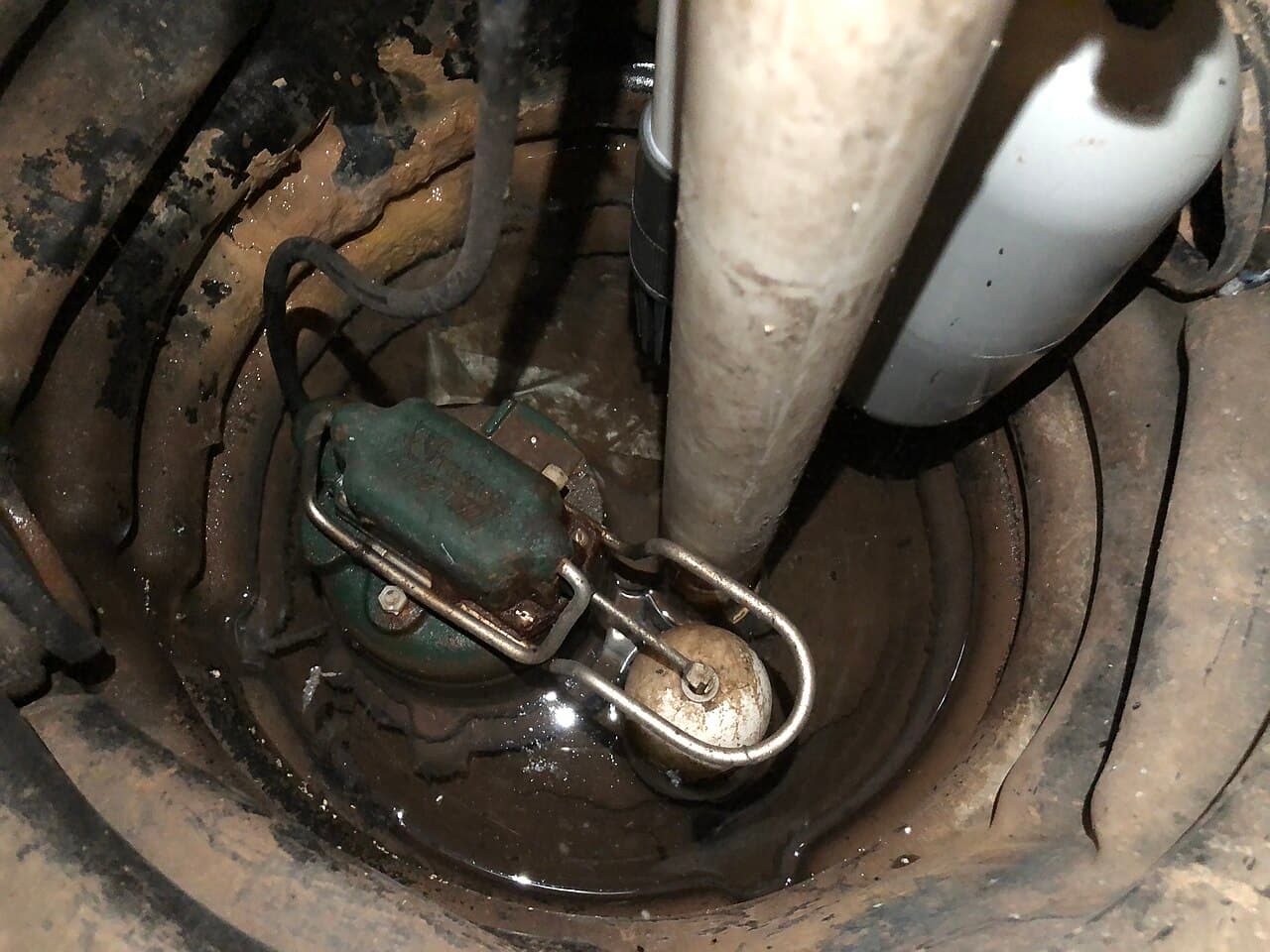
Unplug before you touch anything
Sump pumps sit in water and run on household current, so the order matters. Wayne's manual says to always disconnect the pump from the power supply before servicing it or making any adjustments, and to never handle a pump with wet hands or while standing on a wet or damp floor while it is plugged in.[1] FEMA's flood guidance makes the same point for any equipment: "Do not touch electrical equipment if it is wet or if you are standing in water."[3]
If the basement has already taken on water, do not walk on the floor when water is present until all power is turned off, and if the electric panel is in the basement, call an electrician.[1] Then give the pump time: Wayne says to let the pump cool for a minimum of 2 hours before servicing it, because the oil inside becomes pressurized and hot in normal use.[1]
Most residential pumps plug in. Some have a separate float switch with its own "piggyback" plug that the pump's plug pushes into, so pull both. If your pump is wired straight into a junction box with no plug, stop here: that is an electrician's job.
Why floats get stuck
The pump moved or tipped. Wayne warns that vibration during operation can make a pump fall or tilt onto one side, which can jam the float so it cannot start the pump.[1] It also says rigid piping is required to hold the pump in place, because pump movement can stop the switch from working correctly, and flexible hose should not be used.[1] If your pump hangs from a flexible hose, that is often the root cause.
The float touches the pit wall. Wayne's installation steps call for at least 1 in. of clearance to the side wall of the basin and say to position the pump so the switch is away from the inlet, clear of incoming water.[1] A pump that has drifted a few inches can put the float against the wall or under the inlet pipe.
A cord is in the way. Wayne says to secure the power cord to the discharge pipe with cable or zip ties to prevent the switch getting tangled.[1] A loose loop of cord can settle on a tether float or wrap around a vertical float's rod.
Silt and debris. Sediment from drain tile settles in the pit, and minerals and grime build up on the float and its guide rod over time. A float that drags on a dirty rod may rise late or not at all.
Know which float you have
A vertical float rides up and down a rod or inside a small cage beside the pump, like the white ball in the photo above. A tether float hangs on a short cord and swings up as water rises. They switch on at different heights. On its vertical-float pumps the factory-set on level is approximately 9 in. and the off level approximately 4 in., and on its tether models approximately 13 in. and 7 in.[1] Those are Wayne's figures; your manual has your pump's.
Do not "fix" a stuck float by bending its rod or shortening its tether. Wayne says its tether float is not adjustable, and that changing it can affect how the pump performs and how long it lasts.[1]
Test it properly
After clearing the float, plug the pump back into its GFCI outlet and pour water into the pit until the pump starts. It should stop on its own once the water drops to the off level. Fill and drain it a few more times and watch the float the whole way: it should never touch the pump body, the discharge pipe, the cords or the pit. For more on testing, see how to test a sump pump.
If you have a battery backup pump with an alarm, a sounding alarm is a clue too. Goulds' backup manual says that if the alarm sounds, check operation of the primary pump, which may need service.[2]
When the switch itself has failed
If the float moves freely, the pit has enough water and the outlet works, but the pump still will not start, the switch has probably failed. In Wayne's troubleshooting chart, the remedy for a failed switch is to replace the tether switch or replace the pump.[1] Wayne sells a float kit, a vertical float switch kit and a tether switch as repair parts,[1] and other makers sell their own; match the part to your pump's model number.
Switches also wear out on a schedule. Wayne requires replacing its tether switch every two years,[1] and says to inspect the pump 3-4 times per year for movement or debris building up on the switch or float.[1] If yours is older than that, replacing the switch is cheaper than a flooded basement. If the switch is built into the pump body and cannot be swapped, the fix is a new pump; see how to replace a sump pump.
Stop and call a pro if
- The pump or its switch is hardwired into a junction box rather than plugged into an outlet.
- The outlet is out of reach. If the receptacle is not within reach of the pump's cord, Wayne says to have a qualified licensed electrician install a new one rather than use an extension cord or surge protector.[1]
- The GFCI outlet trips again as soon as you reset it, or the cord is cracked or damaged.
- There is standing water on the floor and the electric panel is in the basement.
- The pump hums but moves no water, runs constantly, or vibrates loudly. See why a sump pump runs constantly and why a sump pump won't turn on.
- A new switch does not fix it, or rain is coming and you cannot get the pump working.
A plumber can swap a switch or a pump in one visit. Browse plumbing repair answers, see sump pump repair on Loclis, or find licensed plumbers near Blacksburg. When you are ready, describe the job once and get quotes from licensed plumbers.
Common questions
- Can I tap the float to get the pump going in an emergency?
- Lifting a float by hand while the pump is plugged in puts your hand in water next to a live pump. Wayne warns never to handle a pump with wet hands or while standing on a wet or damp floor while it is plugged in. Unplug it, free the float, plug it back in and let rising water lift the float. If water is already on the floor, do not walk through it until the power is off.
- How do I know if the float switch itself is bad?
- If the float moves freely, the pump is plugged into a working outlet and there is enough water in the pit, but the pump still will not start, the switch is the likely failure. Wayne's troubleshooting chart gives the remedy for a bad switch as replacing the tether switch or replacing the pump.
- Can I adjust a tether float so the pump runs more often?
- Not on every pump. Wayne says its tether float is not adjustable and that changing it can affect the pump's application and life expectancy. Check the manual for your model before you move a float or its clamp.
- How often should a float switch be replaced?
- Follow the pump maker's schedule. Wayne requires replacing its tether switch every two years to reduce the risk of switch failure and flooding, and says to inspect the pump three to four times a year for movement or debris on the switch or float.
- Why does my float keep getting stuck?
- Usually because something keeps moving. A pump on flexible hose can shift in the pit, vibration can tip it, a loose cord can drift into the float's path, and silt can build up on the float. Rigid discharge pipe, cords tied to the pipe and a clean pit stop most repeats.
Sources
- [1] Submersible Sump Pumps: Operating Instructions and Parts Manual (600002W-001 J, 06/25), WAYNE Water Systems. Checked October 26, 2026.
- [2] Battery Backup Sump Pump: Installation, Operation and Parts Manual (IM186R04), Goulds Water Technology (Xylem). Checked October 26, 2026.
- [3] Floods, Ready.gov (FEMA). Checked October 26, 2026.
Want a pro to handle it?
Describe the job once. Licensed local businesses send quotes, and you pay only when you book one.
Get a quote for Plumbing Repair