Why won't my sump pump turn on?
Most often the pump has lost power (a tripped GFCI outlet, breaker or blown fuse), the float is jammed or the pump has tipped, the pit holds too little water to lift the float, or the inlet screen is clogged. If power, float and screen all check out, the switch or motor has failed and the switch or pump needs replacing.
Free to ask. Local shops send quotes, and you pay only when you book one.
By Kasra Taheri, Founder, LoclisPublished
Researched and drafted with AI, then checked claim by claim against the sources listed below before it was published. Prices and rules change; the dates beside each source say when it was last checked.
Step by step
Read when to stop and call a pro, further down this page, before you start.
Step 2: Check the water level
Look into the pit: if the water is below the float's on level, the pump is not supposed to run yet.[1]
Step 3: Check the GFCI outlet
Make sure the pump is plugged into a working GFCI outlet and press its reset button if it has tripped, since damp basements trip them.[1]
Step 4: Check the breaker or fuse
Look for a tripped breaker or blown fuse on the pump's circuit, and if it trips again, find out why before resetting it again.[1]
Step 5: Unplug before reaching in
Unplug the pump, and any piggyback float plug, before you put a hand in the pit.[1]
Step 6: Let the pump cool
Before you lift the pump or clean its screen, let it cool for a minimum of 2 hours, because the oil inside gets pressurized and hot in normal use.[1]
Step 7: Free the float
Stand the pump upright and clear anything touching the float, so it can travel its full range.[1]
Step 8: Clean the inlet screen
Clear small stones and debris from the pump's inlet screen and the pit floor.[1]
Step 9: Test with a bucket of water
Plug the pump back in and pour water into the pit to see whether it starts on its own and drains the pit quickly.[1]
Step 10: Note what it does
Write down whether it stays silent, hums without pumping, or starts and stops, because that tells a plumber which part has failed.
The short answer
A sump pump that will not turn on has usually lost power, has a float that cannot rise, or is not seeing enough water to start. Wayne's troubleshooting chart lists the causes of a pump that will not start or run in this order: water level too low, a blown fuse or tripped breaker, low supply voltage, the motor, the switch, a clogged inlet screen, and an obstructed switch.[1] You can check most of those yourself. The two that need a pro are low voltage and a dead motor.
If there is water on the floor
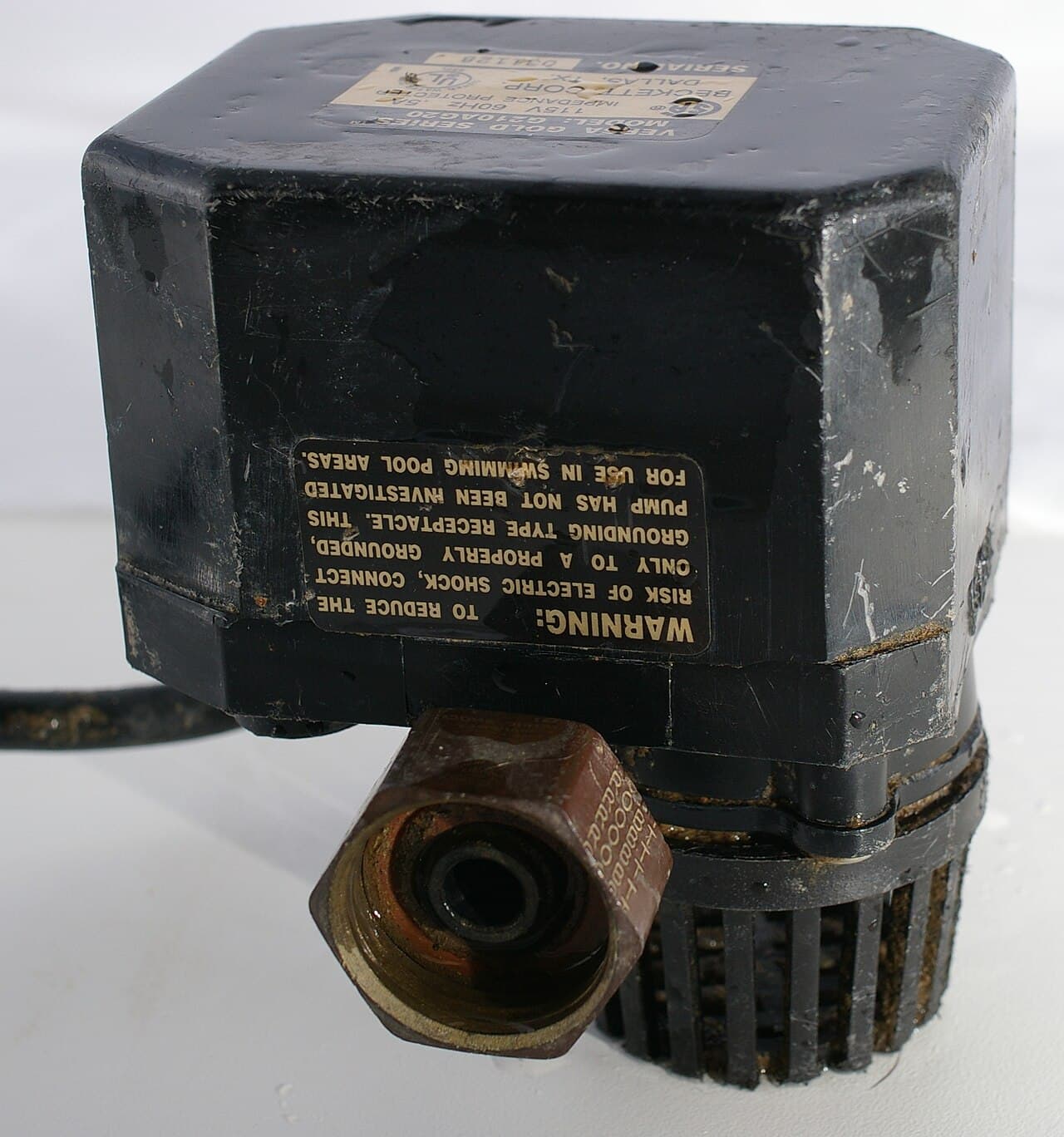
Deal with this before you touch an outlet, a breaker or the pump. Wayne's rule: do not walk on the floor when water is present until all power is turned off, and if the electric panel is in the basement, call an electrician.[1] FEMA says the same for any equipment: "Do not touch electrical equipment if it is wet or if you are standing in water."[4]
First, is it meant to be running?
A pump only starts when water lifts its float to the on level. Wayne's chart notes that water must be at the appropriate level to activate the switch.[1] In a dry spell the pit may sit almost empty for weeks. Pour a bucket of water in: if the pump starts, drains the pit and stops, it is working.
Power: the most common cause
The GFCI outlet tripped. Wayne says the receptacle must be protected with a ground fault circuit interrupter (GFCI),[1] and those outlets trip in damp basements. Wayne warns: "In damp areas, GFCI breakers may trip, effectively shutting off the sump pump."[1] Press the reset button. If it will not reset, or trips again as soon as the pump starts, either the outlet or the pump is faulty.
A breaker tripped or a fuse blew. Check the panel. For a blown fuse or tripped breaker, Wayne's advice is to determine the cause, then either replace it with a properly sized fuse or reset the breaker.[1] A breaker that keeps tripping is telling you something; do not keep resetting it.
Low voltage. Wayne's remedy for low supply voltage is to contact an electrician.[1] Lights dimming when the pump tries to start is one hint.
The float cannot rise
If the pump has power but does not react to rising water, look at the float. Wayne warns that vibration can make a pump fall or tilt onto one side and jam the float so it cannot start the pump.[1] A cord drifting into the float's path, a float rubbing the pit wall, or silt on the float's rod does the same thing. Unplug the pump before reaching into the pit. Our guide to fixing a stuck sump pump float switch walks through freeing it.
A clogged inlet screen
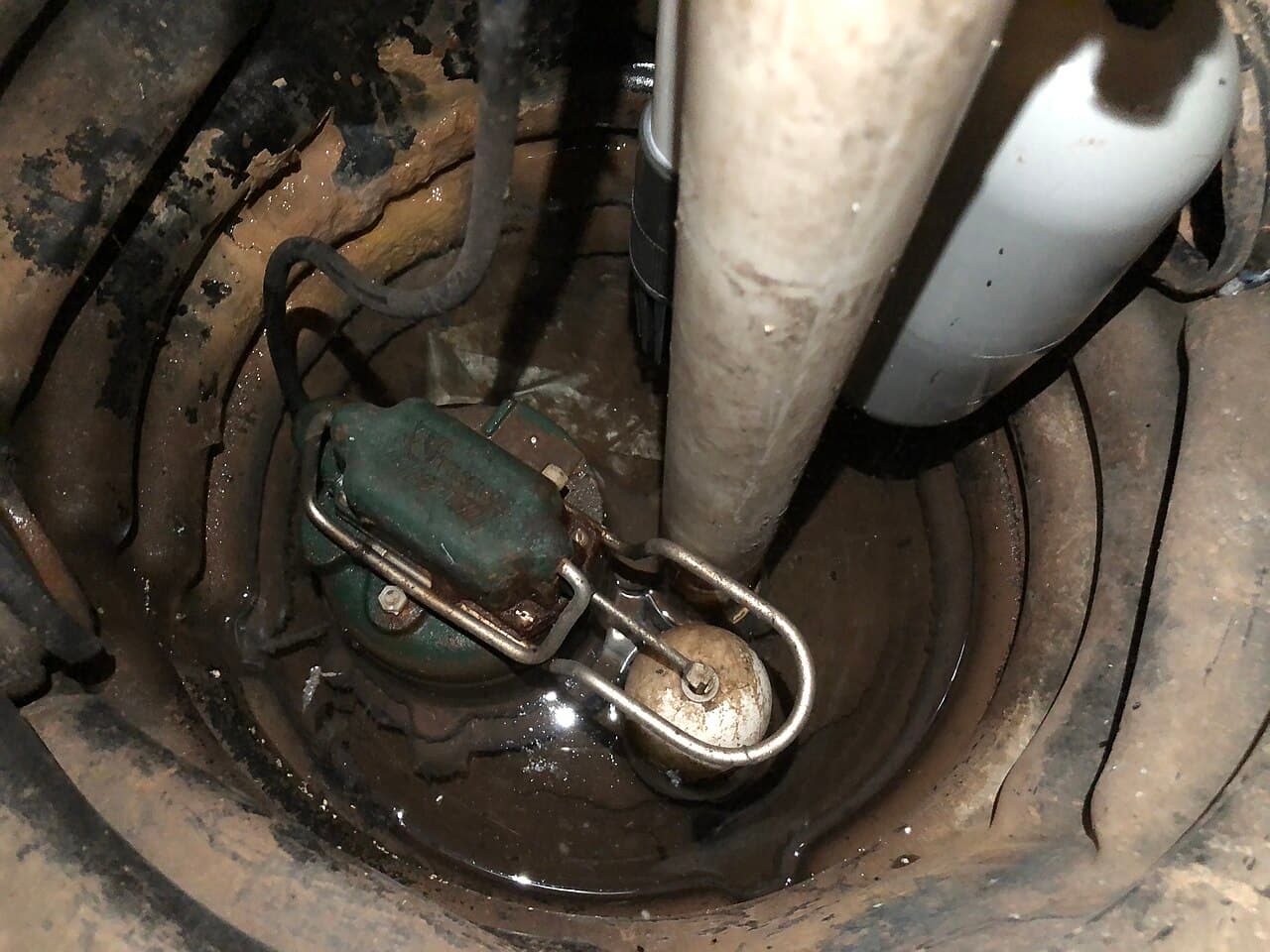
The screen at the base of the pump keeps stones and grit out of the impeller. When it packs with debris, the pump may start but move little water, or labor and overheat. Unplug the pump, then let it cool for a minimum of 2 hours before you service it. Wayne's warning: "Submersible pumps contain oil that become pressurized and hot under normal operating conditions."[1] Then lift it out if you can do so without straining the discharge pipe, and clear the screen.
It started, then stopped by itself
Wayne's pump motor has an automatic resetting thermal protector, so it may restart unexpectedly.[1] Wayne lists what trips it: operating at low heads, excessively high or low voltage, inadequate wiring, incorrect motor conditions, or the end of the product's life.[1] The same manual says its pumps should not be used for water above 77º F.[1] Several of those causes are electrical, so have an electrician check the voltage and wiring before you assume the pump is worn out. A pump that has just tripped is hot: unplug it and let it cool before you handle it.
The switch or the motor has failed
If the pump has power, the float moves freely, the screen is clear and there is water in the pit, but the pump still does nothing when you pour water in, a part has failed. In Wayne's chart, for a failed motor the remedy is to replace the pump, and for a failed switch to replace the tether switch or replace the pump.[1] Wayne's advice: "If the pump doesn’t start, have it serviced or replaced."[1] See should I repair or replace my sump pump to weigh the two.
If the power is out
A pump with no electricity cannot run at all. Fairfax County's floodproofing guide makes the point: "These pumps almost always run on electricity. During extreme weather, electricity can go out, leaving a basement unprotected against flooding at the time it is needed most."[3] A battery backup pump covers that gap. If yours has an alarm, Goulds notes that if battery backup operation is due to a power outage, the alarm will sound but the primary pump is not likely to need service.[2]
Stop and call a pro if
- The GFCI outlet will not reset, or the breaker trips again as soon as the pump starts.
- The lights dim when the pump tries to start, or you suspect low voltage.
- The pump or its switch is hardwired with no plug.
- The pump hums but will not pump after you have cleared the screen, or it smells hot.
- Water is rising in the pit, rain is forecast, and you cannot get the pump running.
- There is water on the floor and the electric panel is in the basement.
For more, see how to test a sump pump, why a sump pump runs constantly and the full list of plumbing repair answers. You can also find licensed plumbers near Blacksburg. When you are ready, describe the problem once and get quotes from licensed plumbers.
Common questions
- Is it normal for a sump pump not to run?
- Yes, in dry weather. The pump only starts when water lifts the float to its on level, and Wayne's troubleshooting chart lists water level too low as the first reason a pump will not start. Pour a bucket of water into the pit to see whether it starts.
- My sump pump hums but does not pump. What is wrong?
- A pump that hums but moves no water usually has a clogged inlet screen, a stuck or reversed check valve, a jammed or broken impeller, or a motor that is failing. Unplug it and clear the inlet screen first. Wayne's chart gives a broken impeller as a reason to replace the pump.
- Why does my sump pump keep tripping the GFCI?
- Either the GFCI outlet is faulty or the pump is. Wayne's chart lists both, with the remedies of having an electrician replace the GFCI or replacing the pump. Do not plug the pump into a non-GFCI outlet or an extension cord to get around it.
- The pump started again on its own after stopping. Is it fixed?
- Not necessarily. Wayne's pumps have an automatic resetting thermal protector that shuts the motor off when it overheats and restarts it once it cools. Wayne says protector tripping means the motor is overloaded, from low heads, high or low voltage, inadequate wiring, incorrect motor conditions, or a pump at the end of its life. Have the voltage and wiring checked before you replace the pump.
- What should I do if the pump fails during a storm?
- If water is on the floor, stay out of it until the power is off, and call an electrician if the panel is in the basement. Then call a plumber for an emergency visit. A battery backup pump or a high water alarm is the protection for next time.
Sources
- [1] Submersible Sump Pumps: Operating Instructions and Parts Manual (600002W-001 J, 06/25), WAYNE Water Systems. Checked October 26, 2026.
- [2] Battery Backup Sump Pump: Installation, Operation and Parts Manual (IM186R04), Goulds Water Technology (Xylem). Checked October 26, 2026.
- [3] Floodproofing Practices (Flood Mitigation Assistance Program), Fairfax County Government. Checked October 26, 2026.
- [4] Floods, Ready.gov (FEMA). Checked October 26, 2026.
Want a pro to handle it?
Describe the job once. Licensed local businesses send quotes, and you pay only when you book one.
Get a quote for Plumbing Repair