Why did the snow plow tear up my lawn or gravel?
Usually because the blade could not tell where the driveway ended, or the ground under it was not frozen. A plow working blind drifts onto soft turf, a blade set to scrape on gravel pulls stone into the grass, and heavy salted snow piled on the lawn damages it further. Most of it can be raked back and reseeded, and marked edges prevent a repeat.
Free to ask. Local shops send quotes, and you pay only when you book one.
By Kasra Taheri, Founder, LoclisPublished
Researched and drafted with AI, then checked claim by claim against the sources listed below before it was published. Prices and rules change; the dates beside each source say when it was last checked.
Step by step
Read when to stop and call a pro, further down this page, before you start.
Step 1: Photograph the damage
Take dated photos of torn turf, displaced gravel, ruts and anything broken before the snow melts and the evidence moves.
Step 2: Tell the plow company
Send the photos and ask how they will repair it, as the contract or quote may say who pays for damage.
Step 3: Mark the edges now
Add markers along the edges and beside obstacles so the next storm's plow has a line to follow.
Step 4: Leave it until it thaws
Wait for the ground to thaw and dry before raking or walking repeatedly on torn turf, so you do not compact or smear the soil.
Step 5: Rake the gravel back
Rake stone out of the grass and back onto the driveway; displaced gravel is usually good material worth reusing.[1]
Step 6: Level the ruts
Press lifted sod back down, and fill ruts and scraped patches with topsoil so the surface is level with the lawn around it.
Step 7: Flush salted spots
Where salty snow was piled, water deeply rather than lightly once the ground thaws, so the salt is carried down and away from the roots.[4]
Step 8: Reseed at the right time
Seed cool-season grass in late summer to mid-fall, prepare the soil first, and keep the seed lightly moist until it is up.[5]
A plow tears up a lawn or a gravel driveway for a few ordinary reasons: the operator could not see where the driveway ended, the ground under the snow was not frozen, the blade was set to scrape when it should have floated, or heavy salted snow was piled on the grass. Most of the damage is cosmetic and can be fixed in spring by raking gravel back, leveling ruts and reseeding at the right time. Marked edges and a clear agreement keep it from happening again.
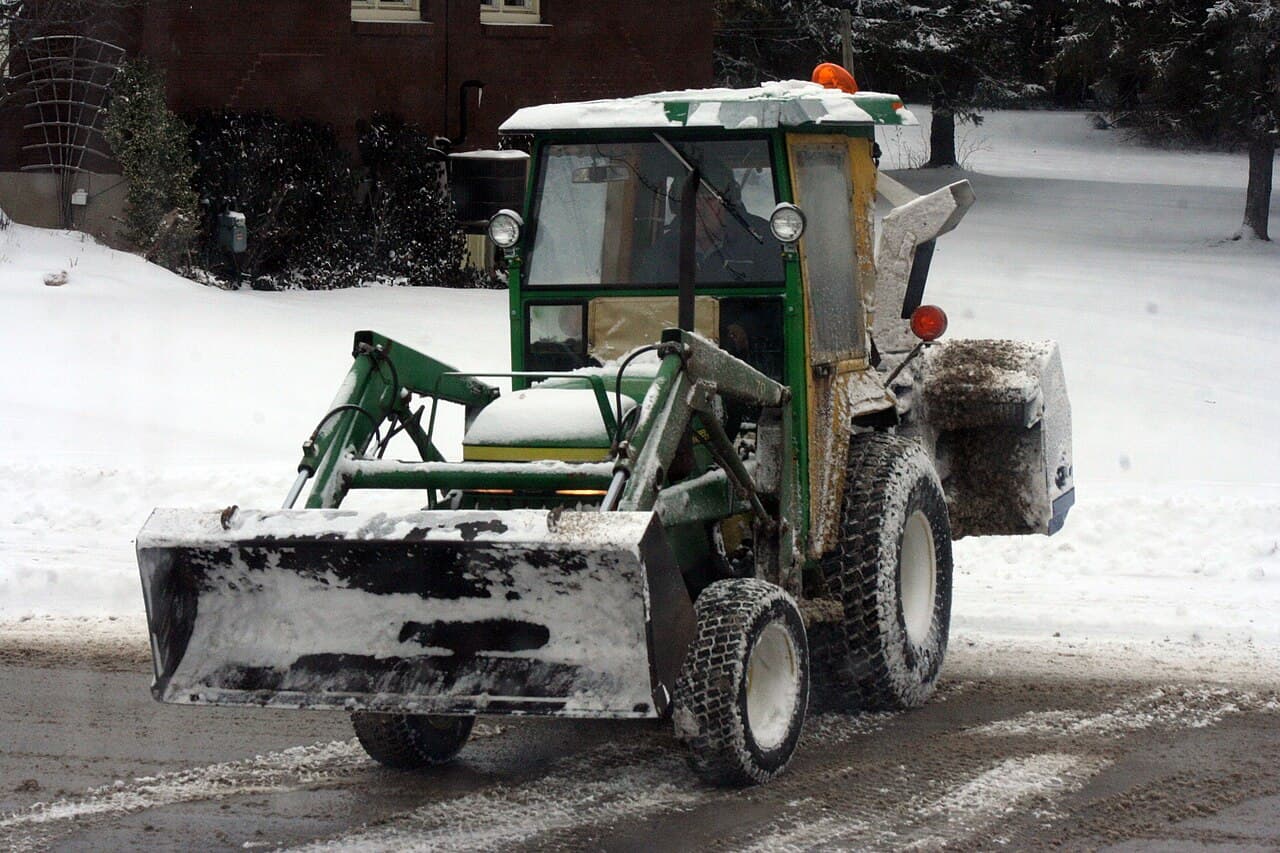
Why it happens
The edge was invisible. Under a foot of snow, a driveway, a lawn and a shallow ditch look the same. Without markers, an operator guesses, and a few inches off the line puts the blade or a tire into the turf. Curves, the apron at the street and the turnaround are where this happens most.
The ground was soft. Frozen soil carries a truck and resists a blade. Snow often falls on ground that has not frozen yet, or that thawed under the snow's insulation, and then a tire leaves ruts and a blade peels sod like a carpet.
The blade was scraping gravel. On pavement, a plow can scrape down to the surface. On gravel, the same setting digs into the stone. Even without a plow, the Federal Highway Administration's gravel road guide explains, "Traffic tends to loosen material from the road surface and displace it to the shoulder area", and it lists winter plowing operations among the things that move gravel off the surface.[1] Once loose, "The stone will tend to separate from the sand and the fine-sized material",[1] which is why a driveway can come out of winter with bare ruts and a ridge of stone along each edge. Many plows have adjustable shoes or skids that let the cutting edge ride slightly above the surface; on gravel, operators often set the blade to leave a thin layer of snow rather than scrape.
The snow was too thin. A blade on a light snow over soft ground does more damage than good. The City of Richmond notes that when snowfall is less than 2 inches, or the accumulation is mostly ice, plow blades are not as effective.[2] A light snow is usually better treated or shoveled.
The pile was in the wrong place. Snow has to go somewhere, and a plow pushes it to the edges, often onto the same patch of lawn every storm. The weight compacts the turf, and the pile melts last. If it was salted snow, it also carries salt into the soil. Virginia Cooperative Extension warns that concentrated sodium, a component of salt, can damage plant tissue whether it contacts above or below ground parts, and notes that snow and ice laden with salt is often heaped where it melts into the soil.[4]
The street plow did it. Not every gouge comes from your contractor. On public roads, crews push snow off the road, to the right, where it can end up in gutters, on road shoulders, and can sometimes block driveways.[3] A street plow's wing can scrape the lawn strip and the apron, and knock down mailboxes. VDOT's own FAQ asks: "A snowplow damaged my mailbox. What do I do?"[3] For a VDOT plow, the answer is to enter a ticket on myVDOT, its Customer Service Center portal, to start a claim, and claims cannot be made by phone.[3]
Fixing gravel
Wait until the driveway thaws and dries out. Then rake the stone out of the grass and back onto the driveway, working from the lawn toward the center. Do not throw it away. Of gravel pulled back from road shoulders, the FHWA guide notes: "The material recovered is often good gravel that needs to be returned to the roadway surface".[1] Rake out ruts and fill low spots with the recovered stone before buying more. If the driveway has lost so much surface that ruts hold water, or the edges have built up into a ridge that traps water, it may need regrading and new stone, which is a job for a gravel driveway service.
Fixing the lawn
Let it thaw first. Raking or walking on wet, thawing soil compacts it. Press lifted pieces of sod back into place as soon as the ground softens, and keep off them.
Level ruts and scrapes. Fill ruts with topsoil, firm it lightly, and bring it level with the lawn around it.
Deal with salt. Where salted snow was piled, water deeply once the soil thaws rather than sprinkling, since Virginia Cooperative Extension notes that repeated light watering without leaching or adequate drainage can result in salt accumulation in the soil.[4] Next winter, ask your plow service to use calcium, potassium or magnesium products instead of sodium-based ones, or a 50/50 mix of sand and granular de-icer,[4] and to pile treated snow away from beds.
Reseed at the right time. For cool-season lawns such as tall fescue and Kentucky bluegrass, Virginia Cooperative Extension is plain: "Late summer to mid-fall is the best time to establish cool-season turfgrass".[5] A small spring patch can work, but a fall seeding usually does better. Warm-season lawns such as bermudagrass and zoysiagrass are different: "warm-season grasses should not be planted in the fall (unless one is installing sod in early to mid-fall)".[5] Prepare the soil first, because "Simply applying seed over the top of an existing turf without any soil preparation usually does nothing more than feed birds and wildlife",[5] then irrigate lightly and frequently until the seed has germinated and is established.[5] For timing in detail, see when to overseed a lawn in Virginia.
A broken mailbox or post
If a plow knocked down the mailbox and the post has to be reset or replaced, that is digging. Virginia 811 says: "You must contact Virginia 811 for all digging projects, such as installing mailboxes, fences or landscaping".[6] Submit the request at least 3 working days before you dig.[6] For where and how high a mailbox should sit, see how to mark a driveway for a snow plow.
Keeping it from happening again
- Mark both edges, the corners and every obstacle before the ground freezes.
- Agree on where snow is piled, and keep salted snow off the lawn and beds.
- Ask the operator to float the blade on gravel and to skip storms under the trigger depth.
- Put damage and repairs in writing; see what a snow plowing contract should include.
Stop and call a pro if
- Ruts are deep enough to hold water, or the driveway's edges or crown have washed out and it needs regrading and new stone.
- A culvert pipe under the driveway was crushed or its ends were buried.
- Landscape lighting cable, an irrigation line or a pet fence wire was cut.
- A large area of lawn is bare and needs soil work and seeding beyond a few patches; see lawn and landscaping services.
Browse driveway plowing services and snow and seasonal answers, find seasonal services around Blacksburg, or describe the repair once and local businesses quote it.
Common questions
- Is the plow company responsible for lawn damage?
- It depends on what you agreed. Many quotes and contracts say who repairs turf, gravel and pavement edges, and some exclude damage where edges were not marked. Send dated photos as soon as you see the damage and ask what they will do. If nothing was agreed in writing, put it in the next contract.
- Can I reseed in spring instead of waiting until fall?
- You can patch in spring, but for cool-season lawns such as tall fescue, Virginia Cooperative Extension says late summer to mid-fall is the best time to establish the grass, and spring seedings face summer heat and weeds. Warm-season lawns such as bermudagrass and zoysiagrass are a different case: they should not be seeded in fall.
- A city or VDOT plow knocked down my mailbox. Who pays?
- For damage by a VDOT plow, VDOT asks you to enter a ticket on myVDOT, its online Customer Service Center, to start the claims process; it does not take claims by phone. In a city or town that plows its own streets, contact that locality's public works department.
- Why is there gravel all over the lawn on one side only?
- A plow usually pushes snow, and any stone it picks up, in the same direction every storm, so the gravel collects where the snow is piled. Ask the operator to vary the pile spot or leave a thin layer of snow on the gravel, and rake the stone back each spring.
- Will the grass come back on its own where snow was piled?
- Often, if the pile was just snow and the crowns were not scraped out. Where the pile was salty, or the turf was torn to bare soil, it usually needs soil leveled and seed. Wait until it greens up elsewhere in spring before deciding what needs work.
Sources
- [1] Gravel Roads Construction and Maintenance Guide (August 2015), Federal Highway Administration and South Dakota Local Technical Assistance Program. Checked October 27, 2026.
- [2] Snow Removal, City of Richmond, Department of Public Works. Checked October 27, 2026.
- [3] Winter weather: snow removal and treatment, and frequently asked questions, Virginia Department of Transportation. Checked October 27, 2026.
- [4] Trees and Shrubs that Tolerate Saline Soils and Salt Spray Drift (430-031), Virginia Cooperative Extension, Virginia Tech. Checked October 27, 2026.
- [5] Fall Lawn Care (430-520), Virginia Cooperative Extension, Virginia Tech. Checked October 27, 2026.
- [6] Homeowners FAQ, Virginia 811. Checked October 27, 2026.
Want a pro to handle it?
Describe the job once. Licensed local businesses send quotes, and you pay only when you book one.
Get a quote from a local pro