What should a snow plowing contract include?
A good snow plowing contract names the property and exactly which areas are cleared, the snow depth that triggers a visit, how soon after snow stops they arrive, how each storm or push is priced, what costs extra, whether the street plow's ridge is cleared, who pays for damage, proof of insurance, the season's dates, and how either side can cancel.
Free to ask. Local shops send quotes, and you pay only when you book one.
By Kasra Taheri, Founder, LoclisPublished
Researched and drafted with AI, then checked claim by claim against the sources listed below before it was published. Prices and rules change; the dates beside each source say when it was last checked.
Step by step
Read when to stop and call a pro, further down this page, before you start.
Step 1: Get more than one quote
Ask two or three local plow services for a written price on the same areas so you can compare like with like.
Step 2: Walk the property together
Show the operator the edges, drop-offs, mailbox, lights and where snow should and should not be piled.
Step 3: Mark the edges
Put driveway markers along the edges and beside obstacles before the ground freezes, and note them in the contract.
Step 4: Agree the trigger and timing
Write down the depth that brings them out and how soon after snow stops they will arrive.
Step 5: Agree the price model
Write down whether you pay per push, per storm or by the season, any visit cap, and what each extra costs.
Step 6: Settle the street ridge
State whether a return trip to clear the ridge the street plow leaves at the driveway end is included.[1]
Step 7: Settle damage and insurance
State who pays for damage to lawn, gravel, pavement or the mailbox, and get a copy of their insurance certificate.[2]
Step 8: Read cancellation terms
Check how either side can end the contract, and what is refunded if a season fee is paid up front and little snow falls.
Step 9: Keep a copy
Keep the signed contract and any written notice of your right to cancel, which a door-to-door seller must give you.[9]
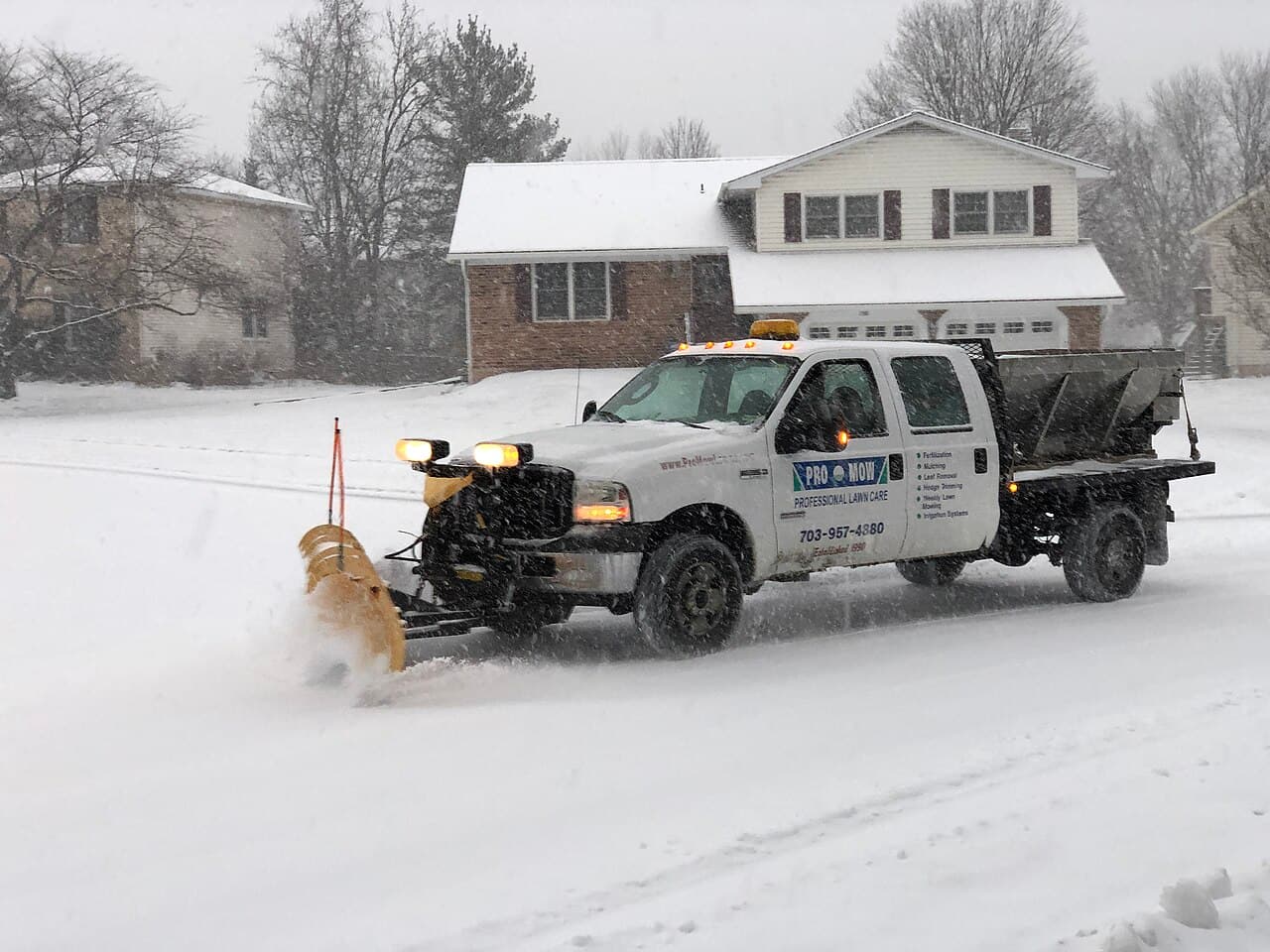
A snow plowing contract should leave nothing to argue about in the middle of a storm. At minimum it names the property and exactly which areas are cleared, the depth that triggers a visit, how soon after snow stops the company arrives, how each storm or push is priced, what costs extra, whether the street plow's ridge is cleared, who pays for damage, proof of insurance, the season's dates and how either side can cancel. Here is what each of those should say, and why.
The parties and the property
The contract should give the company's legal name, a phone number that is answered during storms, and your service address. A business that will not put its full name and address on paper is hard to hold to anything later.
Describe the property precisely. "Driveway" is not enough. List the driveway and apron, any parking pad or turnaround, walks, steps, the path to the mailbox, and the public sidewalk if you want it cleared. A simple sketch or a marked-up aerial photo attached to the contract settles most disputes before they start.
When they come
Trigger depth. The number of inches that brings the truck out. A trigger around 2 inches makes practical sense. The City of Richmond notes that plowing is most useful when the total snow accumulation is above 2 inches,[3] and for Virginia's state roads VDOT says "Plowing generally begins when 2 inches or more of snow has accumulated on the road".[1] If ice or a light dusting should be handled too, say so, and say how.
Response time. How soon after snow stops they will arrive, and whether they plow during long storms. If you must leave at a set hour, write the hour in.
Return trips. VDOT explains that crews push snow off the road, to the right, and it can sometimes block driveways.[1] Alexandria tells residents to be prepared to clear driveways and sidewalks more than one time.[4] The contract should say whether one return trip for the street plow's ridge is included, or billed as another push.
The season. The start and end dates, and whether an early or late storm outside them is covered.
What it costs
State the pricing model plainly: per push, per storm, by depth tier, or a flat seasonal fee. Then list:
- What one storm or one push includes, and how many pushes a long storm gets.
- Any visit cap on a seasonal fee, and the price of each visit over it.
- Extras and their prices: salting or sanding, hand shoveling of walks and steps, hauling snow away, clearing after a city or VDOT plow.
- When payment is due, and whether a season fee is paid up front.
- What is refunded if the company stops serving you mid-season.
For what drives those numbers, see what driveway plowing costs per storm and whether a seasonal contract is worth it.
Where the snow goes
Say where piles go and where they must not. Keep them off beds, out of the sight line at the end of the driveway, and off the low spot where meltwater would run back across the pavement and refreeze; see why a plowed driveway refreezes.
The contract should also say the snow stays out of the street. Richmond asks residents: "Try not to move snow from driveways and parking lots into City streets".[3] Alexandria is blunter: "Do not shovel snow into the street, or it will just be plowed back again".[4]
De-icing
If salt or sand is included, name the product and where it goes. Salt-laden snow pushed onto a lawn or bed damages plants. Virginia Cooperative Extension recommends using calcium, potassium or magnesium products instead of sodium-based ones near plants, and suggests fencing or signage to keep plows from piling treated snow and ice on plantings.[5]
Damage, markers and insurance
Plows scrape lawn edges, push gravel into the grass, crack pavement edges and knock down mailboxes. The contract should say:
- That you will mark the edges and obstacles, and that they will plow to the markers. See how to mark a driveway for a snow plow.
- Who repairs what, and by when: turf, gravel, pavement, mailbox, landscape lights.
- How you report damage, and how soon. Photos with dates help both sides.
Ask for a certificate of insurance before the first storm. Even VDOT requires vehicle insurance for each piece of equipment from contractors who plow for the state.[2] If damage happens, see why a plow tears up lawn or gravel.
Your local sidewalk rules
Some cities make owners clear the public sidewalk. In Alexandria, property owners and tenants must clear adjacent city sidewalks within 24 to 72 hours after the snowfall ends, depending on the storm level, and an owner who misses the deadline may be fined $50 plus the cost of the city having the sidewalk cleared.[4] In Richmond, City Code requires sidewalks to be cleared within 6 hours of snow stopping or by 11 a.m. the next day if snow falls through the night.[3] Check your own city or county. If the plow company is to cover the sidewalk, name it in the contract and put the deadline beside it.
Records and billing
Ask for a service log or dated invoice for each visit, with the time. It lets you check a bill against your own photos, and it is the first thing you will want if a visit was missed. Virginia's Consumer Protection Act makes it unlawful for a supplier to misrepresent that services have been performed.[6]
Cancelling, and door-to-door sales
The contract should say how either side can end it, with how much notice, and what is refunded.
If the contract was sold to you in person at your home, Virginia's Home Solicitation Sales Act usually lets you cancel until midnight of the third business day after you sign.[8] Cancellation happens when you give the seller written notice at the address stated in the agreement,[8] and the seller must give you a copy of the contract when it is signed, with a statement of your right to cancel.[9] The law does not cover cash sales of less than $25,[7] and you cannot cancel if you asked for service without delay because of an emergency, the seller made a substantial start in good faith, and you signed a dated waiver.[8]
Stop and call a pro if
- The driveway is long, steep or gravel, or has drop-offs and ditches a shovel or small blower cannot handle safely.
- You must be out by a set time after every storm and cannot do it yourself.
- Snow is piling up on the roof or ice dams are forming; that is a job for roof snow and ice dam services, not a driveway plow.
- The contract raises a liability or insurance question you cannot answer; ask your insurer.
Browse driveway plowing services and snow and seasonal answers, find seasonal services around Blacksburg, or describe the job once and local businesses quote it.
Common questions
- Do I need a written contract for a one-time plow?
- A text or email that states the price, the areas and whether the street ridge is included is often enough for a single storm. For a season, or for anything paid in advance, get a signed contract with every term on this page, so there is no argument in the middle of a storm about what was agreed.
- What trigger depth is reasonable?
- Around 2 inches is a sensible starting point, because that is when a blade starts to work well: on Virginia's state roads, plowing generally begins when 2 inches or more of snow has accumulated. If you need to get out after any snow, ask for a lower trigger or a separate salting service, and expect to pay for it.
- Should the contract cover the sidewalk in front of my house?
- If your locality requires owners to clear it, yes. In Alexandria, owners and tenants must clear adjacent sidewalks within 24 to 72 hours depending on the storm level, and Richmond's code sets 6 hours after snow stops or 11 a.m. the next day. Name the sidewalk in the contract if you want the company to handle it.
- What if they bill for a visit they did not make?
- Ask for a service log with the date and time of each push, and compare it with your own photos. Virginia's Consumer Protection Act makes it unlawful for a supplier to misrepresent that services have been performed. Keep the log, your photos and the contract together in case a bill has to be disputed.
- Can I cancel a season contract I signed at my front door?
- Usually, for a short window. Under Virginia's Home Solicitation Sales Act you can cancel a sale solicited at your home until midnight of the third business day after you sign, by written notice to the address in the agreement. Cash sales under $25 are not covered. After that window, the contract's own cancellation terms apply.
- Who is responsible if someone slips on my driveway after it is plowed?
- That depends on the facts and on what the contract says, and it is a question for your insurer or a lawyer rather than a plow company's brochure. What a contract can do is make the duties clear: whether salting is included, how soon after snow stops they come, and whether they return for refreeze.
Sources
- [1] Winter weather: snow removal and treatment, and frequently asked questions, Virginia Department of Transportation. Checked October 27, 2026.
- [2] Snow contractors, Virginia Department of Transportation. Checked October 27, 2026.
- [3] Snow Removal, City of Richmond, Department of Public Works. Checked October 27, 2026.
- [4] Snow and Ice Control, City of Alexandria, Virginia. Checked October 27, 2026.
- [5] Trees and Shrubs that Tolerate Saline Soils and Salt Spray Drift (430-031), Virginia Cooperative Extension, Virginia Tech. Checked October 27, 2026.
- [6] Code of Virginia § 59.1-200. Prohibited practices (Virginia Consumer Protection Act), Virginia General Assembly, Legislative Information System. Checked October 27, 2026.
- [7] Code of Virginia § 59.1-21.2. Definitions (Virginia Home Solicitation Sales Act), Virginia General Assembly, Legislative Information System. Checked October 27, 2026.
- [8] Code of Virginia § 59.1-21.3. Cancellation of sale, Virginia General Assembly, Legislative Information System. Checked October 27, 2026.
- [9] Code of Virginia § 59.1-21.4. Receipt or written agreement, Virginia General Assembly, Legislative Information System. Checked October 27, 2026.
Want a pro to handle it?
Describe the job once. Licensed local businesses send quotes, and you pay only when you book one.
Get a quote from a local pro