Why do roof leaks show up weeks after a storm?
Because the water has to get through several layers before you see it. A storm can tear shingles or bend flashing, but the underlayment, deck, insulation and drywall soak up the first rain and hide it. A stain appears only once they are saturated, often after a later rain. Have a licensed roofer inspect the roof and attic.
Free to ask. Local shops send quotes, and you pay only when you book one.
By Kasra Taheri, Founder, LoclisPublished
Researched and drafted with AI, then checked claim by claim against the sources listed below before it was published. Prices and rules change; the dates beside each source say when it was last checked.
This is a job for a licensed pro in Virginia
This page explains what the work involves, the permits, what a licensed pro does and what drives the cost. It does not give step-by-step instructions, because this work needs a licence, a permit or both, and doing it wrong can injure someone. Before you hire, check the licence on Virginia's DPOR record.
A leak that appears weeks after a storm usually started during the storm. Wind or hail opened a path for water, but the layers under the shingles, the attic insulation and the ceiling drywall absorbed the first rain without any sign. The stain shows up only after those layers are saturated, often during a later, longer rain.
What storms do to a roof
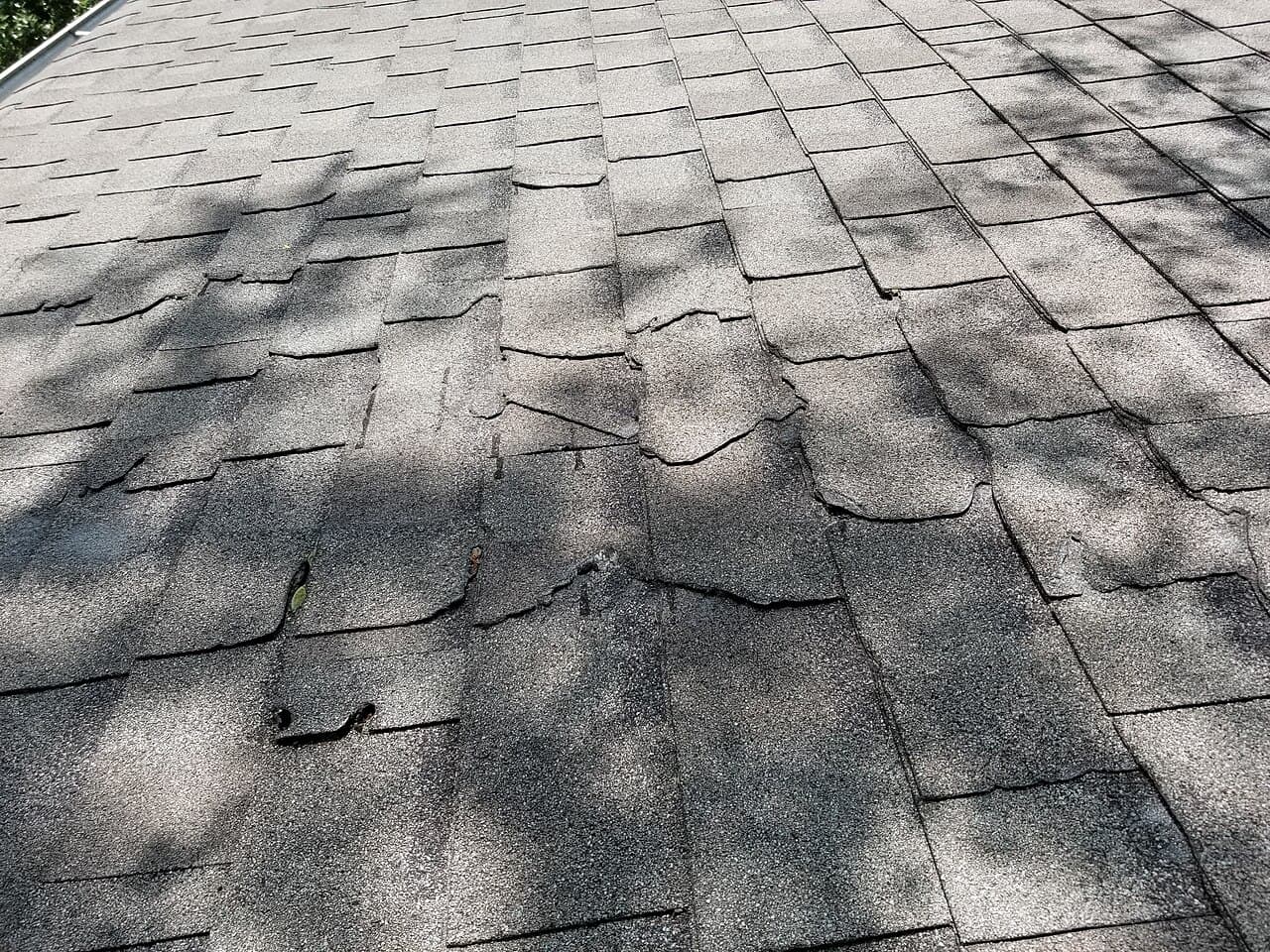
Shingles protect the layers under them. During a hurricane, tornado, high winds, or hail storm, roof shingles can be damaged or blown off the roof, exposing the underlayment and the sheathing as the only protection against rainwater.[1] Those layers hold for a while. Exposed sheathing will eventually succumb to water damage.[1]
Damage you cannot see from the yard works the same way. A shingle lifted and creased by wind, a nail pulled loose, bent flashing at a chimney or vent, or a hail bruise that has broken the mat can all let in small amounts of water in a hard, wind-driven rain and none at all in a light one. That is why the leak seems to come from nowhere. For what the damage looks like, see the signs of hail or wind damage on a roof.
Why you do not see it right away
Water has a long way to go before it reaches your ceiling. It passes the shingle, the underlayment and the roof deck, then falls into the attic, where insulation soaks it up, and the ceiling drywall below is the last layer. PNNL describes the end result: unsealed joints or holes in the roof sheathing due to storm damage can allow rainwater to enter the building, causing severe damage, including saturation of insulation and ceiling drywall, potentially leading to collapsed ceilings.[1]
Several things stretch out the delay:
- Absorption. Insulation and wood take on water before anything drips. A small leak may only dampen them.
- Where the water travels. Water can run along a rafter or the underside of the deck and come through a ceiling several feet from the opening.
- Weather. A small opening may pass water only in heavy or wind-driven rain, so weeks of light showers show nothing.
- Evaporation. A damp spot can dry between storms and look gone, then come back darker.
Most people notice only the last step, a ceiling stain, a bubble in the paint or a drip. By then the water may have been entering for some time.
What is probably already happening
Hidden damage does not wait for a stain. The Department of Energy lists signs of water intrusion in an attic: wet insulation in the attic, especially near the eaves, warped or rotting wood in the attic, bubbled paint at fascia boards or soffits, and mold or mildew on attic surfaces.[2]
Time matters because of mold. The EPA says that if wet or damp materials or areas are dried 24-48 hours after a leak or spill happens, in most cases mold will not grow.[3] A leak that runs for weeks is past that window. The EPA also warns that mold may be hidden in places such as the back side of dry wall,[3] so a ceiling that looks clean is not proof that it is dry behind.
What to do now
You can do these from the ground and from inside the house, without going near the roof:
- Catch drips in a bucket, move furniture and belongings, and photograph every stain with a date.
- Look in the attic from the hatch with a flashlight for dark insulation, damp wood or daylight.
- Write down when it rained and when the stain appeared.
- Call your agent or insurer. Virginia's Bureau of Insurance says that insurance companies are required to acknowledge the receipt of your claim within 10 working days.[4] The same guide says you should make all necessary temporary repairs, such as boarding up windows and patching holes in walls or roofs, as soon as possible, even if you have not yet seen the company representative.[4] That is a roofer's job; see how a roof is tarped after storm damage.
- Keep receipts for anything you pay for.
For help locating the opening from inside, see what to do when your roof starts leaking. If a company's rep rings your doorbell the week after the storm, read how to file a complaint about a storm-chasing roofer first. DPOR advises: Be wary of door-to-door solicitations promising repairs at a discounted price.[5] It also tells homeowners to limit the deposit: Pay 10 percent down or $1,000, whichever amount is less.[5]
When to call a licensed pro
For finding the opening and for every part of the repair. Locating a storm leak means getting on the roof and often opening shingles, flashing or decking, and the repair can mean replacing any of them along with wet insulation or drywall. None of that is a homeowner job, and this page does not teach it. Call a licensed roofer if you see a new stain, damp insulation, daylight in the attic or missing shingles, even if the drip has stopped.
Ask for an inspection report with photos, and check the contractor's licence on DPOR's licence lookup before you agree to anything. DPOR's storm guidance is to verify the licence, insist on a written contract and never pay in cash.[5]
Browse roofing repair answers or find roofing repair businesses.
When you are ready, describe the leak once and licensed local roofers respond.
Common questions
- How long after a storm can a leak appear?
- There is no fixed delay. A leak can show on the next hard rain or only after several wet spells, because the roof layers and the insulation under them have to absorb water before a ceiling stains. That is why a roof check after a big storm is worth doing even when the ceilings look fine.
- Can hidden water damage be there with no stain on the ceiling?
- Yes. Water can wet attic insulation, wood and the back of drywall without showing on the finished ceiling. The Department of Energy lists wet insulation, warped or rotting wood and mold or mildew on attic surfaces as signs of water intrusion, so look in the attic as well.
- Does a leak found weeks later still count for my storm claim?
- Your policy decides that, so call your agent or insurer and ask. Virginia's Bureau of Insurance says insurers must acknowledge a claim within 10 working days. Photograph the stain and the attic, keep receipts for temporary repairs and have the roofer note the cause in writing.
- Should I wait to see if it stops?
- No. A drip that stops when the rain stops has not fixed itself. The opening is still there, and the water keeps soaking insulation, wood and drywall. Move belongings, catch drips, and book a licensed roofer.
- Is the leak always from the storm?
- Not always. Worn flashing, aged shingles and clogged gutters leak too, and a storm can simply be when you first notice them. A roofer can usually tell fresh storm damage from age, which matters when you talk to your insurer.
Sources
- [1] Asphalt Shingle Roofs, Building America Solution Center, Pacific Northwest National Laboratory for the U.S. Department of Energy. Checked October 28, 2026.
- [2] Guide to Durable Attics, U.S. Department of Energy. Checked October 28, 2026.
- [3] A Brief Guide to Mold, Moisture and Your Home, U.S. Environmental Protection Agency. Checked October 28, 2026.
- [4] Disaster Strikes Insured Homeowners Loss, Bureau of Insurance, Virginia State Corporation Commission. Checked October 28, 2026.
- [5] Disaster Recovery: Avoiding Fraud, Virginia Department of Professional and Occupational Regulation. Checked October 28, 2026.
Want a pro to handle it?
Describe the job once. Licensed local businesses send quotes, and you pay only when you book one.
Get a quote for Roofing