Why is my house so humid in summer?
Moisture is getting in, or being made inside, faster than the air conditioner takes it out. Common causes are an oversized AC that cools quickly and shuts off, a thermostat fan left on, mild muggy days when the AC barely runs, gaps that let damp outdoor air in, and moisture from showers, laundry or a damp basement. Measure first, then check the fan setting, drains and vents.
Free to ask. Local shops send quotes, and you pay only when you book one.
By Kasra Taheri, Founder, LoclisUpdated
Researched and drafted with AI, then checked claim by claim against the sources listed below before it was published. Prices and rules change; the dates beside each source say when it was last checked.
Step by step
Read when to stop and call a pro, further down this page, before you start.
Step 1: Measure the humidity
Put a hygrometer in a main room and another on a different floor and read them for a few days; aim for 30 to 50 percent, and treat readings that stay above 60 percent as a problem.[3]
Step 2: Check the thermostat fan
If the fan is set to On, try Auto, so it usually stops soon after the cooling does instead of blowing over the wet coil all day.
Step 3: Watch how the AC cycles
Note whether the system reaches the set temperature quickly and shuts off while the air still feels clammy, a sign it may be oversized.[1]
Step 4: Change a dirty filter
Replace a clogged furnace or air handler filter so the system moves its full airflow.
Step 5: Look at the condensate drain
Check that the AC drip pan is not holding water and the drain line is flowing.[3]
Step 6: Run the exhaust fans
Run the bath fan during and after showers and the kitchen fan while cooking.[3]
Step 7: Check the dryer vent
Make sure the clothes dryer vents to the outside,[3] and that the outside flap opens when it runs.
Step 8: Keep windows shut on muggy days
Close windows and doors while the AC runs, and air the house out only when the outdoor air is cooler and drier.
Step 9: Check the basement or crawl space
Look for damp walls, musty smells or standing water below the house, and run a dehumidifier there if readings are high.[5]
Step 10: Check gutters and grading
Make sure downspouts carry water away from the foundation and the soil slopes away from the house.[5]
A house is humid in summer when moisture gets in, or is made inside, faster than it is taken out. Damp outdoor air leaks in, showers and cooking add more, and in most homes the central cooling system is the only source of dehumidification.[1] That means unless the system is running, indoor humidity goes unchecked.[1] So the question is usually why the AC is not pulling enough water out, or why extra water is getting in.
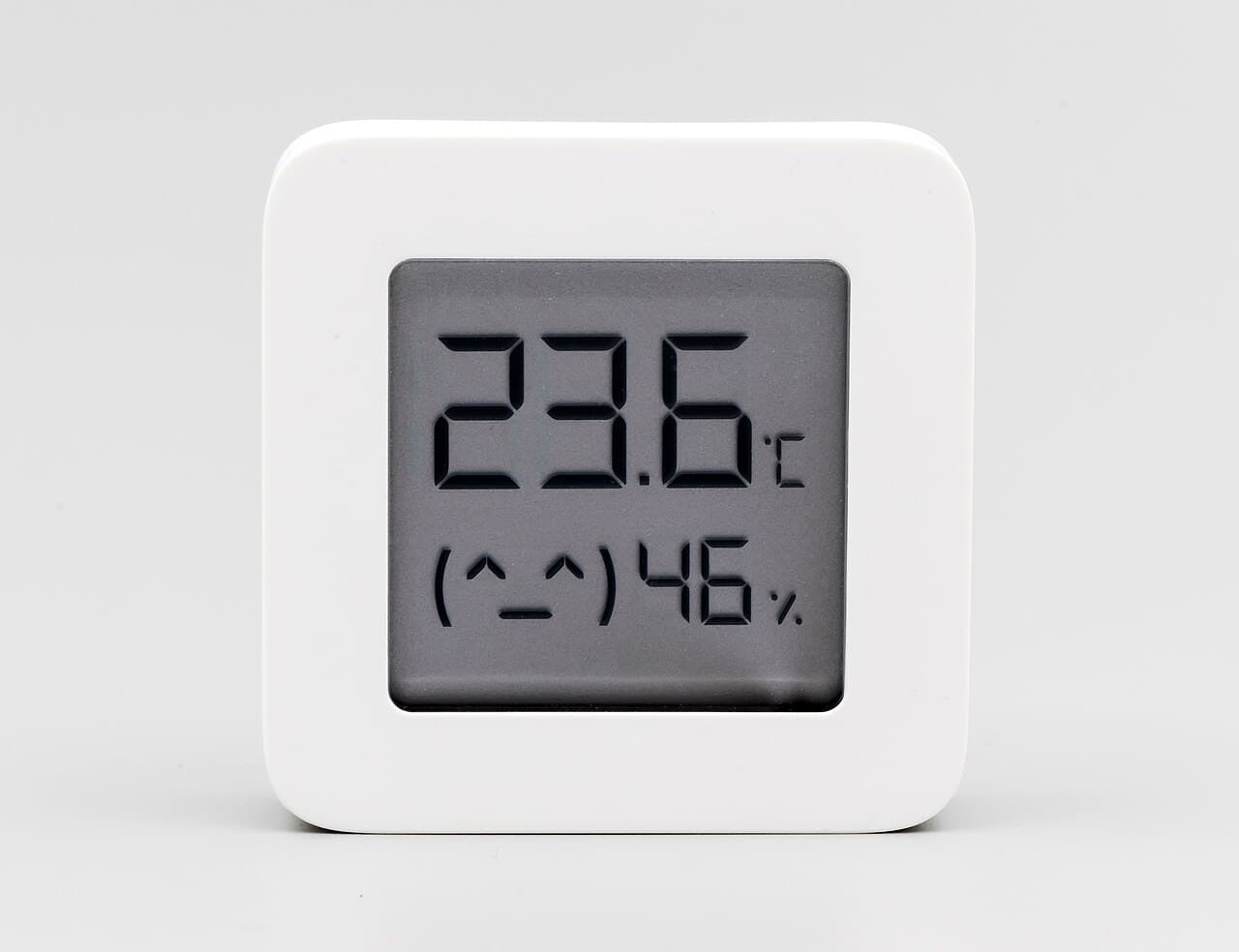
First, put a number on it
Buy a hygrometer and read it in a couple of rooms for a few days. The EPA's target is below 60 percent (ideally between 30 and 50 percent).[3] If readings stay above 60 percent, treat it as a problem to fix: Virginia Cooperative Extension notes that molds grow in air over 60% relative humidity.[2] Note whether one floor is worse than another. A damp basement and a humid whole house point to different fixes.
Damp outdoor air is getting in
Humid summer air carries a lot of water, because warm air can hold more than cool air.[2] Virginia Cooperative Extension lists air leaking between outdoors and indoors as a path for moisture, adding humidity to interior air in summer.[2] Open windows, gaps around doors, attic hatches and leaky ducts in an attic or crawl space can all let that air in. Keep windows shut on muggy days while the AC runs, and look at sealing leaky air ducts.
The air conditioner shuts off too soon
An air conditioner removes water by running long enough for it to condense on the cold indoor coil and drip away. A Department of Energy Building America guide says an oversized system "will quickly meet the sensible cooling requirements (temperature) and will not run for a significant enough time to allow the condensate to drain off of the evaporator coil."[1] The house reaches the set temperature and still feels clammy. ENERGY STAR adds that oversized equipment may cycle too frequently, resulting in less comfort and a shortened lifespan.[7]
The thermostat fan matters for the same reason. The same guide explains that water on the evaporator coil can evaporate back into the airstream as the fan keeps running for a few minutes at the end of the cooling cycle.[1] A fan set to On keeps blowing over that wet coil between cooling cycles too, which is likely to return more of the water to the house, so when humidity is the complaint it is worth trying Auto.
Sizing is the contractor's job. ENERGY STAR says a contractor should size the system from your house's size, insulation and windows,[6] and that a bigger system isn't always better.[6]
Mild, muggy days
Humidity can also build when it is not very hot. The same guide points to the gap in the spring and fall, when humidity can be high but temperatures are moderate:[1] the thermostat is satisfied, so the AC runs little and removes little water. Humidity-control thermostats try to fix this: they typically drop the temperature set-point by 2 degrees to force the cooling system to operate,[1] at a lower fan speed, but the approach requires a thermidistat and a variable speed air handler.[1] A dehumidifier is the other answer. Drier air also lets you keep the house warmer; the guide notes that occupants are more agreeable to a higher summer temperature set-point when the relative humidity is lower.[1]
Moisture made inside the house
The EPA notes that cooking and showering also add to indoor humidity,[4] and so do laundry and a dryer that is not vented properly. It recommends venting moisture-producing appliances such as clothes dryers and stoves to the outside where possible,[3] and running the bathroom fan or opening the window when showering.[3] Check that the fans actually vent outdoors, not into the attic.
One easily missed cause is shutting the AC off while you mop or shampoo carpets. The EPA warns that if the HVAC system is turned off during or shortly after cleaning that uses a lot of water, such as mopping or shampooing carpets, the humidity may rise greatly.[4]
A damp basement or crawl space
Moisture below the house can rise into it. The EPA says crawl spaces with high relative humidity are common sites of hidden mold growth, particularly those with a bare earth floor.[4] For a basement, ENERGY STAR suggests you extend downspouts away from the foundation, keep gutters clear and make sure the soil slopes away from the house.[5] See how to choose a basement dehumidifier.
If the damp space has central air nearby but no supply vent, ENERGY STAR suggests you consider adding an A/C vent in the humid space so the central air dries it too.[5] That is not a homeowner job: a new vent means cutting into and extending ductwork, which is work for a licensed HVAC contractor. It can also need a permit, because Virginia's building code requires a permit before installations or alterations involving "mechanical systems",[8] unless the building official deems the work "minor and ordinary".[8] Ask the contractor who will apply for it.
A drain or duct problem
The water the AC collects has to leave. The EPA says to keep air conditioning drip pans clean and the drain lines unobstructed and flowing properly.[3] A blocked line can back up and overflow; see how to clear a clogged AC condensate drain. Sweating ducts are another sign of damp air. The EPA gives condensation on an uninsulated air conditioning duct as a moisture problem, fixed by insulating the duct on the outside.[4]
If you have tried all of this and the whole house still reads high, a whole-home dehumidifier may be worth it. ENERGY STAR says these carry significant benefits for relatively well sealed homes with central air systems that see humidity readings above 55% consistently throughout the house.[5] See whether a whole-house dehumidifier is worth it and what humidity to keep your house at.
Stop and call a pro if
- Humidity stays above 60 percent for days with the AC running and the fan on Auto.
- You see ice on the refrigerant lines or the indoor coil, or water pooling around the air handler.
- The system turns on and off frequently, a sign it may be oversized.
- Ducts or the air handler sweat, or you find mold on walls, ceilings or vents.
- You want a supply vent added to a basement or other humid room. That is ductwork for a licensed HVAC contractor, and it may need a permit.
- You suspect the system is oversized; a licensed HVAC contractor can check its size against the house before you replace or add anything.
Browse more heating and cooling answers, see humidifier and dehumidifier services, or find licensed HVAC businesses near Blacksburg.
Describe the humidity problem once and get quotes from licensed HVAC pros.
Common questions
- Why is my house humid even with the AC running?
- A common reason is that the system cools the air quickly and shuts off before it has pulled much water out, which happens with oversized equipment. A thermostat fan set to On, a clogged filter or a blocked condensate drain can make it worse. If readings stay above 60 percent, have an HVAC technician look.
- Should the thermostat fan be on Auto or On in summer?
- Auto, if humidity is the problem. Water collects on the cold indoor coil while the compressor runs; a fan that keeps blowing after the compressor stops can evaporate some of it back into the house.
- Why is my house humid in spring and fall?
- On mild, muggy days the thermostat is satisfied, so the air conditioner barely runs, and in most homes it is the only thing removing moisture. A dehumidifier or a humidity-control thermostat on a variable-speed system covers those days.
- Is a bigger air conditioner better for humidity?
- No. An oversized unit reaches the set temperature fast and shuts off before water drains off the coil. The system should be sized from the house itself, including its size, insulation and windows.
- What humidity is too high in summer?
- The EPA recommends keeping indoor humidity below 60 percent and ideally between 30 and 50. Readings that stay above 60 percent are a problem, because molds grow in air that damp.
- Can a humid basement make the whole house humid?
- It can add to it, especially when the basement or crawl space opens to the rest of the house. Dry the basement with a dehumidifier and fix outside drainage, then see whether the upstairs readings drop.
Sources
- [1] Why Right-Size? Science versus Practicality, U.S. Department of Energy Building America program (Consortium for Advanced Residential Buildings). Checked October 26, 2026.
- [2] ENERGY SERIES: What about Moisture? (2908-9020), Virginia Cooperative Extension, Virginia Tech. Checked October 26, 2026.
- [3] A Brief Guide to Mold, Moisture and Your Home, U.S. Environmental Protection Agency. Checked October 26, 2026.
- [4] Mold Course Chapter 2, U.S. Environmental Protection Agency. Checked October 26, 2026.
- [5] Dehumidifiers, ENERGY STAR, U.S. Environmental Protection Agency. Checked October 26, 2026.
- [6] 10 Tips for Hiring a Heating and Cooling Contractor, ENERGY STAR, U.S. Environmental Protection Agency. Checked October 26, 2026.
- [7] HVAC Quality Installation, ENERGY STAR, U.S. Environmental Protection Agency. Checked October 27, 2026.
- [8] 13VAC5-63-80. Section 108 Application for permit (Virginia Uniform Statewide Building Code), Virginia Administrative Code. Checked October 27, 2026.
Want a pro to handle it?
Describe the job once. Licensed local businesses send quotes, and you pay only when you book one.
Get a quote for HVAC Repair