Why is my log splitter slow or weak?
Low hydraulic fluid is the usual cause: the manufacturers say a splitter low on fluid runs with noticeably less power and responds slowly. Air trapped in the system makes the ram jerky and weak. Check the level, bleed the air, and look for leaks. If it is still slow, the pump, valve or seals are worn and a hydraulic mechanic should look at it.
Free to ask. Local shops send quotes, and you pay only when you book one.
By Kasra Taheri, Founder, LoclisPublished
Researched and drafted with AI, then checked claim by claim against the sources listed below before it was published. Prices and rules change; the dates beside each source say when it was last checked.
Step by step
Read when to stop and call a pro, further down this page, before you start.
Step 1: Shut it down and level it
Switch the engine or motor off, let it cool, and park the splitter on level ground with the ram retracted.
Step 2: Check the fluid level
Look at the level in the reservoir; when fluid is low the machine will operate with noticeably less power.[1]
Step 3: Top it up
Fill with the hydraulic fluid your manual specifies until the reservoir is three-fourths full.[1]
Step 4: Look for leaks
Slide a sheet of cardboard under the splitter while it runs and check it for drops.[2]
Step 5: Bleed the air
Open the bleed screw and cycle the ram back and forth three to four times to help remove air.[2]
Step 6: Tighten the bleed screw
Close the bleed screw before you move the splitter, since a loose one leaks oil.[2]
Step 7: Check the wedge and the log
Look for burrs, nicks or flat spots on the wedge, and try a smaller or straighter log.[2]
Start with the fluid
A log splitter that is slow or weak is most often short of hydraulic fluid. When hydraulic fluid is low in your log splitter, the machine will operate with noticeably less power.[1] Mantis lists low hydraulic fluid as the cause of slow pressure plate response, and its fix is to check and adjust the hydraulic oil level.[2]
So do that first. Shut the engine or motor off, let the machine cool, and stand it on level ground with the ram pulled back. Check the level against the mark or dipstick in your manual. Cub Cadet's guidance for its splitters is to fill with hydraulic fluid until the reservoir is three-fourths full.[1] Use the fluid type your manual names, and do not mix types.
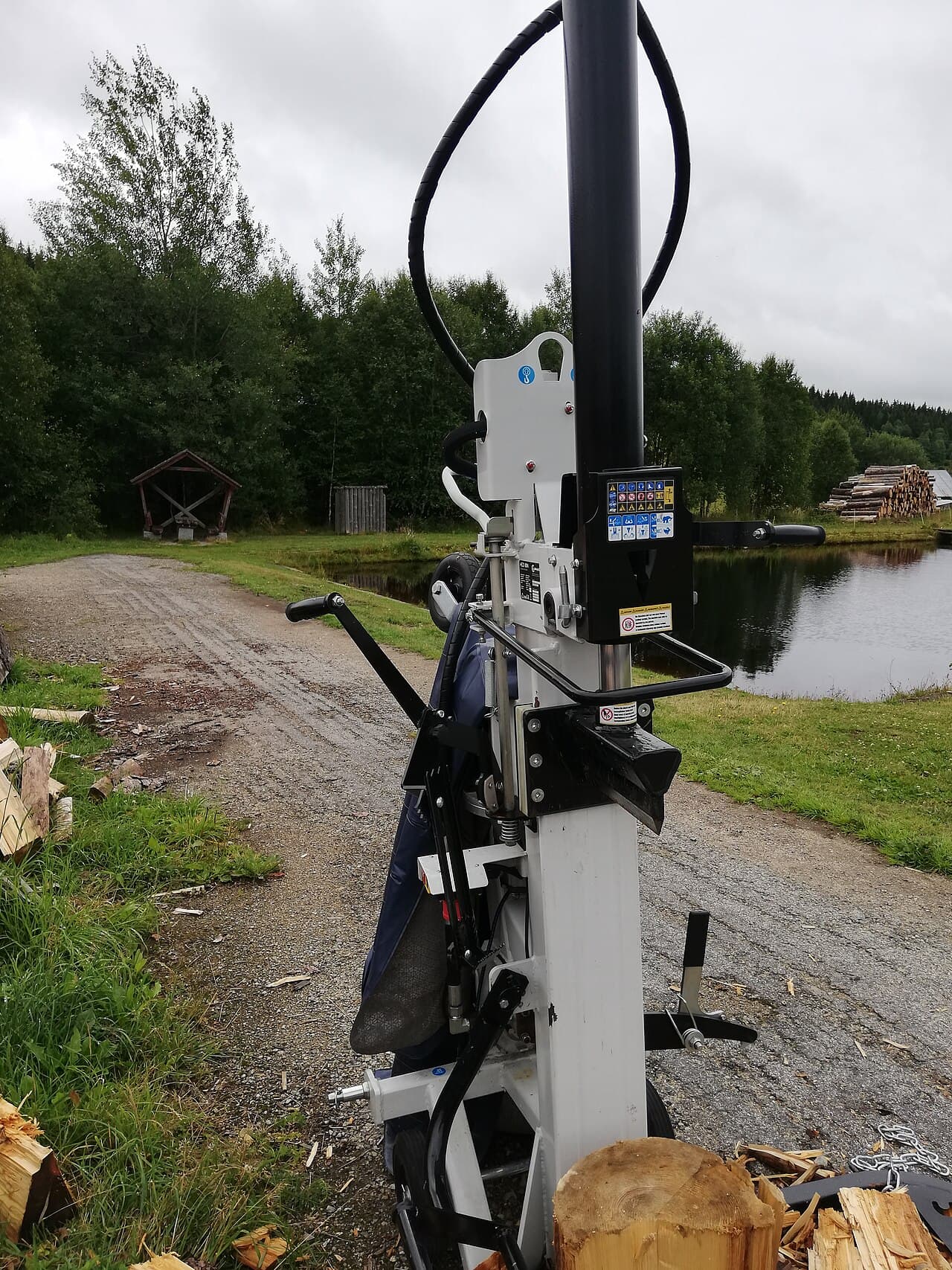
Then the air
If the ram moves in jerks, shudders or vibrates, suspect air. Air in the system and a low fluid level are the two causes Mantis gives for a pressure plate that advances with a jerky motion or strong vibration.[2] Air gets in when the reservoir runs low, when a fitting is loose, or after the system has been opened.
The cure on Mantis machines is to open the bleed screw and cycle the pressure plate back and forth three to four times to help remove any air.[2] Cub Cadet describes a different bleed: start the engine, then use the control handle to extend and retract the wedge twelve complete cycles.[1] Methods differ by model, so use the one in your manual. Close the bleed screw afterward; Mantis lists a bleed screw that was not tightened before the machine was moved as a cause of a hydraulic oil leak.[2]
Check for leaks, safely
Fluid that is low again after a top-up has gone somewhere. The simple test is to place a piece of cardboard under the log splitter to locate the leak.[2] Drops on the cardboard point you to the hose, fitting or seal above.
Never use your hand or any part of your body to check for hydraulic system leaks while the system is pressurized.[3] Escaping pressurized fluid can have enough force to penetrate skin and cause serious injury.[3] Wear gloves and safety glasses, and keep your face away from any spot you are inspecting.
Rule out the wedge and the wood
Not every weak split is hydraulic. Mantis lists a wedge with burrs, nicks or flat spots as a reason a log fails to split, and the fix is to sharpen it.[2] Knotty, wet or oversized rounds can also stall a machine that is perfectly healthy; set the log aside and try a smaller or straighter one. Keep the beam clean and lightly oiled. Cub Cadet says to use regular engine oil on the beam rather than heavy grease.[1]
Old fluid and a worn pump
Fluid wears out and filters clog. Harbor Freight gives the recommended interval for changing the hydraulic oil and filter as approximately every 3 months.[4] Your interval may differ, but a splitter that is years past its last change is a fair candidate for fresh fluid and a new filter.
If the level is right, the air is out, nothing leaks and the wedge is sharp, the remaining causes are inside: a tired pump, a worn control valve or leaking cylinder seals. Worn components should be replaced, and Mantis says to contact a qualified hydraulic mechanic for assistance.[2]
Stop and call a pro if
- Fluid keeps disappearing after you top it up and tighten the fittings. The leak is in a hose, cylinder seal or valve.
- You see a spray or a weep of fluid under pressure. Shut the machine off and do not touch the spot; escaping fluid can penetrate skin.[3]
- The ram is still slow after a fresh fill and a proper bleed. The pump, valve or seals are the likely cause, which is shop work.[2]
- The engine bogs or surges under load. That is an engine problem; see why a lawn mower will not start for the shared fuel and spark checks.
- Anyone has fluid under the skin. Treat it as an emergency and get medical care at once.
Getting help in Virginia
Small engine shops that service hydraulic equipment are local businesses, so ask whether they work on log splitters before you haul one in, and get the repair priced in writing. For context on judging a repair against replacement, read whether an old chainsaw is worth repairing; the same thinking applies. You can browse small engine repair answers or find local log splitter repair pros.
When you are ready, describe the log splitter and local shops can quote it.
Common questions
- How low can the hydraulic fluid be before the splitter slows down?
- The manufacturers do not give a number. Cub Cadet says that when hydraulic fluid is low the machine will operate with noticeably less power, and Mantis lists low fluid as the cause of slow pressure plate response. Check the level before every session, and fill to the mark in your manual.
- Why does the ram jerk instead of moving smoothly?
- Air in the hydraulic fluid is the first suspect. Mantis lists air in the system and a low fluid level as the causes of a pressure plate that advances with a jerky motion or strong vibration. Top up the fluid, then bleed the air by cycling the ram.
- How often should the hydraulic oil be changed?
- Follow your own manual. As one example, Harbor Freight gives the recommended interval for changing the hydraulic oil and filter as approximately every 3 months for its splitters. Old, dirty fluid and a clogged filter are worth ruling out when a splitter has gone slow.
- Can I feel for the leak with my hand?
- No. Mantis warns to never use your hand or any part of your body to check for hydraulic leaks while the system is pressurized, because escaping fluid can penetrate skin. Slide cardboard underneath and look for drops instead.
- What if the splitter is full of fluid and bled but still slow?
- Then the cause is probably inside: a worn pump, a worn control valve or tired cylinder seals. These are not backyard jobs. Mantis says worn components should be replaced and to contact a qualified hydraulic mechanic.
Sources
- [1] How to Maintain Your Hydraulic Log Splitter, Cub Cadet. Checked October 28, 2026.
- [2] Swift Split log splitter manual: Troubleshooting, Mantis. Checked October 28, 2026.
- [3] Swift Split log splitter manual: Hydraulic safety, Mantis. Checked October 28, 2026.
- [4] Log Splitter 91839, 91840 and 92199 manual: Maintenance, Harbor Freight Tools. Checked October 28, 2026.
Want a pro to handle it?
Describe the job once. Licensed local businesses send quotes, and you pay only when you book one.
Get a quote for Small Engines