Why is my water heater making popping noises?
The most common cause of popping in a tank water heater is sediment: minerals settle on the bottom of the tank, steam bubbles get trapped under them, and they pop as they break free. A flush by a technician stops it in many cases. Popping with hissing, sizzling or leaks needs a licensed pro promptly. If you smell gas, go outside and call 911 and then your gas supplier.
Free to ask. Local shops send quotes, and you pay only when you book one.
By Kasra Taheri, Founder, LoclisPublished
Researched and drafted with AI, then checked claim by claim against the sources listed below before it was published. Prices and rules change; the dates beside each source say when it was last checked.
This is a job for a licensed pro in Virginia
This page explains what the work involves, the permits, what a licensed pro does and what drives the cost. It does not give step-by-step instructions, because this work needs a licence, a permit or both, and doing it wrong can injure someone. Before you hire, check the licence on Virginia's DPOR record.
The most common cause is sediment. Over time, minerals settle at the bottom of tank-style units, causing the water heater to make a popping noise or rumble as water heats beneath the debris.[2] A. O. Smith compares it to a pot of pasta coming to the boil: the sediment traps steam bubbles that have to fight to escape, and you hear a pop when they finally break free.[1] Flushing removes sediment, and in many cases that stops the noise.[2] Popping is not always harmless, though. When a heater is hissing, crackling or popping, Rheem warns that the noise can mean an active leak or component failure.[2] Have it checked promptly if it comes with hissing, sizzling, loud repeated banging or water on the floor. If you smell gas, Columbia Gas of Virginia's advice is to go outside and call 911 and then call the gas company.[6]
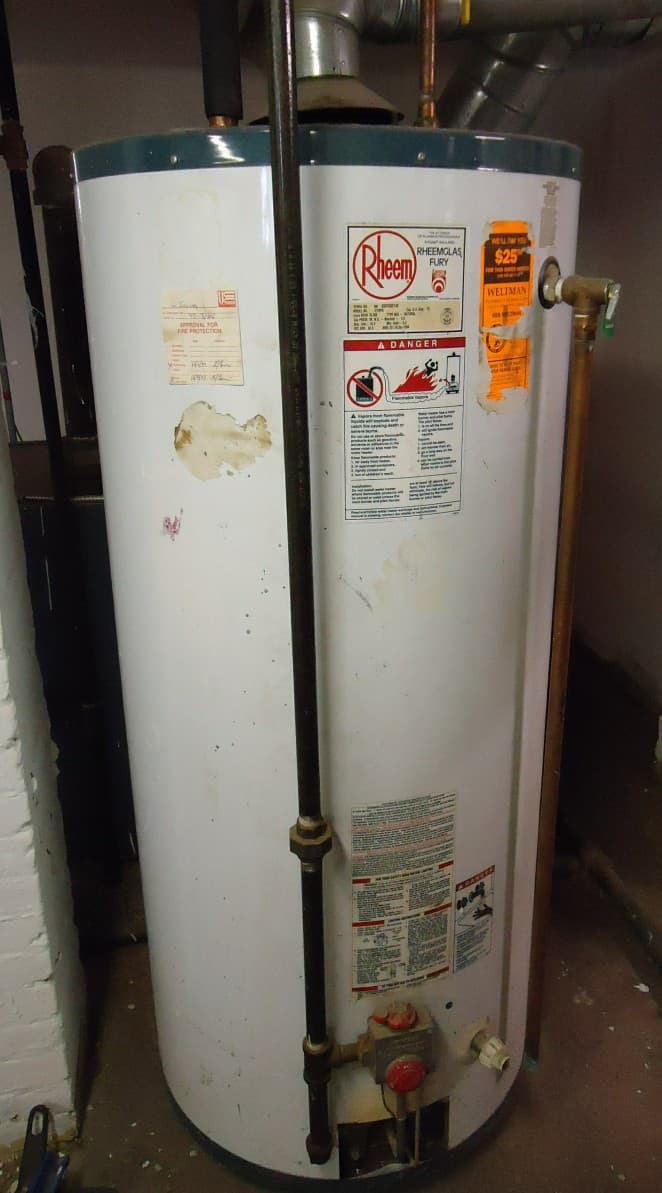
What the popping means
In tank-style units, sediment buildup is the most common cause of popping or rumbling sounds.[2] On a gas heater the burner sits under the tank, so the sediment lies between the flame and the water. On an electric heater it can coat the elements: the Department of Energy's Building America guide notes that sediment can leave mineral deposits on the heating element, reducing its effectiveness in transferring heat to the water.[3]
Even when sediment is the only cause, it costs you money and hot water. Virginia Cooperative Extension says "Mineral scaling in water heaters can increase heating costs by reducing their efficiency."[4] ENERGY STAR adds that as hot water tanks age, sediment can build up in a way that reduces capacity of the tank,[5] so a popping heater that also runs out of hot water sooner than it used to is showing two signs of the same problem.
Why some Virginia homes get it sooner
Sediment comes from the minerals in your water. Virginia Cooperative Extension explains that calcium and magnesium dissolve into groundwater as it comes in contact with soluble limestone and other rocks,[4] and that "Hard water can also reduce the efficiency and life span of water heaters."[4]
On Extension's scale, water between 7.0 and 10.5 grains per gallon (120 to 180 mg/L) is rated hard, and above 10.5 grains per gallon very hard.[4] Extension says levels below 7.0 grains per gallon or 120 mg/L generally do not require treatment, and that a qualified laboratory can analyze your water for hardness.[4] On a private well, a test tells you how hard your water is. Where scale is the trouble, Extension suggests a targeted fix: "If scale forming in your water heater is an issue, consider softening only water that is to be heated."[4]
Popping, crackling, hissing: telling the sounds apart
Not every noise is sediment, and some point to a different problem.
- Crackling. A. O. Smith says crackling can come from the same sediment, or from aluminum hydroxide: colorful, jelly-like beads that form when an aluminum anode rod reacts with excess chlorine in the water.[1] A technician can see the beads when the tank is drained.
- Hissing or sizzling. Rheem warns that when a heater sounds like a tea kettle, or you hear "hissing, crackling or popping, it may mean a more serious issue".[2] It lists water dripping onto a hot burner on a gas model, a leaking heating element gasket on an electric one, or internal condensation interacting with heated components.[2] Its advice for these sounds is turning off power or gas to the unit, not using it, and scheduling a professional inspection immediately.[2]
- Banging or hammering. Banging, rumbling or knocking often comes from water hammer in the house's pipes rather than the heater itself, when a faucet or valve shuts suddenly.[2]
- Screeching or whistling. High-pitched screeching or whistling often means restricted flow or pressure irregularities, from causes such as a partly closed valve or a faulty temperature and pressure (T&P) valve.[2] A T&P valve is a safety device; leave it to the technician.
- Normal sounds. Rheem notes that light ticking, clicking, humming and soft ignition sounds are usually normal operation.[2]
What fixes it
"Flushing removes sediment that causes rumbling and popping."[2] A. O. Smith recommends flushing at least once a year, and more often if you have hard water, older pipes or lots of buildup at the yearly flush.[1] On a gas or electric tank heater, book the flush with a licensed technician as part of a service visit, and ask for the condition of the drain valve and tank to be noted on the invoice.
A flush does not always finish the job. Rheem says in cases of extreme buildup, a professional has the tools to perform a more thorough flush and cleaning.[2] Ask the technician to check the anode rod on the same visit. The rod protects the tank from corrosion: A. O. Smith says anode rods usually last only about 5 years and can go sooner depending on the water.[1]
When the noise means replace, not repair
Rheem's signs that a noisy heater needs an inspection are noise that continues after a flush, loud repeated banging or rumbling, hissing or sizzling, visible leaks or moisture, and a unit that is 8 to 12 or more years old.[2] According to ENERGY STAR, "If your water heater is 10 years old or older, chances are it is heating water inconsistently, or worse—going to altogether fail and flood your home."[5] Its warning signs are visible corrosion, water leaking from joints or seams, rust in the water, a lack of hot water, and rumbling noises.[5]
If your heater is past that age and popping loudly, ask for a repair quote and a replacement quote at the same visit. Before a replacement, read whether you need a permit to replace a water heater in Virginia.
When to call a licensed pro
Call promptly, and stop using the heater, if the popping comes with hissing or sizzling, loud repeated banging or rumbling, water around the base or dripping from the relief valve, or rusty hot water. If you smell gas, leave first. Columbia Gas of Virginia tells its customers to "go outside and call 911 and then call us at 1-800-544-5606 (24/7)."[6] If another company supplies your gas, use its emergency number.
Work inside the heater, from the burner and gas valve to the elements, anode rod and T&P valve, is a job for a licensed tradesman. Under Virginia law no individual may work as a tradesman without a licence unless working under the supervision of a tradesman licensed in that specialty, and the Code's definition of a tradesman covers electrical, plumbing and heating, ventilation and air conditioning work done for the public for pay.[7][8] The Code's definition of a liquefied petroleum gas fitter covers piping, tanks and appliances "excluding hot water heaters, boilers and central heating systems which require a heating, ventilation and air conditioning or plumbing certification".[8] Gas fitting has its own licence: Virginia law bars anyone from working as a liquefied petroleum gas fitter or natural gas fitter provider without one.[7] Check any business on DPOR's License Lookup[9] before it starts, and read what licence an HVAC technician needs in Virginia.
When you call, say what kind of heater you have (gas or electric, and its age from the label), when the popping happens, whether the tank has ever been flushed, and whether you are on a well or city water. That is enough for a technician to bring the right parts.
Getting it fixed in Virginia
Loclis lists DPOR-licensed businesses with their licence number and class. Look up plumbers in Blacksburg or HVAC businesses in Blacksburg, browse HVAC repair, or read more HVAC repair answers.
Describe what your water heater is doing and licensed local businesses quote the repair.
Common questions
- Is a popping water heater dangerous?
- It can be. Sediment is the most common cause, but Rheem lists hissing, crackling or popping among sounds that can mean an active leak or component failure, and loud, repeated banging or rumbling as a reason to call a professional. If the popping comes with hissing or sizzling, water around the base or rust in the hot water, stop using the heater and call a licensed pro promptly. If you smell gas, go outside and call 911, then your gas supplier.
- Will flushing the tank stop the popping?
- In many cases, yes: flushing removes the sediment that causes popping and rumbling. If the buildup is heavy or hardened, a single flush may not clear it, and a technician may need to clean the tank more thoroughly or recommend replacement.
- How often should a water heater be flushed?
- A. O. Smith recommends at least once a year, and more often with hard water, older pipes or a lot of sediment at the last flush. A licensed technician can do it as part of a regular service visit.
- Does hard water make a water heater pop?
- Hard water carries calcium and magnesium that settle as scale, and Virginia Cooperative Extension notes that scale in a water heater raises heating costs and can shorten its life. A qualified laboratory can test your water's hardness; softening only the water that is heated is one option Extension describes.
- Should I replace a water heater that pops?
- Not for the noise alone. Age and condition decide it. ENERGY STAR treats a heater of 10 years or older, with corrosion, leaks, rusty water or rumbling, as one to plan on replacing before it fails. A technician can tell you whether a flush is worth it.
- Do I call a plumber or an HVAC company for a noisy water heater?
- It depends on the heater and the work. Virginia licenses tradesmen by specialty, such as plumbing, HVAC and electrical, and gas fitters need a licence of their own. The Code's definition of a liquefied petroleum gas fitter leaves out hot water heaters that require an HVAC or plumbing certification. Check the business's trade and licence class on DPOR's License Lookup before you book.
Sources
- [1] What to Do When Your Hot Water Heater Is Making Noises, A. O. Smith. Checked October 26, 2026.
- [2] The Ultimate Guide to Water Heater Noises: What's Normal (and What Isn't), Rheem Manufacturing Company. Checked October 26, 2026.
- [3] Flush Water Heater Tank, Building America Solution Center, Pacific Northwest National Laboratory (U.S. Department of Energy). Checked October 26, 2026.
- [4] Virginia Household Water Quality Program: Hardness in Household Water (publication 442-664), Virginia Cooperative Extension, Virginia Tech. Checked October 26, 2026.
- [5] ENERGY STAR Certified Heat Pump Water Heaters fact sheet, ENERGY STAR, U.S. Environmental Protection Agency. Checked October 26, 2026.
- [6] Natural Gas Safety, Columbia Gas of Virginia. Checked October 26, 2026.
- [7] Va. Code § 54.1-1129, Necessity for licensure, Code of Virginia, Virginia General Assembly. Checked October 26, 2026.
- [8] Va. Code § 54.1-1128, Definitions, Code of Virginia, Virginia General Assembly. Checked October 26, 2026.
- [9] License Lookup, Virginia Department of Professional and Occupational Regulation. Checked October 26, 2026.
Want a pro to handle it?
Describe the job once. Licensed local businesses send quotes, and you pay only when you book one.
Get a quote for HVAC Repair