How much does alternator replacement cost in Virginia?
We found no dated, primary-source Virginia price for an alternator replacement, so the cost is whatever the shop quotes for your car. It depends on the alternator, how hard it is to reach, and any core charge. In Virginia you can ask for a written estimate before work starts, and the final bill is capped near it.
Free to ask. Local shops send quotes, and you pay only when you book one.
By Kasra Taheri, Founder, LoclisPublished
Researched and drafted with AI, then checked claim by claim against the sources listed below before it was published. Prices and rules change; the dates beside each source say when it was last checked.
Step by step
Read when to stop and call a pro, further down this page, before you start.
Step 1: Note the symptoms
Write down what you see, such as a battery warning light, dim headlights or a car that will not restart, so the shop quotes the problem you actually have.
Step 2: Get the charging system tested first
Ask for a test of the battery and alternator before you agree to a replacement, and ask what the test costs.
Step 3: Ask for a written estimate
Before any work that may cost more than $25, ask for the estimated labor, estimated parts, a description of the work and the estimated completion time in writing.[2]
Step 4: Ask about any estimate fee
Ask whether the shop charges for the estimate or related diagnostic work; it must disclose any such condition when you ask.[2]
Step 5: Ask what kind of alternator it is
Ask whether the quote is for a new, remanufactured or used alternator, and what warranty comes with it. The final invoice must identify any used, rebuilt or reconditioned parts.[4]
Step 6: Ask about the core charge
Ask whether the quote includes a core charge or trade-in fee tied to your old alternator, and how it is handled.[3]
Step 7: Compare two or three quotes
Put the quotes side by side: part, labor, any belt or battery work, core charge and warranty.
Step 8: Keep the invoice
Check that the invoice shows parts and labor separately, unless the work was done on an advertised single price basis.[4]
We could not find a dated, primary-source Virginia price for replacing an alternator, so we will not quote one. The price you pay is whatever the shop quotes for your car, and it moves with the part, the labor and any core charge. What Virginia law does give you is a way to pin that price down in writing before work starts.
What drives the price
Five things set the total:
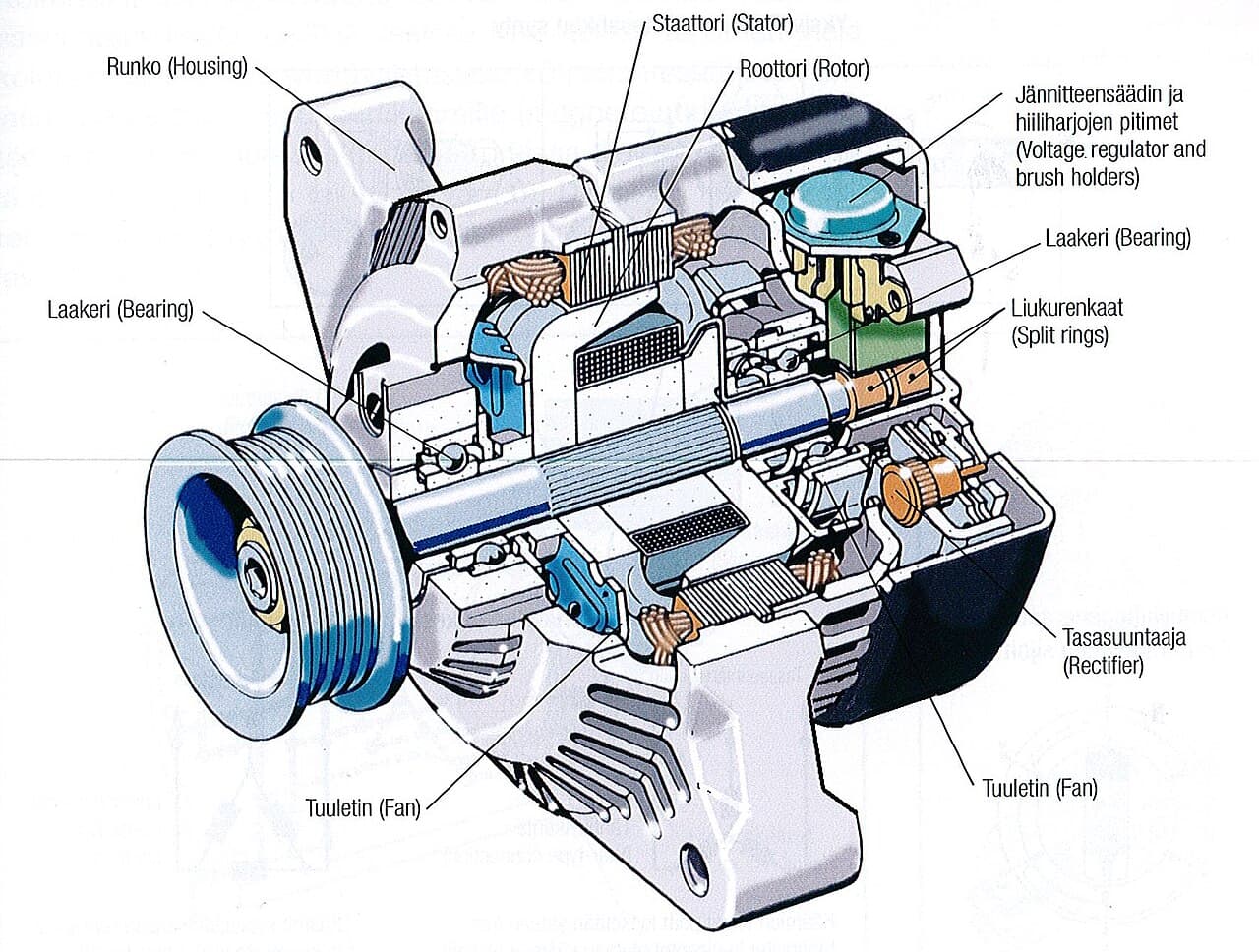
- The alternator itself. Output rating and design vary by vehicle, and prices differ between new, remanufactured and used units. Ask which the quote assumes.
- Labor. On some engines the alternator sits at the front and comes off in a short job. On others it is buried under other parts, and labor climbs with the hours.
- Related parts. The drive belt, a tensioner or the battery are sometimes replaced at the same time. Ask for each as its own line, and ask why.
- The core charge. A shop's quote may include a core charge or trade-in fee tied to your old alternator. Ask whether yours does.
- Diagnosis. A bad battery, a loose belt or corroded cable can mimic a failed alternator. Paying for a test first can save paying for the wrong part.
If a dead battery is the real problem, see what a car battery replacement costs before you book.
Your rights under Virginia law
Virginia's Automobile Repair Facilities Act applies to any person who for profit diagnoses or corrects malfunctions of, or damage to, a motor vehicle.[1] That covers dealers, independent garages and chain shops alike. Under it:
- On request, before any repair work for which you may be charged more than $25, the shop must give you a written statement of the estimated labor, the estimated parts, a description of the problem or work and the estimated completion time.[2]
- Once you ask for a written estimate, work other than the diagnosis needed to prepare it cannot start until you have the estimate and have authorized the work, and the shop cannot charge more than 10 percent over the written estimate, or 20 percent for a vehicle at least 25 model years old, unless you authorize the extra work or time.[2]
- A shop may charge a reasonable fee for the estimate and related diagnostic work, but must disclose the condition when you ask, in writing or on a sign posted at the entrance.[2]
- The shop must offer, when you authorize the repair, to return the parts it removes and replaces, except parts that go back to a manufacturer or distributor under a warranty, trade-in or core agreement.[3]
- When the work is done, you must get a written invoice that shows the work performed and the charges for parts and labor, separately stated, and identifies warranty parts and any used, rebuilt or reconditioned parts. This does not apply to work done on an advertised single price basis.[4]
A violation is a prohibited practice under the Virginia Consumer Protection Act.[5]
How to get a price you can trust
Start with a test. Many shops and parts stores can check the battery and the alternator's output, and doing that first tells you whether you need an alternator at all. Ask what the test costs, since a shop may charge a reasonable fee for diagnostic work as long as it tells you when you ask.
Then get two or three written quotes for the same job. For each, note whether the alternator is new, remanufactured or used, the labor, any belt or battery work, the core charge and the warranty. A cheaper part with a short warranty is not always the cheaper choice, especially when the labor to swap it again is the bigger share of the bill.
The warranty matters because an alternator that fails again after a repair means paying for the labor twice unless the shop covers it. Ask whether the warranty includes labor, and how long it lasts.
If you want the old alternator back, say so when you authorize the work. If you want back a part that is subject to a core or trade-in agreement, you agree to pay the shop the core charge or trade-in fee.[3]
Stop and call a pro if
- The battery light is on and the car is running. The car is running on battery power and will stop when it runs down. Drive only as far as the nearest shop, or have it towed.
- The car stalls, loses power steering or dims its lights while you drive. Pull over somewhere safe and call for help rather than trying to restart it repeatedly.
- You smell burning rubber or hot wiring. A slipping belt or an overheating electrical part is a reason to stop driving.
- A shop will not give you a written estimate. You can request one, and any complaints can be made to the Division of Consumer Counsel of the Department of Law.[2]
- The estimate keeps growing. Without your authorization, the final charge cannot exceed the written estimate by more than the limits above.[2]
Getting help in Virginia
See what brake work costs and what exhaust repair costs, or browse more automotive repair answers.
To get written quotes for your own vehicle, describe the job once and local shops will respond.
Common questions
- Does the shop have to give me a written estimate for an alternator replacement?
- On request, yes, if you may be charged more than $25. The shop must give you a written statement of estimated labor, estimated parts, a description of the work and the estimated completion time. Ask before work starts.
- Can the final bill be higher than the estimate?
- Not by more than 10 percent, or 20 percent for a vehicle at least 25 model years old, unless you authorize the additional work or time. That limit applies once you have asked for a written estimate.
- Can a shop charge me just to diagnose the problem?
- Yes, a reasonable fee for the estimate and related diagnostic work is allowed, but the shop must disclose that condition when you ask, in writing or on a sign posted at the entrance.
- Can I get my old alternator back?
- The shop must offer to return the parts it removes and replaces when you authorize the repair, except parts that go back to a manufacturer or distributor under a warranty, trade-in or core agreement. If a core or trade-in agreement applies, you agree to pay the shop the core charge or trade-in fee to get the part back.
- What if the invoice does not match what we agreed?
- The invoice must show the work performed and the charges for parts and labor, separately stated, and identify warranty parts and any used, rebuilt or reconditioned parts. If it falls short, raise it with the shop first.
- Who do I complain to about a repair shop in Virginia?
- Shops must post a notice that complaints can be made to the Division of Consumer Counsel of the Department of Law. A violation of the repair statute is a prohibited practice under the Virginia Consumer Protection Act.
Sources
- [1] Va. Code § 59.1-207.2, Definitions, Code of Virginia, Virginia General Assembly. Checked October 27, 2026.
- [2] Va. Code § 59.1-207.3, Written estimate for repair work required upon request, Code of Virginia, Virginia General Assembly. Checked October 27, 2026.
- [3] Va. Code § 59.1-207.4, Offer to return replaced parts required, Code of Virginia, Virginia General Assembly. Checked October 27, 2026.
- [4] Va. Code § 59.1-207.5, Written invoice required upon completion of repair work, Code of Virginia, Virginia General Assembly. Checked October 27, 2026.
- [5] Va. Code § 59.1-207.6, Enforcement; penalties, Code of Virginia, Virginia General Assembly. Checked October 27, 2026.
Want a pro to handle it?
Describe the job once. Licensed local businesses send quotes, and you pay only when you book one.
Get a quote for Automotive