Who removes old sheds and playsets?
Junk removal companies take down and haul most sheds and playsets. A licensed contractor is the better fit for a shed on a slab, one attached to something, or a large teardown, and a licensed electrician must disconnect a shed with power. A sound shed or playset can go to a new owner, and local bulk pickup takes only the pieces.
Free to ask. Local shops send quotes, and you pay only when you book one.
By Kasra Taheri, Founder, LoclisPublished
Researched and drafted with AI, then checked claim by claim against the sources listed below before it was published. Prices and rules change; the dates beside each source say when it was last checked.
Step by step
Read when to stop and call a pro, further down this page, before you start.
Step 1: Empty the shed or clear the play area
Take out what you want to keep and set aside paint, fuel and chemicals, so the crew is quoting a teardown and not a cleanout too.
Step 2: Describe the job in writing
Note the size, material, foundation, any power to it, and whether the slab, gravel or anchors should go as well.
Step 3: Photograph it and the way out
Take photos of each side, the floor or base, and the path to where a truck can park.
Step 4: Ask at least three companies to bid
Send each the same description and photos so the written bids can be compared line by line.[2]
Step 5: Check the licence
For a job over $1,000 that removes a structure fixed to the property, ask for a contractor licence number and look it up on DPOR's License Lookup.[1]
Step 6: Settle the electrical and the paperwork
Agree who disconnects any wiring, who applies for a permit if one is needed, and who submits the 811 locate request.[4]
Step 7: Get it in writing
Put the price, the scope, the cleanup and the payment schedule in a written contract, with a small deposit.[2]
Step 8: Walk the site at the end
Before final payment, check that all debris, hardware and nails are gone and the holes are filled as agreed.
Most old sheds and playsets are taken down and hauled away by a junk removal company. When the job is more like construction, such as a shed on a concrete slab, one attached to a fence or deck, or a large teardown, a licensed contractor is the better fit, and a shed with power needs a licensed electrician before anyone starts. A shed or playset in good condition can go to a new owner instead. Curbside bulk pickup is the last resort, and it takes pieces, not whole structures.
Junk removal companies
These do most of the work. A crew with a trailer and hand tools can dismantle a resin, metal or small wood shed, or a backyard swing set, and haul it in one visit. Ask whether the crew takes the shed down or only hauls, and whether the price includes the floor, the gravel or the anchors.
Wooden playsets deserve one extra question. Before 2004, wood treated with chromated arsenicals was used in residential structures such as decks and playsets,[6] and EPA says not to burn CCA or other preservative-treated wood in a residential setting.[6] Ask where the wood goes; the answer should be a landfill or transfer station, not a fire pit. For more questions to ask a hauler, see what to ask a junk removal company before booking.
Licensed contractors, for construction-size jobs
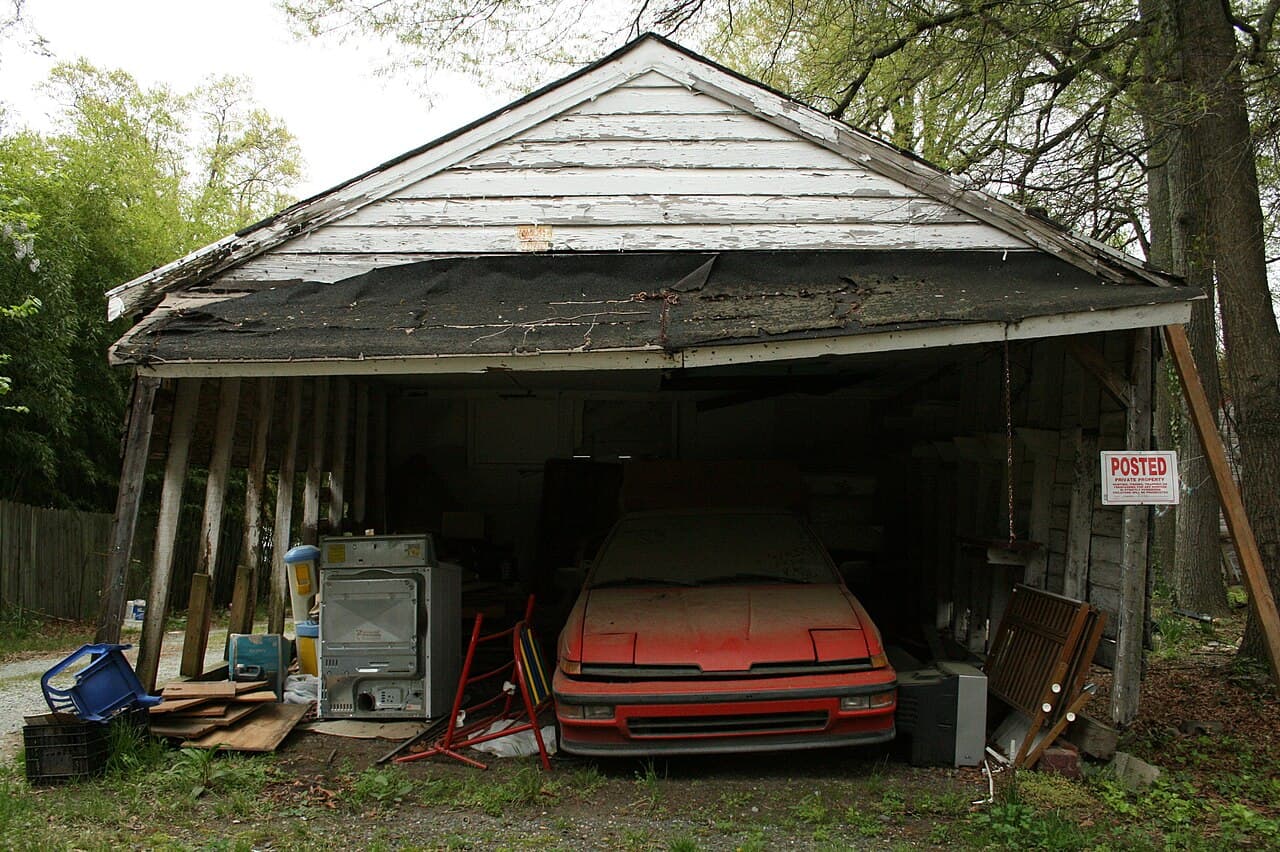
Virginia's definition of a contractor covers anyone who, for a fee, undertakes the "construction, removal, repair, or improvement of any building or structure permanently annexed to real property"[1], and a Class C licence covers single jobs over $1,000 but less than $30,000.[1] A shed bolted to a slab, a shed with a poured floor, or a large outbuilding usually belongs with a licensed contractor who does demolition, and so does any job where the shed is attached to the house, a deck or a fence.
Permits are part of that job. Virginia's building code requires a permit before the construction or demolition of a building or structure,[3] but it exempts one-story detached tool and storage sheds and playhouses whose building area does not exceed 256 square feet.[3] A bigger shed may need a demolition permit, and a contractor should know how to get one from your locality.
Electricians, when the shed has power
A light, an outlet or a buried cable to the shed changes who goes first. A permit is also required for work on electric wiring,[3] and Virginia requires a master tradesman licence as a condition of licensing for an electrical contractor.[1] The circuit has to be disconnected and made safe at its source before the walls come down. Some removal companies bring their own electrician; many expect it done before they arrive. Find electricians around Blacksburg if you need one.
The utility locate
Taking down a structure and pulling footings are covered by Virginia's utility damage law: "No person shall make or begin any excavation or demolition without first submitting a locate request to the notification center."[4] DPOR's homeowner guide says to call 811 before any excavation project, DIY or professional contractor.[2] Agree in writing who makes the request, and do not let work start before the lines are marked.
A new owner, for something still sound
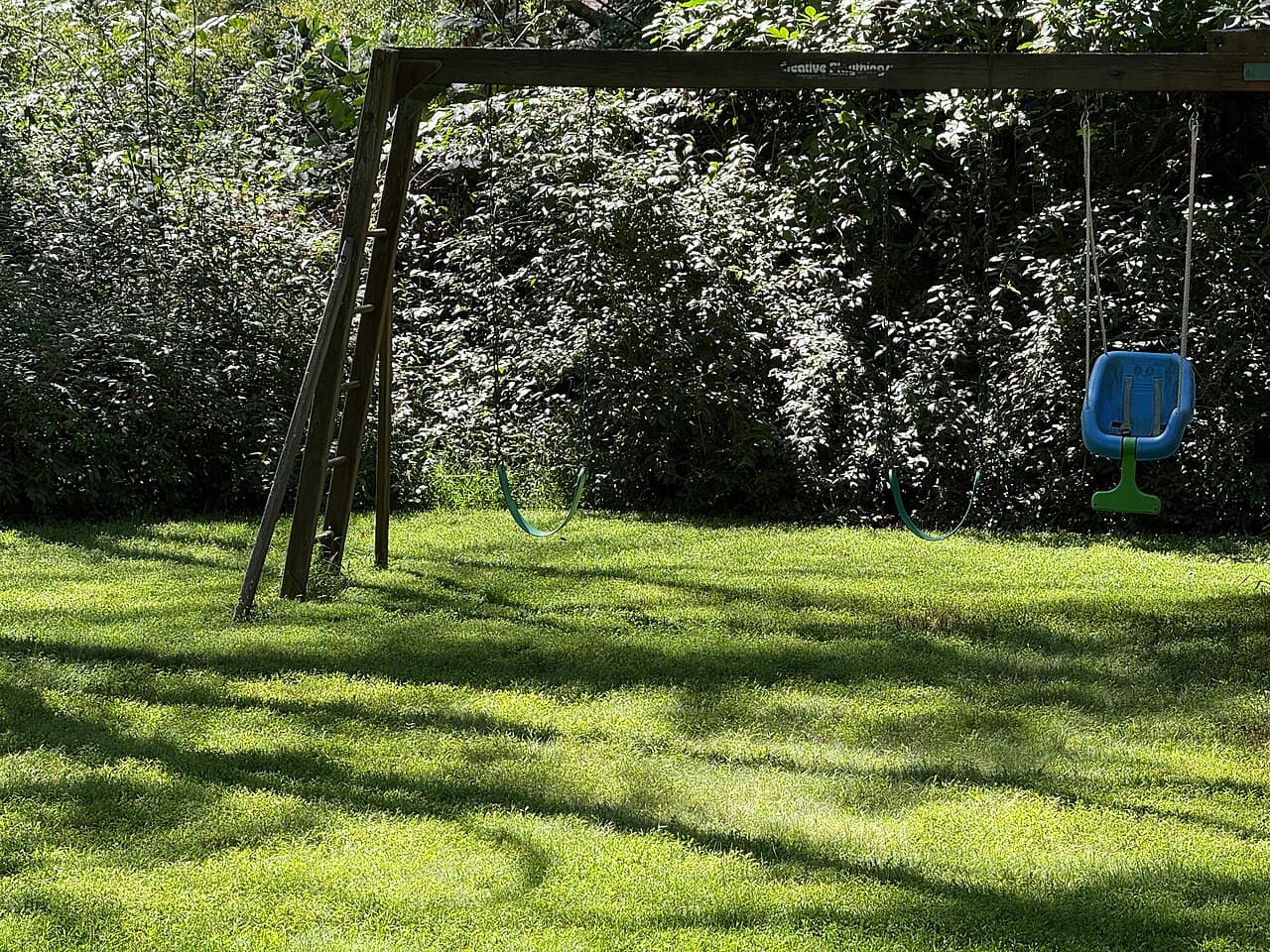
A shed in good shape can sometimes be sold or given away to someone who hires a shed mover to collect it. A playset is easier: families with young children often take one for free. CPSC's advice is to check a play set for broken or missing components, bent pipes or tubing, and splintering wood,[7] so look it over and describe it honestly. To take one apart yourself, see how to get rid of an old swing set.
Your trash service, for the pieces
Curbside bulk pickup is for pieces, not whole sheds. Fairfax County's special pickup takes lumber as bulk material, no longer than 6 feet,[5] and metal items such as metal fencing on a separate truck,[5] in piles of up to 2 cubic yards,[5] and construction debris is not on its list.[5] That can work for a small playset cut to length; for a shed it usually means many pickups or a trip to the landfill. See why trash companies won't take bulky items.
Checking who you hire
DPOR warns: "A license number in an advertisement or on a business card does not necessarily mean the contractor's license is valid."[2] Look the number up yourself on DPOR's License Lookup. DPOR also advises homeowners to get at least three written bids[2] and to be wary of any bid far lower than the rest.[2]
Then put it in writing. "Virginia law requires all licensed contractors to provide a written contract for residential work."[2] Make sure it covers "complete cleanup and removal of debris and materials"[2] and keep the deposit modest; DPOR's rule of thumb is "an initial deposit of no more than 10% of the total price or $1,000, whichever is less."[2]
Stop and call a pro if
- Any wiring, conduit or light runs to the shed.
- The shed is on a slab or piers, attached to another structure, or over 256 square feet.
- The roof is sagging or the walls lean, so it could fall while being taken apart.
- Roofing or siding of unknown age might contain asbestos.
- The locate marks show lines near the shed or the playset footings.
For prices, see how much it costs to remove a shed in Virginia. Browse more junk removal and moving answers, see shed and playset removal businesses, or find junk removal businesses around Blacksburg. To reach several at once, describe your shed or playset on Loclis with photos, and local businesses quote on the same job.
Common questions
- Will a junk removal company take down a shed, or only haul it?
- Many take it down too, but ask. Some crews dismantle and haul; others expect the shed in pieces. Get the teardown, the floor, the foundation and the cleanup spelled out in the quote.
- Does the company I hire need a licence?
- It depends on the job. Virginia's contractor law covers removing a structure permanently attached to the property, and a Class C licence covers single jobs over $1,000 but less than $30,000. Wiring work is for a licensed electrician. Check any number on DPOR's License Lookup.
- Will the county pick up an old shed?
- Not whole. Fairfax County's special pickup, for example, takes lumber no longer than 6 feet as bulk material and metal on a separate truck, in piles of up to 2 cubic yards, and does not take construction debris. Ask your own locality or hauler what it accepts.
- Who takes a playset that still works?
- Often a neighbour, a family with young children, or anyone answering a free listing. Check it first for broken parts, bent tubing and splintering wood, say how old it is, and agree who takes it apart and hauls it.
- Do I need a permit to have a shed removed?
- Virginia's building code requires a permit to demolish a building or structure but exempts one-story detached storage sheds and playhouses of 256 square feet or less. Wiring or asbestos-containing material can change that, so ask your building department or have the contractor ask.
Sources
- [1] Code of Virginia § 54.1-1100. Definitions, Virginia General Assembly, Legislative Information System. Checked October 27, 2026.
- [2] What You Should Know Before You Hire a Contractor, Virginia Department of Professional and Occupational Regulation. Checked October 27, 2026.
- [3] 13VAC5-63-80. Section 108 Application for permit (Virginia Uniform Statewide Building Code), Virginia Department of Housing and Community Development, via the Virginia Administrative Code. Checked October 27, 2026.
- [4] Code of Virginia § 56-265.17. Notification required prior to excavation or demolition, Virginia General Assembly, Legislative Information System. Checked October 27, 2026.
- [5] Special Pickup, Fairfax County Department of Public Works and Environmental Services. Checked October 27, 2026.
- [6] Chromated Arsenicals (CCA), U.S. Environmental Protection Agency. Checked October 27, 2026.
- [7] Outdoor Home Playground Safety Handbook, U.S. Consumer Product Safety Commission. Checked October 27, 2026.
Want a pro to handle it?
Describe the job once. Licensed local businesses send quotes, and you pay only when you book one.
Get a quote from a local pro