Why does my garage door opener run but the door doesn't move?
When the motor runs and the door stays put, the opener is usually not connected to the door. Someone may have pulled the emergency release, or the part that links the trolley to the door has come apart. Check that with the door closed, and test whether the door lifts by hand. A heavy or binding door is a spring problem for a pro.
Free to ask. Local shops send quotes, and you pay only when you book one.
By Kasra Taheri, Founder, LoclisPublished
Researched and drafted with AI, then checked claim by claim against the sources listed below before it was published. Prices and rules change; the dates beside each source say when it was last checked.
Step by step
Read when to stop and call a pro, further down this page, before you start.
Step 1: Close the door first
If the door is open or partly open, do not pull the release. Only detach the opener from a door that is fully closed.[1]
Step 2: Watch the opener run
Press the wall button and look at the opener's rail. If the trolley slides along it while the door stays still, the door is disconnected from the opener.
Step 3: Look at the release
Check whether the red release cord or handle has been pulled, which leaves the door detached from the trolley.
Step 4: Test the door by hand
With the door closed and the opener detached, lift the door by its handle and move it up and down.[1] It should move smoothly and stay where you leave it.
Step 5: Stop if the door is heavy
If the door is heavy, drops or sticks, leave it alone and book a technician.[1]
Step 6: Reconnect following your manual
If the door moved easily, re-engage the release as your opener's manual describes, then run the door with the remote.
Step 7: Check that it now travels
Watch a full open and close. If the trolley moves but the door does not, stop and book a technician.
Start with the connection
When the opener hums or runs but the door does not move, the problem is nearly always that the motor is no longer pulling the door. That happens when the door has been disconnected on purpose, with the red emergency release, or when the link between the trolley and the door has come loose. The motor is working. The door just is not attached to it.
This guide helps you tell which case you have, in order, from easiest to check to least safe to touch. You are not going to open the opener or touch wiring.
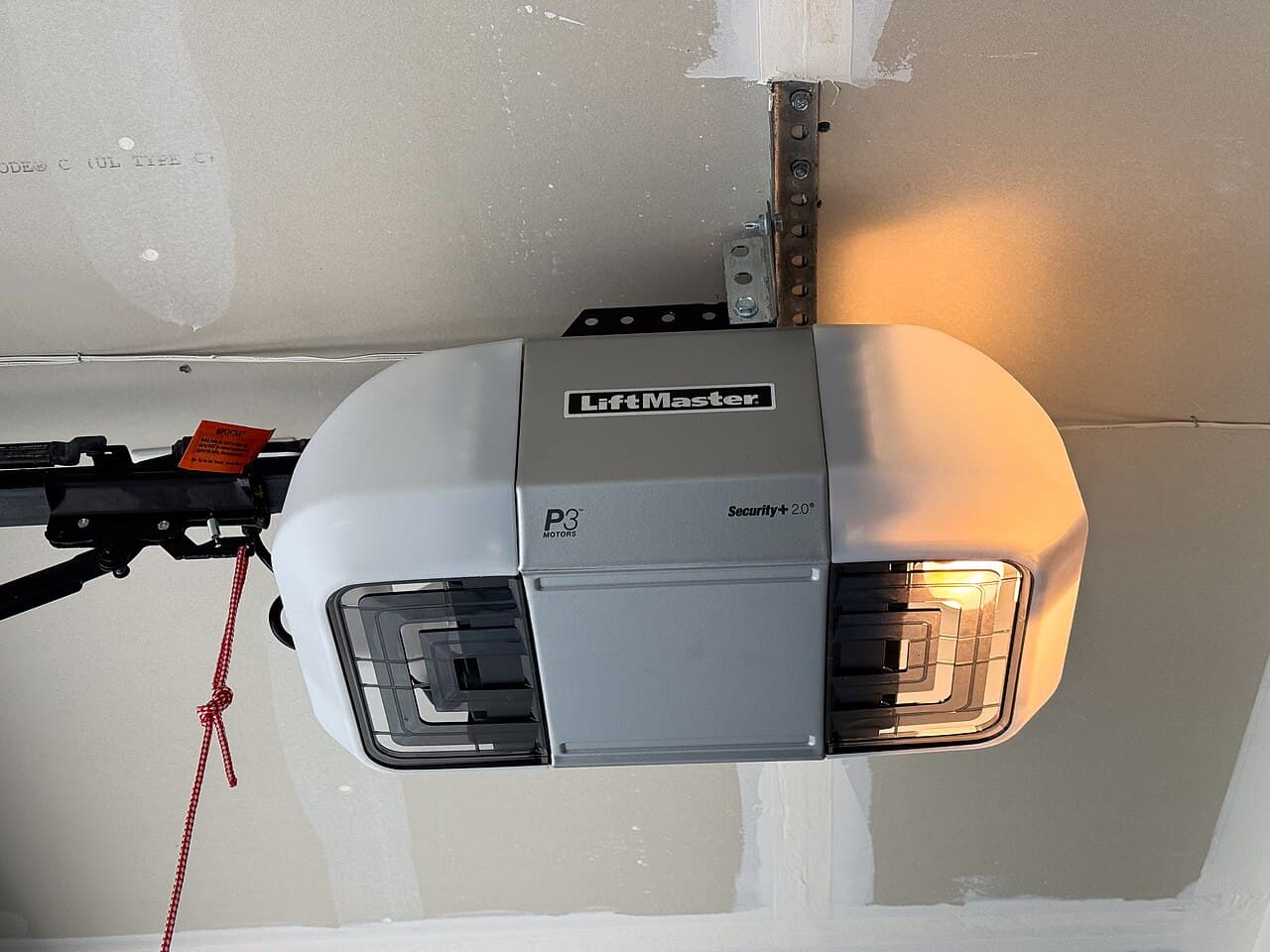
Check the release first
Look at the red cord that hangs from the trolley on the opener's rail. If it has been pulled, or the handle is in the released position, the opener is detached and will run without moving the door. Someone in the house often pulls it by accident, or after a power cut, and forgets.
The rule for using it is simple. The CPSC's own check tells you to make sure the door is closed, then pull the “quick release” mechanism to detach the garage door from the opener.[1] Do not pull it with the door open. If the door is up and a spring is weak, it can come down.
To reconnect, follow the diagram in your opener's manual. Release styles differ by brand and model, so the manual is the right guide, not a general rule.
See what the trolley does
Press the wall button and watch the rail. If the trolley moves back and forth along the rail but the door stays still, the door is disconnected from the trolley. If the trolley does not move at all, the motor, gears or drive may have failed. That is a job for a technician, not something to open up at home.
Test the door by hand
Before you reconnect anything, find out whether the door is fit to be moved by an opener. With the door closed and the opener detached, use the garage door handle to manually move the door up and down to check that the springs are operating properly.[1]
A properly operating garage door will be "balanced."[1] This means that the door will stay in place when stopped in any partially‐open position.[1] A door that is fine glides up with moderate effort and stays where you leave it. A door that is very heavy, drops, or sticks has a problem that the opener was masking.
The danger is real. A severely unbalanced garage door could unexpectedly crash to the floor possibly striking someone under the open door.[1] LiftMaster's monthly list says the same thing in fewer words: manually operate the door, and if it is unbalanced or binding, call a trained door systems technician.[2]
Look for the obvious
If the door moves easily by hand, look over what you can see without touching the springs, cables or bottom brackets. The CPSC tells owners to check the springs, hardware and fittings,[1] and says hardware and fittings should be checked to keep the door on track at all times.[1] A door that has jumped its track, a hinge that is bent, or a loose arm between the trolley and the door can all stop the door from following the trolley.
Do not grease the tracks to free a door. LiftMaster's maintenance list says: "Do not grease the doors tracks."[2]
Test it after you reconnect
Once the door follows the opener again, run it through a full open and close. Then confirm that the safety reversal still works: LiftMaster's monthly list includes the line "Test the safety reversal system."[2] The CPSC's 2x4 test is described in how to align garage door safety sensors. The door must reverse when it meets the board.
Stop and call a pro if
- The door is heavy, drops or sticks when you lift it by hand. If doors are not "balanced," or if they bind or stick, they should be serviced by a professional.[1] Springs and cables are under high tension and are not a homeowner repair.
- The trolley does not move when you press the button. The fault is inside the opener: the motor, gear, circuit board or power supply. Leave that to a technician.
- The door is off its track or a cable has come loose. Read what to do if a garage door comes off its track and keep clear of it.
- You see broken plastic, stripped metal bits or a burning smell in or under the opener.
- The door will not reverse on the 2x4 test. The CPSC says the opener should be disengaged until it is adjusted, repaired or replaced.[1]
Getting help in Virginia
For other opener faults, read why a garage door opener only works sometimes, or work out whether to repair or replace an opener. More guides are in garage door repair answers, and you can find local pros at Loclis garage door repair.
If you hire, remember the licence rule. DPOR says that if the work you are considering is valued at $1,000 or more, a valid Virginia Contractor’s License is required for the license category in which the contractor is to work.[3] Smaller service calls are common for openers, but ask for the business's licence number anyway.
When you are ready, describe the opener problem and local garage door pros will quote the repair. Ask what the quote covers, such as parts, labour and a reversal test.
Common questions
- Is it safe to pull the red release cord?
- Only with the door fully closed. The CPSC's own check says to make sure the door is closed before pulling the quick release to detach the door from the opener. Pulling it on an open door is risky because a weak spring or an unbalanced door can fall.
- Does a running motor mean the opener is fine?
- Not necessarily. A running motor only tells you power is reaching it. If the trolley on the rail moves but the door does not, the break is between the trolley and the door. If the trolley does not move either, the fault is likely inside the opener, and that is a job for a technician.
- How do I know if the springs are the problem?
- Disconnect a closed door and lift it by hand. The CPSC describes a balanced door as one that stays in place when stopped in any partially open position. A door that feels very heavy, or drops when you let go, points to the springs, which are not a home repair.
- Can I just force the door open and leave the opener disconnected?
- Only for a short time, and only if the door moves easily by hand. Get the opener or the door fixed rather than living with it.
- Do I need a licensed contractor in Virginia?
- DPOR says a valid Virginia Contractor's License is required for the license category in which the contractor is to work when the work is valued at $1,000 or more. Check a business on DPOR's licence lookup and ask for a written quote that lists the parts.
Sources
- [1] Non-Reversing Automatic Garage Door Openers Are a Hazard (CPSC publication 523), U.S. Consumer Product Safety Commission. Checked October 27, 2026.
- [2] LiftMaster Residential Maintenance, LiftMaster. Checked October 27, 2026.
- [3] What You Should Know Before You Hire a Contractor, Virginia Board for Contractors, DPOR. Checked October 27, 2026.
Want a pro to handle it?
Describe the job once. Licensed local businesses send quotes, and you pay only when you book one.
Get a quote for Garage Doors