Why does my wood stove smoke when I open the door?
Smoke rolls out when the chimney's draft is too weak to pull room air in through the open door faster than the smoke escapes. The usual causes are opening the door quickly or while the fire smoulders, a cold or short chimney, negative pressure from exhaust fans or a tight house, and a blocked cap, flue or catalytic combustor.
Free to ask. Local shops send quotes, and you pay only when you book one.
By Kasra Taheri, Founder, LoclisPublished
Researched and drafted with AI, then checked claim by claim against the sources listed below before it was published. Prices and rules change; the dates beside each source say when it was last checked.
This is a job for a licensed pro in Virginia
This page explains what the work involves, the permits, what a licensed pro does and what drives the cost. It does not give step-by-step instructions, because this work needs a licence, a permit or both, and doing it wrong can injure someone. Before you hire, check the licence on Virginia's DPOR record.
When you open the loading door, the stove suddenly has a large opening on its front. A healthy chimney pulls room air in through that opening and carries the smoke up the flue. When the draft is weak, the smoke drifts out into the room instead. An occasional puff on a mild day usually comes down to timing or weather. Smoke every time you open the door means something in the stove, the chimney or the house needs a professional look.
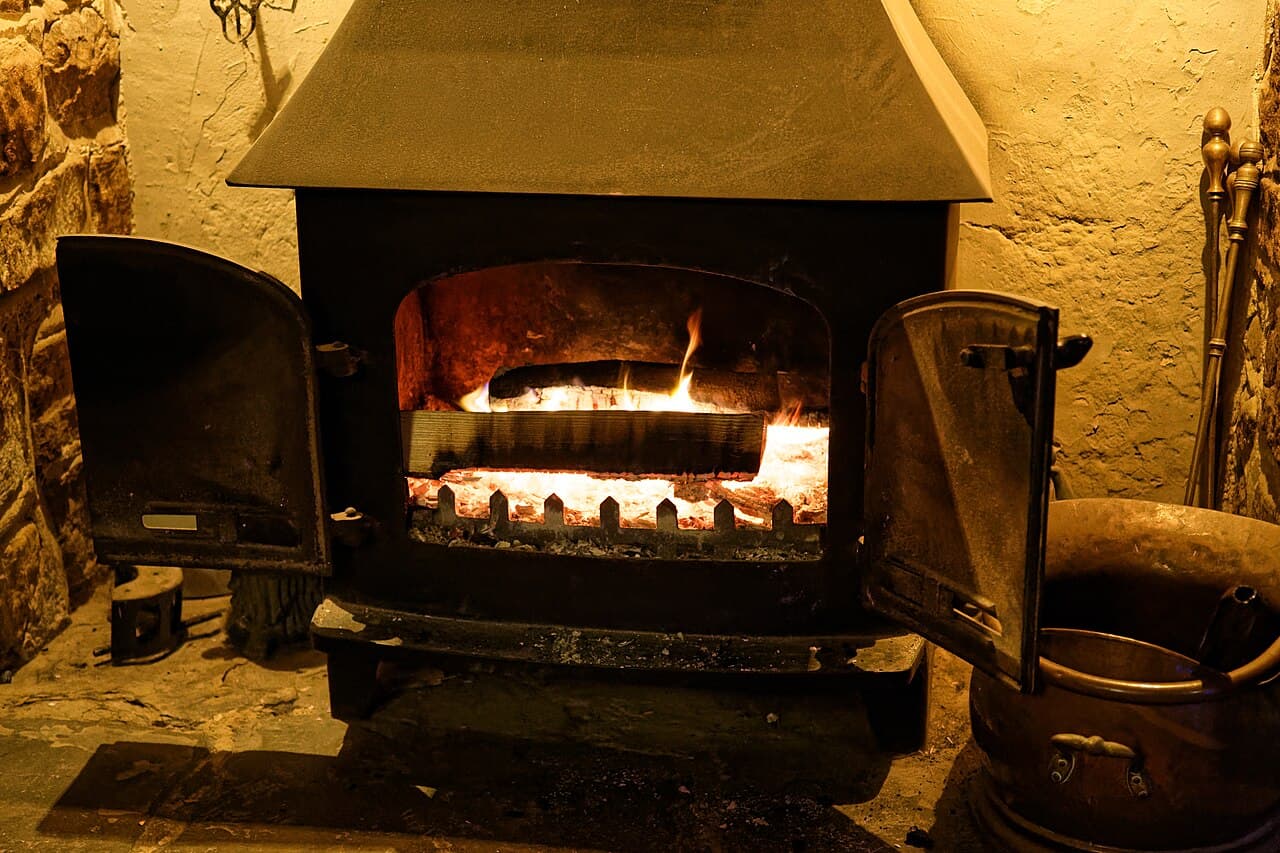
Start with how and when the door is opened
EPA's advice is simple: "When reloading or adding wood to the fire, slowly open the door to reduce the chance of wood smoke spilling back into the room."[1] Yanking the door open lets smoke roll out before the chimney can pull in enough air to replace it. EPA also says to keep the doors of a wood-burning appliance closed unless loading or stoking the live fire, because harmful chemicals like carbon monoxide can be released into your home.[2]
Your owner's manual gives the loading sequence for your model. On a catalytic stove it tells you when to open the bypass damper, and Woodstock Soapstone, a stove maker, notes that if the draft is good and a stove still smokes at start-up, the first things to confirm are that the catalytic combustor bypass is open and the primary air is completely open.[5]
The state of the fire matters too. A firebox full of smoke spills more than one full of flame. "Build hot fires. For most appliances, a smoldering fire is not safe or efficient."[2] Wet wood makes it worse: green wood is hard to light, doesn't produce much heat, and smokes a lot.[7] How to prevent creosote buildup covers burning habits in more detail.
The chimney has no draft yet
Smoke at start-up is the classic case. "Without positive draft to pull smoke up the chimney, the smoke from your fire will just build in the firebox until it eventually spills into the room."[5] Draft comes from heat: the greater the temperature difference between the gases in the chimney and the outside air, the faster the gases rise.[6]
That is why the weather changes things. Warm, damp days in the 50s or 60s can sometimes be very difficult for maintaining good draft,[5] and an outside chimney suffers most. A cold exterior chimney will not draw as well and is subject to down drafting caused by cold, heavy air working against the warm exhaust.[6]
Sometimes the cause is not the chimney at all but the house pulling air down it.
The house is pulling air down the chimney
A house that exhausts more air than it lets in will draw replacement air from wherever it can, and an unused or weakly drafting chimney is an easy route. Woodstock Soapstone says negative pressure is a common problem in houses that are new, very well insulated, and lack a balanced ventilation plan, where the exhaust devices include bathroom and kitchen fans, ranges, dryers and other appliances.[5] The lasting options it describes are an outside air duct that supplies combustion air to the stove, or, in a new build, a heat recovery ventilator.[5]
Basement stoves have an extra handicap called stack effect: warm air rising through a multi-storey house creates negative pressure on the lowest levels, where the stove often sits, and that can make it backpuff.[5]
The chimney is too short, too big or too twisty
A chimney that does not meet basic dimensions may never draw well. Woodstock Soapstone's guidance is that a stove's chimney should rise at least 14 feet above the stove's flue collar, at least three feet above the roofline, and at least two feet above anything within a ten-foot radius.[5] Size matters as well. A flue that is too large allows the smoke to slow down and condense, resulting in water, creosote and sluggish draft.[6] Bends add resistance: its guidance is that a rear-vented stove should have no more than three elbows, and a top-vented stove no more than two.[6] It also recommends that a wood stove have its own flue, both for safety and to ensure good draft.[6]
If the smoking comes with wind from one direction, the fix may be a special chimney cap that creates more draft when the wind blows.[5]
Something is blocking the flow
A stove that used to draw well and now smokes often has a restriction. If the catalytic combustor gets partly plugged with fly ash, air flow through the stove is restricted, and smoke and combustible gas can accumulate in the firebox and leak into the room.[5] The same stove maker lists surprises it has seen, such as a cleanout door left ajar in the basement or a bird's nest in the chimney.[5] Cracks matter as well: EPA notes that chimney cracks can allow smoke to enter your home.[4]
Why it should not be ignored
EPA is direct: "If you smell smoke in your home, something may be wrong."[3] Its advice when that happens is to shut down your wood-burning appliance, open a window, be sure the flue is open, carefully check the venting (chimney) system, and call a professional wood stove installer or chimney sweep.[4] Wood smoke carries carbon monoxide, so CPSC's recommendation, which EPA repeats, is that every home have carbon monoxide (CO) alarms on each level outside each sleeping area.[3] Prince William County's fire department likewise tells residents to install and maintain CO alarms.[8]
When to call a licensed pro
Book a chimney professional if any of these is true:
- the stove smokes every time the door opens, even with dry wood and a hot fire;
- you smell smoke or creosote when the stove is cold;
- smoke comes out of another fireplace or vent in the house;
- there are soot stains on walls or ceilings near the stove or chimney;
- a carbon monoxide alarm has gone off;
- the stove draws worse than it used to.
EPA's advice is to have your wood-burning appliance checked annually by a certified chimney sweep or similar certified professional.[3] The fixes for draft problems, such as a liner, a taller chimney, a new cap or an outside-air kit, are pro-only work on Loclis because they involve roof access, the chimney's fire safety and often a permit. In Virginia, contractor licensing is set out by job size: the Code of Virginia defines Class C contractors as those whose single contract or project is over $1,000 but less than $30,000.[9] How to check a contractor's licence shows how to look one up. For open fireplaces, see why a fireplace smokes into the room, and what a chimney sweep does explains an inspection visit.
Loclis lists DPOR-licensed businesses with their licence number and class. Browse wood stove services, look up chimney businesses in Blacksburg, or see all chimney and fireplace answers.
Describe your smoking stove once and local chimney businesses quote the inspection.
Common questions
- Is a little smoke when I reload normal?
- A faint whiff on a mild day can happen, but EPA says properly installed, correctly used wood-burning appliances should generate very little smoke, and if you regularly see or smell smoke you may have a problem. Smoke every time you open the door is a reason to have the stove and chimney checked.
- Why does it only smoke when the kitchen or bathroom fan is on?
- Exhaust fans push air out of the house, and the replacement air can come down the chimney instead of up it. That negative pressure is common in tight, well-insulated houses. Turning the fan off while you reload is a stopgap; a lasting fix is make-up air, which a licensed pro can plan.
- Why is it worse on mild, damp days?
- Draft comes from the temperature difference between the flue gases and the outside air. On warm, damp days that difference is small, so the chimney pulls weakly. Woodstock Soapstone suggests short, hot fires on those days rather than long, smouldering ones.
- Could a smoky stove mean carbon monoxide in the house?
- It can. Wood smoke contains carbon monoxide, and EPA warns it can be released into your home when stove doors are open. Keep carbon monoxide alarms on each level outside each sleeping area, as CPSC recommends, and have the system inspected if smoke keeps spilling into the room.
- My stove used to draw well and now smokes. What changed?
- A change in performance often points to something new in the flue: creosote buildup, a nest or debris at the cap, or a plugged catalytic combustor. It can also follow changes to the house, such as new windows, insulation or a bigger range hood. A chimney professional can find which one it is.
Sources
- [1] Tips for a Better Burn, U.S. Environmental Protection Agency, Burn Wise. Checked October 27, 2026.
- [2] Best Wood-Burning Practices, U.S. Environmental Protection Agency, Burn Wise. Checked October 27, 2026.
- [3] Frequent Questions about Wood-Burning Appliances, U.S. Environmental Protection Agency, Burn Wise. Checked October 27, 2026.
- [4] Wood-Burning Installation and Maintenance, U.S. Environmental Protection Agency, Burn Wise. Checked October 27, 2026.
- [5] Cures for Backpuffing, Woodstock Soapstone Company (stove manufacturer). Checked October 27, 2026.
- [6] What Makes a Good Chimney, Woodstock Soapstone Company (stove manufacturer). Checked October 27, 2026.
- [7] Wood Burning Basics, Woodstock Soapstone Company (stove manufacturer). Checked October 27, 2026.
- [8] When Using Alternative Home Heating Systems - Use Wisely & Safely, Prince William County Department of Fire and Rescue. Checked October 27, 2026.
- [9] Code of Virginia § 54.1-1100. Definitions, Code of Virginia (law.lis.virginia.gov). Checked October 27, 2026.
Want a pro to handle it?
Describe the job once. Licensed local businesses send quotes, and you pay only when you book one.
Get a quote from a local pro