How do I prevent creosote buildup in a wood stove?
Burn only dry, split wood below 20 percent moisture, keep fires hot instead of smouldering, leave the air inlets open enough for a steady flame, and never overload the firebox. A certified stove on a properly sized, insulated flue helps too. You cannot prevent all creosote, so have the stove and chimney inspected every year and swept as needed.
Free to ask. Local shops send quotes, and you pay only when you book one.
By Kasra Taheri, Founder, LoclisPublished
Researched and drafted with AI, then checked claim by claim against the sources listed below before it was published. Prices and rules change; the dates beside each source say when it was last checked.
This is a job for a licensed pro in Virginia
This page explains what the work involves, the permits, what a licensed pro does and what drives the cost. It does not give step-by-step instructions, because this work needs a licence, a permit or both, and doing it wrong can injure someone. Before you hire, check the licence on Virginia's DPOR record.
Creosote comes from smoke that cools before it leaves the chimney, so every way of preventing it comes back to the same idea: burn the wood completely and keep the flue warm. Dry wood, hot fires, enough air and a properly sized chimney do most of the work. None of them gets creosote to zero, which is why the yearly inspection and sweep still matter.
What creosote is and why it forms
EPA describes the process: smoke from burning wood rises into the cooler chimney, where it can condense and stick to the inside walls.[1] That residue is creosote, a highly combustible black or brown deposit, and if enough builds up, it could cause a chimney fire.[1]
EPA lists the conditions that make it worse: a restricted air supply, unseasoned wood, a chimney that is cooler than normal, and overloading the firebox to get a longer burn.[1] The longer smoke stays in the flue, the more likely that creosote will form.[1] Each habit below targets one of those conditions.
Burn only dry, seasoned wood
Wet wood is the habit to fix first, because the fire spends its energy boiling off water and produces more smoke. EPA says wood burns best at a moisture content of less than 20 percent,[2] and suggests testing it with a wood moisture meter before you burn it.[2] To get there, EPA's guidance is to split it into pieces 6 inches in diameter or smaller,[3] store it for at least 6 months for softwood and at least 12 months for hardwood,[3] and store it outdoors, off the ground, with only the top covered, because covering the sides traps in moisture.[2]
Dry wood is also a legal point for newer stoves: unseasoned wood is on the federal list of fuels that may not be burned in a covered stove.[5] Prince William County's fire department adds that certain types of wood, like soft moist wood, increase creosote buildup.[6] For drying and stacking, see how long firewood needs to season and how to stack firewood so it dries.
Burn hot, not slow and smoky
The long, smouldering overnight burn with the air shut down is the classic creosote maker. "Build hot fires. For most appliances, a smoldering fire is not safe or efficient."[2]
- Give the fire air. Prince William County's advice is to keep air inlets open on woodstoves, because closed inlets cause creosote buildup and lead to chimney fires.[6] In a secondary combustion stove, EPA says to provide enough airflow to maintain a steady flame until the tail end of the fire.[4]
- Check the chimney top. EPA suggests going outside and looking at the chimney. If you see smoke, that usually means the fire needs more air.[4]
- Watch the flue temperature. Prince William County also suggests you install stovepipe thermometers to monitor flue temperatures.[6] The stove's manual gives the range your model should run in.
- Load sensibly. Overloading the firebox to stretch a burn adds creosote and can also damage the firebox and create a safety risk.[1] Smaller, more frequent loads usually burn cleaner than one packed firebox.
Burn only wood
Trash and treated wood add smoke and residue to the flue. EPA's list of things never to burn includes household trash, cardboard, plastics, coated, painted or pressure-treated wood, plywood, particle board or anything with glue in it.[2]
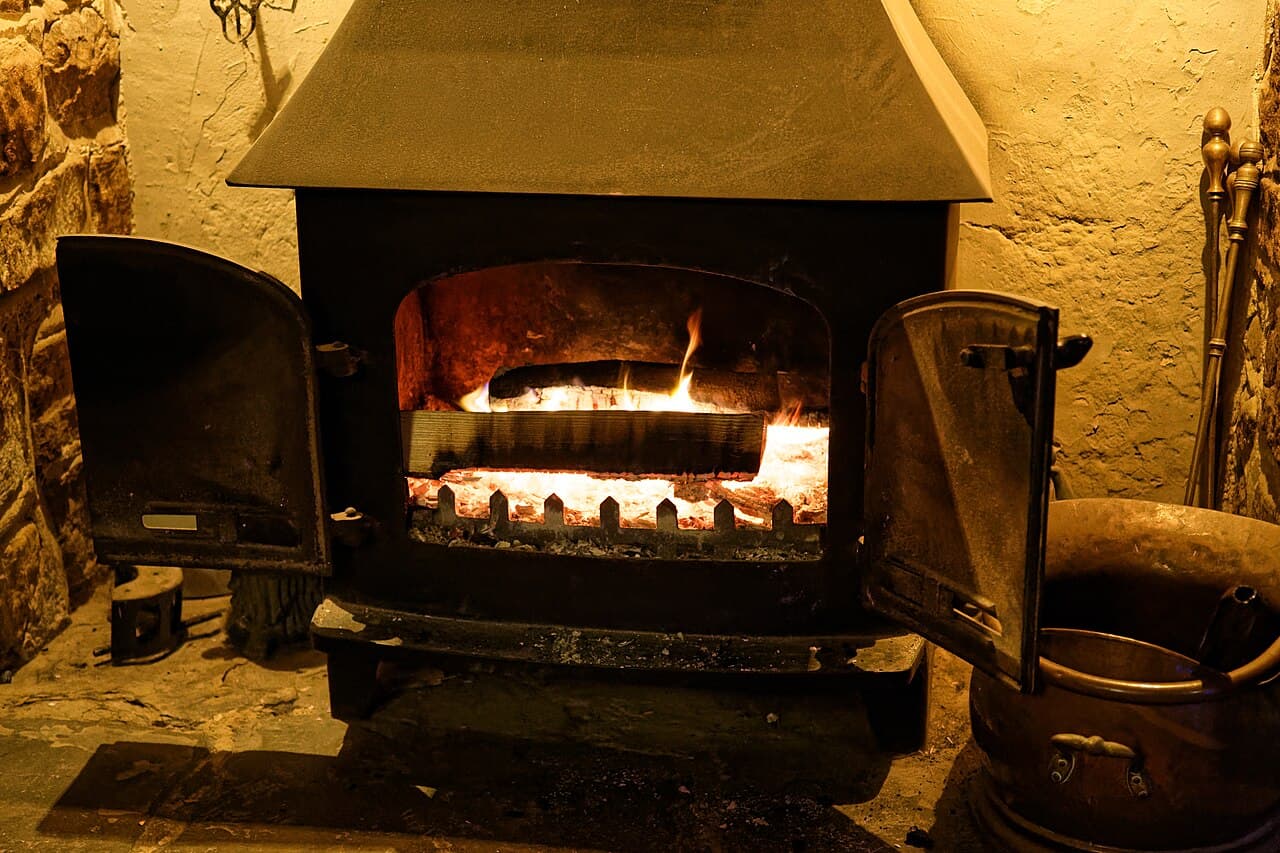
The stove and chimney make a difference too
Some creosote problems are built into the installation, and fixing them is professional work.
- A cold chimney. An exterior chimney is a cold chimney, and it is subject to heavier creosote buildup than an interior one.[7]
- An oversized flue. An oversized flue lets the smoke slow down and condense inside the chimney, resulting in water, creosote and sluggish draft,[7] and creosote tends to build up in the corners of rectangular flues.[7]
- An old stove. EPA-certified wood stoves burn more efficiently than older non-certified models, resulting in less creosote buildup in the chimney.[1] Whether a stove must be EPA certified in Virginia explains the labels.
On a catalytic stove, the combustor needs the care its manual describes. Woodstock Soapstone, a stove maker, lists the signs of a combustor that has stopped working: darker smoke from the chimney, a stove that no longer gets as hot as it once did, and a buildup of creosote or soot in the chimney.[8]
Inspection and sweeping
EPA's advice is to have your wood-burning appliance checked annually by a certified chimney sweep or similar certified professional.[1] Fairfax County Fire and Rescue's advice for wood stove owners is to have a licensed chimney sweep clean and inspect your chimney at least once a year.[10] How often you need sweeping beyond an annual visit depends on how much you burn and how dry your wood is, so ask the sweep what they found.
Store-bought creosote logs and powders are not a substitute for that inspection; a sweep can see what is actually in the flue. How often a chimney should be cleaned and what a chimney sweep does cover the appointment.
When to call a licensed pro
Cleaning the flue, removing glazed creosote, relining an oversized chimney and repairing anything after a chimney fire are pro-only work on Loclis: they involve roof access, the fire safety of the chimney and sometimes a permit. Book a chimney professional if you notice:
- any sign that a chimney fire may have happened, such as cracked or discoloured flue parts;
- flakes of creosote falling into the firebox, or a strong tarry smell from the stove;
- smoke spilling into the room when the door opens; see why a stove smokes when the door opens;
- a stove that draws worse than it used to, or a catalytic stove showing the signs above.
Avoid large, roaring fires: Fairfax County Fire and Rescue warns they can start a chimney fire from soot and creosote deposits in the flue.[9] If you think a chimney fire has happened, do not use the stove again until a professional has inspected the chimney.
In Virginia, contractor licensing is set out by job size: the Code of Virginia defines Class C contractors as those whose single contract or project is over $1,000 but less than $30,000.[11] A relining or chimney repair quote should come from a business whose licence you can look up; how to check a contractor's licence shows how.
Loclis lists DPOR-licensed businesses with their licence number and class. Browse wood stove services, look up chimney businesses in Blacksburg, or see all chimney and fireplace answers.
Describe your stove and chimney once and local chimney businesses quote the inspection and sweep.
Common questions
- Do creosote sweeping logs work?
- Not on their own. The Chimney Safety Institute of America says chimney cleaning products used alone are not an adequate substitute for mechanical cleaning and inspection, and any deposits they loosen can land on the baffle, the catalytic combustor or an offset and still have to be removed.
- Is burning the stove hot once a day enough to burn off creosote?
- Hot fires help prevent new deposits, but they are not a cleaning method. A deliberately overfired stove can damage the firebox and, with heavy creosote in the flue, start a chimney fire. Burn hot routinely, and leave removing existing deposits to a sweep.
- How do I know how much creosote is in my chimney?
- You usually cannot tell from the stove. A chimney professional inspects the flue with a light or camera. Warning signs worth reporting are a strong tarry smell, flakes falling into the firebox, darker chimney smoke than usual or a stove that draws worse than it did.
- Does softwood like pine cause more creosote than hardwood?
- Wet wood is the bigger problem than species. Prince William County's fire department warns that soft, moist wood increases creosote buildup, and EPA says to season softwood at least 6 months and hardwood at least 12. Softwoods burn faster than dense hardwoods, but damp wood of any kind smoulders.
- How often should a wood stove chimney be swept?
- Inspect it every year, and sweep whenever the inspection finds deposits. Fairfax County Fire and Rescue says to have a licensed chimney sweep clean and inspect your chimney at least once a year if you use a wood-burning stove. Heavy use or damp wood can mean more often.
Sources
- [1] Frequent Questions about Wood-Burning Appliances, U.S. Environmental Protection Agency, Burn Wise. Checked October 27, 2026.
- [2] Best Wood-Burning Practices, U.S. Environmental Protection Agency, Burn Wise. Checked October 27, 2026.
- [3] Energy Efficiency and Your Wood-Burning Appliance, U.S. Environmental Protection Agency, Burn Wise. Checked October 27, 2026.
- [4] Tips for a Better Burn, U.S. Environmental Protection Agency, Burn Wise. Checked October 27, 2026.
- [5] 40 CFR 60.532: What standards and associated requirements must I meet and by when?, Electronic Code of Federal Regulations (eCFR). Checked October 27, 2026.
- [6] When Using Alternative Home Heating Systems - Use Wisely & Safely, Prince William County Department of Fire and Rescue. Checked October 27, 2026.
- [7] What Makes a Good Chimney, Woodstock Soapstone Company (stove manufacturer). Checked October 27, 2026.
- [8] Wood Burning Basics, Woodstock Soapstone Company (stove manufacturer). Checked October 27, 2026.
- [9] Fireplace Safety Tips and Can Your Ashes, Fairfax County Fire and Rescue Department. Checked October 27, 2026.
- [10] Heating Systems Safety, Fairfax County Fire and Rescue Department. Checked October 27, 2026.
- [11] Code of Virginia § 54.1-1100. Definitions, Code of Virginia (law.lis.virginia.gov). Checked October 27, 2026.
Want a pro to handle it?
Describe the job once. Licensed local businesses send quotes, and you pay only when you book one.
Get a quote from a local pro